
George Ralph Miles DSO, OBE, RCN
| Born | 26 Feb 1912 | ||
| Died | 19 Dec 1951 | (39) | Esquimalt, British Columbia, Canada |
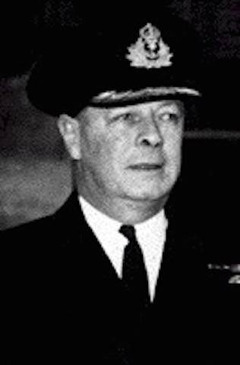 | Ranks
Decorations
|
Warship Commands listed for George Ralph Miles, RCN
| Ship | Rank | Type | From | To |
| HMCS Saguenay (D 79) | Lt.Cdr. | Destroyer | 8 Jul 1939 | 21 Apr 1941 |
| HMCS Athabaskan (i) (G 07) | Cdr. | Destroyer | 2 Feb 1943 | 5 Nov 1943 |
Career information
We currently have no career / biographical information on this officer.
Events related to this officer
Destroyer HMCS Saguenay (D 79)
23 Oct 1939
The British light cruiser HMS Orion (Capt. H.R.G. Kinahan, RN) and the Canadian destroyer HMCS Saguenay (Lt.Cdr. G.R. Miles, RCN) intercept the German tanker Emmy Friedrich (4372 GRT) in the Yukatan Strait west of Tampico. When the British light cruiser HMS Caradoc (Capt. E.W.L. Longley-Cook, RN) also arrived on the scene the Germans scuttled their own ship to prevent her capture.
20 Oct 1940
The British merchant Sulaco is torpedoed and sunk about 360 miles west of Rockall in position 57°25'N, 25°00'W by German U-boat U-124. HMCS Saguenay (Cdr. G.R. Miles, RCN) picks up 1 survivor.
21 Oct 1940
HMCS Saguenay (Cdr. G.R. Miles, RCN) picks up 29 survivors from the Norwegian merchant Cubano that was torpedoed and sunk the previous day south-west of Iceland in position 57°55'N, 24°57'W by German U-boat U-124.
1 Dec 1940 (position 54.40, -15.50)
Around 0350 hours on 1 December 1940 the Italian submarine Argo torpedoed and damaged the Canadian destroyer HMCS Saguenay (Cdr. G.R. Miles, RCN) about 300 nautical miles west of Ireland in position 54°40'N, 15°50'W. The bow was blown off and 21 of the crew lost their lives in this attack. HMCS Saguenay was escorting convoy HG-47 at the time. Saguenay was out of service for nearly 6 months (repairs were completed on 22 May 1941). (1)
Sources
- Personal communication
You can help improve officers George Ralph Miles's page
Click here to Submit events/comments/updates for this officer.
Please use this if you spot mistakes or want to improve his page.