
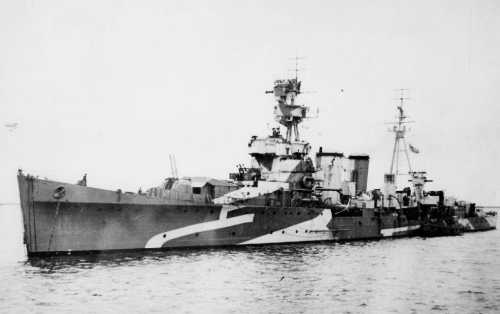
| Navy | The Royal Navy |
| Type | Light cruiser |
| Class | Carlisle |
| Pennant | D 67 |
| Built by | Fairfield Shipbuilding & Engineering Co. (Govan, Scotland) |
| Ordered | Jun 1917 |
| Laid down | 2 Oct 1917 |
| Launched | 9 Jul 1918 |
| Commissioned | 11 Nov 1918 |
| End service | |
| History | HMS Carlisle was completed with a hanger positioned under the bridge, and she was to carry aircraft, however this proved unsatisfactory and was later removed. In 1919 Carlisle joined the 5th Light Cruiser Squadron at Harwich. During March she left Harwich in company with the squadron, and they were then stationed in China. In the period 1921-1929 Carlisle received a refit, and then served on the Africa Station with the 6th Cruiser Squadron. In February 1930, Carlisle was docked in the Selborne dry dock at Simonstown, South Africa prior to becoming a unit of the 2nd cruiser squadron Atlantic (home fleet). On 16 March 1937, after being relieved by the cruiser Neptune, Carlisle returned to the U.K. and was reduced to reserve. In June 1939 Carlisle started a coversion to an A/A cruiser 8-4" QF MK16 and 1 quadruple 2 pdr Pom-Pom being fitted. This conversion was completed in January 1940. In April 1940 during the Norwegian campaign Carlisle was employed on escort duties of a troop convoy consisting of the 148th Infantry Brigade who went ashore at Andalsnes, with this the German position in Trondheim was threatened from the north and south (Operation Sickle). Later during the month the sloop HMS Bittern which was mistaken for a cruiser, was badly damaged by German JU88s and had to be sunk by Carlisle. In August Carlisle was serving in the Red Sea and Gulf of Aden area when she assisted in the evacuation of British troops, civilians and the sick from Berber in British Somali to Aden before being occupied by Italian troops. In March 1941 she was in the Mediterranean and was deployed on escort duties as an A/A vessel of the 15th cruiser squadron for convoys from Alexandria to Greece (Operation "Lustre"). During April she assisted in the evacuation of troops from Greece to Crete and Egypt. By early May she was involved in convoy duties, later that month on the 22nd, Carlisle and HMS Calcutta reinforced Admiral King`s squadron to help with the destruction of a German invasion convoy to Crete. As soon as it was sighted the British ships opened fire. For a short time all went well, a schooner and a steamer were destroyed and an escorting destroyer damaged by shelling. This destroyer laid a very effective smoke screen which concealed what remained of the convoy and the action was broken off. The air attacks which Admiral King feared more than anything intensified and his squadron was under continual attack for over three hours. Carlisle received a direct hit which killed her Commanding Officer Capt. Thomas Claud Hampton, RN). The British destroyer HMS Kingston immediately went alongside to give assistance, but the fire now raging and the still continuing air attacks prompted the cruiser`s Senior Officer to refuse the destroyer`s offer. Carlisle then continued to engage the enemy with a furious barrage. By December, the old cruiser was back performing convoy duties between Alexander and Malta, she was tasked to support the commissioned auxiliary supply ship HMS Breconshire (9776 tons). On 20 March 1942, Carlisle was employed as convoy escort to the commissioned auxiliary supply ship HMS Breconshire loaded with 5,000 tons of precious fuel, the Clan Campbell, the bomb damaged ship of the previous convoy, the Pampas and the Norwegian ship Talabot, fully loaded with ammunition. Getting this convoy through to Malta was afterwards referred to as the second battle of Sirte. Admiral Vian was in command of the operation. Of the total of 26,000 tons of stores carried by the four ships only 5,000 tons finally reached Malta. The price paid for delivering much needed stores was indeed heavy. In July 1943, she provided escort for the support force for the Allied landings in Sicily. During September-October, during the German counter attack in the Aegean, HMS Carlisle (Capt. Harold Fielding Nalder, RN) made a sortie into the area south of Piraeus with the destroyers HMS Panther and HMS Rockwood in order to intercept German convoys in the Scarpanto Strait. It was here that on 9 October 1943 they were spotted by German JU87's dive bombers which succeeded in sinking HMS Panther and later on seriously damaging Carlisle in position 35º48'N, 27º36'E so that she had to be taken in tow to Alexandria by Rockwood. On examination of the damage it was concluded that Carlisle was a constructive loss. She remained at Alexandria as a base ship for the remainder of the war. HMS Carlisle is not listed as active unit in the October 1944 Navy List In 1948 the old cruiser was finally broken up for scrap at Alexandria. Her badge can still be seen painted on the side of the Selborne dry dock wall at Simonstown, South Africa. |
Commands listed for HMS Carlisle (D 67)
Please note that we're still working on this section
and that we only list Commanding Officers for the duration of the Second World War.
| Commander | From | To | |
| 1 | Capt. Gerald Maxwell Bradshaw Langley, OBE, RN | 21 Nov 1939 | 7 Feb 1941 |
| 2 | Capt. Thomas Claud Hampton, RN | 7 Feb 1941 | 22 May 1941 (+) |
| 3 | A/Cdr. William Pope, RN | 22 May 1941 | 2 Aug 1941 |
| 4 | Capt. Douglas Mortimer Lewis Neame, DSO, RN | 2 Aug 1941 | Jul 1942 |
| 5 | Lt.Cdr. Geoffrey Foster Agutter, RN | Jul 1942 | 10 Aug 1942 |
| 6 | A/Cdr. Dudley Alfred Parker, RN | 10 Aug 1942 | 5 Oct 1942 |
| 7 | Capt. Harold Fielding Nalder, RN | 5 Oct 1942 | Nov 1943 |
| 8 | Lt.Cdr. John Oliver Martin, RN | Nov 1943 | mid 1945 |
You can help improve our commands section
Click here to Submit events/comments/updates for this vessel.
Please use this if you spot mistakes or want to improve this ships page.
Notable events involving Carlisle include:
4 Mar 1940
HMS Ceres (Capt. E.G. Abbott, AM, RN) and HMS Carlisle (Capt. G.M.B. Langley, OBE, RN) conducted exercises off Malta. (1)
17 Apr 1940
Around 0830A/17, the light cruisers HMS Galatea (Capt. B.B. Schofield, RN, flying the flag of Vice-Admiral G.F.B. Edward-Collins, CB, KCVO, RN) and HMS Arethusa (Capt. Q.D. Graham, RN), AA cruisers HMS Carlisle (Capt. G.M.B. Langley, OBE, RN), HMS Curacoa (Capt. E.A. Aylmer, DSC, RN) and the destroyers HMS Arrow (Cdr. H.W. Williams, RN) and HMS Acheron (Lt.Cdr. R.W.F. Northcott, RN) departed Rosyth with troops for Åndalsnes and Molde, Norway.
Troops and equipment were landed during the night of 18/19 April. HMS Galatea and HMS Carlisle landed their troops directly at Åndalsnes while HMS Arethusa and HMS Curacoa landed theirs at Molde. The destroyers, after having landed their troops at Åndalsnes then ferried the troops landed at Molde to Åndalsnes.
HMS Galatea, HMS Aurora, HMS Arrow and HMS Acheron returned to Rosyth on the 20th. HMS Curacoa arrived at Scapa Flow also on the 20th. HMS Carlisle also on passage to Scapa Flow was ordered to return to Åndalsnes. (2)
29 Apr 1940
Operation Klaxon, the evacuation of troops from Namsos.
Timespan: 29 April to 5 May 1940.
At 2000A/29 the French armed merchant cruisers El D’Jezair, El Kantara and El Mansour departed Scapa Flow for Namsos, Norway where they were to evacutate troops. They were escorted by the British destroyers HMS Kelly (Capt. L.F.A.V.N. Mountbatten, GCVO, RN), HMS Maori (Cdr. G.N. Brewer, RN), HMS Imperial (Lt.Cdr. C.A.de W. Kitcat, RN) and the French large destroyer Bison (Capt. J.A.R. Bouan).
A cover force departed Scapa Flow one hour later. It was made up of the British heavy cruisers HMS Devonshire (Capt. J.M. Mansfield, DSC, RN, flying the flag of Vice-Admiral J.H.D. Cunningham, CB, MVO, RN), HMS York (Capt. R.H. Portal, DSC, RN), the French light cruiser Montcalm (Capt. J.L. de Corbiere, flying the flag of Commodore (Contre-Admiral) E.L.H. Derrien) and the British destroyers HMS Grenade (Cdr. R.C. Boyle, RN) and HMS Griffin (Lt.Cdr. J. Lee-Barber, RN) and HMS Hasty (Lt.Cdr. L.R.K. Tyrwhitt, RN).
These forces were later reinforced by the British destroyers HMS Afridi (Capt. P.L. Vian, RN), HMS Nubian (Cdr. R.W. Ravenhill, RN) and the French destroyer Foudroyant Foudroyant (Cdr. P.L.A. Fontaine)
The force lead by Vice-Admiral Cunningham arrived off the Norwegian coast near Namsos on May 1st.
HMS Maori had been sent on ahead and reported fog. HMS Kelly, HMS Grenade, HMS Griffin and Bison were ordered to join her.
When entering the Namsenfjord in fog on 2 May 1940, HMS Maori is bombed and damaged from near misses. She had to retire for temporary repairs but was able to participate in the evacuation during the next night. The evacuation attempt was then postponed to the night of 2/3 May.
On 2 May the force was reinforced by the AA cruiser HMS Carlisle (Capt. G.M.B. Langley, OBE, RN).
In the evening of 2 May the force entered the Fjord to embark troops except HMS Devonshire, Montcalm, HMS Grenade, HMS Griffin, HMS Hasty and HMS Imperial which remained at sea to cover the operation.
A total of 1850 British, 2345 French, some Norwegian troops and 30 German prisoners were evacuated. The evacuation was completed around 0445A/3.
Heavy German air attacks developed when the Force was leaving the area. The attacks concentrated on the Devonshire and Montcalm but they were not hit.
The French destroyer Bison was hit at 1010 hours in position 65°42'N, 07°17'E and her forward magazine exploded blowing off the fore part of the ship.The survivors were rescued by HMS Grenade, HMS Imperial and HMS Afridi The wreck was then scuttled by HMS Afridi.
But the attacks continued and at 1400 hours HMS Afridi was hit in position 66°14'N, 05°45'E and sank around 1445 hours. Her survivors were picked up by HMS Griffin and HMS Imperial.
The destroyers with the survivors; HMS Grenade, HMS Griffin and HMS Imperial were detached to land these at Sullom Voe where they arrived around 1700A/4. They departed again around 2130A/4 for Scapa Flow where they arrived around 0730A/5.
Reinforcements had meanwhile been sent out from Sullom Voe these were the light cruiser HMS Southampton (Capt. F.W.H. Jeans, CVO, RN) and the destroyers HMS Beagle (Lt.Cdr. R.H. Wright, RN), HMS Hereward (Lt.Cdr. C.W. Greening, RN) and HMS Hyperion (Cdr. H.St.L. Nicholson, RN). They had departed Sullom Voe late in the evening of May, 2nd with orders to give support to the forces operating in the Namsos area.
Shortly before midnight during the night of 3/4 May, four more destroyers were sent out, these were; HMS Antelope (Lt.Cdr. R.T. White, DSO, RN), HMS Acheron (Lt.Cdr. R.W.F. Northcott, RN), HMS Foresight (Lt.Cdr. G.T. Lambert, RN) and HMS Fury (Cdr. E.W.B. Sim, RN).
All forces arrived at Scapa Flow in the evening of May 4th or the early hours of May 5th. (3)
17 May 1940
At 0030/17, the AA cruiser HMS Carlisle (Capt. G.M.B. Langley, OBE, RN) and the destroyers HMS Havock (Lt.Cdr. R.E. Courage, DSO, RN), HMS Hereward (Lt.Cdr. C.W. Greening, RN), HMS Hero (Cdr. H.W. Biggs, RN), HMS Ilex (Lt.Cdr. P.L. Saumarez, DSC, RN), HMS Imperial (Lt.Cdr. C.A.de W. Kitcat, RN), HMS Mohawk (Cdr. J.W.M. Eaton, RN), HMS Janus (Cdr. J.A.W. Tothill, RN) and HMS Juno (Cdr. W.E. Wilson, RN) and HMS Kimberley (Lt.Cdr. J.S.M. Richardson, RN) departed Plymouth for Gibraltar.
HMS Ilex, HMS Mohawk, Janus, HMS Juno and HMS Kimberley arrived at Gibraltar on the 19th.
HMS Carlisle, HMS Havock, HMS Hereward, HMS Hero and HMS Imperial arrived at Gibraltar on 20 May.
24 May 1940
HMS Carlisle (Capt. G.M.B. Langley, OBE, RN), HMS Kandahar (Cdr. W.G.A. Robson, RN), HMS Khartoum (Cdr. D.T. Dowler, RN), HMS Kimberley (Lt.Cdr. J.S.M. Richardson, RN) and HMS Kingston (Lt.Cdr. P. Somerville, DSO, RN) shifted from Alexandria to Suez. They were to proceed to the Red Sea.
25 May 1940
HMS Carlisle (Capt. G.M.B. Langley, OBE, RN), HMS Kandahar (Cdr. W.G.A. Robson, RN), HMS Khartoum (Cdr. D.T. Dowler, RN), HMS Kimberley (Lt.Cdr. J.S.M. Richardson, RN) and HMS Kingston (Lt.Cdr. P. Somerville, DSO, RN) transited the Suez Canal after which they set course for Aden.
28 May 1940
HMS Carlisle (Capt. G.M.B. Langley, OBE, RN), HMS Kandahar (Cdr. W.G.A. Robson, RN) and HMS Kimberley (Lt.Cdr. J.S.M. Richardson, RN) arrived at Aden where they joined the Red Sea Force.
HMS Khartoum (Cdr. D.T. Dowler, RN) and HMS Kingston (Lt.Cdr. P. Somerville, DSO, RN) also joined the Red Sea Force but remained in the Perim area to join the Perim Patrol.
13 Jun 1940
Around 1100C/14, HMAS Hobart (Capt. H.L. Howden, RAN) departed Aden to provide cover for ships on the Perim patrol.
Earlier that day, while still at Aden, at 0148C/13, four enemy aircraft were sighted and fired upon by the 4" AA battery. One of the attackers was shot down by either HMAS Hobart or HMS Carlisle (Capt. G.M.B. Langley, OBE, RN).
Around 0430C/13, two more enemy aircraft appeared and were fired upon. (4)
23 Jun 1940
Convoy BN 1.
This convoy departed Bombay on 23 June 1940 for the Suez where it arrived on 12 July 1940.
The convoy was made up of the following merchant vessels; Akbar (British, 4043 GRT, built 1924), Alavi (British, 3566 GRT, built 1924), Anna Odland (Norwegian, 4980 GRT, built 1939), Beaconstreet (British, 7467 GRT, built 1927), British Architect (British (tanker), 7388 GRT, built 1922), British Hope (British (tanker), 6951 GRT, built 1928), Svenor (Norwegian (tanker), 7616 GRT, built 1931), Turbo (British (tanker), 4781 GRT, built 1912) and William Strachan (Norwegian (tanker), 6157 GRT, built 1931).
On departure from Bombay the convoy was escorted by the light cruiser HMS Ceres (Capt. E.G. Abbott, AM, RN) and the armed merchant cruiser HMS Cathay (A/Capt.(Retd.) C.M. Merewether, RN).
HMS Cathay parted company with the convoy on 2 July after the light cruiser HMNZS Leander (Capt. H.E. Horan, RN) and sloops HMIS Hindustan (Cdr. G.V.G. Beamish, RIN) and HMS Shoreham (Cdr. G.P. Claridge, RN) had joined the escort.
HMS Ceres parted company with the convoy on 4 July.
The destroyer HMS Kingston (Lt.Cdr. P. Somerville, DSO, RN) joined the convoy on 5 July 1940. HMIS Hindustan then parted company.
Off Aden the merchant vessels Alavi and Beaconstreet parted company with the convoy. They arrived at Aden on 6 July.
Off Aden the RFA tanker Plumleaf (5916 GRT, built 1917) and the armed boarding vessel HMS Chakdina (Lt.Cdr. W.R. Hickey, RNR) also joined the convoy.
Also off Aden the AA cruiser HMS Carlisle (Capt. G.M.B. Langley, OBE, RN), destroyer HMS Kandahar (Cdr. W.G.A. Robson, RN) and sloop HMS Flamingo (Cdr. J.H. Huntley, RN) joined the convoy.
On 9 July HMS Carlisle, HMS Kandahar and HMS Kingston parted company with the convoy.
On 10 July HMNZS Leander, HMS Flamingo and HMS Shoreham parted company with the convoy being relieved as escorts by the sloops HMIS Clive (Cdr. H.R. Inigo-Jones, RIN) and HMS Grimsby (Cdr. K.J. D'Arcy, RN). (5)
7 Jul 1940
Convoy BS 1.
This convoy departed Suez on 7 July 1940 for the Gulf of Aden where it was to be dispersed on 15 July 1940.
The convoy was made up of the following merchant vessels; Almenara (British, 1851 GRT, built 1922), Arabistan (British, 5874 GRT, built 1929), Athelmere (British (tanker), 5566 GRT, built 1918), British Colonel (British (tanker), 6999 GRT, built 1921), British Commodore (British (tanker), 6865 GRT, built 1923), Bronxville (Norwegian, 4663 GRT, built 1929), Bullmouth (British (tanker), 7519 GRT, built 1929), Cliftonhall (British, 5063 GRT, built 1938), Egyptian Prince (British, 3490 GRT, built 1922), Ganges (British, 6246 GRT, built 1930), Ganymedes (Dutch, 2682 GRT, built 1917), Gogra (British, 5190 GRT, built 1919), Herstein (Norwegian, 5100 GRT, built 1939), Khandalla (British, 7018 GRT, built 1923), Khosrou (British, 4043 GRT, built 1924), Orwell (Norwegian (tanker), 7920 GRT, built 1905), Ross (British, 4878 GRT, built 1936) and Zamzam (Egyptian, 8299 GRT, built 1909).
On departure from Suez the convoy was escorted by the sloops HMIS Clive (Cdr. H.R. Inigo-Jones, RIN) and HMS Grimsby (Cdr. K.J. D'Arcy, RN).
On 10 July 1940, HMIS Clive and HMS Grimsby parted company with the convoy as escort was taken over by the light cruiser HMNZS Leander (Capt. H.E. Horan, RN), AA-cruiser HMS Carlisle (Capt. G.M.B. Langley, OBE, RN), destroyers HMS Kandahar (Cdr. W.G.A. Robson, RN), HMS Kingston (Lt.Cdr. P. Somerville, DSO, RN) and the sloops HMS Shoreham (Cdr. G.P. Claridge, RN) and HMS Flamingo (Cdr. J.H. Huntley, RN).
The merchant vessel Khosrou parted company (on the 10th ?) to proceed to Port Sudan arriving there on the 11th. (5)
17 Jul 1940
Convoy BN 2.
This convoy departed Bombay on 17 July 1940 for the Suez where it arrived on 5 August 1940.
The convoy was made up of the following merchant vessels; British Consul (British (tanker), 6940 GRT, built 1924), Clydefield (British (tanker), 7365 GRT, built 1928), Cornwall (British, 10605 GRT, built 1920), Daviken (Norwegian, 2922 GRT, built 1926), Ellenga (British, 5196 GRT, built 1911), Germa (Norwegian, 5282 GRT, built 1920), Grena (Norwegian (tanker), 8117 GRT, built 1934), Hoegh Hood (Norwegian (tanker), 9351 GRT, built 1936), Jalarashimi (British, 4449 GRT, built 1918), Jehangir (British, 3566 GRT, built 1924),Longwood (British (tanker), 9463 GRT, built 1930), Nawab (British, 5430 GRT, built 1915), Olivia (Dutch (tanker), 6307 GRT, built 1939), Ranee (British, 5060 GRT, built 1928) and Varsova (British, 4701 GRT, built 1914).
On departure from Bombay the convoy was escorted by the armed merchant cruisers HMS Cathay (A/Capt.(Retd.) C.M. Merewether, RN) and HMAS Westralia (Cdr. A.S. Rosenthal, RAN).
On 20 July two of the merchant ships parted company with the convoy to proceed to other destinations, these were the tankers British Consul (to Trincomalee) and Clydefield (to Colombo).
On 26 July the armed merchant cruisers HMS Cathay and HMAS Westralia parted company with the convoy while the light cruisers HMNZS Leander (Capt. H.E. Horan, RN) and HMS Ceres (Capt. E.G. Abbott, AM, RN) joined the convoy.
On 27 July the sloops HMIS Hindustan (Cdr. G.V.G. Beamish, RIN) and HMS Shoreham (Cdr. G.P. Claridge, RN) joined the convoy to provided A/S escort while the convoy was approaching Aden.
On the 29th the merchant vessels Jerhangir and Varsova split off from the convoy and proceeded to Aden escorted by HMS Ceres.
The following merchant ships joined the convoy at Aden; Beaconstreet (British, 7467 GRT, built 1927), British Judge (British (tanker), 6735 GRT, built 1921), Marija Petrinovic (Yugoslavian, 5684 GRT, built 1918), Mathura (British, 8890 GRT, built 1920), Ozarda (British, 6985 GRT, built 1940) and Peshawur (British, 7934 GRT, built 1919).
On 30 July the AA cruiser HMS Carlisle (Capt. G.M.B. Langley, OBE, RN), destroyers HMS Kandahar (Cdr. W.G.A. Robson, RN), HMS Kimberley (Lt.Cdr. J.S.M. Richardson, RN) and the sloop HMS Flamingo (Cdr. J.H. Huntley, RN) joined the convoy to escort it partly through the Red Sea. HMIS Hindustan and HMS Shoreham parted company with the convoy on 30 July.
On 3 August the following merchant vessels split off to proceed to Port Sudan; Daviken, Grena, Marija Petrinovic and Ozarda. They were escorted to there by HMS Kimberley.
Also on 3 August 1940 HMS Leander, HMS Carlisle, HMS Kandahar and HMS Flamingo parted company with the convoy, while the sloop HMIS Clive (Cdr. H.R. Inigo-Jones, RIN) joined the convoy to escort it on it's last leg to Suez.
31 Jul 1940
Convoy BS 2.
This convoy departed Suez on 31 July 1940 for the Gulf of Aden where it was to be dispersed on 9 August 1940.
The convoy was made up of the following merchant vessels; African Prince (British, 4653 GRT, built 1939), Deebank (British, 5060 GRT, built 1929), Esneh (British, 1928 GRT, built 1919), Hopecastle (British, 5178 GRT, built 1937), Manaqui (British, 2802 GRT, built 1921), Masirah (British, 6578 GRT, built 1919), Novasli (Norwegian, 3204 GRT, built 1920), Ovula (Dutch (tanker), 6256 GRT, built 1938) Tweed (British, 2697 GRT, built 1926) and William Strachan (Norwegian (tanker), 6157 GRT, built 1931).
On depature from Aden the convoy was escorted by the sloops HMIS Clive (Cdr. H.R. Inigo-Jones, RIN) and HMS Grimsby (Cdr. K.J. D'Arcy, RN) until position 21°30'N, 63°37'E on 3 August.
Two more merchant vessels joined the convoy coming from Port Sudan on 3 August, these were the Akbar (British, 4043 GRT, built 1924) and Trajanus (Dutch, 1712 GRT, built 1930).
Escort was then taken over by the light cruiser HMNZS Leander (Capt. H.E. Horan, RN), AA-cruiser HMS Carlisle (Capt. G.M.B. Langley, OBE, RN), destroyers HMS Kandahar (Cdr. W.G.A. Robson, RN), HMS Kimberley (Lt.Cdr. J.S.M. Richardson, RN) and the sloop HMS Flamingo (Cdr. J.H. Huntley, RN).
The convoy was dispersed on 9 August 1940. Three of the merchant vessels proceeded to Aden as did the escorts. (5)
16 Aug 1940
Evacuation of Berbera.
From 16 to 19 August 1940, Allied troops from Berbera, Italian Somaliland, were evacuated to Aden.
The troops were evacatuated by the transports Akbar (4043 GRT, built 1924), Laomedon (6491 GRT, built 1912), the hospital ship Vita (4691 GRT, built 1914) as well as the armed boarding vessels HMS Chakdina (Lt.Cdr. W.R. Hickey, RNR) and HMS Chantala (Lt.Cdr.(Retd.) C.E.I. Gibbs, RN).
Cover for the evacuation was provided by the light cruisers HMAS Hobart (Capt. H.L. Howden, RAN), HMS Caledon (Capt. C.P. Clarke, RN), HMS Ceres (Capt. E.G. Abbott, AM, RN), AA -cruiser HMS Carlisle (Capt. G.M.B. Langley, OBE, RN), destroyers HMS Kandahar (Cdr. W.G.A. Robson, RN), HMS Kimberley (Lt.Cdr. J.S.M. Richardson, RN), sloops HMS Auckland (Cdr. J.G. Hewitt, DSO, RN), HMS Shoreham (Cdr. G.P. Claridge, RN), HMAS Parramatta (Lt.Cdr. J.H. Walker, MVO, RAN), HMIS Indus (Cdr. E.G.G. Hunt, RIN), HMIS Hindustan (Cdr. G.V.G. Beamish, RIN), minesweeper HMS Derby (Lt.Cdr. F.C.V. Brightman, RN) and the netlayer HMS Protector (Capt. W.Y la L. Beverley, RN).
On 17 August, HMS Ceres bombarded Italian Army targets which temporarily halted the Italian advance.
On 18 August, HMS Caledon and HMS Kandahar bombarded enemy units on the Bulhar-Berbera road.
The evacuation was completed on the 18th. Over 7000 men had been evacuated.
The last men were taken off by HMAS Hobart at Berbera early on the 19th. She left around 0845C/19 for Aden with the last of the Army personnel and the demolition parties which had demolished the harbour facilities. HMIS Indus proceeded along the coast to pick up stragglers. (5)
10 Sep 1940
Convoy AP 3.
This convoy departed Liverpool on 10 September 1940 for Suez where it arrived on 22 October 1940.
The convoy was made up of the following merchant vessels; Athlone Castle (British, 25564 GRT, built 1936), Brisbane Star (British, 12791 GRT, built 1937), Brittanic (British, 26943 GRT, built 1930), Clan Campbell (British, 7255 GRT, built 1937), Clan MacArthur (British, 10528 GRT, built 1936), Dominion Monarch (British, 27155 GRT, built 1939), Durban Castle (British, 17388 GRT, built 1938), Glaucus (British, 7596 GRT, built 1921), Imperial Star (British, 12427 GRT, built 1935) and Ulster Prince (British, 3791 GRT, built 1930).
On departure from the U.K. the convoy was escorted by the destroyers HMS Havelock (Capt. E.B.K. Stevens, DSC, RN), HMS Harvester (Lt.Cdr. M. Thornton, RN), HMS Highlander (Cdr. W.A. Dallmeyer, RN) and HMS Hurricane (Lt.Cdr. H.C. Simms, RN), HMS Volunteer (Lt.Cdr. N. Lanyon, RN) and HMS Wolverine (Cdr. R.H. Craske, RN). They remained with the convoy until 12 September.
In the morning of 11 September the light cruiser HMS Sheffield (Capt. C.A.A. Larcom, RN) joined the convoy until 0745/12 when she returned to the Clyde after having been ordered to do so.
Ocean escort joined around the time the destroyers left and was made up of the armed merchant cruisers HMS Cicilia (Capt.(Retd.) V.B. Cardwell, OBE, RN) and HMS Wolfe (A/Capt.(Retd.) W.G.A. Shuttleworth, RN). They remained with the convoy until it arrived at Freetown on 23 September 1940.
From 25 September 1940 to 4 October 1940, when the convoy arrived at Capetown, it was escorted by the armed merchant cruisers HMS Canton (Capt. G.D. Belben, DSC, AM, RN) and HMS Carnarvon Castle (Capt.(Retd.) H.N.M. Hardy, DSO, RN).
On departure from Capetown on 6 October, the convoy was escorted by HMS Canton until 1140B/9 when she was relieved by HMS Carthage (Capt.(Retd.) B.O. Bell-Salter, RN) which had joined the convoy around 0900B/9. This armed merchant cruiser remained with the convoy until 1220C on 15 October when she was relieved by the heavy cruiser HMS Shropshire (Capt. J.H. Edelsten, RN) which remained with the convoy until 20 October.
On 18 October the convoy was near Aden and the AA cruiser HMS Carlisle (Capt. G.M.B. Langley, OBE, RN), destroyers HMS Kandahar (Cdr. W.G.A. Robson, RN), HMS Kingston (Lt.Cdr. P. Somerville, DSO, RN) and sloop HMS Flamingo (Cdr. J.H. Huntley, RN) joined.
The escort parted company with the convoy on 20 October except HMS Kandahar which remained with the convoy until it's arrival at Suez two days later. On arrival at Suez two more ships were escorting the convoy, these were the sloop HMIS Clive (Cdr. H.R. Inigo-Jones, RIN) and the minesweeper HMS Stoke (Cdr.(Retd.) C.J.P. Hill, RN). Presumably these had joined on 20 October.
14 Sep 1940
Convoy US 5.
This convoy departed Sydney on 14 September 1940.
It was made up of the troopships; Indrapoera (Dutch, 10825 GRT, built 1925) and Slamat (Dutch, 11636 GRT, built 1924).
They were escorted by the light cruiser HMAS Perth (Capt. P.W. Bowyer-Smith, RN, flying the flag of Rear-Admiral J.G. Crace, RN).
In the afternoon of 16 September in Bass Strait the troopships Christiaan Huygens (Dutch, 16287 GRT, built 1927) and Nieuw Holland (Dutch, 11066 GRT, built 1927) joined coming from Melbourne.
At dawn on 21 September the sloop HMAS Warrego (Cdr. R.V. Wheatley, RAN) joined in the approaches to Fremantle. The convoy arrived at Fremantle later the same day.
The convoy departed Fremantle on 22 September escorted by the heavy cruiser HMAS Canberra (Capt. H.B. Farncomb, RAN) and the sloop HMAS Warrego.
HMAS Warrego parted company around 0615H/23 and returned to Fremantle.
The convoy arrived at Colombo on 1 October 1940.
The convoy departed Colombo for Aden on 2 October 1940 escorted by the heavy cruiser HMS Shropshire (Capt. J.H. Edelsten, RN).
The convoy arrived off Aden on 8 October 1940 where HMS Shropshire parted company after the light cruiser HMAS Hobart (Capt. H.L. Howden, RAN), AA cruiser HMS Carlisle (Capt. G.M.B. Langley, OBE, RN), destroyer HMS Kandahar (Cdr. W.G.A. Robson, RN) and the sloop HMS Flamingo (Cdr. J.H. Huntley, RN) had joined.
The escort parted company with the convoy around 0800C/10 to join southbound convoy SW 2.
The convoy arrived at Suez on 12 October 1940.
1 Oct 1940
Convoy US 5A.
This convoy departed Sydney on 1 October 1940 for Suez where it arrived on 2 November 1940.
On departure from Sydney the convoy was made up of the troopship; Johan de Witt (Dutch, 10474 GRT, built 1920).
On departure from Sydney the convoy was escorted by the light cruiser HMAS Perth (Capt. P.W. Bowyer-Smith, RN, flying the flag of Rear-Admiral J.G. Crace, RN).
On 2 October 1940 the troopship Nieuw Zeeland (Dutch, 11069 GRT, built 1928) joined the convoy in Bass Strait. This troopship came from Melbourne.
The convoy arrived at Fremantle on 7 October 1940.
The convoy departed Fremantle on 8 October 1940 still escorted by HMAS Perth.
Around 1330H/9, in approximate position 27°00'S, 109°50'E the heavy cruiser HMAS Canberra (Capt. H.B. Farncomb, RAN) joined. One hour later HMAS Perth parted company and set course for Melbourne.
The convoy arrived at Colombo on 17 October 1940.
On 21 October the convoy left Colombo for Aden escorted by the light cruiser HMS Caledon (Capt. C.P. Clarke, RN). The convoy arrived off Aden on 28 October where the merchant vessels City of Capetown (British, 8046 GRT, built 1937), Clan Campbell (British, 7255 GRT, built 1937), Ulster Prince (British, 3791 GRT, built 1930) and Varsova (British, 4701 GRT, built 1914) joined the convoy as did the following escort vessels; heavy cruiser HMS Shropshire (Capt. J.H. Edelsten, RN), AA cruiser HMS Carlisle (Capt. G.M.B. Langley, OBE, RN), destroyer HMS Kandahar (Cdr. W.G.A. Robson, RN) and the sloop HMS Flamingo (Cdr. J.H. Huntley, RN). HMS Caledon then parted company and proceeded to Aden.
On 30 October the Ulster Prince was detached to Port Sudan. She left there the next day to proceed independently to Suez.
The convoy arrived at Suez on 2 November escorted by HMS Kandahar. The other escorts had parted company on 30 October. (6)
7 Oct 1940
Convoy WS 3 (Fast).
This convoy departed Liverpool and the Clyde on 7 October 1940. The convoy arrived at Suez on 16 November 1940.
The Liverpool section was made up of the troop transports; Duchess of York (British, 20021 GRT, built 1929), Monarch of Bermuda (British, 22424 GRT, built 1931) and Orontes (British, 20097 GRT, built 1929).
It was escorted by the destroyers HMS Douglas (Cdr.(Retd.) J.G. Crossley, RN) and HMCS St. Laurent (Lt. H.S. Rayner, RCN). HMCS St. Laurent however collided with a small merchant vessel very early on the 8th and had to return to Liverpool for repairs.
The Clyde section was made up of the transports; Capetown Castle (British, 27000 GRT, built 1938), Georgic (British, 27759 GRT, built 1932), Oronsay (British, 20043 GRT, built 1925) and Winchester Castle (British, 20012 GRT, built 1930).
It was escorted by the destroyers HMCS Ottawa (Cdr. E.R. Mainguy, RCN) and HMS Active (Lt.Cdr. E.C.L. Turner, RN).
At 0700/8, the Clyde section was joined by the destroyers HMS Arrow (Cdr. H.W. Williams, RN), HMS Achates (Lt.Cdr. Viscount Jocelyn, RN) and HMS Whitehall (Lt.Cdr. A.B. Russell, RN) which came from Londonderry.
At 1012/8, a large enemy bomber was seen to approach the Capetown Castle off the Clyde section and dropped a bomb which missed.
At 1050/8, HMCS Ottawa and HMS Active were ordered to close the Oronsay which had been damaged by air attack and needed assistance. HMS Active however misunderstood the order and remained with the convoy. Meanwhile the Oronsay had dropped out of the convoy.
At 1152/8, HMS Arrow joined the damaged Oronsay as well.
Around 1400/8, the armed merchant cruisers HMS Cheshire (Capt.(Retd.) M.R. Bernard, RN) and HMS Salopian (Capt.(Retd.) J.M. Alleyne, DSO, DSC, RN) also arrived on the scene. HMS Salopian later departed to continue her patrol. HMS Cheshire remained with Oronsay and the two destroyers.
At 1440/8, Oronsay got underway at slow speed and was able to increase speed to 9 knots.
At 1520/8, the ships that were with the Oronsay sighted the Liverpool section of the convoy which apparently had been delayed by bad weather conditions and therefore unable to have joined up with the Clyde section as had been intended. HMS Douglas, one of the escorting destroyers of the Liverpool section had been unable to keep up with it due to the weather conditions now joined the Oronsay group.
At 1900/8, the destroyers HMS Verity (Cdr. R.H. Mills, RN) and HMS Sabre (Cdr.(Retd.) B. Dean, RN) joined.
The destroyer HMS Viscount (Lt.Cdr. M.S. Townsend, OBE, DSC, RN) also joined but it is unknown when.
At 2115/8, the AA cruiser HMS Cairo (Capt. P.V. McLaughlin, RN) joined.
At 0205/9, HMS Arrow and HMCS Ottawa parted company with Oromsay and the other escorts to proceed to Londonderry.
Around 1030/9, the damaged Oronsay escorted by HMS Cairo, HMS Cheshire, HMS Douglas, HMS Verity, HMS Viscount and HMS Sabre arrived at Greenock.
Meanwhile the Clyde section had continued on escorted by HMS Whitehall, HMS Achates and HMS Active. As did the Liverpool section but apparently unescorted. They had failed to make rendezvous with each other in the heavy weather.
Around 1215/9, the Clyde section was joined by the light cruiser HMS Kenya (Capt. M.M. Denny, CB, RN). It seems that at this time the destroyers were no longer present.
At noon on the 12th the Clyde section, with HMS Kenya was finally joined by the Liverpool section of the convoy.
The convoy arrived at Freetown in the afternoon of October 18th.
------------------------------------------------------------------------------------------------------
The convoy departed Freetown on 20 October 1940 and was made up of the Capetown Castle, Duchess of York, Georgic, Monarch of Bermuda, Orontes and Winchester Castle.
The convoy was escorted by the heavy cruiser HMS Dorsetshire (Capt. B.C.S. Martin, RN).
The convoy arrived at Capetown on 28 October 1940. HMS Dorsetshire then proceeded to Simonstown where she arrived also on the same day.
------------------------------------------------------------------------------------------------------
On 30 October the convoy, now made up of the Duchess of York, Georgic, Monarch of Bermuda and Orontes departed Capetown for Suez. They were escorted by HMS Dorsetshire.
In the morning of 3 November the convoy overtook and then merged with the slow section of convoy WS 3 which was made up of the transports Dorset (British, 10624 GRT, built 1934), Erinpura (British, 5143 GRT, built 1911), Highland Brigade (British, 14134 GRT, built 1929), Khedive Ismael (British, 7290 GRT, built 1922), Oropesa (British, 14118 GRT, built 1920), Perthshire (British, 10496 GRT, built 1936) and Port Chalmers (British, 8535 GRT, built 1933) and their escort the armed merchant cruiser HMS Carthage (Capt.(Retd.) B.O. Bell-Salter, RN).
Shortly before noon the Erinpura and Khedive Ismael split off from the convoy and set course for Mombasa escorted by HMS Carthage. HMS Dorsetshire continued on with the remainder of the convoy towards Suez.
In the morning of November 11th, the light cruiser HMS Caledon (Capt. C.P. Clarke, RN) joined the convoy at the entrance to the Gulf of Aden.
The transport City of Lille (British, 6588 GRT, built 1928) and several more escort vessels, the AA cruiser HMS Carlisle (Capt. G.M.B. Langley, OBE, RN), destroyer HMS Kimberley (Lt.Cdr. J.S.M. Richardson, RN), sloops HMS Auckland (Cdr. J.G. Hewitt, DSO, RN) and HMAS Parramatta (Lt.Cdr. J.H. Walker, MVO, RAN) joined on 12 November 1940 for the passage through the Red Sea in which the Italian Navy was still active at this time.
The troopships Duchess of York and Georgic also re-joined the convoy after a brief visit to Aden. HMS Caledon also briefly left the convoy to oil at Aden before re-joining it.
Around 2130/12, the convoy entered the Perim Strait.
HMS Dorsetshire parted company with the convoy at 0915/14.
The convoy arrived at Suez on 16 November 1940. (7)
8 Oct 1940
HMAS Hobart (Capt. H.L. Howden, RAN), HMS Carlisle (Capt. G.M.B. Langley, OBE, RN), HMS Kandahar (Cdr. W.G.A. Robson, RN) and HMS Flamingo (Cdr. J.H. Huntley, RN) all departed Aden to join convoy US 5 as escort through the southern part of the Red Sea.
See the event ' Convoy US 5 ' for 14 September 1940 for more info on this convoy. (8)
8 Oct 1940
Convoy SW 2.
This convoy departed Suez on 8 October 1940 for Durban where it arrived on 22 October 1940.
The convoy was made up of the following merchant vessels; Amra (British, 8314 GRT, built 1938), Duchess of Bedford (British, 20123 GRT, built 1928), Empress of Japan (British, 26032 GRT, built 1930), Orion (British, 23371 GRT, built 1935), Ormonde (British, 14982 GRT, built 1917), Sydney Star (British, 12696 GRT, built 1936) and Waiotira (British, 11090 GRT, built 1939).
On departed from Suez the convoy was apparently not escorted.
On 9 October 1940 two more ships joined the convoy. These came from Port Sudan. They were the merchant vessels Karoa (British, 7009 GRT, built 1915) and Talamba (British, 8018 GRT, built 1924).
Around 0800C/10, the light cruiser HMAS Hobart (Capt. H.L. Howden, RAN), AA cruiser HMS Carlisle (Capt. G.M.B. Langley, OBE, RN), destroyer HMS Kandahar (Cdr. W.G.A. Robson, RN) and the sloop HMS Flamingo (Cdr. J.H. Huntley, RN) joined for onward escort until off Aden.
These ships parted company around 0900C/12 when the convoy was joined by the heavy cruiser HMS Shropshire (Capt. J.H. Edelsten, RN).
This heavy cruiser escorted the convoy until 04°50'N, 30°00'E where the armed merchant cruiser HMS Carthage (Capt.(Retd.) B.O. Bell-Salter, RN) took over around 1220C/15.
The convoy arrived at Durban on 22 October 1940 minus three merchant vessels which had proceeded to other destinations; Amra and Waiotira proceeded to Bombay and Colombo respectively while Ormonde arrived at Mombasa on 18 October. (5)
11 Oct 1940
Convoy AP 3½
This convoy departed Durban on 11 October 1940.
It was made up of the transports; Clan MacArthur (British, 10528 GRT, built 1936) and Columbia Star (British, 8293 GRT, built 1939).
On departure from Durban the convoy was escorted by the armed merchant cruiser HMS Kanimbla (A/Capt. F.E. Getting, RAN).
HMS Kanimbla parted company with the convoy around 1800C/23 after whicht the convoy proceeded unescorted towards the Gulf of Aden.
Around 1500C/22, the heavy cruiser HMS Shropshire (Capt. J.H. Edelsten, RN), AA cruiser HMS Carlisle (Capt. G.M.B. Langley, OBE, RN), destroyer HMS Defender (Cdr. St.J.R.J. Tyrwhitt, RN) and sloop HMAS Parramatta (Lt.Cdr. J.H. Walker, MVO, RAN) joined.
Around 1200C/24, HMS Shropshire, HMS Carlisle and HMAS Parramatta parted company.
The convoy, escorted by HMS Defender arrived at Suez on 26 October 1940. (9)
12 Oct 1940
HMAS Hobart (Capt. H.L. Howden, RAN), HMS Carlisle (Capt. G.M.B. Langley, OBE, RN), HMS Kandahar (Cdr. W.G.A. Robson, RN) and HMS Flamingo (Cdr. J.H. Huntley, RN) arrived at Aden from convoy escort duty.
[See the events ' convoy US 5 ' and ' convoy WS 2 ' for 22 September 1940 and 8 October 1940 respectively for more information on the convoy's they had been escorting.]
21 Oct 1940
Around 1330C/21, HMS Shropshire (Capt. J.H. Edelsten, RN and HMS Carlisle (Capt. G.M.B. Langley, OBE, RN) arrived at Aden. (10)
22 Oct 1940
Around 1345C/22, HMS Shropshire (Capt. J.H. Edelsten, RN), HMS Carlisle (Capt. G.M.B. Langley, OBE, RN), HMS Defender (Cdr. St.J.R.J. Tyrwhitt, RN) and HMAS Parramatta (Lt.Cdr. J.H. Walker, MVO, RAN) departed Aden to join convoy AP 3½.
[For more info on this convoy see the event ' Convoy AP 3½ ' for 11 October 1940.] (11)
25 Oct 1940
Convoy BN 8.
This convoy departed Bombay on 25 October 1940.
The convoy was made up of the (troop) transports; Bahadur (British, 5424 GRT, built 1929, 45 troops and motor transport), Khandalla (British, 7018 GRT, built 1923, 369 troops and camels) and Rizwani (British, 5448 GRT, built 1930, 975 troops and stores).
On departure from Bombay the convoy was escorted by the armed merchant cruiser HMS Antenor (Capt.(Retd.) D.I. McGillewie, RN).
Around 1400C/31, the light cruiser HMS Caledon (Capt. C.P. Clarke, RN) joined. HMS Antenor then parted company.
Around 1530C/2, the destroyer HMS Kingston (Lt.Cdr. P. Somerville, DSO, RN) joined the convoy.
Around 0700C/3, HMS Caledon left the convoy with the Khandalla. They proceed to Aden arriving there not long afterwards.
Around the same time 26 more merchant vessels joined the convoy. These were the following; Aegeus (Greek, 4538 GRT, built 1920), Alice Moller (British, 4986 GRT, built 1914), Arena (Norwegian (tanker), 6362 GRT, built 1927), British Renown (British (tanker), 6997 GRT, built 1928), British Sailor (British (tanker), 5576 GRT, built 1918), City of Evansville (British, 6528 GRT, built 1922), Clan MacBean (British, 5000 GRT, built 1918), Daisy Moller (British, 4078 GRT, built 1911), Haraldsvang (Norwegian, 3112 GRT, built 1920), Helga Moller (British, 5546 GRT, built 1912), Iris (Swedish,1974 GRT, built 1886), Katie Moller (British, 3100 GRT, built 1919), Kawsar (British, 7778 GRT, built 1923), Khosrou (British, 4043 GRT, built 1924), Kurdistan (British, 5844 GRT, built 1928), Maliakos (Greek, 3903 GRT, built 1912), Nirvana (British, 6044 GRT, built 1914), Octavian (Norwegian, 1345 GRT, built 1938), Petros J. Goulandris (British, 4693 GRT, built 1923), Rosalie Moller (British, 3963 GRT, built 1910), Speybank (British, 5154 GRT, built 1926), Strategist (British, 6255 GRT, built 1937), Thorsholm (Norwegian (tanker), 9937 GRT, built 1937), Vacport (British (tanker), 6774 GRT, built 1930) and Zamzam (Egyptian, 8299 GRT, built 1909).
The stores ship / transport HMS Breconshire (9776 GRT, built 1939) was also part of the convoy.
With them were the light cruiser HMS Leander (from the New Zealand Division) (Capt. H.E. Horan, RN), AA cruiser HMS Carlisle (Capt. G.M.B. Langley, OBE, RN) and the sloops HMS Flamingo (Cdr. J.H. Huntley, RN) and HMIS Indus (Cdr. E.G.G. Hunt, RIN).
At 0615C/6, HMS Kingston was detached for Port Sudan taking the transports Khosrou, Nirvana and Rizwani with her. HMS Breconshire was also detached to proceed ahead to Suez.
On 7 November 1940, the escorts were detached.
The convoy continued unescorted to Suez and arrived on 10 November except for the Kurdistan with arrived the following day.
(5)
28 Oct 1940
Around 1130C/28, HMS Shropshire (Capt. J.H. Edelsten, RN), HMS Carlisle (Capt. G.M.B. Langley, OBE, RN), HMS Kandahar (Cdr. W.G.A. Robson, RN) and HMS Flamingo (Cdr. J.H. Huntley, RN) departed Aden for convoy escort duty with Convoy US 5A.
[For more info see the event ' Convoy US 5A ' for 1 October 1940.]
28 Oct 1940
Convoy SW 2A.
This convoy departed Suez on 28 August 1940.
It was made up of the following troop transports; Athlone Castle (British, 25564 GRT, built 1936), Britannic (British, 26943 GRT, built 1930), Christiaan Huygens (Dutch, 16287 GRT, built 1927), Dominion Monarch (British, 27155 GRT, built 1939), Indrapoera (Dutch, 10825 GRT, built 1925), Nieuw Holland (Dutch, 11066 GRT, built 1927) and Slamat (Dutch, 11636 GRT, built 1924).
On departure from Suez the convoy was escorted by the damaged heavy cruiser HMS Kent (Capt. D. Young-Jamieson, RN).
Around 1530C/30, the heavy cruiser HMS Shropshire (Capt. J.H. Edelsten, RN), AA cruiser HMS Carlisle (Capt. G.M.B. Langley, OBE, RN) and sloops HMS Flamingo (Cdr. J.H. Huntley, RN) and HMAS Parramatta (Lt.Cdr. J.H. Walker, MVO, RAN) joined the convoy escort.
The convoy was dispersed off Aden on 1 November. (5)
1 Nov 1940
Convoy WS 4A.
This convoy departed Liverpool / the Clyde on 1 / 2 November 1940 for the far east.
The Liverpool section of the convoy departed Liverpool on 1 November and was made up of the following troopships / transports; Abosso (British, 11330 GRT, built 1935), Akaroa (British, 15130 GRT, built 1914), City of Manchester (British, 8917 GRT, built 1935), Duchess of Richmond (British, 22022 GRT, built 1928), Dunedin Star (British, 11168 GRT, built 1936), Malancha (British, 8124 GRT, built 1937), Scythia (British, 19761 GRT, built 1920) and Stirling Castle (British, 25550 GRT, built 1936).
From the Bristol Channel three ships joined this convoy, these were; Delius (British, 6065 GRT, built 1937), Martand (British, 7967 GRT, built 1939) and Port Wyndham (British, 11005 GRT, built 1937).
It was being escorted by the destroyers HMS Harvester (Lt.Cdr. M. Thornton, DSC, RN), HMS Hurricane (Lt.Cdr. H.C. Simms, RN) and ORP Garland (Lt.Cdr. K.F. Namiesniowski). This last destroyer had been escorting the three ships that came from the Bristol Channel.
The Clyde section of the convoy departed the Clyde on 2 November was made up of the following troopships / transports;
Almanzora (British, 15551 GRT, built 1914), Clan Chattan (British, 7262 GRT, built 1937), Clan Lamont (British, 7250 GRT, built 1935), Highland Monarch (British, 14139 GRT, built 1928) and Warwick Castle (British, 20107 GRT, built 1930).
They were escort by the heavy cruiser HMS Cornwall (Capt. C.F. Hammill, RN), AA cruiser HMS Cairo (Capt. P.V. McLaughlin, RN) and the destroyers HMCS Ottawa (Cdr. E.R. Mainguy, RCN), HMCS Saguenay (Cdr. G.R. Miles, RCN), HMCS Skeena (Lt.Cdr. J.C. Hibbard, RCN), HMS Hesperus (Lt.Cdr. D.G.F.W. MacIntyre, RN), HMS Beagle (Lt.Cdr. R.H. Wright, RN) and HMS Bulldog (Lt.Cdr. F.J.G. Hewitt, RN).
The convoy merged around 1000/2 in position 55°45'N, 07°21'W.
HMS Bulldog and ORP Garland left the convoy around 1200/3 in position 54°25'N, 14°39'W to go to the aid of the troopship Windsor Castle which had been damaged by German aircraft bombs in position 54°12'N, 13°18'W.
HMS Cairo left the convoy at 1830/3 in position 54°12'N, 16°13'W.
HMS Hesperus and HMS Hurricane left the convoy around 1900/3 to go to the aid of the torpedoed armed merchant cruiser HMS Laurentic.
HMS Beagle, HMCS Saguenay and HMCS Skeena parted company with the convoy at 0300/4 in position 52°30'N, 19°00'W.
HMCS Ottawa and HMS Harvester parted company with the convoy at 1600/4 in position 52°30'N, 22°25'W.
At 0310/5 the Duchess of Richmond parted company with the convoy in position 52°10'N, 26°05'E to proceed to her destination independently.
At 0630/9 the Akaroa parted company with the convoy in position 32°44'N, 22°58'W to proceed to Trinidad.
At 0855/11 the Almanzora, Abosso, City of Manchester, Darius, Malancha and Martland were detached ('slow' group) were detached in position 23°47'N, 22°15'W under the escort of the armed merchant cruiser HMS Pretoria Castle (Capt.(Retd.) E.J. Shelly, RN) which had just joined the convoy.
The 'fast' section of the convoy arrived at Freetown on 14 November escorted by HMS Cornwall.
The 'slow' section of the convoy arrived at Freetown on 15 November escorted by HMS Pretoria Castle.
----------------------------------------------------
The convoy, now made up of troopships / transports Almanzora, City of Manchester, Clan Chattan, Clan Lamont, Delius, Dunedin Star, Highland Monarch, Malancha, Martand, Port Wyndham, Scythia, Stirling Castle and Warwick Castle, departed Freetown for South Africa around 1630 hours on 17 November 1940.
They were escorted by HMS Cornwall and HMS Pretoria Castle.
At 0805 hours on 26 November the Scythia and Warwick Castle parted company with the convoy in position 22°55'S, 09°03'E to proceed to Capetown. They were escorted by HMS Pretoria Castle.
These ships arrived off Capetown on 29 October. The troopships both entered the harbour but Scythia only briefly to take on board water.
HMS Pretoria Castle rejoined to convoy around 1200 hours on 29 November. Scythia rejoined about 45 minutes later.
At 1500 hours on 2 December, while in position 32°15'S, 29°35'E, the Almanzora, City of Manchester, Delius, Malancha and Martand were left astern to enable to other ships to arrive at Durban early the next day. HMS Pretoria Castle remained with these five ships while HMS Cornwall went ahead with the others.
Pretoria Castle arrived with the five ships that had split off at Durban some hours after the others. The convoy then entered harbour while HMS Pretoria Castle set course for Capetown.
----------------------------------------------------
The convoy, now made up of troopships / transports City of Manchester, Clan Chattan, Clan Lamont, Delius, Dunedin Star, Highland Monarch, Malancha, Martand, Port Wyndham and Stirling Castle, departed Durban for Aden around 1030 hours on 5 December 1940.
There was one more ships in the convoy, this was the troopship Dunera (11162 GRT, built 1937) who had taken over the troops of the Scythia and took her place in the convoy.
Escort was once again HMS Cornwall but she was now with the armed merchant cruiser HMS Kanimbla (A/Capt. F.E. Getting, RAN).
----------------------------------------------------
In the morning of 18 December 1940 the convoy arrived near Aden and was transferred to the Red Sea escort. HMS Cornwall and HMS Kanimbla parted company with the convoy at 0925/18 in position 11°53'N, 45°08'E. The then proceeded to Aden where they arrived around 1300/18.
The Red Sea escort joined the convoy as follows; sloops HMIS Indus (Cdr. E.G.G. Hunt, RIN) and HMAS Yarra (Lt.Cdr. W.H. Harrington, RAN) joined the convoy at 0730/18 in position 11°53'N, 45°34'E.
Light cruiser HMAS Perth (Capt. P.W. Bowyer-Smith, RN) and AA cruiser HMS Carlisle (Capt. G.M.B. Langley, OBE, RN) joined at 0945/18 in position 11°55'N, 45°03'E.
And the last ship to join, the destroyer HMS Kingston (Lt.Cdr. P. Somerville, DSO, RN) joined at 1023/18 in position 11°57'N, 44°56'E.
Two more troopships / transports joined the convoy at 1130/18 in position 12°02'N, 44°45'E. These were the City of Agra (British, 6361 GRT, built 1936) and Melbourne Star (British, 11076 GRT, built 1936).
HMS Carlisle parted company with the convoy at 1650/20 in position 20°33'N, 38°45'E.
HMIS Indus and HMAS Yarra parted company with the convoy at 1730/20 in position 20°42'N, 38°41'E.
At 1200/21, the Dunedin Star, Melbourne Star and Stirling Castle, escorted by HMS Kingston proceeded ahead. They arrived at Suez at 1500/22.
The remaineder of the convoy arrived at Suez at 0700/23 escorted by HMAS Perth. (12)
1 Nov 1940
In the afternoon and early evening, HMS Kent (Capt. D. Young-Jamieson, RN), HMS Shropshire (Capt. J.H. Edelsten, RN), HMS Carlisle (Capt. G.M.B. Langley, OBE, RN), HMS Flamingo (Cdr. J.H. Huntley, RN) and HMAS Parramatta (Lt.Cdr. J.H. Walker, MVO, RAN) all arrived at Aden from convoy escort duty. (13)
12 Nov 1940
Convoy BN 8½.
[This convoy is sometimes known as convoy BN 8A, official documents however give the name as BN 8½.]
This convoy departed Bombay on 12 November 1940.
It was made up of the following (troop) transports; Christiaan Huygens (Dutch, 16287 GRT, built 1927), Dilwara (British, 11080 GRT, built 1936), Egra (British, 5108 GRT, built 1911), Indrapoera (Dutch, 10825 GRT, built 1925), Lancashire (British, 9557 GRT, built 1917), Nevasa (British, 9213 GRT, built 1913), President Doumer (British, 11898 GRT, built 1934), Rajula (British, 8478 GRT, built 1926), Rohna (British, 8602 GRT, built 1926), Slamat (Dutch, 11636 GRT, built 1924) and Takliwa (British, 7936 GRT, built 1924).
On departure from Bombay the convoy was escorted by the armed merchant cruisers HMS Hector (Capt.(Retd.) F. Howard, DSC, RN) and HMS Ranchi (Capt.(Retd.) H.C. Legge, DSC, RN).
Around 1100D/15, HMS Ranchi parted company.
Around 1130D/16, the convoy was joined by the heavy cruiser HMS Shropshire (Capt. J.H. Edelsten, RN).
Around 0930C/17, HMS Hector parted company to 'patrol' towards Colombo.
Around 0700C/18, the sloop HMAS Parramatta (Lt.Cdr. J.H. Walker, MVO, RAN) joined the convoy escort.
Around 0845C/18, the AA cruiser HMS Carlisle (Capt. G.M.B. Langley, OBE, RN) joined the convoy escort.
Around 1100C/18, three more (troop) transports joined coming from Aden, these were the following; Clan Cameron (British, 7243 GRT, built 1937), Khedive Ismael (Egyptian, 7290 GRT, built 1922) and Rhesus (British, 6530 GRT, built 1911). They were escorted out of Aden by the sloop HMS Flamingo (Cdr. J.H. Huntley, RN) which then also joined the convoy.
Around 1800C/20, HMS Carlisle and HMAS Parramatta parted company to proceed to Port Sudan. At the same time HMS Flamingo also parted company to patrol off Jeddah.
Around 1530C/21, the sloop HMS Grimsby (Cdr. K.J. D'Arcy, RN) joined. HMS Shropshire then parted company with the convoy.
The convoy arrived at Suez on 23 November 1940. (5)
14 Nov 1940
Convoy US 7.
This convoy departed Sydney on 14 November 1940.
The convoy was made up of the following troopships; Batory (Polish, 14287 GRT, built 1936) and Orion (British, 23371 GRT, built 1935).
On departure from Sydney the convoy was escorted by the light cruiser HMAS Adelaide (Capt. H.A. Showers, RAN).
Around 1000K/17, the troopship Strathmore (British, 23428 GRT, built 1935) joined in Bass Strait coming from Melbourne.
Around 1600J/18, the light cruiser HMAS Perth (Capt. P.W. Bowyer-Smith, RN, flying the flag of Rear-Admiral J.G. Crace, RN) joined and took over escort from HMAS Adelaide which then parted company to proceed to Melbourne.
Around 1800J/18, the troopship Stratheden (British, 23722 GRT, built 1937) joined the convoy coming from Adelaide.
The convoy arrived at Fremantle on 21 November 1940.
Sailing of the convoy from Fremantle was then delayed due to enemy raiders being active in the Indian Ocean and the escorting cruisers being used to search for these.
The convoy finally departed Fremantle on 28 November 1940 still escorted by HMAS Perth. Later on the day of departure the convoy was joined by the heavy cruiser HMAS Canberra (Capt. H.B. Farncomb, RAN) which also came from Fremantle but departed a little later to overtake the convoy.
On 3 December 1940, HMAS Canberra was relieved by HMS Capetown (Capt. P.H.G. James, RN).
On 5 December 1940 the convoy arrived at Colombo.
The convoy and escort (still HMAS Perth and HMS Capetown) departed Colombo on 7 December to continue it's passage to Suez.
On 11 December 1940, HMAS Perth was relieved by HMS Caledon (Capt. C.P. Clarke, RN). HMAS Perth then proceeded to Aden to fuel arriving and leaving there on 12 December 1940 to rejoin the convoy. Also from Aden on the 12th additional escorts joined the convoy, these were the AA cruiser HMS Carlisle (Capt. G.M.B. Langley, OBE, RN) and the destroyers HMS Kandahar (Cdr. W.G.A. Robson, RN) and HMS Kingston (Lt.Cdr. P. Somerville, DSO, RN). HMS Capetown and HMS Caledon then parted company with the convoy.
HMS Kingston parted company with the convoy oround midnight during the night of 13/14 December and proceeded to Port Sudan to fuel.
The following morning HMAS Perth, HMS Carlisle parted company with the convoy to join southbound convoy BS 10A. US 7 then continued on to Suez escorted by HMS Kandahar. US 7 arrived at Suez on 15 December 1940.
18 Nov 1940
Convoy WS 4B.
This convoy departed Liverpool / the Clyde on 17/18 November 1940 for Suez where it arrived on 28 December 1940.
The convoy was made up of the troopships; Andes (British, 25689 GRT, built 1939), Duchess of Atholl (British, 20119 GRT, built 1928), Empress of Canada (British, 21517 GRT, built 1922), Orcades (British, 23456 GRT, built 1937), Otranto (British, 20026 GRT, built 1925), Reina del Pacifico (British, 17702 GRT, built 1931), Strathaird (British, 22281 GRT, built 1932), Strathallan (British, 23722 GRT, built 1938), Strathnaver (British, 22283 GRT, built 1931) and Viceroy of India (British, 19627 GRT, built 1929).
The convoy was formed at sea at 0830/18 when the two sections made rendez-vous west of Oversay Light.
The convoy was escorted by the heavy cruiser HMS Norfolk (Capt. A.J.L. Phillips, RN), light cruiser HMS Edinburgh (Capt. C.M. Blackman, DSO, RN) and the destroyers HMS Highlander (Cdr. W.A. Dallmeyer, RN), HMCS Ottawa (Cdr. E.R. Mainguy, RCN), HMCS St. Laurent (Lt. H.S. Rayner, RCN), HMCS Saguenay (Cdr. G.R. Miles, RCN), HMCS Skeena (Lt.Cdr. J.C. Hibbard, RCN), HMS Bath (Cdr.(Retd.) A.V. Hemming, RN) and HMS St. Albans (Lt.Cdr.(Emgy.) S.G.C. Rawson, RN).
The AA cruiser HMS Cairo (Capt. P.V. McLaughlin, RN) joined at 0945/18.
An additional destroyer, HMS St. Marys (Lt. K.H.J.L. Phibbs, RN), joined the convoy in the afternoon of the 18th.
Destroyers HMS Bath, HMS St. Albans and HMS St. Marys parted company with the convoy at 1730/19 followed by HMS Cairo one hour later.
Destroyer HMS Highlander parted company with the convoy at 0900/20 followed at 1800/20 by the four Canadian destroyers.
Heavy cruiser HMS Devonshire (Capt. R.D. Oliver, DSC, RN) joined the convoy at 1300/23. HMS Norfolk parted company with the convoy at 1600/23 and proceeded to patrol east of the Azores.
The convoy arrived at Freetown on 29 November 1940 escorted by HMS Devonshire and HMS Edinburgh.
--------------------------------------------------
The convoy departed Freetown on 1 December 1940 escorted by HMS Devonshire and HMS Cumberland (Capt. G.H.E. Russell, RN).
HMS Cumberland parted company with the convoy late in the morning of December 4th having been relieved by HMS Hawkins (Capt. H.P.K. Oram, RN). HMS Cumberland then proceeded to join the South America Division.
HMS Hawkins was detached with orders to proceed to Simonstown in the morning of December 8th. After fuelling at Simonstown, she was to rejoin the convoy. She arrived at Simonstown around 1630B/9 and departed again around 2110B/9 rejoining the convoy around dawn on the 10th.
The convoy arrived at Durban on 12 December 1940 escorted by HMS Devonshire and HMS Hawkins.
--------------------------------------------------
The convoy departed Durban on 16 December 1940 escorted by HMS Devonshire and HMS Shropshire (Capt. J.H. Edelsten, RN).
At 1000/18, the light cruiser HMS Southampton (Capt. B.C.B. Brooke, RN) took over from HMS Devonshire. This last cruiser then set course to return to Durban.
The convoy arrived near Aden on 25 December 1940 but it did not enter the port. HMS Southampton was briefly detached to fuel at Aden after which she rejoined the convoy. The escort was reinforced with the AA cruiser HMS Carlisle (Capt. G.M.B. Langley, OBE, RN) and the destroyers HMS Kandahar (Cdr. W.G.A. Robson, RN) and HMS Kimberley (Lt.Cdr. J.S.M. Richardson, RN). HMS Shropshire was then detached from the convoy and entered Aden.
HMS Carlisle and HMS Kimberey parted company with the convoy on 27 December 1940 and joined a southbound convoy.
The convoy arrived at Suez on 28 December 1940 escorted by HMS Southampton and HMS Kandahar. (12)
19 Nov 1940
Convoy BS 9.
This convoy departed Suez on 19 November 1940.
It was made up of the transports; Arundo (Dutch, 5163 GRT, built 1930), Askot (Norwegian, 1323 GRT, built 1938), Australind (British, 5020 GRT, built 1929), Bahadur (British, 5424 GRT, built 1929), Clan Campbell (British, 7255 GRT, built 1937), Daisy Moller (British, 4078 GRT, built 1911), Elpis (Greek, 3651 GRT, built 1912), Erica (South African, 5112 GRT, built 1926), Inviken (Norwegian, 4131 GRT, built 1925), Jalakrishna (British, 4991 GRT, built 1937), Katie Moller (British, 3100 GRT, built 1919), King Arthur (British, 5224 GRT, built 1928), Kingswood (British, 5080 GRT, built 1929), Konistra (Greek, 3539 GRT, built 1907), Marion Moller (British, 3287 GRT, built 1909), Myrtlebank (British, 5150 GRT, built 1925), Nyco (Norwegian, 1345 GRT, built 1938), Recorder (British, 5981 GRT, built 1930), Serbino (British, 4099 GRT, built 1919), Subadar (British, 5424 GRT, built 1929) and Umberleigh (British, 4950 GRT, built 1927).
On departure from Suez the convoy was escorted by the sloops HMS Grimsby (Cdr. K.J. D'Arcy, RN) and HMIS Clive (Cdr. H.R. Inigo-Jones, RIN).
On 22 or 23 November the transport Empire Defender (British, 5649 GRT, built 1910) joined coming from Port Sudan while the Marion Moller and Umberleigh, which had straggled from the convoy, were ordered to proceed to Port Sudan where they arrived on 23 November.
The two escorting sloops were replaced A.M. on 23 November by the light cruiser HMS Leander (Capt. H.E. Horan, RN) (from the New Zealand division), AA cruiser HMS Carlisle (Capt. G.M.B. Langley, OBE, RN), destroyer HMS Kingston (Lt.Cdr. P. Somerville, DSO, RN) and the sloops HMS Auckland (Cdr. J.G. Hewitt, DSO, RN) and HMIS Hindustan (Cdr. G.V.G. Beamish, RIN).
Around 1330C/26, the transports Clan Campbell, Inviken, Katie Moller, Konistra and Subadar parted company to proceed to Aden as did HMS Leander, HMS Carlisle and HMS Auckland.
At the same time, the light cruiser HMAS Hobart (Capt. H.L. Howden, RAN) joined coming from Aden.
Around 0900C/27, HMIS Hindustan was detached to Aden.
Around 1200C/27, the convoy was dispersed in position 12°08'N, 46°53'E. HMAS Hobart and HMS Kingston setting course for Aden. (5)
27 Nov 1940
Convoy BN 10.
On departure from Bombay the convoy was made up of the following transports; El Madina (British, 3962 GRT, built 1937), Talamba (British, 8018 GRT, built 1924) and Talma (British, 10000 GRT, built 1923).
It was escorted by the armed merchant cruiser HMS Hector (Capt.(Retd.) F. Howard, DSC, RN).
Around 1310C/1, the light cruiser HMAS Hobart (Capt. H.L. Howden, RAN) relieved HMS Hector in position 14°11'N, 53°03'E.
At 0700C/3, the sloop HMIS Indus (Cdr. E.G.G. Hunt, RIN) joined in position 12°22'N, 45°30'E.
At 1630C/3, the convoy joined the ' Aden section ' of the convoy in position 12°25'N, 43°40'E.
The Aden section was made up of the following transports / tankers; Alcides (British, 7634 GRT, built 1930), Aldington Court (British, 4891 GRT, built 1929), Alpherat (Dutch, 5759 GRT, built 1928), British Destiny (British (tanker), 8470 GRT, built 1937), California Star (British, 8300 GRT, built 1938), City of Auckland (British, 8336 GRT, built 1914), City of Dunkirk (British, 5861 GRT, built 1912), Doris (Greek, 4604 GRT, built 1917), Elizabeth Moller (British, 4353 GRT, built 1906), Garmula (British, 5254 GRT, built 1920), Gazana (British, 5284 GRT, built 1920), Hatasu (British, 3198 GRT, built 1921), Islami (British, 5879 GRT, built 1934), Macoma (Dutch (tanker), 8069 GRT, built 1936), Naringa (British, 6607 GRT, built 1923), Nyholm (Norwegian (tanker), 5843 GRT, built 1927), Pontfield (British (tanker), 8319 GRT, built 1940), Riley (British, 4993 GRT, built 1936), Silvermaple (British, 5313 GRT, built 1937), Star of Suez (Egyptian, 4999 GRT, built 1926), Sygna (Norwegian, 3881 GRT, built 1907), Tanafjord (Norwegian, 5922 GRT, built 1921) and Trentbank (British, 5060 GRT, built 1929).
The captured Italian submarine HMS X 2 (Lt.Cdr.(Retd.) P.E. Heathfield, RN) was also part of the convoy.
The ' Aden section ' of the convoy was escorted by the AA cruiser HMS Carlisle (Capt. G.M.B. Langley, OBE, RN), destroyer HMS Kimberley (Lt.Cdr. J.S.M. Richardson, RN) and sloop HMS Auckland (Cdr. J.G. Hewitt, DSO, RN).
Around 1750C/5, in position 18°08'N, 40°08'E the transport Talma parted company to proceed to Port Sudan. She was escorted by HMS Calcutta and HMS Kimberley.
Around 0530C/5, the Alcides, Sygna and parted company to proceed to Port Sudan escorted by HMIS Indus.
The transport Islami also parted company to proceed to Jeddah.
Around 1600C/6, HMS Kimberley rejoined having fuelled at Port Sudan.
Around 1200C/7, convoy BN 10 and convoy BS 10 met in position 21°50'N, 37°50'E. HMAS Hobart, HMS Kimberley and HMS Auckland joined convoy BS 10 and the sloops HMS Grimsby (Cdr. K.J. D'Arcy, RN) and HMIS Clive (Cdr. H.R. Inigo-Jones, RIN) took over the escort of convoy BN 10.
One hour later HMS Kimberley was ordered to escort the transport Talma to convoy BN 10. This ship had been escorted to the rendezvous position from Port Sudan by HMIS Indus. HMIS Indus then joined convoy BS 10. After the Talma had rejoined convoy BN 10, HMS Kimberely proceeded south again to rejoin convoy BS 10.
Convoy BN 10, escorted by HMS Grimsby and HMIS Clive arrived at Suez on 10 December 1940. (5)
4 Dec 1940
Convoy BS 10.
This convoy departed Suez on 4 December 1940 for the Gulf of Aden where it was dispersed on 11 December 1940.
The convoy was made up of the following merchant vessels; Alice Moller (British, 4986 GRT, built 1914), Arena (Norwegian (tanker), 6362 GRT, built 1927), British Endurance (British (tanker), 8406 GRT, built 1936), British Hope (British (tanker), 6951 GRT, built 1928), British Renown (British (tanker), 6997 GRT, built 1928), British Sailor (British (tanker), 5576 GRT, built 1918), City of Evansville (British, 6528 GRT, built 1922), City of Lille (British, 6588 GRT, built 1928), Clan MacArthur (British, 10528 GRT, built 1936), Imperial Star (British, 12427 GRT, built 1935), Ioannis P. Goulandris (Greek, 3750 GRT, built 1910), Katingo Hadjipatara (Greek, 3661 GRT, built 1913), Katy (Norwegian, 6825 GRT, built 1931), Khosrou (British, 4043 GRT, built 1924), Lancashire (British, 9557 GRT, built 1917), Marcella (British, 4592 GRT, built 1928), Margot (British, 4545 GRT, built 1926), Perthshire (British, 10496 GRT, built 1936), Rosalie Moller (British, 3963 GRT, built 1910), Roxane (British, 7813 GRT, built 1929), Speybank (British, 5154 GRT, built 1926) and Vacport (British, 6774 GRT (tanker), built 1930).
They were escorted on departure from Suez by the sloops HMS Grimsby (Cdr. K.J. D'Arcy, RN) and HMIS Clive (Cdr. H.R. Inigo-Jones, RIN).
On 7 December 1940 five ships joined coming from Port Sudan. These were; Ayamonte (British, 845 GRT, built 1899), Elpis (Greek, 3651 GRT, built 1912), Helen Moller (British, 5259 GRT, built 1918), Takliwa (British, 7936 GRT, built 1924) and Wayfarer (British, 5068 GRT, built 1925).
They had left Port Sudan on the 6th.
Around 1200C/7 the convoy escort was taken over by the light cruiser HMAS Hobart (Capt. H.L. Howden, CBE, RAN), destroyer HMS Kimberley (Lt.Cdr. J.S.M. Richardson, RN) and sloop HMS Auckland (Cdr. J.G. Hewitt, DSO, RN). Around 1300C/7, HMIS Indus (Cdr. E.G.G. Hunt, RIN) joined. She had come with the transport Talma (British, 10000 GRT, built 1923) from Port Sudan. On HMIS Indus joining, HMS Kimberley parted company with the convoy to escort the Talma to convoy BN 10 which she was to join. After doing so HMS Kimberley rejoined convoy BS 10 around 0700C/8.
At 0630C/8, the patrol yacht HMS Sagitta (Lt.Cdr.(Retd.) A.H. Straight, RNR) joined the convoy.
The destroyer HMS Kandahar (Cdr. W.G.A. Robson, RN) also joined convoy BS 10, apparently on the 8th.
Around 0635C/9, the AA cruiser HMS Carlisle (Capt. G.M.B. Langley, OBE, RN) joined convoy BS 10.
Around 1830C/10, HMS Carlisle and HMS Kandahar parted company with the convoy to proceed to Aden.
Around 1800C/11, HMS Auckland and HMS Sagitta were detached with the ' Aden portion ' of the convoy which was made up of the following ships Ayamonte, Elpis and Khosrou, Roxane.
Around 2030C/11, the transport Vacport was detached to Aden due to a reported case of smallpox.
Around 0400C/12, HMAS Hobart and HMIS Indus parted company with the convoy to proceed to Aden. The convoy went on to it's dispersal point escorted by HMS Kimberley.
The convoy was dispersed later on the 12th. (14)
12 Dec 1940
At 1020 hours, HMS Carlisle (Capt. G.M.B. Langley, OBE, RN) and HMS Kandahar (Cdr. W.G.A. Robson, RN) departed Aden to join convoy US 7 for passage northwards throug the Red Sea.
[For more info on this convoy see the event ' Convoy US 7 ' for 14 November 1940.] (15)
12 Dec 1940
Convoy BS 10A.
This convoy departed Suez on 12 December 1940.
It was made up of the (troop) transports; Clan Cameron (British, 7243 GRT, built 1937), Cornwall (British, 10605 GRT, built 1920), Johan de Witt (Dutch, 10474 GRT, built 1920), Nieuw Zeeland (Dutch, 11069 GRT, built 1928), Talma (British, 10000 GRT, built 1923) and Tyndareus (British, 11361 GRT, built 1916).
On departure from Suez the convoy was not escorted.
Around 1100C/14, the light cruiser HMAS Perth (Capt. P.W. Bowyer-Smith, RN) and AA cruiser HMS Carlisle (Capt. G.M.B. Langley, OBE, RN) joined the convoy.
Around 1800C/14, the merchant vessel Talma was detached to Port Sudan.
Around 1830C/14, the destroyer HMS Kingston (Lt.Cdr. P. Somerville, DSO, RN) joined from Port Sudan.
Around 0810C/15, the armed boarding vessel HMS Chantala (Lt.Cdr.(Retd.) C.E.I. Gibbs, RN) and the merchant vessels City of Evansville (British, 6528 GRT, built 1922) and Stanpark (British, 5103 GRT, built 1937) joined coming from Port Sudan.
Around 1030C/15, the Stanpark was detached to return to Port Sudan apparently with engine trouble. HMS Chantala was sent with her as escort.
Around 1800C/16, HMS Carlisle parted company with the convoy to proceed to Aden arriving there around 0900C/17.
In the early afternoon of the 17th the sloop HMIS Indus (Cdr. E.G.G. Hunt, RIN) joined. HMAS Perth then proceeded to Aden arriving in the afternoon.
Later on the 17th the convoy was dispersed. HMS Kingston then proceeded to Aden with the City of Evansville, Johan de Witt and Nieuw Zeeland. They arrived at Aden around 1800C/17.
20 Dec 1940
HMS Kandahar (Cdr. W.G.A. Robson, RN) arrived at Port Sudan with the two troop laden merchant vessels. She then left Port Sudan for Aden. At sea she made rendez-vous with HMS Carlisle (Capt. G.M.B. Langley, OBE, RN). (16)
22 Dec 1940
Around 0900 hours, HMS Carlisle (Capt. G.M.B. Langley, OBE, RN) and HMS Kandahar (Cdr. W.G.A. Robson, RN), arrived at Aden. (15)
25 Dec 1940
HMS Carlisle (Capt. G.M.B. Langley, OBE, RN), HMS Kandahar (Cdr. W.G.A. Robson, RN) and HMS Kimberley (Lt.Cdr. J.S.M. Richardson, RN) joined northbound convoy WS 4B to escort it though the Red Sea.
[For more info on this convoy, see the event 'Convoy WS 4B' for 18 November 1940.] (5)
28 Dec 1940
Convoy WS 4B arrived at Suez. It was escorted by the light cruiser HMS Southampton (Capt. B.C.B. Brooke, RN), AA cruiser HMS Carlisle (Capt. G.M.B. Langley, OBE, RN) and the destroyers HMS Kandahar (Cdr. W.G.A. Robson, RN) and HMS Kimberley (Lt.Cdr. J.S.M. Richardson, RN).
[For more info on this convoy, see the event 'Convoy WS 4B' for 18 November 1940.]
11 Jan 1941
Convoy BN 12A.
This convoy departed Aden on 11 January 1941 for Suez where it arrived on 15 January 1941.
The convoy was made up of the following merchant vessels; Boringia (British, 5821 GRT, built 1930), Chinese Prinsei (British, 8593 GRT, built 1936), City of Bombay (British, 7140 GRT, built 1937), City of Pretoria (British, 8049 GRT, built 1937), Port Halifax (British, 5820 GRT, built 1937) and Shahristan (British, 6935 GRT, built 1938).
On departure from Aden the convoy was escorted by the AA cruiser HMS Carlisle (Capt. G.M.B. Langley, OBE, RN) and the destroyers HMS Kandahar (Cdr. W.G.A. Robson, RN) and HMS Kimberley (Lt.Cdr. J.S.M. Richardson, RN).
On the 13th the merchant vessel Dunera (British, 11162 GRT, built 1937) joined the convoy coming from Port Sudan.
In the afternoon of the 13th the sloop HMS Grimsby (Cdr. K.J. D'Arcy, RN) joined the convoy and the destroyers HMS Kandahar and HMS Kimberley parted company.
On the 14th, HMS Carlisle parted company with the convoy and joined a southbound convoy.
The convoy arrived at Suez on 15 January 1941 escorted by HMS Grimsby. (17)
12 Jan 1941
Convoy SW 4B.
This convoy departed Suez on 12 January 1941 for Durban where it arrived on 25 January 1941.
The convoy was made up of the following merchant vessels; Andes (British, 25689 GRT, built 1939), Duchess of Atholl (British, 20119 GRT, built 1928), Dunedin Star (British, 11168 GRT, built 1936), Empress of Canada (British, 21517 GRT, built 1922), Orcades (British, 23456 GRT, built 1937), Otranto (British, 20026 GRT, built 1925), Strathaird (British, 22281 GRT, built 1932), Strathallan (British, 23722 GRT, built 1938), Strathnaver (British, 22283 GRT, built 1931) and Viceroy of India (British, 19627 GRT, built 1929).
On departure from Suez the convoy was escorted by the light cruiser HMAS Sydney (Capt. J.A. Collins, CB, RAN). However, HMAS Sydney had been delayed in her passage through the Suez Canal and had to overtake the convoy. As the convoy was to the East of her intended route it was not found on HMAS Sydney only joined the convoy in the morning of the 14th.
Three more escorts joined the convoy in the morning of the 14th; the AA cruiser HMS Carlisle (Capt. G.M.B. Langley, OBE, RN) and the destroyers HMS Kandahar (Cdr. W.G.A. Robson, RN) and HMS Kimberley (Lt.Cdr. J.S.M. Richardson, RN).
Late on the 15th HMAS Sydney arrived at Aden with the Empress of Canada. They had been detached from the convoy late on the 14th. After fuelling of HMAS Sydney and the Empress of Canada embarking some passengers they left again to rejoin the convoy.
Early on the 16th HMS Kimberley was detached from the convoy and proceeded to Aden where she arrived early in the afternoon.
In the late afternoon of the 16th, HMS Carlisle and HMS Kandahar parted company with th convoy and proceeded to Aden arriving in the morning of the 17th.
Some ships from the convoy split off to proceed to India while the ones from South Africa continued on escorted by HMAS Sydney until this cruiser was relieved on the 20th by HMS Ceres (Capt. E.G. Abbott, AM, RN).
The convoy arrived at Durban on 25 January 1941. (17)
16 Jan 1941
Convoy US 8A.
This convoy departed Colombo on 16 January 1941 for Suez where it arrived on 28 January 1941.
The convoy was made up of the following troopships / merchant vessels; Christiaan Huygens (Dutch, 16287 GRT, built 1927), Devonshire (British, 11275 GRT, built 1939), Dilwara (British, 11080 GRT, built 1936), Dominion Monarch (British, 27155 GRT, built 1939), Indrapoera (Dutch, 10825 GRT, built 1925), Johan de Witt (Dutch, 10474 GRT, built 1920), Lancashire (British, 9557 GRT, built 1917), Nevassa (British, 9213 GRT, built 1913), Nieuw Zeeland (Dutch, 11069 GRT, built 1928), Rajula (British, 8478 GRT, built 1926), Rohna (British, 8602 GRT, built 1926) and Slamat (Dutch, 11636 GRT, built 1924).
On departure from Colombo the convoy was escorted by the light cruiser HMS Capetown (Capt. P.H.G. James, RN) and the armed merchant cruiser HMS Antenor (Capt.(Retd.) D.I. McGillewie, RN). The heavy cruiser HMAS Canberra (Capt. H.B. Farncomb, RAN) provided cover to the south of the convoy until the 18th after which she returned to Colombo on 19 January 1941. While berthing there she hit a pier and sustained some damage.
On 22 January the convoy escort was taken over by the AA cruiser HMS Carlisle (Capt. G.M.B. Langley, OBE, RN) and the destroyers HMS Kandahar (Cdr. W.G.A. Robson, RN) and HMS Kimberley (Lt.Cdr. J.S.M. Richardson, RN).
On 23 January two more merchant vessels joined the convoy coming from Aden, these were the City of Lincoln (British, 8039 GRT, built 1938) and the Thurland Castle (British, 6372 GRT, built 1929). They were escorted by the sloop HMAS Yarra (Lt.Cdr. W.H. Harrington, RAN).
On the 24th HMS Capetown rejoined the convoy.
Early in the evening of 26 January HMS Carlisle and HMAS Yarra parted company with the convoy to proceed to Port Sudan where they arrived the following day. HMS Capetown and HMS Kimberley also parted company with the convoy to proceed to Aden where they arrived on the 27th.
On the 27th the sole remaining escort, HMS Kandahar was relieved by HMS Grimsby (Cdr. K.J. D'Arcy, RN). HMS Kandahar then proceeded to Port Sudanwhere she arrived on the 28th.
The convoy arrived at Suez also on 28 January 1941. (17)
17 Jan 1941
HMS Carlisle (Capt. G.M.B. Langley, OBE, RN) and HMS Kandahar (Cdr. W.G.A. Robson, RN) returned to Aden from convoy escort duty.
22 Jan 1941
HMS Carlisle (Capt. G.M.B. Langley, OBE, RN), HMS Kandahar (Cdr. W.G.A. Robson, RN) and HMS Kimberley (Lt.Cdr. J.S.M. Richardson, RN) departed Aden for escort duty with convoy US 8A.
[For more info on this convoy see the event ' Convoy US 8A ' for 16 January 1941.]
8 Mar 1941
HMS Formidable (Capt. A.W.La T. Bisset, RN), HMS Griffin (Lt.Cdr. J. Lee-Barber, RN) and HMS Juno (Cdr. St.J.R.J. Thyrwhitt, RN) transited part Suez Canal northbound and arrived at Ismalia. They had been joined for the passage of the Suez Canal by the AA cruiser HMS Carlisle (Capt. T.C. Hampton, RN).
The next they they continued on to Port Said. (18)
10 Mar 1941
HMS Formidable (Capt. A.W.La T. Bisset, RN), HMS Carlisle (Capt. T.C. Hampton, RN) , HMS Griffin (Lt.Cdr. J. Lee-Barber, RN) and HMS Juno (Cdr. St.J.R.J. Thyrwhitt, RN) departed Port Said for Alexandria. (18)
11 Mar 1941
HMS Formidable (Capt. A.W.La T. Bisset, RN), HMS Carlisle (Capt. T.C. Hampton, RN) , HMS Griffin (Lt.Cdr. J. Lee-Barber, RN) and HMS Juno (Cdr. St.J.R.J. Thyrwhitt, RN) arrived at Alexandria. (18)
18 Mar 1941
Convoy AG 7.
This convoy departed Alexandria on 18 March 1941.
It was made up of the following merchant vessels; Corinthia (Greek, 3721 GRT, built 1911), Hav (Norwegian, 5062 GRT, built 1939), Hellas (Greek, 2081 GRT, built 1916), Menelaus (British, 10307 GRT, built 1923) and Ozarda (British, 6985 GRT, built 1940).
The naval transport HMS Breconshire (9776 GRT, built 1939) (Capt.(Retd.) C.A.G. Hutchenson, RN) was also with the convoy as were the armed boarding vessel
HMS Chakla (Cdr. L.C. Bach, RD, RNR) and HMS Fiona (Cdr. A.H.H. Griffiths, RD, RNR) and the tug HMRT Retriever.
The convoy was escorted by the AA cruiser HMS Carlisle (Capt. T.C. Hampton, RN) and the destroyers HMAS Vampire (Cdr. J.A. Walsh, RAN) and HMS Wryneck (Lt.Cdr. R.H.D. Lane, RN).
Around 1600B/19, the transport Ulster Prince (British, 3791 GRT, built 1930) joined coming from Tobruk being escorted by the destroyer HMAS Voyager (Cdr. J.C. Morrow, DSO, RAN) which also joined the convoy.
The convoy arrived at Piraeus late on the 20th. (19)
19 Mar 1941
Operation MC 9.
Convoy MW 6 to Malta.
19 March 1941.
On 19 March 1941 three merchant vessels departed from Haifa to Malta. One more merchant vessel departed from Alexandria.
The merchant vessels that departed from Haifa were the City of Manchester (8917 GRT, built 1935), Clan Ferguson (7347 GRT, built 1938) and Perthshire (10496 GRT, built 1936). They were escorted by HMS Hotspur (Lt.Cdr. C.P.F. Brown, DSC, RN) and HMS Griffin (Lt.Cdr. J. Lee-Barber, DSO, RN).
The merchant vessel that departed from Alexandria was the City of Lincoln (8039 GRT, built 1938). She was escorted by HMS Greyhound (Cdr. W.R. Marshall-A'Deane, DSO, DSC, RN).
20 March 1941.
Around 0430/20, HMS Bonaventure (Capt. H.G. Egerton, RN) departed Alexandria to joined the convoy which was known as ‘Force C’.
Around 0700/20, ‘Force A’ which was made up of the battleships HMS Warspite (Capt. D.B. Fisher, CBE, RN, flying the flag of Admiral Sir A.B. Cunningham, KCB, DSO, RN), HMS Barham (Capt. G.C. Cooke, RN, flying the flag of A/Rear-Admiral H.B. Rawlings, OBE, RN), HMS Valiant (Capt. C.E. Morgan, DSO, RN), aircraft carrier HMS Formidable (Capt. A.W.La T. Bisset, RN, flying the flag of Rear-Admiral A.L.St.G. Lyster, CB, CVO, DSO, RN) departed Alexandria to cover this convoy. These capital ships were escorted by the destroyers HMS Jervis (Capt. P.J. Mack, DSO, RN), HMS Janus (Cdr. J.A.W. Tothill, RN), HMS Jaguar (Lt.Cdr. J.F.W. Hine, RN), HMS Juno (Cdr. St.J.R.J. Thyrwhitt, RN), HMS Mohawk (Cdr. J.W.M. Eaton, RN), HMS Nubian (Cdr. R.W. Ravenhill, RN), HMS Ilex (Capt. H.St.L. Nicolson, DSO and Bar, RN), HMS Havock (Lt. G.R.G. Watkins, RN) and HMS Hero (Cdr. H.W. Biggs, DSO, RN).
21 March 1941.
Around 0700/21, ‘Force B’ which was made up of the cruisers HMS Orion (Capt. G.R.B. Back, RN, flying the flag of Vice-Admiral H.D. Pridham-Whippell, CB, CVO, RN), HMS Ajax (Capt. E.D.B. McCarthy, RN), HMAS Perth (Capt. P.W. Bowyer-Smith, RN) and HMS York (Capt. R.H. Portal, DSC, RN) departed Suda Bay to join ‘Force A’ at sea. Before they did so HMS Gloucester (Capt. H.A. Rowley, RN) joined ‘Force B’ around noon. She came from Piraeus. The destroyers HMAS Stuart (Capt. H.M.L. Waller, DSO, RAN), HMS Hasty (Lt.Cdr. L.R.K. Tyrwhitt, RN) and HMS Hereward (Lt. W.J. Munn, RN) were also in company. HMS Hasty, like HMS Gloucester came from Pireaus. These ships joined up with ‘Force A’ around 1600/21.
When ‘Force A’ and ‘Force B’ joined up, HMS Havock was detached to the convoy (‘Force C’). Also on this day ‘Force C’ was reinforced by the AA-cruisers HMS Coventry (Capt. D. Gilmour, RN), HMS Calcutta (Capt. D.M. Lees, DSO, RN), HMS Carlisle (Capt. T.C. Hampton, RN) which had been on convoy escort duty in the Aegean.
During the night of 21/22 March 1941, ‘Force A’ remained about 20 nautical miles north of ‘Force C’ with ‘Force B’ a further 20 nautical miles to the north-west.
22 March 1941.
At 0740 hours ‘Force B’ rejoined ‘Force A’ and remained close to the convoy all day. None of the forces was detected by enemy air reconnaissance all day.
One Fulmar fighter from HMS Formidable crashed into the sea around 1115 hours. The crew was rescued by HMS Gloucester.
At 2000 hours, when in position 35°08’N, 16°42’E, ‘Force A’ parted company. They set course for Alexandria after covering ‘Force B’ during the night. ‘Force B’, reinforced with HMS Nubian and HMS Mohawk from ‘Force A’, covered ‘Force C’ to the northward during the night.
HMS Coventry and HMS Carlisle left the convoy (‘Force C’) at 2030 hours and proceeded to Alexandria. The remainder of the convoy took the direct route to Malta at the maximum speed of the merchant ships.
At 1945 hours, HMS Defender (Lt.Cdr. G.L. Farnfield, RN), which had been refitting at Malta, left that place to join ‘Force A’.
23 March 1941.
At 0800 hours, ‘Force A’ was in position 35°16’N, 19°32’E where it was rejoined by ‘Force B’. HMS Defender, coming from Malta, joined shortly afterwards. Course was continued towards Alexandria during the day.
The convoy (‘Force C’) arrived at Malta safely but were bombed in the harbour. HMS Bonaventure and HMS Griffin were slightly damaged by near misses. The City of Lincoln was hit on the bridge and the Perthshire took a hit in No.1 hold.
The cruisers and destroyers of ‘Force C’ departed Malta at 1930/23.
At 1900/23, ‘Force B’ had been detached to cover the passage east of ‘Force C’. ‘Force B’ was strengthened by HMS Ilex and HMS Hasty while HMS Hereward was detached from ‘Force A’ to strengthen the escort of convoy AN 22.
24 March 1941.
At 0800 hours, ‘Force A’ was in position 32°27’N, 25°45’E and continued direct to Alexandria where it arrived around 2230/24.
The cruisers and destroyers of ‘Force C’ joined ‘Force B’ around 0730 hours. HMS Coventry and HMS Hereward joined the escort of convoy AN 22. HMS Carlisle arrived at Alexandria in the afternoon.
HMS Calcutta, HMS Ilex and HMS Hasty proceeded to Port Said.
Cover was provided for convoy AN 22 from west of the Kithera Channel.
HMS Bonaventure, HMS Griffin, HMS Greyhound, HMS Hasty and HMS Hotspur proceeded to Alexandria where they arrived the next day.
Part of ’Force B’ then patrolled the Aegean while the other part went to Suda Bay. (18)
25 Mar 1941
Convoy AG 8
This convoy departed Alexandria on 25 March 1941 for Pireaus where all ships arrived on 27 March 1941.
The convoy was made up of the transports HMS Breconshire (9776 GRT, built 1939) and Cameronia (16297 GRT, built 1920).
Escort was provided by the AA cruiser HMS Carlisle (Capt. T.C. Hampton, RN) and the destroyers HMS Juno (Cdr. St.J.R.J. Tyrwhitt, RN), HMS Jaguar (Lt.Cdr. J.F.W. Hine, RN) and HMS Defender (Lt.Cdr. G.L. Farnfield, RN).
The convoy was routed to pass through the Kythera Channel during the night of 26/27 March 1941. (18)
13 Apr 1941
Convoy’s GA 12 and ASF 25.
These convoys departed Pireaus on 13 April 1941 for Alexandria where they arrived on 15 April 1941.
These convoys were made up of the following transports City of Windsor (British, 7218 GRT, built 1923), HMS Glenearn (Capt.(Retd.) L.B. Hill, OBE, RN), HMS Glenroy (Capt.(Retd.) Sir J.F. Paget, RN) and Ozarda (British, 6985 GRT, built 1940).
Escort was provided by the AA cruiser HMS Carlisle (Capt. T.C. Hampton, RN), destroyers HMS Defender (Lt.Cdr. G.L. Farnfield, RN), HMS Hereward (Lt. W.J. Munn, RN) and the sloop HMS Auckland (Cdr. E.G. Hewitt, DSO, RN). (18)
13 Apr 1941
Convoy AN 27.
This convoy sailed in three sections.
The Haifa and Port Said sections departed on 13 April 1941.
The Haifa section was made up of the British Science (British (tanker), 7138 GRT, built 1931). She was not escorted.
The Port Said section was made up of the Aghios Markos (Greek, 4514 GRT, built 1919), Point Judith (Greek, 4810 GRT, built 1919) and Runo (British, 1858 GRT, built 1921). They too, were not escorted.
On 14 April 1941 the Alexandria section was to have sailed but these was a delay and the ships only sailed on the 15th. The Alexandria section was made up of the Comliebank (British, 5149 GRT, built 1924), Crista (British, 2590 GRT, built 1938), Custodian (British, 5881 GRT, built 1928), Dumana (British, 8427 GRT, built 1923), Levernbank (British, 5150 GRT, built 1925) and Santa Clara Valley (British, 4665 GRT, built 1928).
Around 1330C/14, the destroyer HMS Isis (Cdr. C.S.B. Swinley, DSC, RN) was sent out to make contact with the Haifa and Port Said sections which were now to make rendezvous with the Alexandria section on the 15th. Around 1605C/14 the destroyer HMAS Vampire (Cdr. J.A. Walsh, RAN) was sent out for the same purpose.
The Alexandria section finally sailed on the 15th and made rendezvous with the other sections and the destroyers.
Around 0715C/17, the convoy was joined by the AA cruiser HMS Carlisle (Capt. T.C. Hampton, RN).
Around 1015C/17, the destroyer HMAS Vendetta (Lt.Cdr. R. Rhoades, RAN) made rendezvous, coming from Tobruk, to take the merchant vessels Comliebank, Custodian, Levernbank and Santa Clara Valley with her to return to Alexandria. They were joined by the destroyer HMS Hotspur (Lt.Cdr. C.P.F. Brown, DSC, RN) at 1400C/17 which remained with this returning part of the convoy until P.M. on the 18th. The four ships arrived back in Alexandria around 1015C/19 escorted by HMAS Vendetta.
The remainder of the convoy meanwhile continued on but was attacked from the air several times. Around 1330C/18, the British Science was hit by a torpedo launched by an enemy aircraft and was holed. She was sent to Suda Bay independently but she later sank in position 36.06'N, 24.00'E, her crew being rescued by the destroyer HMS Hero (Cdr. H.W. Biggs, DSO, RN). Around the same time HMS Isis was straddled by bombs from high level bombers.
The merchant vessels Crista, Dumana and Runo were sent to Suda Bay where they arrived on 19 April.
Both Greek ships went on to Piraeus with the escort. They arrived at Piraeus also on the 19th.
At 0150C/19, HMAS Vampire had attacked an A/S contact with 20 depth charges and thought to have sunk an enemy submarine but no submarine reported being attacked at this time so the contact was probably non-sub.
16 Apr 1941
The infantery landing ships HMS Glenearn (Capt.(Retd.) L.B. Hill, OBE, RN) and HMS Glengyle (A/Capt.(Retd.) C.H. Petrie, RN) departed Alexandria around 0245C/16 for a raid against Bardia. They were being escorted by the AA cruiser HMS Carlisle (Capt. T.C. Hampton, RN) and the destroyers HMAS Stuart (Capt. H.M.L. Waller, DSO, RAN), HMAS Voyager (Cdr. J.C. Morrow, DSO, RAN) and HMS Wryneck (Cdr.(Retd.) R.H.D. Lane, RN).
The submarine HMS Triumph (Lt.Cdr. W.J.W. Woods, RN) was to act as beacon to guide the landing force in to the beach.
After dark on the 16th HMS Carlisle parted company to join convoy AN 27. She was replaced at daylight on the 17th by HMS Coventry (Capt. D. Gilmour, RN).
The raid however was cancelled due to the bad weather conditions and the force returned to Alexandria around 1300C/17. (18)
19 Apr 1941
Convoy AS 26.
This convoy departed Piraeus on 19 April 1941.
It was made up of the following merchant vessels; Bantria (British, 2407 GRT, built 1928), British Lord (British (tanker), 6098 GRT, built 1922), Cleanthis (Greek, 4153 GRT, built 1911), Daisy Moller (British, 4078 GRT, built 1911), Ekaterini Coumantarou (Greek, 7777 GRT, built 1917), Ena (Dutch (tanker), 6229 GRT, built 1936), Evanthia (Greek, 3551 GRT, built 1915), Georgios Potamianos (Greek, 4044 GRT, built 1913), Helka (British (tanker), 3471 GRT, built 1912), Katie Moller (British, 3100 GRT, built 1919), Kyriaki (British, 5528 GRT, built 1912), Langleecrag (British, 4909 GRT, built 1929), Meroe (British, 3832 GRT, built 1928), Nitsa (Greek, 4732 GRT, built 1915), Point Clear (Greek, 4839 GRT, built 1920), Port Halifax (British, 5820 GRT, built 1937), Rawnsley (British, 4998 GRT, built 1940), Saronikos (Greek, 3548 GRT, built 1912), Volo (British, 1587 GRT, built 1938), Volsella (British, 2103 GRT, built 1096), Warszawa (Polish, 2487 GRT, built 1915) and Zannis L. Cambanis (Greek, 5317 GRT, built 1920).
[Apparently some of these ships were unable to sail with the convoy and sailed later to overtake.]
They were escorted by the AA cruiser HMS Carlisle (Capt. T.C. Hampton, RN) and the destroyers HMS Isis (Cdr. C.S.B. Swinley, DSC, RN) and HMAS Vampire (Cdr. J.A. Walsh, RAN).
In the morning of the 20th, HMAS Vampire was detached to search for straggles. She rejoined shortly before noon with two merchant vessels.
Around 0600C/21, more ships joined coming from Suda Bay, these included several Greek warships among them the armoured cruiser RHS Georgios Averoff. One of the ships joined coming from Suda Bay appeared to be the Desmoulea (British (tanker), 8120 GRT, built 1939).
Also the merchant ship Kyriaki was apparently detached to Suda Bay as she was sunk there on 24 April 1941.
Around 1100C/21, the convoy was attacks and four bombs exploded underneath the British Lord. She was disabled and the engine room slowly flooded. The crew was taken off by HMAS Vampire as were two of them which had been blown overboard but one of these later died. The ship was not sunk as it was hoped she could be towed to Suda Bay later. Apparently she was later taken in tow towards Alexandria by the sloop HMS Auckland (Cdr. E.G. Hewitt, DSO, RN) which was relieved on the 24th by the netlayer HMS Protector (Cdr. R.J. Gardner, RN). The tow arrived at Alexandria on the 25th.
Meanwhile the convoy had continued and was divided into a section of Alexandria and Port Said around 1830C/22.
The Alexandria section arrived there on 23 April escorted by HMS Calcutta and HMS Isis. The Alexandria section was made up of the Bantria, Ena, Georgios Potamianos, Helka, Point Clear, Port Haifax, Rawnslay, Volsella and Warszawa.
The Port Said section arrived there on 24 April. It had been escorted until dark on 22 April by HMAS Vampire but she then parted company and joined the Alexandria section.
The Port Said section was made up of the Cleanthis, Daisy Moller, Desmoulea, Ekaterini Coumantarou, Evanthia, Katie Moller, Langleecrag, Meroe, Nitsa, Saronikos, Volo and Zannis L. Cambanis.
24 Apr 1941
Convoy AG 14.
This convoy departed Alexandria on 24 April 1941 for Suda Bay. In the end the convoy did not enter Suda Bay.
The convoy was made up of the following transports / troopships; City of London (City of London (British, 8956 GRT, built 1907), Costa Rica (Dutch, 8055 GRT, built 1910), Dilwara (British, 11080 GRT, built 1936), Khedive Ismael (Egyptian, 7290 GRT, built 1922), Salween (British, 7093 GRT, built 1937) and Slamat (Dutch, 11636 GRT, built 1924).
The convoy was being escorted by the AA cruiser HMS Carlisle (Capt. T.C. Hampton, RN) and the destroyers HMS Kandahar (Cdr. W.G.A. Robson, DSO, RN) and HMS Kingston (Lt.Cdr. P. Somerville, DSO, DSC, RN).
The convoy was to proceed to Suda Bay via the Kaso Strait. The convoy entered the Aegean around dawn on the 26th but did not proceed to Suda Bay. The ships were split into three groups and went on to the places where troop were to be embarked during Operation Demon. (18)
26 Apr 1941
Operation Demon continued, more troops were to be evacuated from mainland Greece during the night of 26/27 April 1941.
From the Raphina and Raphtis area;
Landing ship HMS Glengyle (A/Capt.(Retd.) C.H. Petrie, RN) and the transport Salween (7063 GRT, built 1938). They were escorted by the AA cruiser HMS Carlisle (Capt. T.C. Hampton, RN) and the destroyers HMS Nubian (Cdr. R.W. Ravenhill, RN), HMS Decoy (Cdr. E.G. McGregor, DSO, RN) and HMS Hasty (Lt.Cdr. L.R.K. Tyrwhitt, DSC, RN).
HMS Glenearn was bombed en-route to the pick up zone. She was towed to Kissamo Bay by HMS Griffin. From there she was taken in tow to Alexandria, first by the sloop HMS Grimsby (Cdr. K.J. D'Arcy, RN) and later by the netlayer HMS Protector (Cdr. R.J. Gardner, RN).
To replace the troop carrying capacity of the landing ship HMS Glenearn, the light cruisers HMS Orion (Capt. G.R.B. Back, RN), HMAS Perth (Capt. P.W. Bowyer-Smith, RN) and destroyer HMAS Stuart (Capt. H.M.L. Waller, DSO, RAN) were disposed.
From the Nauplia and Tolon area;
landing ship HMS Glenearn (Capt.(Retd.) L.B. Hill, OBE, RN), troopships Slamat (Dutch, 11636 GRT, built 1924) and Khedive Ismael (7290 GRT, built 1922), AA cruiser HMS Calcutta (Capt. D.M. Lees, DSO, RN), and destroyers HMS Isis (Cdr. C.S.B. Swinley, DSC, RN), HMS Hotspur (Lt.Cdr. C.P.F. Brown, DSC, RN), HMS Griffin (Lt.Cdr. J. Lee-Barber, DSO, RN), HMS Diamond (Lt.Cdr. P.A. Cartwright, RN) and HMS Havock (Lt. G.R.G. Watkins, RN).
Slamat was late in leaving Nauplia in the early morning and delayed the convoy's sailing. Slamat was then bombed and wrecked south of the Argolic Gulf in position 37°01'N, 23°10'E shortly after 0700 hours. Destroyer HMS Diamond was then left behind to rescue the survivors which she did. At 0925 hours HMS Diamond signalled that she had picked up most of the survivors and that she had set course for Suda Bay. She had also fired a torpedo into the blazing wreck and Slamat sank shortly afterwards.
The destroyers HMS Wryneck (Cdr.(Retd.) R.H.D. Lane, RN), HMAS Vendetta (Lt.Cdr. R. Rhoades, RAN) and HMAS Waterhen (Lt.Cdr. J.H. Swain, RN) were then sent out to assist the Nauplia group. Of these HMS Wryneck was ordered to assist HMS Diamond. Wryneck arrived just as Slamat capsized. Both destroyers were then attacked and sunk in the early afternoon by German aircraft (9 German aircraft Ju.88, probably of I./KG.51 (Hpt. Heinrich Hahn)) with heavy loss of life. Only 27 survivors (another source gives 24 survivors) were picked up the next day by HMS Griffin. HMS Diamond was lost with 7 officers and 141 ratings while HMS Wryneck was lost with 7 officers and 98 ratings.
From the Kalamata area;
Transports City of London (British, 8956 GRT, built 1907), Costa Rica (Dutch, 8055 GRT, built 1910), Dilwara (British, 11080 GRT, built 1936). These were escorted by the light cruiser HMS Phoebe (Capt. G. Grantham, RN), destroyers HMS Defender (Lt.Cdr. G.L. Farnfield, RN), HMS Hero (Cdr. H.W. Biggs, DSO, RN) and HMS Hereward (Lt. W.J. Munn, RN) and the sloop HMS Flamingo (Cdr. R.J.O. Otway-Ruthven, RN).
HMS Defender had also embarked the Yugoslav crown jewels for transport to Alexandria.
The destroyers HMS Kandahar (Cdr. W.G.A. Robson, DSO, RN) and HMS Kingston (Lt.Cdr. P. Somerville, DSO, DSC, RN) were also operating in the Aegean area but their exact whereabouts are for the moment unknown to us.] (18)
29 Apr 1941
Convoy GA 15.
This convoy was formed north of Crete on 29 April 1941 for Alexandria / Port Said where it arrived on 1 May 1941.
This convoy was made up of the following transports; Comliebank (British, 5149 GRT, built 1929), Corinthia (Greek, 3721 GRT, built 1911), Delane (British, 6054 GRT, built 1938), Ionia (British, 1936 GRT, built 1923), Itria (British, 6845 GRT, built 1940), Thurland Castle (British, 6372 GRT, built 1929) and the RFA oiler Brambleleaf (5917 GRT, built 1917).
Escort was provided by the AA cruiser HMS Carlisle (Capt. T.C. Hampton, RN), destroyers HMS Kandahar (Cdr. W.G.A. Robson, DSO, RN), HMS Kingston (Lt.Cdr. P. Somerville, DSO, DSC, RN) and the sloop HMS Auckland (Cdr. E.G. Hewitt, DSO, RN).
Cover was provided by the light cruisers HMS Orion (Capt. G.R.B. Back, RN, flying the flag of Vice-Admiral H.D. Pridham-Whippell, CB, CVO, RN), HMS Ajax (Capt. E.D.B. McCarthy, RN), HMAS Perth (Capt. P.W. Bowyer-Smith, RN), HMS Phoebe (Capt. G. Grantham, RN) and the destroyers HMS Decoy (Cdr. E.G. McGregor, DSO, RN), HMS Defender (Lt.Cdr. G.L. Farnfield, RN), HMS Hasty (Lt.Cdr. L.R.K. Tyrwhitt, RN), HMS Hereward (Lt. W.J. Munn, RN) and HMS Nubian (Cdr. R.W. Ravenhill, RN). During an air attack HMS Nubian was near missed sustaining some minor damage.
The battleships HMS Barham (Capt. G.C. Cooke, RN, flying the flag of A/Rear-Admiral H.B. Rawlings, OBE, RN), HMS Valiant (Capt. C.E. Morgan, DSO, RN), aircraft carrier HMS Formidable (Capt. A.W.la T. Bisset, RN), and the destroyers HMAS Stuart (Capt. H.M.L. Waller, DSO, RAN), HMAS Vampire (Cdr. J.A. Walsh, RAN), HMAS Vendetta (Lt.Cdr. R. Rhoades, RAN), HMAS Voyager (Cdr. J.C. Morrow, DSO, RAN), HMAS Waterhen (Lt.Cdr. J.H. Swain, RN) and HMS Greyhound (Cdr. W.R. Marshall-A'Deane, DSO, DSC, RN) sailed from Alexandria to support the convoy. The forces met south of the Kaso Strait on 30 April where HMAS Perth, HMS Phoebe and HMS Nubian joined the force of Rear-Admiral Rawlings. His force was also joined by three more destroyers; HMS Ilex (Capt. H.St.L. Nicholson, DSO and Bar, RN) joined from Alexandria while HMS Jaguar (Lt.Cdr. J.F.W. Hine, RN) and HMS Juno (Cdr. St. J.R.J. Tyrwhitt, RN) joined coming from Malta from where they had sailed on the 28th. HMAS Perth and HMS Nubian were however soon detached and joined the close escort of the actual convoy briefly before they went on ahead to Alexandria.
On 1 May, HMS Jaguar and HMS Juno attacked an A/S contact in position 32°59'N, 27°52'E. During this attack a depth charge exploded prematurely on board HMS Juno causing some minor damage to the ship. Five of the crew were killed in this mishap. Eleven more were wounded. The submarine in question was the Italian Turchese
The bulk of the convoy arrived at Alexandria on the 1st, but Comliebank and Itria went to Port Said instead escorted by HMS Decoy and HMS Defender. They also arrived on May 1st.
On 2 May 1941 the destroyers HMS Hasty, HMS Imperial (Lt.Cdr. C.A.de W. Kitcat, RN), HMS Jaguar, HMS Juno and HMS Kandahar departed Alexandria to join the fleet and relieve the Australian destroyers Stuart, Vampire, Vendetta, Voyager and Waterhen which then proceeded ahead of the fleet to Alexandria arriving in the evening of 2 May.
The Fleet arrived at Alexandria on the 3rd. (18)
5 May 1941
Operation Tiger, supply convoy from Gibraltar to Alexandria and reinforcements for the Mediterranean Fleet and Operation MD 4, supply convoy from Alexandria to Malta and taking up the reinforcements for the Mediterranean Fleet.
Timespan: 5 to 12 May 1941.
5 May 1941.
Western Mediterranean.
Part of Convoy WS 8A was approaching Gibraltar from the west. This part of convoy WS 8A was to proceed to Malta during operation ‘Tiger’.
It was made up of five transports; Clan Campbell (7255 GRT, built 1937), Clan Chattan (7262 GRT, built 1937), Clan Lamont (7250 GRT, built 1939), Empire Song (9228 GRT, built 1940) and New Zealand Star (10740 GRT, built 1935). During the passage from the U.K. it had been escorted by the battlecruiser HMS Repulse (Capt. W.G. Tennant, CB, MVO, RN), light cruiser HMS Naiad (Capt. M.H.A. Kelsey, DSC, RN, flying the flag of Rear-Admiral E.L.S. King, CB, MVO, RN) and the destroyers HMS Harvester (Lt.Cdr. M. Thornton, DSC, RN), HMS Havelock (Cdr. E.H. Thomas, DSC, RN) and HMS Hesperus (Lt.Cdr. A.A. Tait, RN) (with the additional local escorts when still close to the U.K.)
Around 0700A/5, HMS Repulse, HMS Harvester, HMS Havelock and HMS Hesperus were relieved from the escort by the battleship HMS Queen Elizabeth (Capt. C.B. Barry, DSO, RN) and the destroyers HMS Fearless (Cdr. A.F. Pugsley, RN) , HMS Foresight (Cdr. J.S.C. Salter, RN) , HMS Fortune (Lt.Cdr. E.N. Sinclair, RN) and HMS Velox (Lt.Cdr. E.G. Roper, DSC, RN). The Repulse and the three H-class destroyers then proceeded to Gibraltar to refuel where they arrived shortly before 1800 hours. It had originally been intended to include Repulse in the upcoming operation but she was left at Gibraltar due to her inadequate anti-aircraft armament.
HMS Naiad had already arrived at Gibraltar around 0900/4, having been relieved shortly after noon on the 2nd of May by HMS Mauritius (Capt. W.D. Stephens, RN). Around the same time HMS Naiad arrived at Gibraltar the cruiser HMS Fiji (Capt. P.B.R.W. William-Powlett, RN) arrived, she had been part of the escort of convoy SL 72.
Around 0930A/5, the battlecruiser HMS Renown (Capt. R.R. McGrigor, RN, flying the flag of Vice-Admiral J.F. Somerville, KCB, DSO, RN), aircraft carrier HMS Ark Royal (Capt. L.E.H. Maund, RN), light cruisers HMS Sheffield (Capt. C.A.A. Larcom, RN), HMS Fiji and the destroyers HMS Kashmir (Cdr. H.A. King, RN), HMS Kipling (Cdr. A. St. Clair-Ford, RN) and HMS Wrestler (Lt. E.L. Jones, DSC, RN). Kashmir and Kipling had departed a little earlier and carried out an A/S sweep in Gibraltar Bay first.
For the upcoming operation two groups were formed; The cover force which was formed on Renown was group I, the close escort, which was to remain with the transports was group II. When they arrived near the convoy at 1800A/5, group I was formed and was made up of Renown, Queen Elizabeth, Ark Royal, Sheffield, Fiji, Kashmir and Kipling. Group II remained with the convoy and was (for the moment) made up of Fearless, Foresight, Fortune, Velox and Wrestler. Group II and the convoy proceeded towards the Straits of Gibraltar at 13 knots while Group I proceeded to the south until 2130 hours when course was changed to 074°. At 1930 hours, Group I, had been joined by HMS Naiad. This cruiser had sailed from Gibraltar at 1300 hours.
Eastern Mediterranean.
Convoy MW 7B departed Alexandria for Malta this day. It was made up of the Norwegian tankers Hoegh Hood (9351 GRT, built 1936) and Svenor (7616 GRT, built 1931). These tankers were able to proceed at 10 knots. Escort was provided by the AA-cruisers HMS Carlisle (Capt. T.C. Hampton, RN), HMS Coventry (Capt. D. Gilmour, RN), destroyers HMS Defender (Lt.Cdr. G.L. Farnfield, RN), HMS HMS Greyhound (Cdr. W.A. Marshall-A’Deane, DSO, DSC, RN) and HMS Hasty (Lt.Cdr. L.R.K. Tyrwhitt, DSC, RN). Also part of the escort of this convoy was the corvette HMS Gloxinia (Lt.Cdr. A.J.C. Pomeroy, RNVR) which was to serve as minesweeper at Malta and the whaler HMS Swona which was to be outfitted as minesweeper (LL-sweep) at the Malta Dockyard.
6 May 1941.
Western Mediterranean.
The convoy with Group II passed through the Straits of Gibraltar between 0130 and 0330 hours followed by Group I between 0300 and 0430 hours. Although the moon did not set until 0314 hours the sky was completely overcast and visibility was low.
At 0330 hours, HMS Faulknor (Capt. A.F. de Salis, RN), HMS Forester (Lt.Cdr. E.B. Tancock, DSC and Bar, RN), HMS Fury (Lt.Cdr. T.C. Robinson, RN), HMS Harvester, HMS Havelock and HMS Hesperus departed Gibraltar followed at 0420 hours by HMS Gloucester (Capt. H.A. Rowley, RN) which had completed her repairs and undocking shortly before.
By 0550 hours, Group I was about 32 miles to the east of Gibraltar with the convoy and Group II 10 miles to the north. At this time Faulknor, Forester and Fury joined Group I. At 0615 hours Queen Elizabeth with Kashmir and Kelvin was detached to join Group II, followed thirty minutes later by Naiad.
At 0625 hours, Gloucester joined Group I and speed was then increased to 24 knots to draw well ahead of the convoy. During the day Group I steered 060°. Group II was steering parallel to the Spanish coast at 13 knots. Velox and Wrestler were detached from Group II to arrive at Gibraltar after dark to avoid being sighted returning from the East.
At 1740 hours Renown, in position 37°05’N, 00°21’W sighted a French merchant ship most likely en-route to Oran. On sighting the British ships she immediately steered clear to the westward. Shorty afterwards Group I reduced speed to 17 knots as to not get too far ahead of Group II and the convoy.
By midnight Group I was about 150 nautical miles east-north-east of Group II.
Eastern Mediterranean.
The Mediterranean Fleet departed Alexandria in the forenoon, it was made up of the battleships HMS Warspite (Capt. D.B. Fisher, CBE, RN, flying the flag of Admiral Sir A.B. Cunningham, GCB, DSO and 2 Bars, RN), HMS Barham (Capt. G.C. Cooke, RN), HMS Valiant (Capt. C.E. Morgan, DSO, RN), aircraft carrier HMS Formidable (Capt. A.W.la T. Bisset, RN), light cruisers HMS Orion (Capt. G.R.B. Back, RN, flying the flag of Vice-Admiral H.D. Pridham-Whippell, CB, CVO, RN), HMS Ajax (Capt. E.D.B. McCarthy, RN), HMAS Perth (Capt. P.W. Bowyer-Smith, RN), destroyers (D.14) HMS Jervis (Capt. P.J. Mack, DSO, RN), HMS Jaguar (Lt.Cdr. J.F.W. Hine, RN), HMS Juno (Cdr. St. J.R.J. Tyrwhitt, RN), HMS Kandahar (Cdr. W.G.A. Robson, DSO, RN), HMS Kimberley (Lt.Cdr. J.S.M. Richardson, DSO, RN), HMS Kingston (Lt.Cdr. P. Somerville, DSO, DSC, RN), (D.7) HMAS Napier (Capt. S.H.T. Arliss, RN), HMAS Nizam (Lt.Cdr. M.J. Clark, RAN), HMS Imperial (Lt.Cdr. C.A.de W. Kitcat, RN), HMS Havock (Lt. G.R.G. Watkins, RN), HMS Hotspur (Lt.Cdr. C.P.F. Brown, DSC, RN) and HMS Griffin (Lt.Cdr. J. Lee-Barber, DSO, RN). The fast minesweeper HMS Abdiel (Capt. E. Pleydell-Bouverie, MVO, RN) and the naval transport HMS Breconshire (9776 GRT, built 1939) also sailed with the Fleet. HMS Abdiel was to lay a minefield off Lampedusa. HMS Breconshire had on board oil and petrol for Malta as well as oil to supply this to destroyers at sea. Abdiel took station in the destroyer screen while Breconshire took station in the battleship line. After sailing the fleet proceeded to the northwest. No aircraft were flown off by HMS Formidable due to a dust storm and very limited visibility.
After the Fleet sailed, convoy MW 7A departed Alexandria. It was made up of four transport vessels; Amerika (10218 GRT, built 1930), Settler (6202 GRT, built 1939), Talabot (6798 GRT, built 1936) and Thermopylae (6655 GRT, built 1930). These were able to proceed at 14 knots. Escort was provided by the light cruisers HMS Dido (Capt. H.W.U. McCall, RN), HMS Phoebe (Capt. G. Grantham, RN), AA-cruiser HMS Calcutta (Capt. D.M. Lees, DSO, RN) and the destroyers (D.2) HMS Ilex (Capt. H.St.L. Nicholson, DSO and Bar, RN), HMS Isis (Cdr. C.S.B. Swinley, DSC, RN), HMS Hereward (Lt. W.J. Munn, RN) and HMS Hero (Cdr. H.W. Biggs, DSO, RN).
One of the destroyers from the escort of convoy MW 7B, HMS Defender, that had sailed on the 5th had to return to Alexandria due to condenser problems.
7 May 1941.
Western Mediterranean.
At 0400 hours, Group II, which was approximately 30 nautical miles east of Cape Palos, altered course to the south for about two hours before turning eastwards for the run to Malta.
Group I meanwhile had altered course to the northward at 0130 hours to pass between Ibiza and Majorca in order to carry out a diversion to the north of the Baleares during the day should this appear desirable.
By 0715 hours there was no indication that Group I had been sighted, and as visibility varied from poor to moderate, course was altered to pass again between Ibiza and Majorca to reach a position well ahead of Group II so as to divert any attention of any enemy aircraft from Group II and the convoy.
At 1000 hours, when 33 nautical miles south-west of Malta, Group I encountered a small Spanish fishing vessel which was seen to proceed towards Palma de Majorca.
At noon, Group I altered course to 140°. At 1630 hours course was altered to 100° to keep about 40 nautical miles to the eastward of Group II. Group I streamed paravanes at 1800 hours.
At 1945 hours, two Sunderland flying boats flying east passed north of the force and did not identify themselves till challenged. At the same time smoke was sighted astern and shortly afterwards a fighter aircraft reported that it was the convoy at a distance of 26 nautical miles.
At 2100 hours, Group I altered course to the north-east until dark in order to mislead any hostile aircraft. The sky had been overcast all day but towards the evening the visibility improved considerably and the convoy was clearly visible to the southwestward making a great deal of smoke.
At 2225 hours, RD/F in Fiji detected a group of aircraft bearing 170°, range 30 miles. The bearing changed to 154° and the range opened to 40 miles until the echo faded at 2230 hours. Group I altered course to 080° at 2300 hours.
Eastern Mediterranean.
All forces continued on their way during the day without incident. Destroyers were being fuelled from Breconshire one at a time.
The submarine HMS Triumph reported three transports proceeding towards Benghazi. Accordingly HMS Ajax, HMS Havock, HMS Hotspur and HMS Imperial were detached to attack Benghazi during the night of 7/8 May.
The Vice-Admiral Malta reported that the harbour had been mined and that the destroyers based at Malta were therefore unable to leave the harbour and participate in the convoy operations.
8 May 1941.
Western Mediterranean.
Soon after midnight Group I had to alter course to avoid being sighted by a lighted merchant ship steering a course of 110°.
At 0535 hours, HMS Ark Royal launched three reconnaissance A.S.V. aircraft in position 38°06’N, 06°26’E to search to the eastward south of Sardinia. At 0700 hours a fourth aircraft was flown off to search to the west of Sardinia. These aircraft returned at 0800 hours and had nothing to report. They had covered 140 miles to the eastward and 50 miles to the westward. Group I then proceeded to join the convoy. The first fighter patrol was flown off by Ark Royal at 0830 hours.
By 1000 hours, Group I had joined the convoy, which was proceeding on a course of 085° at 14 knots. This was the Clan Campbell’s best speed. Renown and Ark Royal took station on the starboard side of the convoy in order to facilitate flying operations and at the same time provide AA protection for the convoy. Queen Elizabeth took station astern of Ark Royal to provide AA protection for this vulnerable ship. Gloucester and Fiji formed on the transport ships.
At 1115 hours an enemy signal was intercepted that our forces had been sighted at 0800 hours. Naiad detected an enemy aircraft approaching at 1133 hours and three minutes later a large float-plane emerged from the clouds ahead of the convoy. Naiad opened fire and the aircraft retreated into the clouds. Fighters were sent in pursuit but failed to intercept. At noon a full and accurate report was made by this float-plane on the composition of our forces.
The sky cleared to some extent at noon, it had been overcast all morning. Visibility continued to improve all day although considerable cloud prevailed until the evening.
At 1345 hours, eight aircraft were seen approaching very low, fine on the starboard bow. These were engaged as they approached, but the AA fire appeared to be not very well directed. Torpedoes were dropped from outside the destroyer screen, which was roughly 3000 yards ahead of the convoy and extended to starboard to cover Renown, Ark Royal and Queen Elizabeth. The four Fulmar fighters on patrol at this time were engaging CR. 42 fighters that had accompanied these torpedo aircraft.
Torpedoes were evidently aimed at Renown and Ark Royal but by very skilful handling by the Commanding Officers of these two ships all tracks were combed or avoided. Two torpedoes passed close to Renown. A third which was being successfully combed made a sudden alteration of 60° towards Renown and a hit forward seemed inevitable when the torpedo reached the end of it’s run and sank. Two torpedoes passed to port and two to starboard of Ark Royal.
Of the eight aircraft which attacked one was brought down during the approach, probably by AA fire from the destroyers. Two others were seen to fall from the sky during their retirement. The destroyers were disappointingly slow in opening fire on the approaching torpedo-bombers and a full barrage never developed. During the action between the Fulmar’s and the CR. 42’s one Fulmar was brought down and the crew of two was lost.
At 1400 hours a few bomb splashes were observed on the horizon to the northwestward.
At 1525 hours, two sections of Fulmar’s attacked and shot down in flames an S.79 shadower. On returning from this attack one Fulmar had to make a forced landing on the water about 9 nautical miles from the fleet. HMS Foresight closed the position and was able to pick up the crew of two. At this time the fleet was about 28 nautical miles north of Galita Island.
At 1600 hours, as the wind had backed from south of east to north of east. The starboard column; Renown, Ark Royal and Queen Elizabeth, was moved over to the port quarter of the convoy and the destroyer screen was readjusted accordingly. This allowed freedom of manoeuvre for flying operations and enabled the column to increase speed and snake the line whenever a bombing attack developed, in order to hamper the bombers and at the same time remain in a position to afford full AA support of the convoy.
The first high level bombing attack of the day developed at 1622 hours when three S.79’s approached from astern at about 5000 feet, i.e. just under the cloud level. One, diverted by AA fire, jettisoned his bombs and subsequently crashed astern of the Fleet. The other two dropped twelve bombs close ahead of Ark Royal and escaped into the clouds. It is probable that both of these were hit by the concentrated AA fire with which they were met. About 10 minutes later a single aircraft approached from astern and encountering heavy AA fire turned across the stern of the Fleet, dropping its bombs well clear.
At 1710 hours, another S.79 shadower was shot down in flames on the port quarter of the Fleet by a Fulmar fighter. Twenty minutes later five S.79’s attacked the fleet from south to north. Two broke formation under gunfire and the remainder delivered a poor attack, bombs falling near the destroyer screen. A similar attack by three S.79’s took place at 1800 hours, when bombs were again dropped near the destroyer screen.
The provision a adequate fighter protection for the Fleet was a difficult problem with the small numbers of fighters available. Aircraft returned to the carrier at various times with damage and failure of undercarriage, and every opportunity was taken, whenever the RD/F screen cleared to land on, refuel and rearm the Fulmars, sometimes singly and sometimes two or three at a time. There were occasions when no more then two fighters were in the air, but whenever an attack appeared to be impending every fighter that could be made serviceable was sent up.
At 1910 hours enemy aircraft were detected at a range of 70 miles approaching from Sicily. At this time only seven Fulmars remained serviceable of which only three were in the air. The other four were immediately flown off. The total number of hostile aircraft is uncertain, but the Fulmars sighted three separate formations of sixteen Ju.87’s, twelve Ju.87’s and six Me.110’s. One formation was seen from Renown for a short time at 1933 hours in a patch of clear sky. RD/F indicated several formations circling to the northwest of the Fleet for nearly one hour and several bomb splashes were seen well away to the northward and northwestward. During this period Fulmars intercepted the enemy and, although greatly outnumbered, fought several vigorous and gallant actions, resulting in the certain destruction of one Ju.87 and damage to several others, including at least one Me.110. These attacks disorganised the enemy and forced them to the northward with the result that they probably missed sighting the Fleet. They then entered thick cloud and it is possible that the groups became separated and all cohesion in the attack disappeared. Whatever the reason RD/F showed these groups retiring to the northward and no attack on the Fleet developed.
The Fleet reached the entrance to the Skerki Channel at 2015 hours. ‘Force B’ then turned westwards. It was made up of Renown, Ark Royal, Sheffield, Harvester, Havelock and Hesperus. Queen Elizabeth was ordered to join ‘Force F’.
The turn to the west was just being completed when ‘Force B’ was attacked at 2030 hours by three torpedo-bombers which came from right ahead. The destroyers were still manoeuvering to take up their screening positions and did not sight the enemy aircraft in time to put up a barrage of AA fire. This attack was pressed home by the enemy with great determination. All three aircraft were heavily engaged and two were seen to be hit. Renown combed the torpedo tracks, two passing close down the port side and one down the starboard side.
During this attack No. P (port) 3, 4.5” gun turret in Renown malfunctioned and fired two round into the back of No. P 2 gun turret. This resulted in five ratings killed, five seriously wounded of which one later died and one officer and twenty-five ratings wounded.
Speed was increased to 24 knots at 2038 hours and a westerly course was maintained throughout the night.
As a result of the day’s air attacks, seven enemy aircraft were destroyed, two probably destroyed and at least three, probably more, damaged. Of the seven destroyed AA fire accounted for four and feighters for three. No hits, either by bomb or torpedo were obtained on our ships, nor were there any casualties besides than caused by the accident in Renown. Two Fulmars were lost, the crew of one of them was saved.
Meanwhile the convoy continued eastwards escorted now by HMS Queen Elizabeth, HMS Naiad, HMS Gloucester, HMS Fiji, HMS Faulknor, HMS Fearless, HMS Foresight, HMS Forester, HMS Fortune, HMS Fury, HMS Kashmir and HMS Kipling.
Eastern Mediterranean.
Visibility was still poor with patches of heavy rain. This helped the Fleet and convoy from being detected by the enemy and attacked by aircraft. On the other hand it resulted in the loss of two Albacore aircraft. One Fulmar was lost in combat with enemy aircraft.
HMS Ajax, HMS Havock, HMS Hotspur and HMS Imperial rejoined the Fleet at 1700 hours. Their attack on Benghazi had been successful although there was little shipping in the harbour two transports were intercepted after the bombardment. The largest blew up, and the other was ran aground and was left on fire after several explosions. These were the Italian Tenace (1142 GRT, built 1881) and Capitano A. Cecchi (2321 GRT, built 1933).
The Fleet remained with convoy MW 7A during the day and at dark moved to the southward. HMS Dido, HMS Phoebe, HMS Calcutta, HMS Carlisle and HMS Coventry were detached from their convoy’s to join the Tiger convoy coming from Gibraltar.
Both MW convoy’s made direct for Malta escorted by HMS Hotspur, HMS Havock and HMS Imperial. All other destroyers had been oiled from Breconshire during the past two days.
9 May 1941.
Western Mediterranean.
Further torpedo-bomber attacks were expected and a screen made up of Sheffield and the three destroyers was stationed ahead, astern and on either beam of Renown and Ark Royal at 5000 yards. The night was however uneventful and at 0800 hours speed was reduced to 20 knots and screening diagram no.4 was resumed by the escorts.
A shadower was detected, bearing 115°, range 12 nautical miles at 1027 hours. Two fighters were flown off but failed to intercept the enemy. An enemy sighting report was intercepted in Renown.
At 1100 hours a merchant vessel was sighted in position 37°54’N, 03°30’E about 8 nautical miles to the northward. At the same time Ark Royal reported that a periscope had been sighted about 4000 yards away. No further action was taken as detaching a single destroyer to search for the submarine was thought to be of little use and it was not thought wise to detach more then one destroyer as there were only three present.
At 1300 hours course was altered to 145° and speed reduced to 16 knots to conserve fuel in the destroyers.
At 1700 hours five search aircraft were flown off from position 37°27’N, 01°29’E to search between bearings 045° and 340° from Oran and south of parallel 38°45’N. Nothingwas sighted except for a merchant vessel. A Fulmar was also flown off to carry out a reconnaissance of Oran. This aircraft took photographs and reported the battlecruiser Dunkerque in her usual position at Mers-el-Kebir surrounded by nets, with lighters alongside and a pontoon gangway to the shore. One large and two small destroyers were sighted inside Oran harbour and probably six or seven submarines.
The six destroyers from the 8th Destroyer Flotilla which had taken part in getting the ‘Tiger’ convoy to as far as Malta sailed from there at 2000B/9 for their return passage to Gibraltar. HMS Foresight however had to return to Malta with an engine problem.
At 2200 hours ‘Force B’ altered course to the eastward as to be in a position to support the destroyers during their passage west at daylight the next day when they were passing south of Sardinia.
The Tiger convoy and it’s escort.
Shortly after midnight the transport Empire Song was mined and damaged. Initially she was able to remain with the convoy but around 0140 hours she was slowly sinking having also been on fire. The destroyers HMS Foresight and HMS Fortune were detached to stand by her. In the end Empire Song blew up during which Foresight was damaged.
The transport New Zealand Star was also damaged but she was able to remain with the convoy as her speed was not affected.
The convoy was attacked by torpedo-bombers early in the night but no damage was done by them. One torpedo passed very close to HMS Queen Elizabeth.
Around 0700 hours the Tiger convoy was joined by HMS Dido and HMS Phoebe. An hour later HMS Calcutta, HMS Carlisle and HMS Coventry also joined.
At 1515 hours the Tiger convoy made rendez-vous with the Mediterreanean Fleet about 50 nautical miles south of Malta.
Eastern Mediterranean.
Convoy’s MW 7A and MW 7B both arrived safely at Malta. Both were swept in by HMS Gloxinia who succeeded in exploding a number of mines. The 5th Destroyer Flotilla was then also able to leave the harbour and they joined the Mediterranean Fleet; these were HMS Kelly (Capt. L.F.A.V.N. Mountbatten, GCVO, DSO, RN), HMS Kelvin (Cdr. J.H. Allison, DSO, RN) , HMS Jackal (Lt.Cdr. R.McC.P. Jonas, DSC, RN) and HMS Janus (Cdr. J.A.W. Tothill, RN)
Also Breconshire arrived at Malta where she fuelled HMS Hotspur, HMS Havock and HMS Imperial.
As said above, at 1515 hours the Tiger convoy made rendez-vous with the Mediterreanean Fleet about 50 nautical miles south of Malta. HMS Queen Elizabeth then joined the battleship column. The Fleet then turned eastward but remained near the convoy for the remainder of the day. During the night he Fleet covered the convoy from a position to the north-eastward of it.
10 May 1941.
Western Mediterranean.
At 0700 hours, when in position 37°35’N, 03°02’E, course was altered to the westward at 15 knots. This being the most comfortable speed for the destroyers in the rising westerly gale.
At 1000 hours, the Capt. (D) 8th Destroyer Flotilla, reported he was in position 37°18’N, 08°45’E steering 275° at 28 knots. He also reported hat his ships were being shadowed by enemy aircraft. The enemy aircraft report was intercepted at 1025 hours. Course was then altered by ‘Force B’ to the eastward to reduce the distance between the two forces.
At 1100 hours, the Capt. (D) 8th Destroyer Flotilla, reported he was in position 37°22’N, 07°54’E, still steering 275° at 28 knots. The destroyers were still being shadowed.
At noon ‘Force B’ altered course to the westward. The wind was by then force 8 with a rising sea. Ten minutes later the enemy aircraft was again heard to report the position of the 8th Destroyer Flotilla and it’s course and speed.
At 1300 hours, the Capt. (D) 8th Destroyer Flotilla, reported he was in position 37°25’N, 07°01’E, steering 270° at 28 knots and that his ships were still being shadowed. At this time ‘Force B’ was 134 nautical miles to the westward and they could only maintain 13 knots in the sea without suffering damage. In view of the weather conditions and the fact that HMS Ark Royal had now only four serviceable fighters available it was not possible to afford the 8th Destroyer Flotilla any fighter protection without hazarding Ark Royal unduly. It was hoped that if an attack would develop the destroyers were able to avoid damage by high speed manoeuvring.
At 1430 hours a signal was received that the 8th Destroyer Flotilla was being bombed in position 37°25’N, 06°18’E and that HMS Fortune had been hit and her speed had been reduced to 8 knots. ‘Force B’ immediately altered course to the eastward and ran before the sea at 24 knots the maximum safe speed for the destroyers in the prevailing weather conditions.
An unidentified aircraft that had been detected by RD/F overtook the force at 1530 hours and was fired at by HMS Sheffield. The aircraft retired to the northward before resuming it’s easterly course. A reconnaissance of three aircraft was flown off at 1600 hours to cover the area to the northward and eastward of the 8th Destroyer Flotilla to maximum depth, in case enemy surface units were out in pursuit. These aircraft reported having sighted nothing on their return.
At 1750 hours a signal was received that the 8th Destroyer Flotilla had been subjected to another bombing attack but that no damage had been done. ‘Force B’ continued eastwards to provide close support in case of more air attacks.
At 1820 hours rendes-vous was made with the 8th Destroyer Flotilla and all ships proceeded westwards steering 280° at 12 knots. This was the best course and speed HMS Fortune could maintain. By this time this destroyer was down by the stern with seas breaking continually over her quarterdeck.
Five search aircraft were flown off by Ark Royal to search to maximum depth between 025° and 090°. Nothing was sighted except for one enemy aircraft. By 2030 hours all aircraft had returned.
As a speed of 12 knots subjected Fortune’s bulkhead to undue strain, HMS Fury was ordered to escort Fortune and proceed at 8 knots for the night. The remainder of the force zig-zagged, clear of these two destroyers, at higher speed.
It became also clear that Fortune had not received a direct hit but that five near misses had bent one shaft and caused flooding in several compartments aft, and minor flooding in the engine room.
Eastern Mediterranean.
The Battlefleet remained near the convoy for the entire day. Visibility improved throughout the day although conditions were still difficult for the enemy to attack from the air. One Ju.88 aircraft was shot down and another one was damaged. One Fulmar was lost when taking off from Formidable.
No enemy air attacks developed until dark when a number of aircraft, probably torpedo bombers, endeavoured to attack the convoy and battlefleet. A very heavy blind barrage of AA fire however kept them off and no torpedoes were seen.
At 1700 hours, Capt. D.5 in HMS Kelly was detached with the ships of the 5th Destroyer Flotilla (besides Kelly these were Kashmir, Kelvin, Kipling and Jackal) to bombard Benghazi before returning to Malta. The bombardment was carried out successfully. Following the bombardment they were dive bombed by German aircraft and all but Kipling were near missed. The Flotilla reached Malta p.m. on the 11th.
11 May 1941.
Western Mediterranean.
At 0532 hours, Vice-Admiral Somerville sent a signal to the Vice-Admiral commanding the North Atlantic station at Gibraltar reporting the position, course and speed of his forces. He also requested a tug to be sent for the assistance of HMS Fortune.
The wind eased considerably during the morning and at daylight Fortune and Fury were sighted about 4 nautical miles in advance of the Fleet and making good about 10 knots.
A reconnaissance of six aircraft were flown off at 0700 hours. These searched for a depth of about 140 miles between 030° and 085°. Visibility was reported as being 10 to 20 miles. Also a search was conducted for a depth of about 100 miles between 085° and 110° with a visibility of 3 to 5 miles. Only a few French merchant vessels were sighted.
Nothing happened during the day.
At 1700 hours a reconnaissance was flown of from position 36°54’N, 01°11’E to a depth of 180 nautical miles between north and east and to a depth of 90 nautical miles between north and 290°. The visibility was reported as being 10 to 15 nautical miles. Nothing was sighted.
The Fleet turned to the eastward for an hour before dark to take up a position well astern of Fortune and Fury during the night.
Eastern Mediterranean.
The Tiger convoy and the Fleet continued eastwards. Enemy aircraft were in the vicinity all day but no attacks developed. One Ju.88 was shot down and another one was damaged, one Fulmar was lost. At dark the cruisers were detached to proceed to Alexandria and the Fleet went on ahead of the convoy.
12 May 1941.
Western Mediterranean.
Just before daylight contact was made by the Fleet with Fortune and Fury. At dawn the tug HMS St. Day and four ML’s arrived from Gibraltar.
HMS Sheffield, HMS Harvester, HMS Hesperus and the four ML’s then remained with HMS Fortune and HMS Fury. Fortune was now able to make 12 knots.
HMS Renown and HMS Ark Royal, screened by HMS Faulknor, HMS Fearless, HMS Forester, HMS Foresight and HMS Havelock, then proceeded ahead to conduct flying exercises east of Gibraltar before entering harbour.
A reconnaissance was flown off at 0800 hours to search to the east but nothing was sighted. On their return these aircraft made a practice attack on Renown and Ark Royal. More exercises were carried out during the day.
The Fleet arrived at Gibraltar at 1800 hours. Renown berthed in no.1 dock to enable her damaged 4.5” gun turret to be hoised out.
HMS Sheffield entered harbour at 2030 hours followed shortly afterwards by the damaged Fortune and her escorts.
Eastern Mediterranean.
The bulk of the Fleet arrived at Alexandria around 1000 hours. The convoy arrived later, around 1300 hours. Some ships had been detached from the fleet to arrive early, fuel and then depart again for escort duties. (20)
20 May 1941
Battle for Crete.
Timespan: 20 May to 1 June 1941.
Opening of the German airborn attack on Crete, 20 May 1941.
At 0915 hours, 20 May 1941, just three weeks after the British withdrawal from Greece, the German attack on Crete commenced. This took the form of intense bombing of Maleme airfield and Suda Bay areas, closely followed by the landing of troops by parachute, gliders and troop carrying aircraft. The enemy’s main objective appeared to be Maleme airfield but in the afternoon similar attacks developed at Heraklion and Retimo.
Fierce hand to hand fighting took place throughout the day on the Maleme airfield. At nightfall the situation appeared to be in hand, though about 1200 of the 3000 enemy who had landed by air appeared to be unaccounted for.
The naval situation at dawn, 20 May 1941.
The position of British (Allied) naval forces at sea at daylight on the 20th of May was as follows;
Force A 1 was about 100 nautical miles to the west of Crete. It was made up of the following warships; battleships HMS Warspite (Capt. D.B. Fisher, CBE, RN, flying the flag of Rear-Admiral H.B. Rawlings, OBE, RN), HMS Valiant (Capt. C.E. Morgan, DSO, RN), light cruiser HMS Ajax (Capt. E.D.B. McCarthy, RN), destroyers HMAS Napier (Capt. S.H.T. Arliss, RN), HMS Kimberley (Lt.Cdr. J.S.M. Richardson, DSO, RN), HMS Janus (Cdr. J.A.W. Tothill, RN), HMS Imperial (Lt.Cdr. C.A.de W. Kitcat, RN), HMS Isis (Cdr. C.S.B. Swinley, DSC, RN), HMS Hereward (Lt. W.J. Munn, RN), HMS Hero (Cdr. H.W. Biggs, DSO, RN), HMS Hotspur (Lt.Cdr. C.P.F. Brown, DSC, RN), HMS Griffin (Lt.Cdr. J. Lee-Barber, DSO, RN) and HMS Decoy (Cdr. E.G. McGregor, DSO, RN).
Force B was enroute from Alexandria to join force A 1 and consisted of the light cruisers HMS Gloucester (Capt. H.A. Rowley, RN also in command of this force as senior Captain) and HMS Fiji (Capt. P.B.R.W. William-Powlett, RN).
Force C was to the south of the Kaso Strait and was made up of the light cruisers HMS Naiad (Capt. M.H.A. Kelsey, DSC, RN, flying the flag of Rear-Admiral E.L.S. King, CB, MVO, RN), HMAS Perth (Capt. P.W. Bowyer-Smith, RN), destroyers HMS Kandahar (Cdr. W.G.A. Robson, DSO, RN), HMS Kingston (Lt.Cdr. P. Somerville, DSO, DSC, RN), HMS Juno (St.J.R.J. Tyrwhitt, RN) and HMS Nubian (Cdr. R.W. Ravenhill, RN).
Force D had reached the Antikithera Channel during the night and was now steering to join Force A 1. Force D was made up of the light cruisers HMS Orion (Capt. G.R.B. Back, RN, flying the flag of the Rear-Admiral (D) [D = Destroyers] I.G. Glennie, RN) and HMS Dido (Capt. H.W.U. McCall, RN).
The Commander-in-Chief’s intentions, 20-21 May 1941.
On learning that the attack on Crete had started, the Commander-in-Chief, Mediterranean at once ordered the forces at sea to move up towards the island but to keep out of sight of land. In the course of the forenoon he signalled his intentions for the night.
Force B was ordered to pass close to Cape Matapan at 0400/21 and then rendezvous with Force A 1 about 50 miles west of Crete at 0700/21.
Force D, augmented by HMS Ajax and the destroyers HMS Isis HMS Imperial, HMS ar and HMS Kimberley was to pass through the Antikithera Channel to sweep the area Cape Malea (36°26’N, 23°12’E), Hydra (37°21’N, 23°35’E), Phalconera (36°50’N, 23°54’E) and to be off Canea at 0700/21.
Force C was to pass through the Kaso Strait and sweep round Stampalia (75 miles north of Kaso) arriving off Heraklion at 0700/21.
Later in the day air reconnaissance reported caiques in the Aegean, and these two sweeps were cancelled as it was feared that they might miss south-bound convoys in the darkness. Instead forces C and D were ordered to establish patrols to the east and west of Longtitude 25°E respectively. A new force of destroyers (Force E) made up of HMS Jervis (Capt. P.J. Mack, DSO, RN), HMS Ilex (Capt. H.St.L. Nicolson, DSO and Bar, RN) and HMAS Nizam (Lt.Cdr. M.J. Clark, RAN) was to bombard the Italian airfield at Scarpanto (50 miles to the east of Crete), withdrawing to the southward before daylight.
Night operations, 20-21 May 1941.
Scarpanto airfield was bombarded at 0245/21. The result could not be observed, but intelligence reports later indicated that two Do.17 aircraft were damaged. After examining Pegadia Bay (six miles to the northward of the airfield on the east coast of Scarpanto), and finding it empty, Force E retired to the southward.
The other operations ordered by the Commander-in-Chief were duly carried out but no convoys were sighted. Force C was attacked by torpedo-carrying aircraft with approaching the Kaso Strait at 2040/20. All torpedoes could be avoided. An hour later six MAS boats were encountered. Juno, Kandahar and Naiad engaged them and they retired after four of them had been damaged.
Naval situation at dawn, 21 May 1941.
At daylight, 21 May, Force A 1 (Warspite, Valiant, HMAS Napier, HMS Hereward, HMS Hero, HMS Hotspur, HMS Griffin and HMS Decoy) was 60 miles west of the Antikithera Channel, steering to the south-east to meet Force D (HMS Orion, HMS Ajax, HMS Dido, HMS Isis, HMS Imperial, HMS Janus and HMS Kimberley), which sighted nothing during the night and was now to the northward of Canea Bay and withdrawing towards the Antikithera Channel.
Force B (HMS Gloucester and HMS Fiji) was closing Force A 1 after an uneventful sweep between Cape Matapan and Cape Elophonesi (the south-west point of Crete).
The minelayer HMS Abdiel (Capt. E. Peydell-Bouverie, MVO, RN) was returning to Alexandria after laying mines off Cephalonia.
At the eastern end of Crete Force C (HMS Naiad, HMAS Perth, HMS Kandahar, HMS Kingston, HMS Juno and HMS Nubian) was joined at 0600 hours by the AA cruiser HMS Calcutta (Capt. D.M. Lees, DSO, RN). This force was now retiring from the Aegean through the Kaso Strait.
Force E (HMS Jervis, HMS Ilex and HMAS Nizam) was to the southward of Scarpanto and operating under the orders of Rear-Admiral King (Force C) as was the AA cruiser HMS Carlisle (Capt. T.C. Hampton, RN) which was on passage from Alexandria.
Operations during 21 May 1941. Loss of HMS Juno.
During 21 May, Force A 1, B and D remained to the south-west of Kithera. Every opportunity, between air attacks, being taken to refuel destroyers from the battleships. Force C cruiser to the southward of the Kaso Strait where HMS Carlisle joined him in the afternoon. Force E was recalled to Alexandria.
Throughout the day various forces were subjected to heavy air attacks. Force C in particular suffered attacks from daylight onwards, and after withdrawing through the Kaso Strait, was bombed continuously from 0950 to 1350 hours.
At 1249 hours, HMS Juno was hit and sank in two minutes. Six officers and ninety-one ratings were rescued by Kandahar, Kingston and Nubian. During the attacks one enemy aircraft was shot down and two, maybe more, were damaged.
To the west of Crete Force D was located at daylight and heavily bombed while withdrawing towards Force A 1. HMS Orion and HMS Ajax both suffered damage from near misses.
Force A 1 was attacked once during the forenoon and for two and a half hours during the afternoon. This later bombing was shared by Forces B and D which were then in company. Two enemy aircraft were probably shot down.
No seaborne landing has as yet taken place but during the afternoon air reconnaissance reported groups of small craft, escorted by destroyers, moving towards Crete from Milos (80 miles north of Retimo). Forces B, C and D were therefore ordered into the Aegean to prevent landings during the night. If there were no developments Forces C and D, in the eastern and western areas respectively, were to commence working northwards on a wide zigzag at 0530/22, to locate convoys.
Force A followed Force D well into the Antikithera Channel as AA support, turning to the westward at sunset to patrol for the night in the supporting area. As the two forces parted company a sharp attack by four Ju.88’s was made on Force D which shot down three of them.
Force D breaks up a troop convoy, night of 21/22 May 1941.
At 2330/21 when some 18 miles north of Canea, Rear-Admiral Glennie with Force D which now consisted of HMS Dido, HMS Orion, HMS Ajax, HMS Janus, HMS Kimberley, HMS Hasty (Lt.Cdr. L.R.K. Tyrwhitt, DSC, RN) and HMS Hereward, encountered an enemy convoy composed mainly of caiques escorted by a torpedo boat. The caiques which were crowded with German troops were engaged for two and a half hours. In all, at least a dozen caiques, two or three steamers and a steam yacht were sunk or left burning. It was estimated that about 4000 German troops were accounted for [an over-estimate, the real number was about 800 of which some were rescued later]. In addition the Italian torpedo-boat Lupo, after firing torpedoes at the cruisers, was damaged by a broadside from HMS Ajax.
After taking a further sweep to the east and north, Rear-Admiral Glennie decided that, in view of serious shortage of AA ammunition (AA ammunition remaining; Orion 38%, Ajax 42%, Dido 30%) and the scale of air attack to be anticipated the next day, he was not justified in keeping his force in the Aegean to carry out the intended sweep to the northward at daylight. He accordingly turned to the westward at 0330/22. His ships which had become considerably scattered during the action were given a rendezvous some 30 miles west of Crete. This decision, together with the result of his attack on the convoy, he reported to the Commander-in-Chief who ordered Force D to return to Alexandria with all dispatch.
Meanwhile Force B (Gloucester, Fiji, HMS Greyhound (Cdr. W.A. Marshall-A’Deane, DSO, DSC, RN) and Griffin) had been ordered by the Commander-in-Chief to leave their patrol off Cape Matapan and to proceed with dispatch to Heraklion where part of the town and harbour were reported to be in enemy hands. These orders reached Capt. Rowley in the Gloucester too late to be carried out, but the force entered the Aegean and at daylight was about 25 miles north of Canea. Nothing was sighted, and they retired to the westward towards Force A 1. Force B was attacked almost continuously by dive bombers for an hour and a half from 0630/22 onwards but escaped with slight damage only to each cruiser. They joined Force A 1 at 0830/22.
Naval situation at dawn, 22 May 1941.
At daylight on 22 May 1941, the position of the naval forces at sea was as follows. Rear-Admiral Rawlings with Force A 1 (HMS Warspite, HMS Valiant. HMAS Napier, HMS Imperial, HMS Isis, HMS Hero, HMS Hotspur and HMS Decoy) was about 45 miles south-west of Kithera, steering to the north-westward and shortly to be joined by the forces D and B from the Aegean.
The 5th Destroyer Flottilla had meanwhile (21 May) sailed from Malta the previous evening and was on passage to join Rear-Admiral Rawlings around 1000/22. This Flotilla was made up of five destroyers; HMS Kelly (Capt. L.F.A.V.N. Mountbatten, DSO, RN), HMS Kashmir (Cdr. H.A. King, RN), HMS Kelvin (Cdr. J.H. Alliston, RN), HMS Kipling (Cdr. A. St.Clair-Ford, RN) and HMS Jackal (Lt.Cdr. R.McC.P. Jonas, DSC, RN).
HMAS Stuart (Capt. H.M.L. Waller, DSO, RAN), HMAS Vendetta (Lt.Cdr. R. Rhoades, RAN) and HMAS Voyager (Cdr. J.C. Morrow, DSO, RAN) from the 10th Destroyer Flotilla as well as HMS Jervis, HMS Ilex and HMAS Nizam from the 14th Destroyer Flotilla were on passage from Alexandria to join Rear-Admiral Rawlings (Force A 1) and Rear-Admiral King (Force C) respectively.
Force C (HMS Naiad, HMAS Perth, HMS Calcutta, HMS Carlisle, HMS Kandahar, HMS Kingston and HMS Nubian) was off Heraklion about to sweep to the north-westward in search of enemy troop convoys.
The 22nd of May was to prove an expensive day for the British naval forces costing them two cruisers and a destroyer sunk, and leading directly to the situation which occasioned the loss of a further two destroyers the next morning. Also two battleships and two cruisers were damaged.
On the other hand the enemy was prevented from making a seaborne landing, and that so effectively as to deter him from any further attempts to do so, until the fall of Crete had been decided by his airborne troops.
Force C’s encounter with an enemy troop convoy, AM 22nd May.
Rear-Admiral King’s Force C had spent the night of 21/22 May patrolling of Heraklion. Nothing was sighted and at dawn the force formed up to carry out the sweep to the northward as ordered by the Commander-in-Chief. Air attacks on Force C commenced at 0700/22 and were continued without intermission. At 0830 hours a single caique carrying German troops was sighted. This caique was sunk by HMAS Perth, and as she was being heavily attacks by enemy aircraft, HMS Naiad turned back to support her. A small merchant vessel, reported by HMS Calcutta at 0909 hours was dealt with by the destroyers.
At 1000/22 Force C was 25 miles south of Milo (90 miles north of Retimo), HMAS Perth had rejoined the rest of the force but HMS Naiad was being heavily attacked and was still some way astern. Ten minutes later an enemy torpedo-boat (the Italian Saggitario) with four or five small sailing vessels was sighted to the northward. The destroyers gave chase, while the Perth and Naiad engaged the torpedo boat, causing her to retire behind smoke. HMS Kingston then engaged another destroyer, who was laying a smoke screen, at 7000 yards range, claiming two hits. She also reported a large number of caiques behind the smoke.
Force C was running short of AA ammunition. Air attacks were incessant and the force had to be kept together for mutual support. Its speed was limited as HMS Carlisle was unable to do more than 21 knots due to a bomb hit by enemy aircraft. During the same attack HMAS Perth had been near-missed but her speed was not effected.
For these reasons, Rear-Admiral King considered that he would jeopadise his whole force if he proceeded any further to the northward. He therefore decided to withdraw to the westward and ordered his destroyers to abandon the chase. A signal from the Commander-in-Chief (timed 0941 hour), which showed that this convoy was of considerable size, was not seen by him until 1100 hours. The brief action did, however, cause the enemy to turn back, and the troops, if they ever reached Crete at all, were not in time to influence the battle.
During its withdrawal to the westward, Force C, was continuously bombed for three and a half hours. HMS Naiad due to avoiding action had been unable to overtake the remainder of the force had two 5.25” turrets out of action. Several compartments were flooded by near misses, and at 1125 hours, her speed being reduced to 16-19 knots, the remainder of the force was ordered back to her support. Over a period of two hours, 181 bombs had been counted as being aimed at HMS Naiad.
HMS Carlisle was hit, and although not seriously damaged her Commanding Officer was killed. Torpedo bombers attacked the force at 1258 and 1315 hours but all torpedoes were avoided. At 1321 hours Force C sighted Force A 1 coming up the Kithera Channel from the westward.
The junction of Force A 1 with Force C, 22 May 1941.
On learning that Rear-Admiral King would be withdrawing through the Kithera Channel, Rear-Admiral Rawlings had decided that he would meet him in that neighbourhood. Accordingly, after being joined by Forces B and D he spent the forenoon patrolling between 20 and 30 miles west of the channel. The ammunition situation was causing anxiety, and rigid economy was ordered.
At 1225 hours, Rear-Admiral Rawlings heard from Rear-Admiral King that HMS Naiad was badly damaged and in need of support. He immediately decided to enter the Aegean and steered for the Kithera Channel at 23 knots. AA shell bursts from Force C were sighted at 1312 hours and a few minutes afterwards a large caique was seen between Pori and Antikithera Islands, to the south of the channel. HMS Greyhound was ordered to sink it.
At 1332 hours, just as forces A 1/B/D and C were meeting HMS Warspite was attacked by three Me 109’s equipped with bombs. A bomb hit and wrecked the starboard 4” and 6” batteries and damaged number three boiler room fan intakes, thereby reducing the ship’s speed. Both forces then withdrew to the south-westward, air attacks continuing intermittently for most of the afternoon.
The loss of HMS Greyhound, HMS Gloucester, HMS Fiji, 22 May 1941.
HMS Greyhound meanwhile, after sinking the caique, was returning to her place in Force A 1’s screen when at 1351 hours she was struck by two bombs and sank stern first 15 minutes later. HMS Kandahar and HMS Kingston were detached from Force C to pick up survivors and shortly after 1400 hours, Rear-Admiral King (who was the senior officer of all the forces present) ordered HMS Gloucester and HMS Fiji to give them AA support and to stand by the sinking Greyhound. These rescuing ships, and the men swimming in the water were subjected to almost continuous bombing and machine gun attacks. HMS Kingston was damaged by three near misses.
At 1413 hours, Rear-Admiral King asked Rear-Admiral Rawlings for close support as Force C by that time had practically no AA ammunition left. Force A 1 closed at the Warspite’s best speed (18 knots), and Rear-Admiral Rawlings, who was feeling uneasy about the orders given to Gloucester and Fiji informed Rear-Admiral King about the depleted state of their AA ammunition stocks of which the latter was not aware. At 1457 hours, Rear-Admiral King therefore ordered the rescuing ships to withdraw at their discretion, leaving boats and rafts if air attack prevented the rescue of survivors from Greyhound.
At 1530 hours, HMS Gloucester and HMS Fiji were coming up astern of HMS Warspite at high speed, engaging enemy aircraft. At 1550 hours, HMS Gloucester was hit by several bombs and came to a full stop. She was badly on fire and her upper deck was a shambles. In view of the intensity of the air attacks the Captain of HMS Fiji reluctantly decided that he could offer no assistance to her. All available boats and floats were dropped and the Fiji proceeded to the southward with Kandahar and Kingston still being hotly attacked by enemy aircraft.
At 1710 hours, HMS Fiji reported that she was in position 24 miles, 305°, Cape Elophonesi (the south-west point of Crete), steering 175° at 27 knots, a position 30 miles due east of Forces A 1 and C which were steering 215°.
At 1845 hours, after having survived about 20 bombing attacks by aircraft formations during the last four hours she fell victim to a single Me. 109. The machine flew out of the clouds in a shallow dive and dropped its bomb very close to the port side amidships. The ship took up a heavy list, but was able to steam at 17 knots until half an hour later when another single machine dropped three bombs which hit above ‘A’ boiler room. The list increased and at 2015 hours she rolled right over and sank in position 34°45’N, 23°12’E. She had expended all her 4” ammunition except for six star shell.
HMS Kandahar and HMS Kingston dropped boats and floats and then withdrew to the southward to avoid almost certain damage from air attacks if they had stayed in the area. They returned after dark and were able to rescue 523 officers and men. It was during this rescue work that Cdr. W.R. Marshall-A’Deane the Commanding Officer of HMS Greyhound, who had been picked up by HMS Kandahar earlier in the day when his own ship was sunk, jumped overboard to help a men in distress. He was lost out of sight in the darkness and was never seen again.
HMS Kandahar and HMS Kingston had been subjected to 22 air attacks between 1445 and 1920 hours and were now running short of fuel. At 2245 hours they left the scene of the loss of HMS Fiji and shaped course to rendezvous with Rear-Admiral King’s forces to the southward of Crete.
Night operations, 22-23 May 1941
Meanwhile, Rear-Admiral King, with Forces C and A 1 had been steering to the south-westward. Spasmodic air attacks continued till dusk. At 1645 hours HMS Valiant was hit by two medium bombs but no serious damage was done to her. Course was altered to the southward at 1800 hours and to the eastward at 2100 hours
Captain Lord Louis Mountbatten with his five destroyers; HMS Kelly, HMS Kashmir, HMS Kelvin, HMS Kipling and HMS Jackal had been delayed on his passage from Malta by a promising A/S hunt and only effected his junction with Force A 1 at 1600/22. At 2030 hours Kelly, Kashmir and Kipling were detached to search for survivors from Fiji and half an hour later Kelvin and Jackal were also detached to try to search for survivors from Gloucester. Subsequently these searches for survivors were cancelled and the destroyers were ordered to patrol inside Kisamo and Canea Bays.
On arrival at the Antikithera Channel HMS Kipling developed a steering defect and was detached to join Force A 1. Later on as the defect was remedied, her Commanding Officer decided to remain to the south-west of Crete where he anticipated he was able to make rendezvous with the other destroyer on their return. To this fortunate decision Capt. D.5 and over 250 of his officers and men in all probability were to owe their lives.
Continuing into Canea Bay Kelly and Kashmir fell in with a troop carrying caique, which they damaged badly with gunfire. They then carried out a short bombardment at Maleme and, whilst withdrawing, they engaged and set on fire another caique.
The Naval Officer in Command Suda had meanwhile reported some lights in Canea Bay. These lights the Kelvin and Jackal, who were operating in Kissamo Bay, were ordered to investigate, and finding them to be shore lights, proceeded independently for Alexandria informing the Commander-in-Chief of this intention at 0300/23.
Towards the eastern end of Crete, Force E, consisting of HMS Jervis, HMAS Nizam, HMS Ilex and HMS Havock (Lt. G.R.G. Watkins, RN) maintained a patrol off Heraklion without incident. They set course to return to Alexandria in the morning. On the way there were bombed for five hours, Ilex and Havock being damaged by near misses.
During the night HMS Decoy and HMS Hero embarked the Greek King, members of the government and other prominent Greeks at Agriarumeli on the south coast of Crete after which the two destroyers sailed to join Rear-Admiral King forces to the southward.
In the meantime Forces C and A 1 were some 75 miles to the southward of Crete steering 110°. At 0100/23 ‘Force C’ parted company and proceeded for Alexandria. Some hours previously Rear-Admiral Rawlings had signalled to the Commander-in-Chief that a rallying point further to the east would be better than one to the southwest of Kithera. If this was approved it was suggested that the 5th Destroyer Flotilla should make it’s withdrawal from Canea Bay to the eastward and that the Commander-in-Chief should issue orders accordingly, to all forces. Force A 1 therefore continued steering 110° until 0400/23, when, no reply having been received from the Commander-in-Chief, course was altered to the south-westward. Rear-Admiral Rawlings was about to signal a rendezvous to the southwest of Cape Elophonesi when a message was received ordering the withdrawal of all force to Alexandria. He accordingly set course for Alexandria at 15 knots, informing scattered units of his position, course and speed at 0530/23.
The Commander-in-Chief orders withdrawal to Alexandria, 23 May 1941.
At 2230/22, the Commander-in-Chief had received a ‘Most Immediate’ message from Rear-Admiral Rawlings reporting the loss of HMS Gloucester and HMS Fiji, and giving details of the ammunition situation. Owning to an error at Alexandria this signal made it appear that the battleships of Force A 1 had no pompon ammunition left. Therefore at 0408/23 orders were given to all forces to retire to the eastward.
In actual fact, the battleships had plenty of ammunition. Had the Commander-in-Chief been aware of this, they would not have been ordered to Alexandria, and would have been available as a support and rallying point for the 5th Destroyer Flotilla in the morning of the 23rd.
Naval situation at dawn, 23 May 1941.
Dawn on 23 May 1941 found the naval forces in the waters around Crete considerably scattered. To the eastward Capt. Mack with Force E was north of Crete, returning to Alexandria through the Kaso Strait.
Rear-Admiral Glennie in HMS Dido was just arriving at Alexandria with HMS Orion and HMS Ajax some distance astern of him.
The transport HMS Glenroy (Capt.(Retd.) J.F. Paget, RN), with reinforcements on board and escorted by HMS Coventry (A/Capt. W.P. Carne, RN), HMS Auckland (A/Capt. E.G. Hewitt, RN) and HMS Flamingo (Cdr. R.J.O. Otway-Ruthven, RN) had left Alexandria the previous afternoon and was 130 miles out making for Tymbaki.on the south coast of Crete.
Forces A 1 and C were about 25 miles apart to the south of Crete and were returning to Alexandria. The destroyers HMS Kandahar and HMS Kingston, with survivors from HMS Fiji on board were about to join Force C. The destroyers HMS Decoy and HMS Hero, with the King of Greece on board, were to the northward of Force A 1 which they joined at 0745/23.
Further to the west, a bit to the south of Gavdos Island, was Capt. Waller in HMAS Stuart, HMAS Vendetta and HMAS Voyager, who had been ordered around 2330C/22, by Rear-Admiral Rawlings to search for survivors from HMS Fiji. The Australian destroyers searched until around 0600C/23 and joined Force A 1 around 1000C/23. Also in that area were the destroyers HMS Jaguar (Lt.Cdr. J.F.W. Hine, RN) and HMS Defender (Lt.Cdr. G.L. Farnfield, RN) which had left Alexandria the day before with munitions for the army.
HMS Kelvin and HMS Jackal were to the south-west of Crete and returning to Alexandria where they arrived on May, 24th. HMS Kipling was also in that vicinity and was hoping to join HMS Kelly and HMS Kashmir, who had cleared Canea Bay and were retiring close to the west coast of Crete.
Loss off HMS Kelly and HMS Kashmir, 23 May 1941.
Captain Lord Louis Mountbatten had been withdrawing at full speed since dawn. At 0755 hours, after surviving two air attacks without suffering damage, he was about 13 nautical miles to the southward of Gavdos Island when his ships were attacked by a force of 24 Ju.87 dive bombers. The Kashmir was hit and sunk in 2 minutes. A large bomb struck the Kelly while she was doing 30 knots under full starboard rudder. She turned turtle to port with considerable way on, and after floating upside down for about half an hour, finally sank. In accordance with earlier practice the dive bombers then machine-gunned the survivors in the water, killing and wounding several.
The attack was witnessed by HMS Kipling, who was some 7 to 8 miles to the southward. She immediately closed and succeeded in picking up 281 officers and men from the water including the Commanding Officers of both destroyers. She left the scene of the sinking for Alexandria at 1100/23. She was considerably hampered in this rescue work by six high level bombing attacks and it was subsequently estimated that between 0820 and 1300 hours no less then 40 aircraft attacked her, dropping 83 bombs, though she emerged from the ordeal unscathed.
Return of the British naval forces to Alexandria, 23 May 1941.
In the meantime Force C had been joined by HMS Kandahar and HMS Kingston with survivors from HMS Fiji on board at 0630/23. Both destroyers were very low on fuel. Force A 1 was only 25 miles to the north-west. Force C then closed Force A 1 and both destroyers were able to fuel from the battleships. Shortly after 0800 hours, a signal was received from HMS Kipling reporting the loss of HMS Kelly and HMS Kashmir. Rear-Admiral King reluctantly decided that he could sent no help from Forces A 1 and C.
HMS Decoy and HMS Hero, with the Greek Royal party on board, had joined Force A 1 about the same time, and in course of the forenoon all the scattered destroyer joined up except for HMS Kipling. Later in the day HMS Jaguar and HMS Defender were detached to land ammunition at Suda Bay. The remained of the force proceeded to Alexandria where they arrived in the early hours of the 24th.
The fighting in Crete, 21 -24 May 1941.
On shore, meanwhile, the situation deteriorated. During the 21st although Maleme airfield remained no-man’s land under fire from Italian guns manned by New Zealand gunners, enemy troop carriers landed there regardless of losses. Parachute reinforcements also arrived, and the Germans concentrated between Aliakanou and Canea, and immediately west of Meleme. The savage air bombardment of the British positions continued.
Early on the 22nd, a British counter attack reached Maleme airfield, but heavy dive bombing, and machine gun fire from air and ground rendered further progress impossible. Fighting continued throughout the day, but enemy troop carriers with reinforcements were arriving at a rate of more than 20 each hour, and the withdrawal of British troops to a new line further east was commenced.
The steady flow of German reinforcements, and very heavy air attacks on the British troops continued throughout the 23rd. On this day, the five Motor Torpedo Boats of the 10th M.T.B. Flotilla in Suda Bay (MTB 67, MTB 213, MTB 214, MTB 216 and MTB 217) were all sunk by air attacks. During their operations off the Cretan coast and in harbour they accounted for two aircraft shot down for sure and another two probably shot down.
By the 24th the AA defences of Suda had been seriously reduced and losses to small craft in port were heavy. Severe bombing of Canea compelled the withdrawal of the Army Headquarters to the Naval Headquarters at Suda.
At Heraklion, in the meantime, the Germans had been unable to make much headway. Successful counter attacks were carried out by British troops, in conjunction with Greek and Cretan forces on the 21st, and the situation remained will in hand the next day. 20 to 30 German troop carrying aircraft were destroyed by AA fire. On the 23rd an ultimatum from the Germans calling for the surrender of Heraklion was rejected by the British and Greek commanders, though by this time the Greeks were running short of ammunition.
Reinforcements and supplies to the Army in Crete.
Throughout the Battle of Crete, frequent attempts were made to throw reinforcements and supplies into the island, with varying success.
All disembarkation had to planned to take place at night, owning to the German command of the air. Attempts were made to use HMS Glenroy and merchant vessels for this purpose, but it was found in practice that only warships were able to get through.
On the night of the 23rd – 24th of May, HMS Jaguar and HMS Defender landed stores and ammunition at Suda between midnight and 0200 hours. They returned to Alexandria with officers and men not required in Crete as well as some wounded.
HMS Glenroy embarked 900 men from the Queens Royal Regiment, H.Q. staff of the 16th Infantry Brigade and 18 vehicles at Alexandria. She then sailed for Tymbaki on the afternoon of the 22nd escorted by HMS Coventry, HMS Auckland and HMS Flamingo. These ships were recalled at 1127/23 due to the heavy air attacks sustained by the Fleet.
The following day, HMS Isis, HMS Hero and HMAS Nizam sailed from Alexandria with the Headquarters and two battalions of special service troops, known as ‘Layforce’. These were to be landed on the south-west coast of Crete at Selinos Kastelli. The weather conditions however did not permitted a landing and it had to be cancelled.
During the night of 24 – 25 May, the fast minelayer HMS Abdiel landed about 200 personnel of ‘Layforce’ and about 80 tons of stores at Suda. She returned with about 50 wounded and 4 Greek Cabinet Ministers. A dive bombing attack by 4 Ju.88’s at 1300/25 was successfully avoided.
On arrival at Alexandria in the evening of the 25th, HMS Abdiel embarked Brigadier Laycock with 400 men and 100 tons of stores. She left again early on the 26th accompanied by HMS Hero and HMAS Nizam. These ships landed about 750 troops and stores at Suda during the night of 26 – 27 May. These were the last reinforcements landed in Crete.
About 930 men no longer required there were then embarked and taken back to Alexandria in HMS Abdiel. Air attacks commenced at daylight, just north-west of the Kaso Strait, and continued intermittently till 1130/27. No damage was sustained except by HMS Hero whose speed was reduced to 28 knots by a near miss at 0700 hours.
Meanwhile the Glenroy with a battalion of the Queen’s Regiment on board, had sailed from Alexandria for Tymbaki during the evening of the 25th. She was being escorted by HMS Coventry, HMAS Stuart and HMS Jaguar. The force was subjected to bombing attacks by enemy reconnaissance aircraft during the forenoon. At 1820/26 there were heavy dive bombing attacks. Glenroy was slightly damaged sustained some casualties owing to near misses and machine gun attacks. Three of her landing craft were holed and a large dump of cased petrol on the upper deck caught fire, which necessitated steering down wind until the fire was put out. With 800 troops on board and with a large cargo of petrol it was a nasty situation. By 1950 hours the fire was under control and course was resumed to the northward. A final attack by torpedo bombers at 2050 hours caused no further damage. The torpedoes were being successfully evaded. The Glenroy was now about three hours behind schedule and wither landing craft capacity down by about a third and the weather forecast in mind it was decided to cancel the operation and the force was ordered to return to Alexandria.
One other attempt was made to transport some supplies to Crete. Convoy AN 31 of three Greek merchant ships escorted by HMS Auckland left Alexandria at 0500/26. One of the merchant vessels soon had to turn back due to engine trouble. The convoy escort was later reinforced by HMS Calcutta and HMS Defender. Early the next forenoon it was realised that under the existing conditions they would not have a chance of reaching the island and they too were recalled. Shortly after turning back the convoy was attacked by about 9 Ju.88’s but no damage was sustained. One of the attacking aircraft was seen to be hit by AA fire.
Naval situation at dawn, 24 May 1941.
At daylight on the 24th, the only naval forces at sea were HMS Jaguar and HMS Defender, which were about to pass through the Kaso Strait on passage from Suda Bay to Alexandria and HMS Abdiel which had left Alexandria during the night and was on passage to Suda Bay with more stores for the Army.
HMS Kipling with the survivors from HMS Kelly and HMS Kashmir on board was about 70 miles from Alexandria, practically out of fuel. HMS Protector (Cdr. R.J. Gardner, RN) had been sent out to meet her.
It was on this day that the Commander-in-Chief, well aware under which strain his ships were working, signalled to his Fleet. ‘The Army is just holding its own against constant reinforcement of airborne enemy troops. We must NOT let them down. At whatever cost to ourselves, we must land reinforcements for them and keep the enemy from using the sea. There are indications that the enemy resources are stretched to the limit. We can and must outlast them. STICK IT OUT.’
The Commander-in-Chief’s appreciation, 24 May 1941.
Four days had now elapsed since the opening of the attack on Crete and in reply to a request from the Chiefs-of-Staff for an appreciation, the Commander-in-Chief, Mediterranean, informed them that the scale of air attack now made it no longer possible for the Navy to operate in the Aegean or vicinity of Crete by day. The Navy could not guarantee to prevent seaborne landings without suffering losses which, added to those already sustained, would very seriously prejudice our command of the Eastern Mediterranean.
The Chiefs-of-Staff replied that the Fleet and Royal Air Force were to accept whatever risk was entailed in preventing any considerable enemy reinforcement from reaching Crete. If enemy convoys were reported north of Crete, the Fleet would have to operate in that area by day, although considerable losses might be expected. Experience would show for how long this situation could be maintained.
To this the Commander-in-Chief replied on the 26th that the determining factor in operating in the Aegean was not the fear of sustaining losses but the need to avoid crippling the Fleet. He added that the enemy, so far, had apparently not succeeded in landing any appreciable reinforcements by sea.
As how long the situation could be maintained, he pointed out that in three days two cruisers and four destroyers had been sunk, one battleship had been put out of action for several months, and two cruisers and four destroyers had been considerably damaged. He also referred to the strain both to personnel and machinery in the light craft, who had been operating to the limits of their endurance since February.
Captain McCarthy’s Force , 24-26 May 1941.
There had been indications that a landing might take place in the east of Crete at Sitia on the night of 24-25 May. To deal with this threat a Force consisting of the cruisers HMS Ajax (Senior Officer), HMS Dido, destroyers HMS Hotspur, HMS Imperial and HMS Kimberley left Alexandria at 0800/24 and passing through the Kaso Strait swept the north coast of Crete during the night. Nothing was sighted and the Force withdrew to the southward of Kaso before daylight. Here they remained during the 25th, repeating the sweep north of Crete the next night. Again nothing was sighted.
F.A.A. attack on Scarpanto airfield, 26 May 1941.
It was known that Scarpanto airfield was being extensively used by the enemy in his operations against Crete, and it was therefore decided to attack it with Fleet Air Arm aircraft from HMS Formidable (Capt. A.W.la T. Bisset, RN, flying the flag of A/Rear-Admiral D.W. Boyd, CBE, DSC, RN), who had now built up her fighter strength to 12 Fulmars.
Vice-Admiral Pridham-Whippel left Alexandria on the 25th with Force A which was made up of the battleships HMS Queen Elizabeth (Capt. C.B. Barry, DSO, RN, flying the flag of Vice-Admiral H.D. Pridham-Whippell, CB, CVO, RN), HMS Barham (Capt. G.C. Cooke, RN), aircraft carrier HMS Formidable and the destroyers HMS Jervis, HMS Janus, HMS Kandahar, HMS Nubian, HMS Hasty, HMS Hereward, HMAS Voyager and HMAS Vendetta.
At 0330/26 this Force was about 100 miles to the south-south-west of Scarpanto. Four Albacores and later five Fulmars were flown off from HMS Formidable to attack the airfield. The Albacores achieved complete surprise. They destroyed two enemy aircraft and damaged several others while the Fulmars damaged a number of Cr.42’s and Ju.87’s. All aircraft had returned to Formidable by 0700 hours. By now the Force headed by HMS Ajax had also joined coming from the Kaso Strait. ‘Force A’ now set course to the southward.
Operations of ‘Force A’, HMS Formidable and HMS Nubian damaged, 26 May 1941.
During the forenoon of the 26th May, enemy aircraft were continually being detected. The eight remaining serviceable aircraft, four of which were fighters, made 24 flights, during which there were 20 combats. Two enemy aircraft were shot down and two more were probably destroyed. One Fulmar was lost.
At 1320 hours, when about 150 miles south of the Kaso Strait ‘Force A’ was attacked by about 20 dive bombers which approached from the African coast. HMS Formidable was hit twice, her starboard side was blown out between numbers 17 and 24 bulkheads and ‘X’ turret and cable and accelerator gear were put out of action.
During the same attack, HMS Nubian, was hit right aft and had her stern blown off. She was still able to steam 20 knots. She was then detached to Alexandria with HMS Jackal where she arrived under her own steam that night.
Force A than shaped course to the eastward and after dark HMS Formidable escorted by HMS Hereward, HMAS Vendetta and HMAS Voyager parted company and set course for Alexandria where they arrived around 0715C/27. The remainder of the Force operated to the north-eastward of Alexandria during the night.
Naval situation at dawn, 27 May 1941.
At daylight, 27 May 1941, ‘Force A’, now consisted of the battleships HMS Queen Elizabeth, HMS Barham and escorted by the destroyers HMS Jervis, HMS Janus, HMS Kandahar, HMS Kelvin, HMAS Napier and HMS Hasty were about 250 nautical miles south-east of Kaso, steering to the north-westward. In the Kaso Strait HMS Abdiel, HMS Hero and HMAS Nizam were returning from Suda Bay.
Some 90 nautical miles to the north-west of Force A, HMS Glenroy and her escorting destroyers; HMAS Stuart and HMS Jaguar were steering for Alexandria after their abortive attempt to land troops and supplies at Tymbaki. About half way between these two forces was convoy AN 31 heading for Crete. This convoy was recalled soon afterwards.
Operations of ‘Force A’, HMS Barham damaged, 27 May 1941.
Vice-Admiral Pridham-Whippel with Force A had been steering since daylight for the Kaso Strait to cover the withdrawal of HMS Abdiel, HMS Hero and HMAS Nizam. At 0859 hours, 15 Ju.88’s and He.111’s attacked from the direction of the sun. HMS Barham was hit on ‘Y’ turret and two of her bulges were flooded by near misses. A fire was started, which necessitated steering down wind to the south until it was extinguished two hours later. Two enemy aircraft were shot down and one was seen to be damaged.
At 1230 hours, on receipt of instructions from the Commander-in-Chief, Force A shaped course for Alexandria, arriving there at 1900 hours that evening.
The collapse in the Suda-Maleme area, 26 May 1941.
While these operation had been in progress at sea, the battle on shore had continued with unabated bitterness. Sunday, May 25th, the sixth day of the enemy attack was critical for the Australian and New Zealand troops in the Maleme area. After continuous bombing of their positions all day, a strong enemy attack took Galatos. British light tanks and New Zealand troops retook it at the point of the bayonet. This was described by General Fryberg as ‘one of the great efforts in the defence of Crete’. The position could not be held, however, and with Maleme no longer under fire, enemy troop carriers poured in reinforcements. Late that night the new line formed in the Maleme-Canea sector was broken by the Germans, after several attacks had been repulsed.
The next day (May 26th) further attacks compelled the tired New Zealand and Australian troops to withdraw still further towards Suda. They had fought for six days without respite; more then 20 fiece bayonet counter attacks had been carried out, and throughout the whole period they had been subjected to air attacks on unprecedented scale. That night the line collapsed and the retreat commenced.
So suddenly did the collapse come at the last, that there had been no time to organise the retirement and though the infantry which withdrew from the front line did so in good order, the movements of the rest of the force were uncontrolled, and much congestion on the route resulted.
The withdrawal, which was directed towards Sphakia continued during the 27th. By this time a rearguard had been organised which was able to cover the retirement of the bulk of the remainder to Sphakia.
Meanwhile in the Heraklion sector the British troops were holding out. On the 26th, the Argyll and Sutherland Highlanders, and two of the ‘I’ tanks landed at Tymbaki on the 19th, succeeded in breaking through from the south and joining them. With the Suda-Maleme area in the hands of the enemy, however, the position of the troops at Heraklion was clearly untenable and it appeared to be only a matter of time before the enemy would launch a major attack on them.
The work of the Royal Air Force.
Throughout the battle, the Royal Air Force, working from Egypt, did all that was possible to afford relief to our troop in Crete; but the distance was too great to maintain a scale of attack on the Germans that could affect the issue.
Enemy positions and aircraft were attacked at Maleme by Blenheims and Marylands (of the S.A.A.F.) at intervals on the 23rd, 25th, 26th and 27th of May. In these raids at least 40 enemy aircraft of various types were destroyed and many others damaged. Nine Ju.52’s carrying troops were destroyed by Hurricanes on the 23rd and 26th. Wellingtons bombed Maleme on the nights of the 23rd, 25th, 26th, 27th and 29th. They also attacked Scarpanto on the nights of the 25th, 27th, 28th and 29th and Heraklion on the 30th at 31st of May and 1st of June.
All these attacks caused fires and explosions but the extent of the damage is not known. During the battle the R.A.F. lost 38 aircraft, 33 of them in the air.
The decision to evacuate Crete, 27 May 1941.
Messages received from the G.O.C. Troops in Crete and the N.O.I.C. Suda Bay made it clear that our line defending Suda had collapsed with great suddenness.
In a message times 0824/27, General Wavell informed the Prime Minister that he feared we must recognise that Crete was no longer tenable, and that, so far as possible, the troops must be withdrawn. In reply to this message, the Chiefs-of-Staff ordered Crete to be evacuated forthwith.
Evacuation from Sphakia, 1st night, 28-29 May 1941.
At 0600/28, less then 24 hours after the decision to evacuate Crete had been taken, Force B, consisting of the light cruisers HMS Orion, HMS Ajax, HMS Dido and the destroyers HMS Decoy, HMS Hereward, HMS Hotspur, HMS Imperial, HMS Jackal and HMS Kimberley departed Alexandria to evacuate the Heraklion garrison. Rear-Admiral Rawlings, flying his flag in Orion was given charge of this operation.
Two hours later, Force C, under Capt. Arliss, left Alexandria for Sphakia. It was made up of HMAS Napier, HMAS Nizam, HMS Kandahar and HMS Kelvin. Force C had an uneventful passage and commenced embarkation at 0030/29. The operation was completed by 0300/29 by which time the four destroyers had taken on board nearly 700 troops and had landed badly needed rations for 15000.
On the return passage, the force was attacked by four Ju.88’s at about 0900 hours, HMAS Nizam suffered minor damage from a near miss. Fighter protection had been arranged from 0545 hours and at 0940 hours a crashed enemy aircraft was sighted, probably shot down by our fighters. Force C arrived at Alexandria at 1700/29 without much enemy interference.
Evacuation of the Heraklion garrison, 1st night, 28-29 May 1941.
Rear-Admiral Rawlings, meanwhile, had been having a much more different experience. At 1700/28 Force B was about 90 miles from Scarpanto and from then until dark was subjected to a series of air attacks. High level, dive bombing and torpedo.
At 1920 hours, HMS Imperial was near missed but appeared to be undamaged and 50 minutes later a near miss caused slight damage and some casualties in HMS Ajax which was then detached to Alexandria.
On arrival of the force at Heraklion at 2330/28 the destroyers immediately entered harbour, embarked troops from the jetties and ferried them to the cruisers outside. By 0245/29 the ferrying was complete and a quarter of an hour later HMS Kimberley and HMS Imperial had embarked the rearguard.
At 032 hours the force proceeded to sea at 29 knots with the whole of the Heraklion garrison on board, some 4000 troops. All went well until 0345 hours when HMS Imperial’s steering gear failed and she nearly collided with HMS Orion and HMS Dido. Her rudder was jammed and repairs could not be made. Delaying the force would mean more air attacks and it was vital to be as far away as possible from the enemy airfields before daylight. It was therefore decided to take off the troops from HMS Imperial and then sink her. At 0445 hours this was successfully done by HMS Hotspur which had now 900 troops on board. By now Force B was about 1,5 hours late and it was only at sunrise that they arrived off the Kaso Strait. The German air force was already waiting.
Air attacks commenced at 0600 hours and continued at intervals to 1500 hours when the force was within 100 miles from Alexandria.
At 0625 hours, HMS Hereward was hit by a bomb which forced her to reduce speed and fall away from her position in the screen. The force was then in the middle of the Kaso Strait and once more Rear-Admiral Rawlings had to decide whether to endanger his whole force and the troops on board for the sake of a single ship, or to leave her for a certain destruction. HMS Hereward was last seen making slowly towards Crete which was only five miles distant with her guns engaging enemy aircraft.
Twenty minutes later HMS Decoy suffered damage to her machinery as the result of a near miss and the speed of the force had to be reduced to 25 knots. A further reduction to 21 knots was needed after HMS Orion had been near-missed at 0730 hours.
With 4000 troops on board, the speed reduced to 21 knots, and no fighter support, things were beginning to look ugly. The Commander-in-Chief realised from Rear-Admiral Rawlings signals that our fighters had not appeared and every endeavour was made to rectify this but the fighters only appeared at noon.
By this time Force B had suffered badly. Shortly after 0730 hours Capt. Back, the Flag captain of HMS Orion was wounded and died two hours later. His place was taken by Cdr. Wynne.
At 0815 hours, HMS Dido was hit on ‘B’ turret and the Orion on ‘A’ turret at 0900 hours, both by bombs from Ju.87 dive bombers. In each case the turrets were put out of action.
At 1045 hours, HMS Orion was again attacked by Ju.87’s and a bomb passed through her bridge, putting the lower conning tower out of action. Force B was then 100 miles south of Kaso and this was the last attack made by dive bombers.
The Orion had nearly 1100 troops on board and the casualties on the crowded mess decks were very heavy. It is believed that a total of 260 were killed and 280 were wounded. In addition three of the engineer officers were killed. All normal communication between the bridge and the engine room was destroyed, the steering gear was put out of action, and three boiler rooms were damaged. Also there were fires in the foremost 6” and 4” magazines.
Fortunately there was a lull in the air attacks until 1300/29 when a high level bombing attack developed, followed by another one at 1330 hours and a final one at 1500 hours.
Force B arrived at Alexandria at 2000/29. HMS Orion only having 10 tons of fuel and two rounds of 6” HE remaining.
Feasibility of further evacuation considered, 29-30 May 1941.
This disastrous commencement of the evacuation placed the Commander-in-Chief in a most unpleasant predicament. Of the 4000 troops embarked in Force B, no less then 800 had been killed or captured (those on the Hereward) after leaving Crete. If this was to be the scale of the casualties, it appeared that quite apart from prospective naval losses of ships and men, who could be ill spared, our efforts to rescue the army from capture might only lead to destruction of a large portion of the troops.
Particular anxiety was feld for the transport HMS Glengyle (A/Capt.(Retd.) C.H. Petrie, RN) which was already at sea and was due to embark 3000 troops the next night (29-30 May).
It was only after long and anxious consideration, and consultation with the Admiralty, as well as with the military authorities, that the decision to continue the evacuation could be taken.
Once taken this decision was amply justified. The remainder of the evacuation proceeded almost without casualties to personnel. Fighter protection became steadily more effective, and the enemy less enterprising. His failure to interfere with the nightly embarkations at Sphakia was most surprising.
The original intention to send ships to Plaka Bay to take off the Retimo garrison was abandoned, as it was not known whether the troops had received the message ordering them to retire there. Moreover it was doubtful that they would be able to reach the coast, since they had no supplies. 1200 rations were dropped by air at Plaka, in case any should get there, but it was decided to send ships to Sphakia only.
From messages received from Crete during the night of 28-29 May, it was thought that the next night was going to be the last night of the evacuation but in the course of the day it became clear that the situation was not so desperate as it had appeared and the Commander-in-Chief decided to send four destroyers to embark men on the night of 30-31 May.
Evacuation from Sphakia, 2nd night, 29-30 May 1941.
Meanwhile Rear-Admiral King, wearing his flag in HMS Phoebe (Capt. G. Grantham, RN, flying the flag of Rear-Admiral E.L.S. King, CB, MVO, RN) had left Alexandria in the evening of the 28th with the light cruiser HMAS Perth, AA cruisers HMS Calcutta, HMS Coventry, transport HMS Glengyle, destroyers HMS Jervis, HMS Janus and HMS Hasty (Force D). Detination was Sphakia and their passage was uneventful except for one attack by one Ju.88 which dropped a stick of bombs near HMAS Perth but no damage was caused.
The cruisers and the Glengyle anchored off Sphakia at 2330/29 and the destroyers closed in one at a time to embark their quota. The troops were ferried from the beach in the landing craft from Glengyle assisted by two assault craft carried in HMAS Perth. The beach was too small for ships boats to be used in addition.
By 0320/30 a total of 6000 men had been embarked and Force D sailed for Alexandria, leaving three motor landing craft behind for use on subsequent nights. During the passage there were three air attacks on the force which had been joined by the destroyers HMAS Stuart, HMS Defender and HMS Jaguar at 0645 hours.
In the fist of these attacks, at 0930 hours, HMAS Perth was hit and her foremost boiler room was put out of action. The second and third attacks achieved no result although bombs fell close to HMAS Perth and HMS Jaguar. Fighter cover was able to drive off quite a number of enemy aircraft. The force returned to Alexandria during the night of 30 / 31 May.
Evacuation from Sphakia, 3rd night, 30-31 May 1941.
At 0915/30, Force C, consisting of the destroyers HMAS Napier, HMAS Nizam, HMS Kandahar and HMS Kelvin again left Alexandria for Sphakia. After a few hours Kandahar developed a mechanical defect and had to return to Alexandria.
At 1530 hours, three Ju.88’s carried out an unseen dive from astern. Bombs were dropped and HMS Kelvin was near missed. The result was that her speed had to be reduced to 20 knots and she too was detached to Alexandria.
Captain Arliss now continued on with only the two Australian destroyers and arrived at Sphakia at 0030/31. By 0300 hours, each destroyer had embarked over 700 troops, using the three motor landing craft that had been left behind the previous night, supplemented by the ships boats.
On the return passage to Alexandria the two Australian destroyers were attacked by 12 Ju.88’s between 0815 and 0915 hours. Both destroyers were damaged by near misses and HMAS Napier had her speed reduced to 23 knots. One Ju.88 was shot down while three others were seen to be hit.
Fighter cover was able to shoot down three Ju.88’s and one Cant 1007 during the day. The remainder of the passage was without incident and HMAS Napier and HMAS Nizam arrived at Alexandria in the evening with a total of 1510 troop on board.
The final evacuation, Sphakia, 31 May – 1 June 1941.
A final evacuation of about 3000 men was required, which was more then previously was estimated. It was therefore decided to sent over one more Force to evacuate these men during the night of 31 May – 1 June.
So at 0600/31, Vice Admiral King departed Alexandria with the light cruiser HMS Phoebe (Flag), fast minelayer HMS Abdiel, destroyers HMS Hotspur, HMS Jackal and HMS Kimberley to carry out this final evacuation (Force D).
That forenoon the Commander-in-Chief received a signal from Capt. Arliss, who was then on his way back from Sphakia, which indicated that there was then some 6500 men to come off Crete. Vice-Admiral King was then authorized to increase the total number he was allowed to embark to 3500 men. This was later changed to ‘fill up to maximum capacity’.
In the evening of the 31st the force was attacked three times by enemy aircraft. None of the bombs fell very close and one Ju.88 was believed to be damaged by AA fire. Many bombs were seen to be jettisoned on the horizon indicating several successful combats by our fighters.
Force D arrived at 2320/31. Three fully loaded landing craft, the ones left behind, immediately went alongside. The embarkation went so quickly that for a time the beach was empty of troops. This was unfortunate as it led to a last minute rush, which could not be dealt with in the time available and some troops had to be left behind. Some medical stores were landed and finally the three motor landing craft were destroyed or sunk.
The force departed at 0300/1 having embarked nearly 4000 troops and arrived at Alexandria at 1700 hours that day. The return passage was uneventful.
The loss off HMS Calcutta.
Yet one more loss was suffered by the Fleet. In order to provide additional protection for Force D the AA cruisers HMS Calcutta and HMS Coventry were sailed from Alexandria early on the 1st of June. When only about 100 nautical miles out, they were attacked by two Ju.88’s, who dived from the direction of the sun. HMS Coventry was narrowly missed by the first but two bombs from the second hit HMS Calcutta and she sank within a few minutes at 0920/1. HMS Coventry then picked up 23 officers and 232 ratings. She then immediately returned to Alexandria. (21)
6 Jun 1941
The Syrian campaign.
6 June 1941.
At 1415C/6, the destroyer HMS Hero (Cdr. H.W. Biggs, DSO, RN) had departed Port Said for Haifa. On board were 2 officers and a small beach party. HMS Hero arrived at Haifa around 2130C/6. Cdr. Biggs and the two officers then met the Naval Officer in Charge Haifa to arrange a reconnaisance of the landing beaches. The NOIC Haifa then put the patrol vessel Cadwell (a 50 foot fast motor boat) at their disposal.
At 2355C/6, the Cadwell departed Haifa with the two officers and the small beach party. Twenty minutes later HMS Hero followed to give support for the reconnaisance.
7 June 1941.
During the night, the Cadwell conducted reconnaisance to the north of mouth of the Litani river. HMS Hero patrolled 7 miles from the shore in case Cadwell needed assistance. The reconnaisance party encountered a heavy surf. Cadwell and HMS Hero retired from the area at first light and returned to Haifa around 0600C/7 after which the results of the reconnaisance were discussed. Conclusion was that it would be impracticable to land under the current weather conditions. It was expected that this would be the case for at least two days.
Around 1145C/7, 'Force B', the cover force, made up of the light cruisers HMS Phoebe (Capt. G. Grantham, RN, flying the flag of Rear-Admiral E.L.S. King, CB, MVO, RN), HMS Ajax (Capt. E.D.B. McCarthy, RN) and the destroyers HMS Kandahar (Cdr. W.G.A. Robson, DSO, RN), HMS Kimberley (Lt.Cdr. J.S.M. Richardson, DSO, RN), HMS Jackal (Lt.Cdr. R.McC.P. Jonas, DSC, RN) and HMS Janus (Cdr. J.A.W. Tothill, RN) departed Alexandria so to be off the Syrian coast at dawn the following day for their role supporting the Army during Operation Exporter, the Allied attack on the Vichy-French colony of Syria.
Around 1200C/7, ' Force C ', the landing force, departed Port Said for Syria. Force C was made up of the transport HMS Glengyle (A/Capt.(Retd.) C.H. Petrie, RN), AA cruiser HMS Coventry (A/Capt. W.P. Carne, RN) and the destroyers HMS Ilex (Capt. H.St.L. Nicholson, DSO and Bar, RN), HMS Isis (Cdr. C.S.B. Swinley, DSC, RN) and HMS Hotspur (Lt.Cdr. C.P.F. Brown, DSC, RN). On board HMS Glengyle were troops (27 officers and 456 men).
Around 1500C/7, HMS Hero departed Haifa to join Force C which she did around 1850C/7 in position 32°21'N, 34°01'E.
8 June 1941.
At 0038C/8, HMS Glengyle arrived in position 270° - mouth of the Litani river - 4 miles. She had lowered her boats by 0100C/8. It was then that the Cadwell approached and it was stated that landing the troops would be impossible due to the surf. The attempt was then abandoned at 0115C/8. ' Force C ' then set course to return to Port Said.
At 0600C/8, HMS Coventry, HMS Isis and HMS Hotspur from Force C joined Force B.
At 0645C/8, Force B closed the coast to the southward of Tyrus and HMS Hotspur was detached to try to make contact with the Naval Liaison Officer with the Army ashore. It proved very difficult to determine the progress of the army. A land mine was seen to explode three miles north of the border at 0700C/8. It apparently had destroyed a considerable stretch of the road and as a result the Allied motor transport was being held up.
At 1230C/8, HMS Kimberley was also sent inshore but no definite news could be obtained until 1530C/8 when it seemed fairly certain that the Allied troops had taken Tyrus. Owing to the uncertainty of the situation, no supporting fire was given or asker for until 2200C/8 when HMS Kimberley was able to bombard some French positions near Khan bridge for half an hour, after which Force B retired to seaward for the night. HMS Isis and HMS Hotspur were detached with orders to join HMS Glengyle, HMS Ilex and HMS Hero for another attempt at landing the troops.
At 1430C/8, HMS Glengyle, HMS Ilex and HMS Hero arrived back at Port Said.
At 1615C/8, HMS Glengyle, HMS Ilex and HMS Hero departed Port Said for a further attempt of landing the troops.
9 June 1941.
At 0100C/9, when near Haifa, HMS Glengyle, HMS Ilex and HMS Hero were joined by HMS Isis and HMS Hotspur. HMS Glengyle was now able to land the special service troops around 0430C/9 after which she returned immediately to Haifa arriving there around 0615C/9 escorted by HMS Isis and HMS Hotspur. Her landing craft later proceeded to Haida under their own power where they had all arrived around 1145C/9 escorted by HMS Ilex and HMS Hero. During the landings around 0530C/9, French shore batteries had opened fire after which HMS Ilex and HMS Hero closed their position and carried out a bombardment which was ceased after five minutes as the positions of the special service troops were not known.
Around 0310C/7, HMS Phoebe was attacked but missed ahead by the Vichy-French submarine Caiman. HMS Kandahar and HMS Kimberley were detached to hunt the attacker but they failed to obtain contact. Shortly afterwards, around 0400C/7, Force B commenced to close the coast again to give support for the landings by Force C. As the presence of Vichy Submarines was now proven no destroyers could be spared for inshore support as they were required to screen the cruisers. At 0845C/9, Force B retired to the westward.
At 1005C/9, a report was received from the Naval Liaison Officer with the Army that two Vichy-French destroyers were shelling the Allied positions near Khan Bridge. These were the Guepard and Valmy. HMS Coventry was detached to Haifa while the remainder of Force B closed the coast at full speed but noting was seen of the French ships which had meanwhile retired to the north. Their raid had lasted half an hour and was well timed from their point of view.
At 1045C/9, HMS Isis and HMS Hotspur which had just returned after having oiled at Haifa, which they had left at 0930C/9, were sent inshore to give fire support to the Army. However the situation on land was too confused to permit immediate supporting fire.
At 1225C/9, HMS Phoebe, HMS Ajax, HMS Kandahar and HMS Kimberley left the area to proceed to Haifa so that more destroyers would be available for close (inshore) support. HMS Janus and HMS Jackal therefore joined HMS Isis and HMS Hotspur. This was considered a strong enough force to deal with the two French destroyers in case they would come out again.
At 1240C/9, HMS Janus was ordered by the Commanding Officer of HMS Isis (Senior Officer) to take HMS Jackal and HMS Hotspur under his command and conduct an A/S sweep until 1600C/9. HMS Isis would meanwhile patrol inshore.
At 1240C/9, HMS Glengyle, HMS Ilex and HMS Hero departed Haifa for Alexandria where they arrived around 2350C/9.
At 1335C/9, while in position 33°30'N, 35°12'E, HMS Janus sighted two destroyers on the horizon, bearing 040°. They were steering to the south-west. Immediately an enemy report was made, speed was increased and course was altered towards. HMS Janus ordered HMS Jackal and HMS Hotspur to form single line ahead on the most advance ship and proceed at 30 knots. It was consided important to advance as fast as possible and not to wait until the line was properly formed up.
At 1339C/9, the two French destroyers (Guepard and Valmy) opened fire from a range of about 17000 yards.
At 1340C/9, HMS Phoebe received the contact report from HMS Janus which reported she was in contact with the two French destroyers, HMS Phoebe, HMS Ajax, HMS Kandahar and HMS Kimberley immediately turned back at full speed.
At 1342C/9, HMS Janus opened fire on the leading French destroyer from 15000 yards. At that time HMS Jackal was about 8 cables on the starboard quarter. HMS Hotspur had been unable to keep up and was at least a mile astern.
At 1347C/9, when the range was about 10000 yards HMS Janus was hit on the bridge, in the foremost boiler room and aft. The hit on the bridge killed or wounded all the bridge personnel except the Commanding Officer, and cut all fire-control leads. The hit in No.1 boiler room stopped the ship and cut off all electric high power. The hit aft did not affect the fighting efficiency of the ship. While stopped the ship was hit twice, again in No.1 boiler room, and an unexploded shell ended up in the seamen's bathroom.
Fire was continued in local conttrol and quarters firing by all gins, until A and B guns would no longer bear. X gun continued in action as long as the enemy were in range, and whenever they were in sight.
HMS Janus finally stopped, with the enemy fine on the port quarter, and the wind on the starboard beam. Smoke floats were lit and launched over the stern and, as the ship drifter to leeward proved effective. HMS Jackal passed between HMS Janus and the enemy making smoke.
HMS Jackal and HMS Hotspur continued to engage the enemy and as a result the French did not close the range to finish off the damaged HMS Janus. At 1406C/7, HMS Jackal fired three torpedoes towards the French destroyers.
Meanwhile HMS Isis also come north at full speed ans as soon as she opened fire the French made smoke and withdrew around 1412C/7, chased by the three British destroyer, HMS Jackal in the lead. Afterwards the French destroyers briefly turned and engaged the British several times. Last action between HMS Jackal and the two French destroyers was at 1445C/9 after which the three British destroyers turned to the south while the French retired to Beirut. HMS Jackal sustained some minor damage from a shell hit during the action.
At 1450C/9, HMS Phoebe, HMS Ajax, HMS Kandahar and HMS Kimberley passed the disabled HMS Janus. HMS Ajax, HMS Kandahar and HMS Kimberley were ordered to stand by the stricken destroyer while HMS Phoebe proceeded on to join and give support to HMS Isis, HMS Hotspur and HMS Jackal. 10 Minutes later HMS Phoebe saw the three destroyers returning southwards after their action with the French destroyers which now had retired back into the port of Beirut.
Shortly afterwards, while HMS Kimberley was taking HMS Janus in tow the force was bombed by Vichy aircraft but no damage was sustained.
By 1545C/9, HMS Kimberley had HMS Janus in tow at a speed of 10 knots towards Haifa escorted by the remainder of the force minus HMS Ajax which had been ordered to proceed ahead to Haifa independently. She arrived at Haifa around 1730C/9.
At 1600C/9, a British and French fighter aircraft collided with each other. Both pilots survived and were picked up by HMS Kandahar.
At 1820C/9, when the tow was off Ras Nakura (Naqoura), HMS Phoebe, HMS Isis and HMS Hotspur parted company and returned to the coast. They were later joined by HMS Jackal.
Between 2036C/9 and 2051C/9, HMS Phoebe, on requist of the Naval Liaison Officer with the Army, bombarded enemy positions on the northern side of Khan Bridge, after which HMS Phoebe, HMS Isis, HMS Hotspur and HMS Jackal retired to seaward for the night.
PM on this day,
HMAS Stuart (Capt. H.M.L. Waller, DSO, RAN), HMS Jaguar (Lt.Cdr. J.F.W. Hine RN), HMS Griffin (Lt.Cdr. J. Lee-Barber, DSO, RN) and Defender (Lt.Cdr. G.L. Farnfield, RN) departed Alexandria for the operations area of the Syrian Coast.
10 June 1941.
At 0400C/10, HMS Ilex and HMS Hero departed Port Said to return to the operations area of the Syrian Coast. They were to join HMAS Stuart, HMS Jaguar, HMS Griffin and Defender coming from Alexandria also for the operations area of the Syrian Coast.
At dawn on the 10th, HMS Phoebe, HMS Isis, HMS Hotspur and HMS Jackal were to the west of Beirut to cut off the French destroyers in case they had come out for another sweep but when a French reconnaissance aircraft was seen at 0702C/10 it became apparent that this would not materialise.
Around dawn HMS Kandahar and HMS Kimberley had left Haifa to give close inshore support to the Army. They did good work and destroyed French tucks, tanks and ammunition depots north of Khan Bridge.
Around 1130C/10, HMS Ajax departed Haifa. She was joined shortly afterwards by HMAS Stuart, HMS Hero, HMS Griffin and HMS Defender.
Around 1315C/10, HMS Phoebe then left the area for Haifa escorted by HMS Ilex, HMS Hotspur and HMS Jackal. HMS Isis and HMS Jaguar were ordered inshore to reinforce HMS Kandahar and HMS Kimberley.
Around 1620C/10, HMS Phoebe, HMS Ilex, HMS Hotspur and HMS Jackal arrived at Haifa.
At 1640C/10, the four 'inshore' destroyers were attacked by 5 Potez bombers but no damage was done.
11 June 1941.
At 0625C/11, HMS Coventry, HMS Ilex and HMS Jackal left Haifa to relieve HMAS Stuart, HMS Kandahar and HMS Isis which subsequently arrived at Haifa around 1000C/11. HMS Ilex took over from HMS Isis as leading destroyer of the inshore squadron. During the day the 'Inshore Squadron' bombarded visible targets north of a line indicated by the Army.
At 1800C/11, HMS Janus left Haifa in tow of HMS Protector (Cdr. R.J. Gardner, RN) and escorted by HMS Flamingo (Cdr. R.J.O. Otway-Ruthven, RN).
12 June 1941.
An air raid on Haifa, during which minedropping was suspected, delayed HMS Phoebe, HMAS Stuart, HMS Kandahar, HMS Isis and HMS Hotspur from sailing until 0830C/12. Around 1215C/12, they relieved HMS Ajax, HMS Griffin, HMS Defender, HMS Jaguar and HMS Kimberley which then set course to Haifa where they arrived around 1500C/12.
During the day HMS Ilex, HMS Kandahar, HMS Isis and HMS Jackal formed the 'Inshore Squadron' which carried out further shore bombardments which assisted the Army advance to a position on the Zahrani River. Close support to the 'Inshore Squadron' was provided by HMS Phoebe, HMS Coventry screened by HMAS Stuart, HMS Hero and HMS Hotspur.
By 1630C/12, the Army had advanced to within two miles of Sidon where stiff resistance was met and the advance halted. At 1950C/12, a request was received to bombard Sidon but this was declined as Rear-Admiral King had no authority to open fire on non-military targets.
At dusk, HMS Jackal picked up an agent with his boat at Tyre and landed him close to Beirut. HMS Ilex, HMS Kandahar and HMS Isis gave close support for this operation. The remainder of the force gave cover to the northward.
13 June 1941.
The coast was closed at dawn and the 'Inshore Squadron' began their bombardment around 0800C/13. Main target was the wooden areas south of Sidon where the Vichy-French had strong defensive positions.
HMS Griffin, HMS Kimberley and HMS Defender joined from Haifa at 1040C/13 and relieved HMS Ilex, HMS Hero and HMS Jackal which then returned to Haifa with HMS Coventry. They arrived at Haifa around 1500C/13.
Around 1200C/13, the light cruiser HMS Leander (New Zealand Division, Capt. R.H. Bevan, RN) and the destroyers HMS Jervis (Capt. P.J. Mack, DSO, RN) and HMS Hasty (Lt.Cdr. L.R.K. Tyrwhitt, DSC, RN) joined coming from Alexandria which they had departed around 1800C/12.
On these ships joining, HMS Isis and HMS Kimberley were sent inshore with HMS Phoebe, HMS Leander, HMS Jervis, HMS Griffin, HMS Hasty and HMS Defender providing cover.
Around 1245C/13, HMS Ajax and HMS Jaguar departed Haifa for Alexandria. They were joined at sea by HMAS Stuart, HMS Kandahar and HMS Hotspur. They arrived at Alexandria around 0700C/14.
Warnings were received that German air attack might be expected and French bombers were noticeably more in evidence in attacking onshore. On receipt therefore of information from the NOIC Haifa that for the future it would not be possible to do more than maintain fighters at call for the protection of ships off the coast, Rear-Admiral King reported that it was most desirable that extra fighters should be made available, since fighters at call could not arrive in time to prevent attack.
At 1530C/13, eight JU 88's attacked the force without causing damage. Allied fighters were on their way out for a routine patrol, shot down three and damaged two after the attack.
After dark, as the Army was still held up and did not want fire support during the night, the force withdrew and patrolled north of Beirut.
14 June 1941.
Bombardment was continued at dawn by HMS Isis and HMS Kimberley which were relieved inshore at 0640C/14 by HMS Jervis and HMS Griffin.
At 0719C/14, a message was sent for fighters to deal with a formation of aircraft closing from the westward. No attack took place and it is possible that the aircraft were French reinforcements flying to Syria. The fighters took 36 minutes to arrive. The NOIC Haifa reported that they had left the ground 16 minutes after receipt of the message at the W/T station but he hoped to speed up communications. Later it was noticed that the time needed had been halved.
At 1020C/14, HMS Coventry and HMS Hero joined coming from Haifa and half an hour later HMS Phoebe and HMS Isis left for Haifa where they arrived around 1345C/14. HMS Ilex and HMS Jackal were delayed in their departure from Haida due to the later arrival of ammunition. They eventually relieved HMS Jervis and HMS Hasty around 1600C/14 which then proceeded to Haifa.
At 1620C/14, HMS Griffin sighted the French destroyers Guepard and Valmy which had again come out of Beirut harbour.
The possibility that the French intended to mine the coast north of Saida threatened to hamper the work of the destroyers inshore.
15 June 1941.
Around 0800C/15, HMS Phoebe, HMS Jervis, HMS Isis and HMS Hasty departed Haifa and joined HMS Leander and her escorting destroyers around 1100C/15. It was decided to keep the whole force together, except for the 'Inshore Squadron' as a Cassard-class destroyers was reported to be to the north of Cyprus proceeding towards Syria. [This was the Vichy French destroyer Chevalier Paul.]
The 'Inshore Squadron' for this day was made up of HMS Jervis, HMS Hasty and HMS Defender.
During the day Sidon surrendered as reported by the Naval Liaison Officer with the Army in his report received at 1730C/15. He also reported that gunfire from the destroyers had destroyed 12 75mm guns as well as several tanks.
At 1703C/15, eight JU 88's attacked and a near miss caused severe damage HMS Isis to the machinery spaces and boiler rooms off the ship. Three fighters were in the area and drove off half the bombers before they completed their attack, bringing down one. HMS Coventry and HMS Defender were ordered to escort HMS Isis to Haifa.
At 1908C/15, another air attack was made by a number of Vichy French aircraft. Their number was estimated between 14 and 18. At 1915C/15, HMS Ilex was badly damaged by a near miss and had to be towed back to Haifa by HMS Hasty. No fighters were present during this attack. [The report by HMS Ilex on this attack however stated that the bombs that caused the damage were dropped by a JU 88 aircraft so if that is correct the attacker must have been German.] The boiler rooms were damaged but the ship managed to get underway again by 1935C/15 but she came to a stop at 1950C/15 due to the fuel oil being contaminated with water.
After having escorted HMS Isis to Haifa, HMS Coventry was ordered to Port Said to make good engine defects and HMS Defender was ordered to escort the transport Rodi (British (former Italian), 3220 GRT, built 1928) on the first part of her voyage from Famagusta to Port Said.
The remainder of Force B patrolled to the north of Beirut during the night with the object of intercepting the Cassard-class destroyer and engaging the two other French destroyers if they came out of Beirut.
16 June 1941.
At 0415C/16, HMS Kimberley sighted the Guepard and Valmy close inshore off Beirut. In the brief engagement which followed, before the enemy made smoke and retired under the protection of the shore batteries, HMS Kimberley and HMS Jervis both claimed to have seen hits on the second destroyer.
Around 0500C/16, the damaged HMS Ilex arrived at Haifa still in tow of HMS Hasty.
At 0800C/16, after a report from 815 Squadron (FAA) that they had hit the Cassard-class destroyer, north of Rouad Island Rear-Admiral King turned his force to the northward to close the position but on further consideration decided that he was not justified in risking the ships against air attack north of Beirut for a destroyer which there was a small chance of intercepting before she reached Tripoli (Syria) even if still afloat which was doubtful. He therefore turned back to the southward and in the middle of the turn torpedo tracks were sighted by HMS Kimberley. While following up, HMS Kimberley was attacked by two bombers and fired on by shore batteries. She was therefore ordered to rejoin the other ships.
At 1025C/16, a signal was received from the C-in-C Mediterranean ordering Force B to return to Haifa. The C-in-C had decided not to operate off Syria in daylight unless full fighter protection was available. Force B arrived at Haifa around 1500C/16.
17 June 1941.
During the forenoon, the light cruiser HMS Naiad (Capt. M.H.A. Kelsey, DSC, RN) and the destroyers HMS Kingston (Lt.Cdr. P. Somerville, DSO, DSC, RN) and HMS Jaguar (Lt.Cdr. M.J. Clark, RAN) arrived from Alexandria which they had departed around 1800C/16.
HMAS Nizam arrived later in the day as she had departed Alexandria after the other ships which had arrived earlier.
Around 1800C/17, HMS Griffin and HMS Defender departed Haifa for Alexandria.
During the day, Rear-Admiral King visited the General Officer Commanding of the Army and the Air Officer Commanding of the RAF, in Jerusalem to discuss the situation, and the question of fighter protection in particular. It became clear that unless required from bombardment purposes no or little fighter protection could be provided for Force B. The little fighter protection that could be provided would be able to give three hours of fighter protection if need for a bombardment arose.
At 1815C/17, the Naval Liaison Officer reported a French destroyer, later reported to be a 'gun boat' which fired a few rounds before retiring back to Beirut having done no damage.
At 1830C/17, Rear-Admiral King transferred his flag from HMS Phoebe to HMS Naiad.
At 1900C/17, HMS Phoebe, HMS Jackal, HMS Jaguar, HMS Nizam and HMS Kingston departed Haifa with the object of destroying the Cassard-class destroyer if it had managed to reach Tripoli (Syria). While at sea it was learned that this ship had in fact been sunk and so a sweep between Beirut and Tripoli was carried out instead.
18 June 1941.
At 0715C/18, HMS Phoebe, HMS Jackal, HMS Jaguar, HMS Nizam and HMS Kingston returned to Haifa after a blank patrol.
At 1945C/18, HMS Phoebe departed Haifa for Alexandria where she arrived around 1315C/19.
At 1900C/18, HMS Naiad, HMS Jervis, HMS Kimberley, HMS Jaguar and HMS Kingston departed Haifa for a patrol off Syria. With them the minesweeper HMS Harrow (Lt.(Retd.) G.C. Hocart, RNR) also sailed to carry out a searching sweep of area QB 44 for enemy mines but no mines were found. Force B also provided cover for her.
19 June 1941.
At dawn Force B closed the coast and HMS Jervis and HMS Kingston were detached and carried out a 40 minute bombardment of enemy positions at El Atiqua just south of Damur. On completion they rejoined Force B with subsequently returned to Haifa arriving there around 0835C/19.
HMS Coventry arrived from Port Said.
Around 1900C/19, HMS Leander, HMS Hero, HMS Hasty, HMS Jackal and HMAS Nizam sailed and carried out a search north of Beirut during which nothing was sighed.
20 June 1941.
Around 0920C/20, HMS Leander, HMS Hero, HMS Hasty, HMS Jackal and HMAS Nizam returned to Haifa. At dawn, HMS Hero and HMS Jackal had carried out a short bombardment during which they came under some light return fire from the shore but they sustained no damage.
Around 1945C/20, HMS Naiad, HMS Leander, HMS Jervis, HMS Kimberley, HMS Kingston, HMS Jaguar, HMS Jackal, HMAS Nizam, HMS Hero and HMS Hasty departed Haifa with the object of intercepting another Cassard-class destroyer reported to be arriving at Beirut at daylight the following morning. This was the Vauquelin.
At 2130C/20, HMS Jervis, HMS Hasty, HMS Jaguar, HMS Kingston and HMAS Nizam were detached as a searching force while the cruisers and the other three destroyers formed a striking force.
At 2353C/20, HMS Jervis sighted a submarine but she failed to gain contact after it had dived. The operation continued as planned.
21 June 1941.
The search was carried out to a point 60 miles north of Beirut at 0320C/21 but nothing was seen of the enemy. At 0530C/21, the two French destroyers already based at Beirut, Guepard and Valmy, were sighted close to the harbour entrance at a range of 26000 yards.
The Army did not desire a dawn bombardment and on return to Haifa around 0930C/21, reconnaissance reports were received which showed that the Vauquelin had waited till daylight before making the coast and was being escorted to Beirut by 20 aircraft.
That morning the destroyers HMS Decoy (Lt.Cdr. J.M. Alliston, RN), HMS Havock (Lt. G.R.G. Watkins, RN) and HMS Hotspur arrived from Alexandria. HMS Hero, HMS Kimberley and HMS Jackal then departed for Alexandria [It seems likely these destroyers did not enter Haifa on their return with Force B and set course direct for Alexandria on Force B entering harbour around 0930C/21.]
Around 1915C/21, HMS Naiad, HMS Decoy, HMS Hotspur and HMS Havock departed Haifa to intercept the Vichy-French hospital ship Canada (9684 GRT, built 1912). HMS Hero had detached HMS Jackal at 1600C/21 to search and at 2245C/21, a report was received that she was escorting the Canada towards Haifa.
22 June 1941.
The Canada was sighed by Force B at 0030C/22 and escorted to Haifa while HMS Jackal was detached to continue her passage to Alexandria. Force B arrived at Haifa around 0630C/22. HMS Decoy had been detached to escort the Canada arrived a little later that morning with the French hospital ship. The Canada was examined and, nothing irregular being found, was allowed to proceed to Beirut latter in the forenoon.
Information was received from the Naval Liaison Officer of the three days programme of naval supporting fire that would be required when the coastal advance was resumed, the date for which could not then be given.
Around 1915C/22, Force B departed Haifa for a sweep to the northward of Beirut while HMS Jervis, HMS Havock, HMS Hotspur and HMS Decoy were ordered to carry out an A/S patrol to seaward while HMS Naiad, HMS Leander, HMS Jaguar, HMS Kingston and HMAS Nizam swept close inshore to look for the French destroyers.
23 June 1941.
At 0148C/23, when about 10 miles north of Beirut on a southerly course HMS Naiad sighted first one and then a second French destroyer on the port bow, on a northerly course close inshore and at a range of 5000 yards.
The French destroyers turned away making smoke and retired under the coast defence battery of Nahr el Kelb which opened fire. They were engaged by the cruisers and their escorting destroyers for about eleven minutes and several hits were observed on both.
It is probable that two torpedoes fired by HMS Jaguar and four by HMS Leander ran ashore in approximate position 34°05'N, 35°38'E. Owing to the nature of the coast it was considered almost certain they will have exploded on grounding and HMS Kingston (rear ship) reported hearing underwater explosions at the time.
The Army had no specific bombardment requirements and Force B returned to Haifa around 0615C/23.
The submarine HMS Parthian (Cdr. M.G. Rimington, DSO, RN) arrived on patrol off Beirut during the afternoon.
Around 1930C/23, HMS Harrow sailed to carry out another searching sweep of QB 44. She was covered during the night by HMS Leander, HMS Hasty, HMS Jaguar and HMAS Nizam. No mines were found.
24 June 1941.
The Leander's force closed the coast at dawn and HMS Leander, HMS Hasty and HMS Jaguar bombarded enemy positions until 0600C/24 when all ships set course for Haifa where they arrived around 0845C/24. During the bombardment they came under some light fire from batteries on shore.
The Air Officer Commanding, visited Rear-Admiral King during the day and the fighter situation was discussed. It was reported that improvements had been made but the escort for any extended period could only be undertaken at the expense of other tasks such as attacking French aerodromes. It was decided not to take the fighters of these other tasks.
Around 2030C/24, HMS Naiad, HMS Jervis, HMS Kingston and HMS Hotspur departed Haifa to carry out a sweep to the northwestward during the nigh. Nothing was seen. Dawn bombardment was not required.
In an air raid on Haifa during the nigh a bomb was dropped fairly close to HMS Leander but did no damage.
25 June 1941.
Around 0500C/25, HMS Hasty and HMS Jaguar departed Haifa for Alexandria.
Around 0630C/25, HMS Naiad, HMS Jervis, HMS Kingston and HMS Hotspur returned to Haifa from their night patrol.
At 1248C/25, HMS Parthian sank a French Requin-class submarine between Damur and Beirut.
Around 2030C/25, HMS Leander, HMS Decoy, HMAS Nizam and HMS Havock departed Haifa to carry out a sweep to the northwestward. Nothing was seen.
26 June 1941.
The Leander's force closed the coast at dawn and bombarded enemy positions between 0518 and 0555C/26. Course was then set for Haifa where they arrived around 0850C/26. HMS Leander did not enter harbour but was joined by HMS Coventry which had departed Haifa around 0645C/26. The cruisers then set course for Alexandria.
Around 1000C/26, the light cruisers HMAS Perth (Capt. P.W. Bowyer-Smith, RN) and HMS Carlisle (A/Cdr. W. Pope, RN) arrived from Alexandria.
Around 2030C/26, HMS Naiad, HMS Jervis, HMS Kingston and HMS Hotspur departed Haifa for a sweep to the northwestward during the night.
27 June 1941.
The Naiad's force closed the coast at dawn and HMS Jervis and HMS Hotspur bombarded shore targets between 0500 and 0600C/27. Shore batteries replied.
At 0545C/27, four bombers and at 0615C/27, one bomber attacked Force B but no damage was done. Allied fighters were in the vicinity but failed to intercept owing to cloud conditions and the brief warning received of the attack. The incident however showed that the dawn bombardments were becoming too much a matter of routine.
On recovering paravanes, HMS Naiad port wire was found to be cut and it was decided to carry out another searching sweep of QB 44.
Around 0600C/27, HMS Kandahar and HMS Griffin arrived at Haifa from Alexandria.
Around 0830C/27, HMS Naiad, HMS Jervis, HMS Kingston and HMS Hotspur returned to Haifa.
Around 1915C/27, HMS Kandahar, HMS Griffin and HMS Havock departed Haifa for a T.S.D.S. (this is minesweeping gear fitted on destroyers) search of QB 44. HMAS Perth also sailed to support the destroyers if required. No mines were found.
28 June 1941.
Around 0550C/28, HMAS Perth, HMS Kandahar, HMS Griffin and HMS Havock returned to Haifa.
At the Army's requist six hours of fighter protection was arranged and at 1215C/28, HMAS Perth, HMS Carlisle, HMS Jervis, HMS Kingston, HMAS Nizam, HMS Decoy and HMS Hotspur departed Haifa. They arrived off Damur around 1530C/28. HMS Jervis and HMS Kingston bombarded various targets while HMAS Perth opened fire on and silenced the Khalde battery. They returned to Haifa around 1930C/28.
Around 2000C/28, the damaged HMS Ilex left for Port Said in tow of HMS Decoy and escorted by HMS Carlisle, HMAS Nizam and HMS Hotspur.
29 June 1941.
Around 1800C/29, HMS Jervis departed Haifa for Alexandria.
Around 2045C/29, HMS Carlisle, HMS Decoy and HMS Hotspur returned to Haifa from escorting / towing HMS Ilex. HMAS Nizam did not return to Haifa but proceeded to Alexandria instead.
Around 2030C/29, HMS Naiad, HMS Kandahar and HMS Griffin sailed to carry out a night bombardment of targets in the Damur area.
30 June 1941.
The Naiad's force closed the coast around 0030C/30. HMS Naiad illuminated the targets with starshell while HMS Kandahar carried out a short bombardment. This was done mainly for its nuisance value. The 5.25" star shell proved to have considerable incendiary effect. The force returned to Haifa around 0620C/30.
Around 2030C/30, HMAS Perth, HMS Kingston, HMS Havock and HMS Hotspur departed Haifa to carry out a sweep during the night.
1 July 1941.
Around 0615C/1, HMAS Perth, HMS Kingston, HMS Havock and HMS Hotspur returned to Haifa from patrol.
Around 0900C/1, HMS Parthian arrived at Haifa from patrol.
Around 2030C/1, HMS Naiad, HMS Kandahar, HMS Decoy and HMS Havock departed Haifa for patrol.
2 July 1941.
Around 0600C/2, HM MTB 68 and HM MTB 215 arrived at Haifa from Famagusta. Their tender HMS Vulcan followed around 1330C/2.
Around 0615C/2, HMS Naiad, HMS Kandahar, HMS Decoy and HMS Havock returned to Haifa from patrol.
Around 1015C/2, HMS Naiad, HMAS Perth, HMS Kandahar, HMS Kingston, HMS Havock and HMS Griffin departed Haifa and subsequently carried out a bombardment of the Damur area. HMAS Perth managed the destroy four guns from a battery at Abey also an ammunition dump was blown up.
Around 1500C/2, Force B was bombed by Allied aircraft by mistake but no damage was sustained. Rear-Admiral King decided to remain at sea during the night to intercept possible Vichy French freighters with reinforcements which have been reported to be on their way to Syria.
Around 1600C/2, HMS Parthian departed Haifa to patrol off Tripoli.
3 July 1941.
Around 0650C/3, HMS Naiad, HMAS Perth, HMS Kandahar, HMS Kingston, HMS Havock and HMS Griffin returned to Haifa from patrol. The destroyers HMS Jaguar (with Capt. S.H.T. Arliss, RN, on board) and HMS Hasty had arrived from Alexandria. The Yugoslav motor torpedo boats Kajmak?alan and Durmitor also arrived from Alexandria.
Around 1500C/3, HMS Ajax (flying the flag of Rear-Admiral H.B. Rawlings, OBE, RN), HMS Phoebe, HMAS Nizam and HMS Kimberley arrived at Haifa from Alexandria.
Around 2030C/3, HMAS Perth, HMS Phoebe, HMS Kingston, HMS Hotspur and HMS Griffin departed Haifa for a night sweep.
Also on this day HMS Decoy and HMS Kandahar departed Haifa for Alexandria.
4 July 1941.
Around 0630C/4, HMAS Perth, HMS Phoebe, HMS Kingston, HMS Hotspur and HMS Griffin returned to Haifa.
Around 0930C/4, HMS Naiad, HMS Ajax, HMS Jackal, HMAS Nizam, HMS Kimberley, HMS Havock and HMS Hasty departed Haifa to carry out a bombardment in the Damur area. The destroyers found and plastered their targets but the shoot by HMS Ajax was less successful. The force returned to Haifa around 1730C/4.
Around 2030C/4, HMS Naiad, HMS Phoebe, HMS Kimberley and HMS Hasty departed Haifa for a night search keeping clear of the area HMS Parthian was patrolling. Nothing was seen though.
5 July 1941.
Around 0630C/5, HMS Naiad, HMS Phoebe, HMS Kimberley and HMS Hasty returned to Haifa from their patrol.
Around 1100C/5, HMS Ajax, HMAS Perth, HMS Carlisle, HMS Jackal, HMS Kingston, HMAS Nizam, HMS Griffin, HMS Havock and HMS Hotspur departed Haifa to carry out another bombardment in the Damur area. HMS Ajax, HMAS Perth, HMS Kingston and HMAS Nizam were the ships which carried out bombardments. The force returned to Haifa around 1800C/5.
Around 2030C/5, HMAS Perth, HMS Carlisle, HMAS Nizam and HMS Havock departed Haifa for a nigth sweep again keeping clear of HMS Parthian who had been ordered to leave patrol P.M. and was returning the Haifa.
6 July 1941.
At 0045C/6, HMS Ajax, HMS Jackal, HMS Griffin, HMS Kingston and HMS Hotspur departed Haifa to join Perth's force at 0500C/6 off Damur. The Army advance over the Damur river began at dawn and throughout the day Force B gave support to the coastal column. Force B returned to Haifa around 2015C/6.
Around 0930C/6, HMS Parthian arrived at Haifa from patrol.
Around 1945C/6, HMS Naiad, HMS Phoebe, HMS Kimberley and HMS Hasty departed Haifa for a night sweep during which nothing was sighed.
7 July 1941.
Around 0620C/7, HMS Naiad, HMS Phoebe, HMS Kimberley and HMS Hasty returned to Haifa from their sweep. They did not enter harbour but anchored off the breakwater entering only around 1000C/7.
Between 0930C/7 and 1000C/7, HMS Ajax, HMAS Perth, HMS Carlisle, HMS Jackal, HMS Hotspur, HMAS Nizam, HMS Kimberley, HMS Havock and HMS Hasty departed Haifa to support Army operations. They returned to Haifa around 1830C/7. They had carried out no bombardments due to the confusing situation on land and the poor visibility.
A strong force of Vichy-French bombers approached the bombarding force during the afternoon but were driven off by the fighter escort. The fighters reported having shot down a JU 88 which was most likely a German reconnaissance aircraft.
From air reconnaissance reports during the day of the three Vichy-French destroyers (Guepard, Valmy and Vauquelin) on the Turkish coast it appeared possible that they might attempt to reach Beirut during the night. At 1815C/7, HMS Naiad and HMS Phoebe departed Haifa to look for them. HMS Jackal, HMS Hotspur, HMAS Nizam and HMS Havock joined them on leaving harbour having been detached from the Ajax's force.
At the same time the four MTB's (MTB 68, MTB 215, Kajmak?alan and Durmitor) departed Haifa to operate of Beirut during the night. MTB 68 actually entered the harbour but on finding it very difficult to attack merchant vessels with torpedoes due to the limited space and therefore firing only one torpedo which missed. She dropped depth charges instead alongside two of the merchant vessels.
around 2330C/7, it became apparent that the French destroyers were not proceeding towards Beirut this night and HMS Naiad, HMS Phoebe, HMS Jackal, HMS Hotspur, HMAS Nizam and HMS Havock turned southwards and set course to return to Haifa.
8 July 1941.
On their arrival off Haifa HMS Naiad, HMS Phoebe, HMS Jackal, HMS Hotspur, HMAS Nizam and HMS Havock found the port closed due to enemy air laid mines having been dropped in the harbour. They therefore patrolled to seaward throughout the day and then proceeded on a normal night sweep at sunset. In the port mines had been dropped close to HMS Carlisle which was towed out of the danger area.
9 July 1941.
Around 0600C/9, HMS Naiad, HMS Phoebe, HMS Jackal, HMS Hotspur, HMAS Nizam and HMS Havock returned to Haifa from patrol.
A report was received that the French had asked for an armistice and this was later confirmed.
Around 1800C/9, HMS Parthian departed Haifa for Alexandria.
Around 2030C/9, HMS Ajax, HMAS Perth, HMS Griffin, HMS Hasty, HMS Kimberley and HMS Kingston departed Haifa for a regular night sweep.
10 July 1941.
Around 0620C/10, HMS Ajax, HMAS Perth, HMS Griffin, HMS Hasty, HMS Kimberley and HMS Kingston returned to Haifa.
Reconnaissance during the day reported two large merchant vessels at Banias, two between Rouad Island and the coast and one north of Tripoli harbour. The reports were not trusted but at 1618C/10, a signal was received from the Commander-in-Chief Mediterranean that these ships were to be captured so at 2015C/10, HMS Ajax, HMAS Perth, HMS Jackal, HMS Griffin, HMS Hasty, HMS Kimberley and HMS Kingston departed Haifa to do so. Boarding parties had been sent by the cruisers which remained in harbour to the destroyers.
No merchant ships were found in the reported places and off the coast.
11 July 1941.
Around 0635C/11, HMAS Nizam, HMS Havock and HMS Hotspur departed Haifa to join HMS Ajax's force (possibly for exercises ?).
Around 0805C/11, HMS Jackal arrived at Haifa after having been detached.
Around 0930C/11, HMS Ajax, HMAS Perth, HMS Griffin, HMS Hasty, HMS Kimberley, HMS Kingston, HMAS Nizam, HMS Havock and HMS Hotspur returned to Haifa.
Around 2030C/11, HMS Naiad, HMAS Perth, HMS Griffin, HMAS Nizam and HMS Kingston departed Haifa for a night sweep.
12 July 1941.
Information was received during the night that hostilities would cease at 0001C/12 and that armistice delegates would meet at 1100C/12 at Acre.
Around 0620C/12, HMS Naiad, HMAS Perth, HMS Griffin, HMAS Nizam and HMS Kingston returned to Haifa from patrol.
Around 2030C/12, HMS Naiad, HMAS Perth, HMS Kimberley, HMS Hasty and HMS Hotspur departed Haifa for a night sweep and also to avoid congestion in the harbour.
13 July 1941.
Around 0625C/13, HMS Naiad, HMAS Perth, HMS Kimberley, HMS Hasty and HMS Hotspur returned to Haifa from patrol.
Around 2030C/12, HMS Ajax, HMS Phoebe, HMS Jackal, HMS Kingston and HMS Havock departed Haifa for a night sweep and also to avoid congestion in the harbour.
14 July 1941.
Around 0630C/14, HMS Ajax, HMS Phoebe, HMS Jackal, HMS Kingston and HMS Havock returned to Haifa from patrol.
Around 1800C/14, HMS Naiad, HMS Phoebe, HMAS Perth, HMS Kimberley, HMS Griffin, HMS Havock and HMS Hotspur departed Haifa for Alexandria.
15 July 1941.
Around 1400C/15, HMS Moy departed Haifa for Beirut.
Around 1900C/15, HMS Harrow and HMS Lydiard (Lt. D.M. Gibb, RNR) departed Haifa for Beirut.
Around 2000C/15, HMS Carlisle departed Haifa for Beirut.
All the above ships were due to arrive at Beirut around 0530C/16.
Around 2000C/15, HMS Hasty and HMAS Nizam departed Haifa to carry out an A/S sweep from 5 to 15 miles from Beirut. The search was negative.
16 July 1941.
Around 0800C/16, HMS Hasty and HMAS Nizam returned to Haifa.
Around 1145C/16, HMS Leander arrived at Haifa from Alexandria. She had been delayed by a reduction of speed at 21 knots due to excessive vibration.
17 July 1941.
Around 0800C/17, HMS Jervis arrived at Haifa from Alexandria.
Around 2000C/17, HMS Jackal, HMAS Nizam and HMS Hasty departed Haifa for Alexandria. Off Alexandria they were to join the Fleet for exercises.
Around 2030C/17, HMS Ajax, HMS Jervis and HMS Kingston departed Haifa to provide cover for convoy LE 25 which they did until 0500C/18.
18 July 1941.
Around 0800C/18, HMS Ajax and HMS Kingston returned to Haifa.
Around 0930C/18, HMS Leander departed Haifa for full power trials after divers had removed wire fouling her inner port propeller. The full power trial was satisfactory though there was still some vibration aft but this may also be due to a foul bottom as her last undocking had been on 26 December 1940. She returned to Haifa around 1120C/18.
Around 1130C/18, HMS Jervis returned to Haifa having conducted D/F trials before entering harbour. (22)
25 Jun 1941
Around 1530C/25, HMAS Perth (Capt. P.W. Bowyer-Smith, RN) and HMS Carlisle (A/Cdr. W. Pope, RN) departed Alexandria for Haifa where they arrived around 1030C/26. HMAS Perth was only partially repaired following the damage she had sustained off Crete.
[For more information on the attack on the Vichy-French colony of Syria and subsequent movements see the event ' The Syrian campaign ' for 6 June 1941.] (23)
29 Jun 1941
HMS Ilex (Capt. H.St.L. Nicholson, DSO and Bar, RN) under tow by HMS Decoy (Lt.Cdr. J.M. Alliston, RN) and their escorts; HMS Carlisle (A/Cdr. W. Pope, RN), HMS Hotspur (Lt. T.D. Herrick, DSC, RN) and HMAS Nizam (Lt.Cdr. M.J. Clark, RAN) arrived at Port Said.
HMAS Nizam then departed for Alexandria arriving there later the same day while HMS Carlisle, HMS Decoy and HMS Havock returned to Haifa. (24)
22 Jul 1941
Around 2100C/22, the Mediterranean Fleet, made up of the battleships HMS Queen Elizabeth (Capt. C.B. Barry, DSO, RN, flying the flag of Vice-Admiral H.D. Pridham-Whippell, KCB, CVO, RN), HMS Valiant (Capt. C.E. Morgan, DSO, RN), light cruisers HMS Naiad (Capt. M.H.A. Kelsey, DSC, RN, flying the flag of Vice-Admiral E.L.S. King, CB, MVO, RN), HMS Phoebe (Capt. G. Grantham, RN), HMS Neptune (Capt. R.C. O'Conor, RN), HMAS Hobart (Capt. H.L. Howden, CBE, RAN), fast minelayers HMS Abdiel (Capt. E. Peydell-Bouverie, MVO, RN), HMS Latona (Capt. S.L. Bateson, RN) and the destroyers HMS Griffin (Cdr. J. Lee-Barber, DSO, RN), HMS Hasty (Lt.Cdr. L.R.K. Tyrwhitt, DSC, RN), HMS Havock (Lt. G.R.G. Watkins, RN), HMS Jackal (Lt.Cdr. R.McC.P. Jonas, DSC, RN), HMS Kimberley (Cdr. J.S.M. Richardson, DSO, RN), HMS Kipling (Cdr. A. St. Clair-Ford, RN) and HMAS Nizam (Lt.Cdr. M.J. Clark, RAN) departed Alexandria to proceed to a position to the west of Crete.
Around 1400C/22, the light cruisers HMS Ajax (Capt. E.D.B. McCarthy, DSO, RN, flying the flag of Rear-Admiral H.B. Rawlings, OBE, RN), HMS Leander (New Zealand Division) (Capt. R.H. Bevan, RN) and the destroyers HMS Jervis (Capt. P.J. Mack, DSO, RN), HMS Jaguar (Lt.Cdr. J.F.W. Hine, RN), HMS Kandahar (Cdr. W.G.A. Robson, DSO, RN) and HMS Kingston (Lt.Cdr. P. Somerville, DSO, DSC, RN) had departed Haifa to rendez-vous with the fleet at 0600C/23.
At daylight on 23 July the AA cruiser HMS Carlisle (A/Cdr. W. Pope, RN) also joined the fleet.
After dark on 23 July the fleet turned eastwards. HMS Neptune, HMS Abdiel and HMS Kimberley were then detached with orders to proceed to Port Said where they arrived on 24 July.
HMS Latona, HMS Jervis, HMS Jaguar and HMS Kandahar were detached on the 24th to make rendez-vous off Alexandria with the damaged aircraft carrier HMS Formidable (Capt. A.W.la T. Bisset, RN) and escort her to Port Said. HMS Formidable arrived at Port Said on the 25th. HMS Latona and the destroyers then proceeded to Haifa.
On the 24th HMS Leander was also detached with orders to proceed to Port Said where she arrived on 25 July to embark troops together with HMS Latona and HMS Jaguar.
The bulk of the fleet returned to Alexandria around 1800C/24. (24)
6 Dec 1941
The destroyers HMS Kandahar (Cdr. W.G.A. Robson, DSO, DSC, RN) and HMS Jaguar (Lt.Cdr. L.R.K. Tyrwhitt, DSC, RN) departed Alexandria at 0630B/6 to patrol off Derna during the night of 6/7 December 1941 and then proceed to Malta where they arrived around 0915B/8.
Around 1315B/6, the light cruisers HMAS Hobart (Capt. H.L. Howden, CBE, RAN), HMS Galatea (Capt. E.W.B. Sim, RN), AA cruiser HMS Carlisle (Capt. D.M.L. Neame, DSO, RN) and the destroyers HMS Griffin (Capt. H.St.L. Nicolson, DSO and Bar, RN) and HMS Hotspur (Lt. T.D. Herrick, DSC, RN) departed Alexandria to make rendezvous with the transport HMS Breconshire (9776 GRT, built 1939) which was coming from Malta having departed there around 1700B/5 escorted by the destroyers HMS Kimberley (Cdr. J.S.M. Richardson, DSO, RN) and HMS Kingston (Lt.Cdr. P. Somerville, DSO, DSC, RN). To cover these ships the light cruisers HMS Ajax (Capt. E.D.B. McCarthy, DSO, RN, flying the flag of Rear-Admiral H.B. Rawlings, OBE, RN), HMS Neptune (Capt. R.C. O’Coner, RN) and destroyer HMS Lively (Lt.Cdr. W.F.E. Hussey, DSC, RN) had departed Malta around 2000B/5 and joined with HMS Breconshire, HMS Kimberley and HMS Kingston around 0800B/6.
Around 0700B/7, HMAS Hobart, HMS Galatea, HMS Carlisle, HMS Griffin and HMS Hotspur joined HMS Kingston and HMS Kimberley to escort HMS Breconshire to Alexandria where they arrived around 0445B/8. HMS Ajax, HMS Neptune and HMS Lively then set course to return to Malta where they arrived around 0400B/8.
Later on the 7th both forces were attacked by enemy aircraft several times but no damage was caused. (25)
15 Dec 1941
Operation MF 1 and the resulting first Battle of Sirte.
Operation MF 1, passage of the British supply ship HMS Breconshire to Malta.
Around 2200B/15 the British supply ship HMS Breconshire (9776 GRT, built 1939) departed Alexandria being escorted by HMS Naiad (Capt. M.A.H. Kelsey, DSC, RN flying the flag of Rear-Admiral P.L. Vian, DSO and 2 Bars, RN), HMS Euryalus (Capt. E.W. Bush, DSO, DSC, RN), HMS Carlisle (Capt. D.M.L. Neame, DSO, RN), HMS Jervis (Capt. P.J. Mack, DSO and Bar, RN), HMS Kimberley (Cdr. J.S.M. Richardson, DSO, RN), HMS Kingston (Lt.Cdr. P. Somerville, DSO, DSC, RN), HMS Kipling (Cdr. A. St.Clair Ford, RN), HMAS Nizam (Lt.Cdr. M.J. Clark, RAN), HMS Havock (Lt. G.R.G. Watkins, DSC, RN) and HMS Decoy (Lt.Cdr. J.M. Alliston, RN). This last destroyer was also to proceed to Malta for repairs to her bow that had been damaged in a collision at Alexandria on 4 December. HMS Breconshire was carrying oil fuel for Malta.
At 1100/16 the Allied destroyers HMS Sikh (Cdr. G.H. Stokes, DSC, RN), HMS Maori (Cdr. R.E. Courage, DSO, DSC and Bar, RN), HMS Legion (Cdr. R.F. Jessel, RN) and HrMs Isaac Sweers (Cdr. J. Houtsmuller, RNN) departed Malta. They joined up with the convoy at daylight on the 17th. During the day the convoy was attacked by enemy high level and torpedo bombers
These were followed at 1800B/16 by ‘Force K’; HMS Aurora (Capt. W.G. Agnew, CB, RN), HMS Penelope (Capt. A.D. Nicholl, RN), HMS Lance (Lt.Cdr. R.W.F. Northcott, RN) and HMS Lively (Lt.Cdr. W.F.E. Hussey, DSC, RN).
At dark on the 16th HMS Carlisle, HMS Havock and HMS Kingston were detached to make a W/T diversion to the eastward at midnight of the night of 16/17 and then to proceed to Alexandria. They were later joined by HMS Griffin (Capt. H.St.L. Nicolson, DSO and Bar, RN).
Enemy heavy forces were reported at sea at 2230B/16 by the submarines HMS Unbeaten (Lt. Cdr. E.A. Woodward, RN) and HMS Utmost (Lt.Cdr. R.D. Cayley, DSO, RN) in the Gulf of Taranto area. Neither submarine was able to attack. The Italians were at sea to cover an imported Axis convoy to North Africa.
From Taranto had departed the transports Monginevro (5324 GRT, built 1940), Napoli (6142 GRT, built 1941) and Vettor Pisani (6339 GRT, built 1939). They had a close escort of the destroyers Ugolino Vivaldi, Antonio Da Noli, Nicoloso da Recco, Lanzerotto Malocello, Emanuelle Pessagno, Nicolò Zeno. From Naples the German transport Ankara (4768 GRT, built 1937) departed on the same day. She had a close escort made up of the destroyer Saetta and the torpedo-boat Pegaso.
Cover was provided by two groups of warships. One group was made up of the battleship Caio Dulio, the light cruisers Emanuele Filiberto Duca D’Aosta, Muzio Attendolo, Raimondo Montecuccoli and the destroyers Aviere, Ascari and Camicia Nera. The other, and larger group, was made up of the battleships Littorio, Andrea Doria, Guilio Cesare, heavy cruisers Gorizia, Trento and the destroyers Granatiere, Bersagliere, Fuciliere, Alpino, Corazziere, Carabiniere, Antoniotto Usodimare, Maestrale, Alfredo Oriani and Vincenzo Gioberti.
The enemy heavy forces were reported by reconnaissance aircraft at 0825B/17 and again at 1525B/17 when they were with their convoy and only about 60 nautical miles from the Allied convoy. Very few Allied aircraft were available for reconnaissance and shadowing was therefore not carried out at all. At 1745B/17 the Allied convoy unexpectedly ran into the larger of the Italian cover forces. The Italian battleships opened fire but drew off to the northward when the Allied convoy escorts closed to attack. Contact was lost in the dark. When both forces made contact HMS Breconshire was detached with HMS Havock and HMS Decoy as escorts. They later made rendez-vous with ‘Force K’.
To reinforce the convoy HMS Neptune (Capt. R.C. O’Coner, RN), HMS Jaguar (Lt.Cdr. L.R.K. Tyrwhitt, DSC, RN) and HMS Kandahar (Cdr. W.G.A. Robson, DSO, DSC, RN) were sailed from Malta.
The original convoy escorts meanwhile retired to the eastward and then proceeded to the north of Benghazi to try to intercept the enemy convoy but as it was bound for Tripoli they made no contact. They therefore retired eastwards and arrived at Alexandria during the night of 18/19 December. HMS Kipling had been damaged by a near miss on the 17th. One rating had been killed during this attack.
HMS Breconshire and her escorts arrived safely at Malta in the afternoon of December 18th. (24)
26 Dec 1941
Convoy ME 8
This convoy departed Malta on 26 December 1941 for Alexandria where it arrived on 29 December 1941.
The convoy was made up of the following transports; Ajax (7797 GRT, built 1931), City of Calcutta (8063 GRT, built 1940), Clan Ferguson (7347 GRT, built 1938) and Sydney Star (11095 GRT, built 1936).
Escort was provided by the light cruisers HMS Ajax (Capt. E.D.B. McCarthy, DSO, RN, flying the flag of Rear-Admiral H.B. Rawlings, OBE, RN), HMS Dido (Capt. H.W.U. McCall, RN) and the destroyers HMS Lance (Lt.Cdr. R.W.F. Northcott, RN), HMS Lively (Lt.Cdr. W.F.E. Hussey, DSC, RN), HMS Arrow (Cdr. A.M. McKillop, RN), HMS Foxhound (Cdr. G.H. Peters, DSC, RN), HMS Gurkha (Cdr. C.N. Lentaigne, RN) and HMAS Nestor (Cdr. A.S. Rosenthal, DSO, RAN).
On the same day the light (AA) cruiser HMS Carlisle (Capt. D.M.L. Neame, DSO, RN) and the destroyers HMAS Napier (Capt. S.H.T. Arliss, RN), HMAS Nizam (Lt.Cdr. M.J. Clark, RAN), HMS Maori (Cdr. R.E. Courage, DSO, DSC and Bar, RN) and HrMs Isaac Sweers (Cdr. J. Houtsmuller, RNN) departed Alexandria. They were to make rendez-vous with the convoy on the 27th but due to bad weather rendez-vous was only made in the morning of the 28th. By then the Dutch destroyer HrMs Isaac Sweers had already left the force on the 27th to return to Alexandria due to weather damage. She arrived at Alexandria on the 28th.
When the two groups met HMS Lance and HMS Lively split off and returned to Malta where they arrived on the 29th.
During the 28th the convoy was attacked several times by German Ju.88’s and Italian torpedo aircraft. The destroyer HMS Maori was damaged by near-misses. There were also some casualties amongst her crew.
The convoy and it’s escort arrived at Alexandria on the 29th less the transport Sydney Star which proceeded to Port Said escorted by HMAS Nizam. The destroyer then arrived at Alexandria on the 30th. (24)
16 Jan 1942
Operation MF 3.
Two convoy’s (MW 8A and MW 8B) departed Alexandria on 16 January 1942 for Malta where they arrived on 19 January 1942.
Convoy MW 8A was made up of the transports Ajax (7540 GRT, built 1931) and Thermopylae (Norwegian, 6655 GRT, built 1930). Escort was provided by the light (AA) cruiser HMS Carlisle (Capt. D.M.L. Neame, DSO, RN) and the destroyers HMS Griffin (Capt. H.St.L. Nicolson, DSO and Bar, RN), HMS Arrow (Cdr. A.M. McKillop, RN), HMS Hasty (Lt. N.H.G. Austen, RN) and HMS Hero (Cdr. H.W. Biggs, DSO and Bar, RN). This convoy departed Alexandria around 0830B/16.
Convoy MW 8B was made up of the transports City of Calcutta (8063 GRT, built 1940) and Clan Ferguson (7347 GRT, built 1938). Escort was provided by the destroyers HMS Maori (Cdr R.E. Courage, DSO, DSC and Bar, RN), HMS Legion (Cdr. R.F. Jessel, DSC, RN), HMS Gurkha (Cdr. C.N. Lentaigne, RN) and HrMs Isaac Sweers (Cdr. W. Harmsen, RNN). This convoy, which had a higher speed, 14 instead of 12 knots, then convoy MW 8A, departed Alexandria around 1530B/16.
Both convoys were to converge later but they were delayed by heavy weather.
Cover for the convoy was provided by ‘Force B’ made up of the light cruisers HMS Naiad (Capt. G. Grantham, DSO, RN, flying the flag of Rear-Admiral P.L. Vian, DSO and 2 Bars, RN), HMS Euryalus (Capt. E.W. Bush, DSO, DSC, RN), HMS Dido (Capt. H.W.U. McCall, RN) and the destroyers HMS Kelvin (Cdr. J.H. Alliston, DSO, RN), HMS Kipling (Cdr. A. St.Clair Ford, DSO, RN), HMS Kingston (Cdr. P. Somerville, DSO, DSC and Bar, RN), HMS Foxhound (Cdr. G.H. Peters, DSC, RN), HMS Hotspur (Lt. T.D. Herrick, DSC, RN) and HMS Havock (Lt. G.R.G. Watkins, DSC, RN). This force was due to sail at 2359B/16. However when they left the harbour Alexandria was struck suddenly by very bad weather resulting in HMS Kingston and HMS Foxhound colliding with each other causing serious damage to both ships and they were unable to proceed. HMS Hotspur then fouled a propeller and was also unable to proceed. HMS Dido was delayed for a few hours and sailed only around 0545B/17 while the remaining ships had departed around 0240B/17.
HMS Gurkha, escorting convoy MW 8B, was torpedoed at 0740B/17 by the German U-boat U-133 in position 31°50'N, 26°15'E. She was towed clear of the burning oil by HrMs Isaac Sweers which managed to rescue 240 survivors. Only 9 of the crew of the Gurkha lost their lives. While rescueing the crew of the Gurkha, HMS Maori screened them and hunted the attacker but she was unable to obtain contact. HMS Gurkha sank at 0917B/17. HrMs Isaac Sweers and HMS Maori then rejoined convoy MW 8B at 1125 hours. HrMs Isaac Sweers was detached at 1540B/17 to land the survivors at Tobruk where she arrived around 1745B17 and already left again around 1830B/17. She rejoined the convoy the following day around 0200B/18.
’Force K’, made up of the light cruiser HMS Penelope (Capt. A.D. Nicholl, RN) and the destroyers HMS Sikh (Cdr. G.H. Stokes, DSC, RN), HMS Zulu (Cdr. H.R. Graham, DSO, DSC, RN), HMS Lance (Lt.Cdr. R.W.F. Northcott, RN), HMS Lively (Lt.Cdr. W.F.E. Hussey, DSC, RN) and HMS Jaguar (Lt.Cdr. L.R.K. Tyrwhitt, DSO, DSC, RN), left Malta around 1900B/17 to make rendez-vous with the convoy on the morning of the 18th.
Both convoy and ’Force B’ eventually joined up at 1100B/18. ‘Force K’ made contact at 1315B/18 and the convoy then proceeded westwards. There were a number of attacks by single German Ju-88 aircraft during the day but without damage to any of the ships.
Before ‘Force K ‘had joined the transport Thermopylae was detached at 1130B/18 due to engine defects and was ordered to proceed to Benghazi escorted by HMS Carlisle, HMS Arrow and HMS Havock. She was later able to make 13 knots and was then ordered to return to Alexandria.
At 1930 hours on the 18th, air reconnaissance had not sighted any enemy warships so HMS Naiad, HMS Euryalus, HMS Dido, HMS Griffin, Kelvin, HMS Kipling, HMS Hero, HMS Hasty, HrMs Isaac Sweers and HMS Jaguar set course to return to Alexandria. HMS Maori joined ‘Force K’ vice HMS Jaguar and HMS Legion also proceeded to Malta as she was to dock there. At daylight on the 19th HMS Hero and HMS Hasty were detached to join the ships escorting the Thermopylae.
However at 0945B/19 the Thermopylae was hit by two bombs in the engine room during a bombing attack by a single German JU-88 pressed right home. The ship caught fire and could not be saved. She was eventually scuttled at 1153B/19 in position 33°02'N, 24°16'E by a torpedo from HMS Havock.
The remaining ships of the convoy arrived safely at Malta around 1530B/19. Heavy enemy air attacks having been held off by effective fighter protection.
’Force B’ had also been attacked on the way back to Alexandria by single German JU-88’s. The only damage done was to HMS Naiad by a near-miss. In the afternoon of the 19th, HMS Kelvin was detached and ordered to proceed to Tobruk to pick up the survivors from HMS Gurkha and take them to Alexandria.
The first ships to return to Alexandria were the ones from ‘Force B’. They arrived around 0830B/20. HMS Carlisle, HMS Arrow, HMS Havock, HMS Hasty and HMS Hero arrived shortly afterwards as did HMS Kelvin later on the day with the survivors of HMS Gurkha. (26)
23 Jan 1942
' Force K ', made up of the light cruiser HMS Penelope (Capt. A.D. Nicholl, RN) and the destroyers HMS Sikh (Cdr. G.H. Stokes, DSC, RN), HMS Zulu (Cdr. H.R. Graham, DSO, DSC, RN), HMS Maori (Cdr. R.E. Courage, DSO, DSC and Bar, RN), HMS Lance (Lt.Cdr. R.W.F. Northcott, RN), HMS Legion (Cdr. R.F. Jessel, RN) and HMS Lively (Lt.Cdr. W.F.E. Hussey, DSC, RN) departed Malta around 1930/23 to attack a northbound enemy convoy. These were the Italian salvage vessel Raffio (291 GRT, built 1912) and the merchant vessel Sant' Antonio (1480 GRT, former Yugoslavian Anton, built 1919) which departed Tripoli without escort on the 23rd and arrived at Pantelleria on the 24th. ' Force K ' returned to Malta the next morning. (27)
24 Jan 1942
Operation MF 4.
The passage of HMS Breconshire from Alexandria to Malta from 24 to 27 January and the passage of convoy ME 9 from Malta to Alexandria from 25 to 28 January 1942.
In the morning on of 24 January 1942, HMS Breconshire (9776 GRT, built 1939) departed Alexandria with stores for Malta. Escort was provided by ‘Force B’ which was made up of the light cruisers HMS Naiad (Capt. G. Grantham, DSO, RN, flying the flag of Rear-Admiral P.L. Vian, DSO and 2 Bars, RN), HMS Euryalus (Capt. E.W. Bush, DSO, DSC, RN), HMS Dido (Capt. H.W.U. McCall, RN), HMS Carlisle (Capt. D.M.L. Neame, DSO, RN) and the destroyers HMS Griffin (Capt. H.St.L. Nicolson, DSO and Bar, RN), HMS Arrow (Cdr. A,M. McKillop, RN), HMS Hasty (Lt. N.H.G. Austen, RN), HMS Jaguar (Lt.Cdr. L.R.K. Tyrwhitt, DSC, RN), HMS Kelvin (Cdr. J.H. Alliston, DSO, RN), HMS Kipling (Cdr. A. St.Clair Ford, RN), HrMs Isaac Sweers (Cdr. W. Harmsen, RNN) and HMS Kingston (Cdr. P. Somerville, DSO, DSC and Bar, RN). HMS Kingston was to proceed to Malta for docking and repairs.
In the morning of 25 January 1942, convoy ME 9 departed Malta for Alexandria. This convoy was made up of the transports HMS Glengyle (A/Capt.(Retd.) C.H. Petrie, DSO and Bar, RN) (9919 GRT, built 1939) and Rowallan Castle (7801 GRT, built 1939). Escort was provided by ‘Force K’ which was made up of the light cruiser HMS Penelope (Capt. A.D. Nicholl, RN) and the destroyers HMS Zulu (Cdr. H.R. Graham, DSO, DSC, RN), HMS Maori (Cdr R.E. Courage, DSO, DSC and Bar, RN), HMS Lance (Lt.Cdr. R.W.F. Northcott, RN), HMS Legion (Cdr. R.F. Jessel, DSC, RN) and HMS Lively (Lt.Cdr. W.F.E. Hussey, DSC, RN). 'Force K' had departed Malta around 1930B/25.
On the 25th HMS Breconshire and ‘Force B’ were shadowed by enemy aircraft. They were attacked by eight German JU-88 bombers between 1445 and 1520 hours. No ships were seriously damaged. HrMs Isaac Sweers sustained six near misses causing the Asdic and Gyro compass to be out of action for a few hours. Two JU-88’s are thought to have been shot down during the attacks. The enemy aircraft are thought to have been damaged.
At noon on the 26h both forces made rendez-vous. ‘Force B’ then turned back with the ships of convoy ME 9 while ‘Force K’ took over HMS Breconshire. Also HMS Lance joined ‘Force B’ vice HMS Kingston.
’Force K’ was bombed during the afternoon and both ‘Force B’ and ‘Force K’ were attacked during the afternoon by enemy torpedo bombers. No ships were damaged although HrMs Isaac Sweers was missed by a few hundred yards by a torpedo down the starboard side.
’Force K’ and HMS Breconshire arrived at Malta around 1000B/27.
’Force B’ and convoy ME 9 arrived at Alexandria around 1100B/28. (26)
12 Feb 1942
Operation MF 5.
Passage convoy MW 9A and MW 9B from Alexandria to Malta and passage of convoy ME 10 from Malta to Alexandria / Port Said.
Timespan: 12 to 16 February 1942.
Convoy MW 9A made up of the transports Clan Campbell (British, 7255 GRT, built 1937) and Clan Chattan (British, 7262 GRT, built 1937) departed Alexandria around 1600B/12. Close escort was provided by the AA cruiser HMS Carlisle (Capt. D.M.L. Neame, DSO, RN), destroyer HMS Lance (Lt.Cdr. R.W.F. Northcott, RN) and the escort destroyers HMS Avon Vale (Lt.Cdr. P.A.R. Withers, DSO, RN), HMS Eridge (Lt.Cdr. W.F.N. Gregory-Smith, DSC, RN) and HMS Heythrop (Lt.Cdr R.S. Stafford, RN).
Convoy MW 9B made up of the transport Rowallan Castle (British, 7801 GRT, built 1939) and Clan Chattan (British, 7262 GRT, built 1937) departed Alexandria around 1700B/12. Close escort was provided by the escort destroyers HMS Beaufort (Lt.Cdr. S.O’G Roche, RN), HMS Dulverton (Lt.Cdr. W.N. Petch, OBE, RN), HMS Hurworth (Lt.Cdr. J.T.B. Birch, RN) and HMS Southwold (Cdr. C.T. Jellicoe, DSC, RN).
A cover force (Force B) for these convoys departed Alexandria around 0200B/13 and was made up of the light cruisers HMS Naiad (Capt. G. Grantham, DSO, RN, flying the flag of Rear-Admiral P.L. Vian, DSO and 2 Bars, RN), HMS Euryalus (Capt. E.W. Bush, DSO, DSC, RN), HMS Dido (Capt. H.W.U. McCall, RN) and the destroyers HMS Jervis (Capt. P.J. Mack, DSO and Bar, RN), HMS Jaguar (Lt.Cdr. L.R.K. Tyrwhitt, DSO, DSC, RN), HMS Kipling (Cdr. A. St.Clair Ford, DSO, RN), HMS Kelvin (Cdr. J.H. Alliston, DSO, RN), HMS Griffin (Capt. H.St.L. Nicolson, DSO and Bar, RN), HMS Hasty (Lt. N.H.G. Austen, RN), HMS Havock (Lt.Cdr. G.R.G. Watkins, DSC, RN) and HMS Arrow (Cdr. A.M. McKillop, RN).
At 1730B/13, the transport Clan Campbell was damaged by bombing in position 32.22’N, 24.22’E and detached to Tobruk escorted by HMS Avon Vale and HMS Eridge. The escort destroyer were ordered to rejoin the convoy as soon as possible.
Convoy MB 9B was attacked from the air but no damage was sustained.
The cover force (Force B) was also attacked by enemy bombers at dusk but no damage was sustained by any of the ships.
After dark on 13 February, convoy ME 10, made up of the transports Ajax (British, 7540 GRT, built 1931), HMS Breconshire (British, GRT, built ), City of Calcutta (British, 8063 GRT, built 1940) and Clan Ferguson (British, 7347 GRT, built 1938) departed Malta for Alexandria / Port Said. Close cover was provided by Force K made up of the light cruiser HMS Penelope (Capt. A.D. Nicholl, RN) and the destroyers HMS Sikh (Cdr. G.H. Stokes, DSC, RN), HMS Zulu (Cdr. H.R. Graham, DSO, DSC, RN), HMS Legion (Cdr. R.F. Jessel, DSC, RN), HMS Lively (Lt.Cdr. W.F.E. Hussey, DSC, RN), HMS Fortune (Lt.Cdr. R.D.H.S. Pankhurst, RN) and HMS Decoy (Lt.Cdr. J.M. Alliston, RN) which had departed Malta around 1945B/13.
At 0700B/14, convoy MW 9A, convoy MW 9B and Force B joined. They were shadowed throughout the day. High level and dive bombing attacks started at 1345 and continued until 1600 hours. The transport Clan Chatten was hit and badly damaged in position 35°01’N, 20°11’E. She was later scuttled by our own forces after all crew and passengers had been taken off.
Force K and convoy ME 10 was met at 1440B/14 hours. HMS Lance then joined Force K while HMS Fortune and HMS Decoy from Force K, which had just completed repairs at Malta (she had undocked on 11 February), joined Force B. Force K then turned back to Malta escorting Rowallan Castle.
Both forces continued to be attacked by enemy aircraft and at 1515B/14 Rowallan Castle was near missed in position 35°34’N, 19°40’E. Her engines were disabled and she was taken in tow by HMS Zulu but she could not make sufficient speed to reach Malta safely and the transport had to be sunk which was done at 1956B/14.
HMS Penelope, HMS Lance and HMS Lively were ordered to continue to Malta where they arrived around 0800B/15, while HMS Sikh, HMS Zulu and HMS Legion were ordered to join Force B.
Meanwhile two ships of the close escort of convoy ME 10, HMS Carlisle and HMS Eridge had sustained some minor damage in enemy air attacks in the afternoon of the 14th.
Force B and convoy ME 10 were bombed throughout the day on the 15th by single aircraft but no damage was done to any of the ships.
During the day, HMS Beaufort, HMS Dulverton, HMS Hurworth and HMS Southwold were detached to Tobruk. They left there around 1830B/15 escorting the damaged transport Clan Campbell back to Alexandria.
Light cruisers HMS Naiad, HMS Dido, HMS Euryalus, destroyers HMS Sikh, HMS Zulu, HMS Legion, HMS Hasty, HMS Havock, Griffin, HMS Decoy, HMS Arrow and the escort destroyers HMS Avon Vale, HMS Eridge and HMS Heythrop arrived at Alexandria around 0130B/16 with the transport HMS Breconshire.
The transports Ajax, City of Calcutta and Clan Ferguson continued on to Port Said escorted by the destroyers HMS Jervis, HMS Jaguar, HMS Kelvin, HMS Kipling and HMS Fortune. They arrived at Port Said P.M. on the 16th. HMS Kelvin, HMS Jaguar and HMS Fortune then immediately proceeded to Alexandria (arriving on February, 17th), while HMS Jervis and HMS Kipling remained at Port Said.
The damaged transport Clan Campbell and the escort destroyers HMS Beaufort, HMS Dulverton, HMS Hurworth and HMS Southwold arrived at Alexandria P.M. on the 16th coming from Tobruk. (26)
20 Mar 1942
Operation MG 1 and the resulting second Battle of Sirte.
Operation MG 1, passage of convoy MW 10 to Malta.
Around 0700B/20 convoy MW 10 departed Alexandria for Malta. This convoy was made up of the transports HMS Breconshire (9776 GRT, built 1939), Clan Campbell (British, 7255 GRT, built 1937), Pampas (British, 5415 GRT, built 1941) and Talabot (British, 6798 GRT, built 1936). Close escort was provided by the AA cruiser HMS Carlisle (Capt. D.M.L. Neame, DSO, RN) and the destroyers HMS Sikh (Capt. St.J.A. Micklethwait, DSO and Bar, RN), HMS Zulu (Cdr. H.R. Graham, DSO, DSC, RN), HMS Lively (Lt.Cdr. W.F.E. Hussey, DSO, DSC, RN), HMS Hasty (Lt.Cdr. N.H.G. Austen, RN), HMS Havock (Lt.Cdr. G.R.G. Watkins, DSC, RN) and HMS Hero (Cdr. H.W. Biggs, DSO and Bar, RN).
Cover for this convoy was provided by Force B, made up of the light cruisers HMS Cleopatra (Capt. G. Grantham, DSO, RN, flying the flag of Rear-Admiral P.L. Vian, DSO and 2 Bars, RN), HMS Dido (Capt. H.W.U. McCall, RN), HMS Euryalus (Capt. E.W. Bush, DSO, DSC, RN) and the destroyers HMS Jervis (Capt. A.L. Poland, DSO and Bar, DSC, RN), HMS Kelvin (Cdr. J.H. Alliston, DSO, RN), HMS Kingston (Cdr. P. Somerville, DSO, DSC and Bar, RN) and HMS Kipling (Cdr. A. St.Clair Ford, DSO, RN). This cover force departed Alexandria around 1800B/20.
At daylight on 21 March the convoy escort was reinfored by the escort destroyers HMS Avon Vale (Lt.Cdr. P.A.R. Withers, DSO, RN), HMS Dulverton (Lt.Cdr. W.N. Petch, OBE, RN), HMS Eridge (Lt.Cdr. W.F.N. Gregory-Smith, DSC, RN), HMS Hurworth (Lt.Cdr. J.T.B. Birch, RN) and HMS Southwold (Cdr. C.T. Jellicoe, DSC, RN). These escort destroyers had departed Alexandria already on the 19th to proceed to Tobruk while conducting an A/S sweep and fuel there before joining the convoy. A sixth escort destroyer joined later as she had been delayed at Tobruk with a fouled propeller. This was HMS Beaufort (Lt.Cdr. S.O’G Roche, RN) and she sailed from Tobruk around 0945B/21. Another escort destroyer, HMS Heythrop (Lt.Cdr R.S. Stafford, RN), was torpedoed at 1100B/20 in position 32°22'N, 25°28'E by the German submarine U-652 while the escort destroyers were conducting their A/S sweep. The stricken ship was taken in tow towards Tobruk by HMS Eridge but she sank at 1600B/20 in position 32°13'N, 25°33'E.
Shortly after the escort destroyers had joined the convoy escort, Force B made contact with the convoy. The fleet destroyers that had been escorting the convoy the joined that force.
After dark on March 21st, around 2015B/21, the light cruiser HMS Penelope (Capt. A.D. Nicholl, RN) and the destroyer HMS Legion (Cdr. R.F. Jessel, DSC, RN) departed Malta and joined Force B in the morning of March 22nd.
At 0130B/22, the submarine HMS P 36 (Lt. H.N. Edmonds, DSC, RN) reported enemy heavy ships leaving Taranto.
In the forenoon light enemy air attacks commenced on the convoy. These developed into heavy air attacks in the afternoon. A total of about 150 enemy aircraft were counted attacking. They concentrated mainly on the convoy but no ships were hit.
At 1430B/22 Force B sighted four enemy cruisers to the north-east in position 33°53'N, 17°47'E. These were then driven off.
At 1640B/22 Force B sighted a Littorio class battleship, two heavy cruisers and some destroyers to the northward. A delaying action was then fought by the cruisers and destroyers of Force B making full use of smoke while the convoy continued on to the westward. Destroyers pressed home a torpedo attack to 6000 yards and reported a hit on the battleship (this was not the case). The battleship was also hit by gunfire and was seen to be on fire aft. One enemy cruiser was seriously damaged and the other was also hit. HMS Cleopatra was hit on the bridge but only sustained minor damage. HMS Kingston was hit in an engine room and HMS Havock in a boiler room. Both destroyers had their speed reduced to 15 knots. HMS Lively was hit forward but was not seriously damaged.
At 1900B/22 (dusk) the enemy, who had never got within range of the convoy, withdrew to the northward while the convoy was dispersed to Malta with the escorts proceeding with the individual ships. HMS Penelope, HMS Havock, HMS Kingston and HMS Legion were also detached to Malta. Force B set course to Alexandria.
The Italian ships encountered were the following; battleship Vittorio Veneto, heavy cruisers Bolzano, Trento, light cruiser Giovanni Delle Bande Nere and the destroyers Alpino, Bersagliere, Fuciliere, Lanciere, Ascari, Aviere, Geniere, Grecale, Alfredo Oriani and Scirocco.
From daylight on March 23rd the ships of the convoy were again subjected to heavy air attacks as they were approaching Malta. At 1040B/23 Clan Campbell was bombed and sunk in position 35°33'N, 14°35'E. HMS Eridge rescued 113 men. Breconshire was hit in the engine room at 1030B/23 wen about eight miles from Grand Harbour. She was disabled and attempts by HMS Penelope to take her in tow failed. She drifted towards the shore and came to anchor. Owning to the gale and heavy swell attempts to tow her had to be abandoned.
Pampas and Talabot arrived in harbour safely. HMS Legion was hit but reached Marsaxlokk Harbour and anchored in shallow water.
HMS Carlisle and the Hunt class escort destroyers remained at Malta to provide AA protection for Breconshire. HMS Avon Vale was damaged when she collided with Breconshire and by a near miss. She was unseaworthy. The damaged HMS Kingston and HMS Havock were able to reach Malta safely.
Force B, on their passage east, were delayed by heavy weather. Some of the destroyers sustaining weather damage. The force was bombed during the day but no ship sustained any damage due to the bombing.
An aircraft search for the Italian fleet failed to find any enemy ships.
Shortly after noon on the 24th HMS Cleopatra, HMS Dido, HMS Euryalus, HMS Sikh, HMS Zulu, HMS Hasty, HMS Hero, HMS Jervis, HMS Kelvin and HMS Kipling entered harbour at Alexandria. All ships had sustained some form of weather damage. HMS Lively arrived later due to flooding forward. HMS Zulu and HMS Lively were out of action for some weeks.
Meanwhile at Malta weather was still unsuitable to tow Breconshire into the harbour. HMS Southwold was mined while operating near her. She sank while under tow to the harbour. Breconshire was finally towed into the harbour in the morning of the 25th. (26)
16 Apr 1942
Convoy WS 18.
This convoy was assembled off Oversay on 16 April 1942.
It was made up of the following (troop) transports; Aorangi (British, 17491 GRT, built 1924), Capetown Castle (British, 27000 GRT, built 1938), City of Capetown (British, 8046 GRT, built 1937), Clan Lamont (British, 7250 GRT, built 1939), Dempo (Dutch, 17024 GRT, built 1931, Duchess of Bedford (British, 20123 GRT, built 1928), Empress of Canada (British, 21517 GRT, built 1922), Empress of Japan (British, 26032 GRT, built 1930), Highland Chieftain (British, 14135 GRT, built 1929), Highland Princess (British, 14133 GRT, built 1930), Maloja (British, 20914 GRT, built 1923), Marnix van St. Aldegonde (Dutch, 19355 GRT, built 1930), Nieuw Zeeland (Dutch, 11069 GRT, built 1928), Orbita (British, 15495 GRT, built 1915), Orduna (British, 15507 GRT, built 1914), Phemius (British, 7406 GRT, built 1921), Rangitata (British, 16737 GRT, built 1929), Reina del Pacifico (British, 17702 GRT, built 1931), Soudan (British, 6677 GRT, built 1931) and Waipawa (British, 12436 GRT, built 1934).
The destroyer tender HMS Hecla (Capt. E.F.B. Law, RN) was also part of the convoy.
On assembly from Oversay the convoy was escorted by the light cruiser HMS Gambia (Capt. M.J. Mansergh, CBE, RN, Senior Officer), heavy cruiser HMS Frobisher (Capt. J.F.W. Mudford, RN), destroyers HMS Georgetown (Lt.Cdr. P.G. MacIver, RNR), HMS Lancaster (A/Cdr. N.H. Whatley, RN), HMS Salisbury (Lt.Cdr. M.H.R. Crichton, RN), HMS St. Marys (Lt.Cdr. K.H.J.L. Phibbs, RN), HMS Volunteer (Lt. A.S. Pomeroy, RN), HMS Boadicea (Lt.Cdr. F.C. Brodrick, RN), HrMs Van Galen (Lt.Cdr. F.T. Burghard, RNethN) and the destroyer escorts HMS Badsworth (Lt. G.T.S. Gray, DSC, RN), HMS Lauderdale (Lt. G.D. Pound, DSC, RN) and HMS Tetcott (Lt. R.H. Rycroft, RN).
Around 0700N/19, HMS Badsworth and HMS Lauderdale parted company to return to the U.K.
Around 1900N/19, HMS Lancaster, HMS St. Marys, HMS Boadicea and HMS Volunteer parted company to return to the U.K.
Around 2000N/19, HrMs Van Galen and HMS Tetcott parted company to refuel at Ponta Delgada, Azores and to rejoin the convoy on completion. The departed Ponta Delgada to rejoin the convoy on the 20th.
Around 0915N/21, HMS Georgetown and HMS Salisbury parted company to refuel at Ponta Delgada, Azores.
Around 1900N/22, HrMs Van Galen rejoined.
Around 1030N/23, HMS Tetcott rejoined. Both had been delayed in rejoining the convoy due to them having difficulty finding the convoy.
Around 0930N/26, the destroyers HMS Wild Swan (Lt.Cdr. C.E.L. Sclater, RN), HMS Boreas (Lt.Cdr. E.L. Jones, DSC, RN) and the corvette HMS Petunia (Lt.Cdr. J.M. Rayner, RD, RNR) joined.
The convoy arrived at Freetown on 29 April 1942.
-----------------------------------------------------------------------------------------------------------------
The convoy departed Freetown on 3 May 1942 in the same composition with the addition of the troop transport Rimutaka (British, 16576 GRT, built 1923), transport Agwileon (American, 6678 GRT, built 1907) and the seaplane carrier HMS Albatross (A/Capt. F.W.H. Clarke, RN).
Escort on departure from Freetown was provided by the light cruiser HMS Gambia, heavy cruiser HMS Frobisher, destroyers HMS Wivern (Cdr. M.D.C. Meyrick, RN), HMS Boreas, HrMs Van Galen and escort destroyer Tetcott.
Around 1245Z/4, the corvette HMS Hydrangea (A/Lt.Cdr. J.E. Woolfenden, RNR) joined. The corvette FFS Commandant Detroyant was also to have joined the convoy but failed to do so.
Around 1430Z/4, HMS Wivern and HMS Boreas were detached.
Around 1020Z/5, HMS Hydrangea parted company.
In the morning of 8 May 1942, HMS Frobisher fuelled HMS Tetcott and on completion of doing so parted company with the convoy around 1315Z/8 to escort the Agwileon to Walvis Bay. This ship was detached from the convoy as she was unable to keep up.
In the morning of 9 May 1942, HMS Gambia fuelled HrMs Van Galen however after only 57 tons of fuel had been transferred to hose parted due to the bad weather conditions. These two ships then parted company with the convoy to proceed to St. Helena, which was only 52 nautical miles away, where they were able to complete fuelling (another 155 tons was transferred) while at anchor. HMS Gambia rejoined the convoy around 1550A/10. HrMS Van Galen proceeded independently to Capetown arriving there on 22 May 1942.
Late in the morning of the 14th, HMS Gambia transferred 20 tons of fuel to HMS Tetcott which was running low.
Around 1300B/14, the A/S whalers HMS Southern Gem (T/Lt. D.C. Hayes, RNVR) and HMS Southern Pride (T/Lt. F.A. Darrah, RNVR) joined.
Around 0300B/15, the Capetown section parted company. It was made up of the Dempo, Empress of Canada, Marnix van St. Aldegonde, Nieuw Zeeland, Orbita, Orduna, Phemius, Reina del Pacifico, Rimutaka and Waipawa. HMS Albatross, HMS Tetcott, HMS Southern Gem and HMS Southern Pride went with them. The Capetown section arrived there later the same morning.
The remainder of the convoy continued on to Durban escorted by HMS Gambia.
At 1600B/15, HMS Hecla suffered a heavy explosion on the starboard side. Position was to the south of Cape Aghulas, in 36°06'S, 19°55'E. It was though that she had been torpedoed but this was soon changed to being mined. HMS Gambia stood by the stricken vessel. Later it was found out that also the transport Soudan had also been mined and had been sunk as a result of the damage sustained.
HMS Hecla and HMS Gambia arrived off Simonstown around 0800B/16. HMS Hecla was immediately docked in the Selborne dry dock.
The Durban section of convoy WS 18 was then joined around 1000B/16 by the AA cruiser HMS Carlisle (Capt. D.M.L. Neame, DSO, RN). This ship had been en-route from Durban to Simonstown and had now been ordered to escort the Durban section with HMS Gambia absent.
The Durban section arrived at Durban around noon on the 18th.
-----------------------------------------------------------------------------------------------------------------
On 19 May 1942, the Capetown section of the convoy departed from there. It was now made up of the Bulkoil (American (tanker), 8071 GRT, built 1942), Dempo, Empress of Canada, Marnix van St. Aldegonde, Nieuw Zeeland, Orbita, Orduna, Phemius, Reina del Pacifico and Waipawa. HMS Albatross was also with the convoy which was escorted by HMS Frobisher. The Phemus however had to return to Capetown later the same day.
On 23 May 1942, the Durban section of the convoy departed from there. It was made up of the Capetown Castle, City of Capetown, Clan Lamont (British, 7250 GRT, built 1935), Empire Woodlark (British, 7793 GRT, built 1913) and Llandaff Castle (British, 10799 GRT, built 1926). They were escorted by the battleship HMS Resolution (Capt. A.R. Halfhide, CBE, RN).
The two sections then merged, but the Reina del Pacifico was detached to proceed independently to Bombay arriving there on 2 June.
Around 0615C/27, the Phemus rejoined the convoy after having returned to Capetown on the 19th.
Around 2300C/27, the Llandaff Castle parted company with the convoy to proceed to Diego Suarez. HMS Frobisher went with her as escort. They arrived there around 2000C/29.
Around 1330C/30, the light cruisers HMS Emerald (Capt. F.C. Flynn, RN) and HMS Enterprise (Capt. J.C.A. Annesley, DSO, RN) joined. HMS Resolution, HMS Albatross and the Empire Woodlark then parted company to proceed to Kilindini where they arrived the following morning.
At 0745D/31, the armed merchant cruiser HMS Worcestershire (A/Capt.(Retd.) E.H. Hopkinson, RN) joined. HMS Emerald then parted company.
Around 1530D/2, HMS Worcestershire parted company taking the Bulkoil, Phemius and Waipawa with her to Aden where they arrived around 0900C/4.
The remainder of the convoy continued on towards Bombay escorted by HMS Enterprise. It arrived at Bombay around 1100FG/7. (28)
9 Jun 1942
HMS Carlisle (Capt. D.M.L. Neame, DSO, RN) and HrMs Isaac Sweers (Capt. W. Harmsen, RNN) departed Freetown for Gibraltar. The next day they made a very short top at Bathurst to fuel before continuing their passage.
16 Jun 1942
HMS Carlisle (Capt. D.M.L. Neame, DSO, RN), and HrMs Isaac Sweers (Capt. W. Harmsen, RNN) arrived at Gibraltar. They departed, after fuelling, later the same day for the U.K.
23 Dec 1942
HMS Belfast (Capt. F.R. Parham, RN) conducted 6" gunnery exercises off Scapa Flow. these were followed by RIX and NEX (rangefinding and inclination and night encounter exercises) with HMS Carlisle (Capt. H.F. Nalder, RN) and several destroyers.
HMS Carlisle had earlier on the day been carrying out RIX exercises with HMS Bermuda (Capt. T.H. Back, RN). (29)
5 Jan 1943
HMS Belfast (Capt. F.R. Parham, RN), HMS Carlisle (Capt. H.F. Nalder, RN), HMS Glasgow (Capt. E.M. Evans-Lombe, RN) and HMS Penelope (Capt. G.D. Belben, DSC, AM, RN) all conducted exercises off Scapa Flow. (30)
7 Jan 1943
HMS Penelope (Capt. G.D. Belben, DSC, AM, RN) conducted exercises off Scapa Flow, first with HMS Malaya (Capt. J.W.A. Waller, RN) and later with HMS Carlisle (Capt. H.F. Nalder, RN). (31)
2 Mar 1943
HMS Newfoundland (Capt. W.R. Slayter, DSC, RN) and HMS Carlisle (Capt. H.F. Nalder, RN) conducted exercises off Scapa Flow. (32)
16 Apr 1943
Combined convoy WS 29 / KMS 13.
This combined convoy was formed off Oversay on 16 April 1943. The convoy was divided into convoys WS 29 and KMS 13 at sea on 20 April 1943.
The combined convoy was made up of the following (troop) transports; Athlone Castle (British, 25564 GRT, built 1936), Banfora (British, 9472 GRT, built 1914), Boissevain (Dutch, 14134 GRT, built 1937), City of Edinburgh (British, 8036 GRT, built 1938), Cuba (British, 11420 GRT, built 1923), Duchess of York (British, 20021 GRT, built 1929), Dunnottar Castle (British, 15007 GRT, built 1936), Empire Kamal (British, 7862 GRT, built 1938), Empire Prime (British, 9248 GRT, built 1941), Franconia (British, 20175 GRT, built 1923), Gloucester (British, 8532 GRT, built 1941), Highland Brigade (British, 14134 GRT, built 1929), Highland Monarch (British, 14139 GRT, built 1928), Highland Princess (British, 14133 GRT, built 1930), Índrapoera (Dutch, 10825 GRT, built 1925), Nea Hellas (British, 16991 GRT, built 1922), Nieuw Holland (Dutch, 11066 GRT, built 1927), Orion (British, 23371 GRT, built 1935), Ormonde (British, 14982 GRT, built 1917), Pardo (British, 5400 GRT, built 1940), Silverwalnut (British, 6770 GRT, built 1930), Staffordshire (British, 10683 GRT, built 1929), Straat Malakka (Dutch, 6439 GRT, built 1939) and Troilus (British, 7422 GRT, built 1921).
When the convoy was formed up off Oversay the escort for the combined convoy was made up of the light cruiser HMS Newcastle (Capt. P.B.R.W. William-Powlett, DSO, RN), destroyers HMS Rapid (Lt.Cdr. M.W. Tomkinson, DSC and Bar, RN), HMS Venomous (Lt. H.D. Durell, RN), escort destroyer HMS Lauderdale (Lt. G.D. Pound, DSC, RN), sloops HMS Weston (Cdr. L.F. Durnford-Slater, RN), HMS Wellington (Lt.Cdr. J.T. Jones, RD, RNR), cutters HMS Gorleston (Cdr.(Retd.) R.W. Keymer, RN), HMS Totland (Lt.Cdr. L.E. Woodhouse, RN) and the frigates HMS Exe (A/Cdr. M.A.O. Biddulph, DSC, RN) and HMS Ness (A/Cdr. T.G.P. Crick, DSC, RN).
Around 1530B/18, the light (AA) cruiser HMS Charybdis (Capt. G.A.W. Voelcker, RN) joined the convoy having sailed from Plymouth around 1415B/17. She parted company with the convoy after dark on the 20th.
Around 1600A/20, HMS Rapid parted company with the convoy to fuel at Casablanca.
Around 2100A/20, the Nea Hellas parted company to proceed to New York unescorted. Also around the same time HMS Charybdis parted company to proceed to Gibraltar where she arrived the following day.
Around 1030A/21, the destroyer HMS Malcolm (Cdr. J.M. Money, RN), HMS Witch (Lt.Cdr. S.R.J. Woods, RNR) and HMS Wolverine (Lt. I.M. Clegg, RN) joined coming from Casablanca. The combined convoy then split up.
------------------------------------------------------------------------------------------------------
Convoy KMF 13, made up of the Banfora, Boissevai, Cuba, Duchess of York, Dunnottar Castle, Empire Pride, Franconia, Indrapoera, Nieuw Holland, Ormonde and Staffordshire escorted by HMS Weston, HMS Wellington, HMS Gorleston, HMS Totland, HMS Exe and HMS Ness set course to pass through the Straits of Gibraltar. All the merchant vessels were to proceed to Algiers, except the Dunnottar Castle which was to proceed to Gibraltar and the Boissevain and Nieuw Holland which were to proceed to Oran.
On 22 April the escort destroyer HMS Atherstone (Lt. E.N. Wood, DSC, RNVR) and HMS Holcombe (Lt.Cdr. S.H. Pinchin, DSC, RN) joined the convoy off Gibraltar.
Also the AA cruiser HMS Carlisle (Capt. H.F. Nalder, RN) joined the convoy.
The convoy arrived at Algiers on 23 April 1943.
------------------------------------------------------------------------------------------------------
Convoy WS 29, made up of the Athlone Castle, City of Edinburgh, Empire Kamal, Gloucester, Highland Brigade, Highland Monarch, Highland Princess, Orion, Pardo, Silverwalnut, Straat Malakka and Troilus escorted by HMS Newcastle, HMS Venomous, HMS Malcolm, HMS Witch, HMS Wolverine and HMS Lauderdale.
At 2020A/21, HMS Rapid rejoined from fuelling at Casablanca. HMS Venomous and HMS Lauderdale were then detached to proceed to Gibraltar.
On 24 April the Gloucester was detached.
On 26 April the transport China Mail (American, 8616 GRT, built 1942) joined coming from Dakar.
The convoy arrived at Freetown on 28 April 1943.
------------------------------------------------------------------------------------------------------
Convoy WS 29 departed Freetown for South Africa on 5 May 1943, it was now made up of the transports; Almanzora (British, 15551 GRT, built 1914), Aorangi (British, 17491 GRT, built 1924), Athlone Castle, City of Edinburgh, Clan Lamont (British, 7250 GRT, built 1935), Empire Kamal, Highland Brigade, Highland Monarch, Highland Princess, Orion, Pardo, Silverwalnut, Straat Malakka and Troilus.
On departure from Freetown the convoy was escorted by the light cruiser HMS Newcastle, destroyers HMS Rapid, HMS Boreas (Lt.Cdr. E.L. Jones, DSC, RN), HMS Malcolm, HMS Witch, HMS Wolverine and HMS Lewes (Lt.Cdr. M.V. Thorburn, DSC, RNVR) and the sloop Savorgnan de Brazza.
At 0930Z/6, Savorgnan de Brazza was detached.
At 1800Z/7, the City of Edinburgh, Highland Princess and Troilus split off from the convoy to proceed to Takoradi. The destroyers HMS Boreas and HMS Witch were their escorts.
At 2359B/11, HMS Rapid, HMS Malcolm and HMS Wolverine, were detached at 2359B/11 to Pointe Noire.
At 0700B/12, the destroyers HMS Racehorse (Cdr. A.F. Burnell-Nugent, DSC, RN), HMS Relentless (Lt.Cdr. R.A. Fell, RN) and HMS Rotherham (Lt. J.R.L. Moore, RN) joined coming from Pointe Noire.
In the afternoon of the 12th HMS Lewes fuelled from HMS Newcastle.
HMS Lewes was again fuelled by HMS Newcastle in the afternoon of the 14th.
In the afternoon of the 15th, HMS Relentless fuelled from HMS Newcastle.
On the 16th the Capetown section of the convoy split off, it was made up of the Almanzora, Athlone Castle, Empire Kamal, Pardo and Silverwalnut. They were escorted by HMS Newcastle, HMS Rotherham and HMS Lewes. They arrived at Capetown on the 17th. HMS Lewes then proceeded to Simonstown arriving there on the 18th.
The remaining ships, Aorangi, Clan Lamont, Highland Brigade, Highland Monarch, Orion and Straat Malakka made up the Durban section. They were escorted by HMS Racehorse, HMS Relentless and HMS Quadrant (Lt.Cdr. W.H. Farrington, RN). This last destroyer having joined on the 16th coming from Salanha Bay. HMS Racehorse and HMS Relentless were relieved on the 18th by the destroyers HMAS Norman (Cdr. H.M. Burrell, RAN) and HMS Redoubt (Lt.Cdr. N.E.G. Ropner, DSO, RN) which had departed Simonstown at 0815B/18. HMS Racehorse and HMS Relentless then proceeded to Capetown arriving later on the 18th. The Durban section of the convoy arrived there on 21 May 1943.
------------------------------------------------------------------------------------------------------
On 22 May 1943, the Capetown section of convoy WS 29 departed there, it was now made up of the following transports; Alcoa Pioneer, (American, 6761 GRT, built 1941), Almanzora, Athlone Castle, Empire Kamal, Llanstephan Castle (British, 11348 GRT, built 1914), Orbita (British, 15495 GRT, built 1915), Pardo and Silverwalnut. They were escorted by the destroyers HMS Racehorse, HMS Relentless and HMS Rotherham.
On 25 May 1943, HMS Racehorse arrived at Durban to fuel.
On 25 May 1943, the Durban section of the convoy departed there, it was now made up of the following transports; Bergensfjord (Norwegian, 11015 GRT, built 1913), Clan Lamont, Leopoldville (Belgian, 11509 GRT, built 1929), Ruys (Dutch, 14155 GRT, built 1937), Selandia (South African, 8482 GRT, built 1938), Straat Malakka, Strathaird (British, 22281 GRT, built 1932) and Strathmore (British, 23428 GRT, built 1935). They were escorted by the destroyers HMAS Norman, HMS Quadrant, HMS Racehorse and HMS Redoubt. The Silverwalnut had to return to Durban due to defects.
The Capetown and the Durban section made rendezvous on 26 May and then merged minus the transports Empire Kamal and Llanstephan Castle which proceeded to Durban escorted by HMS Relentless and HMS Rotherham. They arrived at Durban on 26 May 1943. HMS Racehorse joined the three destroyers that came with the Durban section.
Around 1700C/27, the convoy was joined by the light cruiser HMS Kenya (Capt. D.P. Evans, RN) which had departed Durban at 1645C/26 to overtake the convoy.
At 1650C/28, HMAS Norman parted company with the convoy.
At 2359C/28, HMS Quadrant and HMS Redoubt parted company.
At 1100C/29, HMS Racehorse parted company.
At 0810D/2, the armed merchant cruiser HMS Chitral (A/Capt.(Retd.) G.W. Hoare-Smith, RN) joined the convoy.
At 1300D/2, HMS Kenya parted company with the convoy to proceed to Kilindini where she arrived around 1700C/4.
At 0800D/3, the armed merchant cruiser HMS Alaunia (Capt. R.H.C. Crawford, OBE, RNR) joined the convoy.
At 1230D/5, the convoy was split up in the Aden section and the Bombay section.
The Aden section was made up of; Alcoa Pioneer, Bergensfjord, Clan Lamond, Leopoldville, Pardo, Ruys and Selandia. It was escorted by HMS Chitral and arrived at Aden on 8 June 1943.
The Bombay section was made up of; Almanzora, Athlone Castle, Orbita, Straat Malakka, Strathaird and Strathmore. It was escorted by HMS Alaunia and arrived at Bombay on 10 June 1943, minus the Straat Malakka which had been detached on 9 June 1943 for Karachi where she also arrived on 10 June 1943.
10 Jul 1943
At 0640B/10, HMS Uganda (Capt. W.G. Andrewes, RN) opened fire on a shore battery in the Acid landing zone. The results of the bombardment are not known.
At 0813B/10, HMS Uganda opened fire on a shore battery in the Acid landing zone which was believed to be engaging shipping to the northward of the beaches. The battery ceased fire temporarily.
At 0945B/10, HMS Uganda was engaged by a shore battery to the north of her. No shells landed nearer then 600 yards.
At 1045B/10, HMS Uganda opened fire on the same shore battery then had been engaged at 0813B/10. It was reported that under cover of the shoot infantry had reached a position close to this battery.
At 1550B/10, enemy aircraft conducted an air raid on the ' Acid beaches '.
At 1739B/10, HMS Uganda opened fire on enemy barracks and a shore battery. Contact with the forward observer was lost and the result of the bombardment is not known. Shorty afterwards another enemy air attack on the ' Acid area ' commenced.
At 1909B/10, HMS Uganda was narrowly missed by an enemy fighter bomber attack. Three of her crew sustained (minor) injuries due to splinters.
The air attacks continued and at 1930B/10, HMS Uganda was again near missed as was HMS Erebus (Cdr.(Retd.) H.W. D'Arcy-Evans, RN).
Around 2200B/10, during another enemy air attack the hospital ship Talamba (British, 8018 GRT, built 1924) was bombed and sunk. HMS Tartar (Cdr. St.J.R.J. Tyrwhitt, DSC, RN), HMS Carlisle (Capt. H.F. Nalder, RN) and HMS Uganda picked up survivors. (33)
9 Aug 1943
Combined convoy OS 53 / KMS 23.
This combined convoy was assembled off Oversay on 9 August 1943.
It was made up of the following merchant vessels; Alresford (British, 2472 GRT, built 1922), Antilochus (British, 9082 GRT, built 1906), Avon Coast (British, 1036 GRT, built 1923), Baron Fairlie (British, 6706 GRT, built 1925), Baron Forbes (British, 3061 GRT, built 1915), Botlea (British, 5119 GRT, built 1917), British Engineer (British (tanker), 6993 GRT, built 1922), Chloris (British, 1171 GRT, built 1910), Elizabeth Massey (British, 4323 GRT, built 1929), Empire Bardolph (British, 7063 GRT, built 1943), Empire Bombardier (British (tanker), 8202 GRT, built 1943), Empire Cabot (British, 6715 GRT, built 1941), Empire Capulet (British, 7044 GRT, built 1943), Empire Chamois (British, 5684 GRT, built 1918), Empire Clarion (British, 7031 GRT, built 1942), Empire Deed (British, 6766 GRT, built 1943), Empire Flame (British, 7069 GRT, built 1941), Empire Porpoise (British, 7592 GRT, built 1918), Empire Prince (British, 7030 GRT, built 1942), Empire Prowess (British, 7058 GRT, built 1943), Empire Rain (British, 7290 GRT, built 1941), Empire Shearwater (British, 4970 GRT, built 1920), English Monarch (British, 4557 GRT, built 1924), Euryades (British, 5801 GRT, built 1913), Facto (Norwegian, 1522 GRT, 1921), Fenad Head (British, 5038 GRT, built 1941), Filleigh (British, 4856 GRT, built 1928), Fort Albany (British, 7131 GRT, built 1943), Fort Ash (British, 7131 GRT, built 1943), Fort Assiniboine (British, 7128 GRT, built 1943), Fort Caribou (British, 7132 GRT, built 1943), Fort Carillon (British, 7129 GRT, built 1943), Fort Connolly (British, 7133 GRT, built 1943), Fort Drew (British, 7134 GRT, built 1943), Fort Fraser (British, 7126 GRT, built 1942), Fort Glenlyon (British, 7132 GRT, built 1943), Fort McLeod (British, 7127 GRT, built 1942), Fort St. Paul (British, 7137 GRT, built 1943), Fort Ville Marie (British, 7122 GRT, built 1941), Greathope (British, 2297 GRT, built 1926), Hilversum (Dutch, 3717 GRT, built 1920), Itinda (British, 6619 GRT, built 1938), Lanrick (British, 1276 GRT, built 1920), Leighton (British, 7412 GRT, built 1921), Lowlander (British, 8059 GRT, built 1925), MacGregor Laird (British, 4992 GRT, built 1930), Neleus (British, 6685 GRT, built 1911), New Brooklyn (British, 6546 GRT, built 1920), Norjerv (Norwegian, 5582 GRT, 1919), Northleigh (British, 5450 GRT, built 1937), Ocean Faith (British, 7174 GRT, built 1942), Ocean Valentine (British, 7174 GRT, built 1942), Penshurst (British, 1454 GRT, built 1921), Peterston (British, 4680 GRT, built 1925), Portsea (British, 1583 GRT, 1938), Selvik (Norwegian, 1557 GRT, built 1920), Solarium (British, 6239 GRT, built 1936), St. Rosado (British, 4312 GRT, built 1937), Tigre (Norwegian, 5498 GRT, built 1926), Trojan Star (British, 9037 GRT, built 1936), Tynemouth (British, 3168 GRT, built 1940), Warfield (British, 6070 GRT, built 1917) and Wayfarer (British, 5068 GRT, built 1925).
The rescue vessel Rathlin (British, 1600 GRT, built 1936) was also part of the convoy.
Also part of the convoy were the boom defence vessels HMS Barndale (T/Lt. R.L. Jones, RNR) and HMS Barnehurst (T/Lt. T. Robb, RNR).
On assembly the convoy was escorted by the frigates HMS Blackwood (Lt.Cdr. L.T. Sly, RD, RNR, with Cdr. E.H. Chavasse, DSC, RN on board as Senior Officer of the Escort Group), HMS Bazely (Lt.Cdr. J.V. Brock, RCNVR), HMS Drury (Lt.Cdr. N.J. Parker, RN), HMS Fal (Lt.Cdr. M.G. Rose, RANVR), HMS Test (Lt.Cdr.(Retd.) F.B. Collinson, RD, RNR), HMS Trent (T/A/Lt.Cdr. J.G. Rankin, DSC, RNR), HrMs Johan Maurits van Nassau (Cdr. A. de Booy, RNethN) and the M/S trawlers (for passage to the Mediterranean) HMS Staffa (T/Lt. R.L. Roat, RNVR) and HMS Unst (T/Lt. F.M. Cornall, RNVR).
On 11 August 1943, the sloops HMS Stork (Cdr.(Retd.) G.W.E. Castens, RN) and HMS Redpole (Lt.Cdr. I.M. Carrs, RN) joined the convoy coming from Londonderry and Milford Haven respectively which they had departed on 10 August.
around 0845B/13 the light cruiser HMS Bermuda (Capt. T.H. Back, RN) was near the convoy to provide cover. She left the following day after the AA cruiser HMS Scylla (Capt. I.A.P. Macintyre, CBE, DSO, RN) had joined around 0815B/14.
Around 1945B/15, the convoy was attacked by (16 ?) German FW 200 aircraft from 1./KG.40 in position 38°59'N, 12°58'W. The Warfield was heavily damaged and later sank while the Baron Fairlie and Ocean Faith were both damaged. The Baron Fairlie was making water in the engine room. HMS Bazeley remained behind to assist these ships but she later rejoined the convoy. She sank the wreck of the Warfield which was beyond salvage.
Around 2245B/16, HMS Scylla parted company with the convoy to proceed to Gibraltar where she arrived around 0830B/17.
Around 1015B/17, the convoy split into convoy OS 53 and KMS 23. HMS Test and HMS Trent parted company to proceed to Casablanca where they arrived later on the 17th. They departed on the 18th to rejoin the convoy (OS 53).
------------------------------------------------------------------------------------------------------
Convoy OS 53, towards Freetown, was made up of the following merchant vessels; Antilochus, Botlea, British Engineer, Empire Bardolph, Empire Bombardier, Empire Cabot, Empire Porpoise, Empire Prowess, English Monarch, Hilversum, Leighton, MacGregor Laird, Neleus, New Brooklyn, Norjerv, Peterston, Solarium, St. Rosario, Trojan Star and Tynemouth.
They were joined by the merchant vessels; Dalcross (British, 4557 GRT, built 1930), Dumfries (British, 5149 GRT, built 1935), Fort Alexandria (British, 7127 GRT, built 1942), Fort Chesterfield (British, 7100 GRT, built 1943), Fort Kootenay (British, 7133 GRT, built 1942), Glaucus (British, 7596 GRT, built 1921), Glenpark (British, 5136 GRT, built 1939), Pentridge Hill (British, 7579 GRT, built 1941), Richmond Hill (British, 7579 GRT, built 1940), Stad Maassluis (Dutch, 6541 GRT, built 1918), Trevaylor (British, 5257 GRT, built 1940) and the boom defence vessel HMS Barbette (Skr.Lt. F. Parsons, RNR) and the rescue tug HMRT Antic which came from Gibraltar which they had departed on the 15th escorted by the destroyers HMS Isis (Cdr. B. Jones, DSO, DSC, RN), HMS Anthony (Lt.Cdr. J.H. Wallace, DSC, RN) and the trawler HMS St. Nectan (T/A/Lt.Cdr. T.F. Broadhead, RNR).
The convoy was escorted by HMS Blackwood, HMS Bazeley, HMS Drury, HMS Fal and HMS Johan Maurits van Nassau. HMS Test and HMS Trent rejoined later from Casablanca.
On 17 August 1943, the convoy was joined by the following merchant vessels coming from Casablanca which they had departed the previous day; El-Biar (French, 4678 GRT, built 1927), Finistere (French, 1158 GRT, built 1909), Fort Nakasley (British, 7132 GRT, built 1943) and Montaigne (French, 2770 GRT, built 1920). They were escorted by the patrol vessels USS PC-471 (Lt. G. Washburn, USNR), USS PC-473 (Lt. D.F. Welch, USNR) and USS PC-474 (Lt. A.D. Weekes, Jr., USNR). These patrol vessels did not join the convoy but returned to Casablanca arriving there on the 18th. They had taken the merchant vessel Empire Prowess with them.
Around 1000Z/22, the sloops HMS Enchantress (Cdr. A.E.T. Christie, OBE, DSC, RN), HMS Leith (Lt.Cdr.(Retd.) A.W. Preston, RN), HMS Sandwich (T/A/Lt.Cdr. A.J. Clemence, RNR) and the corvette HMS Anchusa (T/Lt. R.A. Baker, RNVR) joined the convoy. HMS Blackwood, HMS Bazeley, HMS Drury and HMS Johan Maurits van Nassau then parted company to proceed to Dakar where they arrived the following day.
On 23 August 1943, the El-Biar, Finistere and Montaigne arrived at Dakar after having been detached from the convoy. The merchant vessels Fort Vercheres (British, 7128 GRT, 1942) and Thomas Holt (British, 3585 GRT, built 1929) joined the convoy coming from Dakar.
On 24 August 1943, the British Engineer and Empire Bombardier arrived at Bathurst after having been detached from the convoy. The merchant vessel Lida (Polish, 1387 GRT, built 1938) joined the convoy the following day coming from Bathurst.
The convoy arrived at Freetown on 27 August 1943. Not all merchant ships entered Freetown but continued on to their destination independently.
------------------------------------------------------------------------------------------------------
Convoy KMS 23, towards the Mediterranean, was made up of the following merchant vessels; Arlesford, Avon Coast, Baron Fairlie, Baron Forbes, Chloris, Elizabeth Massey, Empire Capulet, Empire Chamois, Empire Clarion, Empire Deed, Empire Flame, Empire Prince, Empire Rain, Empire Shearwater, Euryades, Facto, Fenad Head, Filleigh, Fort Albany, Fort Ash, Fort Assiniboine, Fort Caribou, Fort Carillon, Fort Connolly, Fort Drew, Fort Fraser, Fort Glenyon, Fort McLeod, Fort St. Paul, Fort Ville Marie, Greathope, Itinda, Lanrick, Lowlander, North Leigh, Ocean Faith, Ocean Valentine, Penshurst, Portsea, Selvik, Tigre and Wayfarer.
The rescue vessel Rathlin and the boomb defence vessels HMS Barndale and HMS Barnehurst were also with the convoy.
They were escorted by the destroyers HMS Isis, HMS Anthony, sloops HMS Stork, HMS Redpole, A/S trawler HMS St. Nectan and the M/S trawlers HMS Staffa and HMS Unst. Also joining on the split up of the combined convoy was the Mediterranean escort of the convoy. It had departed Gibraltar on 16 August 1943 and was made up of the sloop HMS Shoreham (Cdr. E. Hewitt, RD, RNR) and the minesweepers HMS Hythe (Lt.Cdr. L.B. Miller, RN), HMS Romney (Lt. W.E. Halbert, RNR), HMS Rye (A/Lt.Cdr. J.A. Pearson, DSC and Bar, RNR), HMS Whitehaven (Lt.Cdr.(Retd.) G.W.A.T. Irvine, DSC, RNR), HMAS Gawler (Lt.Cdr.(Emgy.) W.J. Seymour, RAN), HMAS Ipswich (T/Lt.Cdr. J.S. McBryde, RANR(S)), HMAS Lismore (T/Lt. L.C.G. Lever, RANR(S)) and HMAS Maryborough (T/Lt. J.C.P. Boyle, RANR(S)).
On 18 August 1943, the Arlesford, Baron Forbes, Ocean Faith, Selvik, Rathlin, HMS Barndale and HMS Barnehurst arrived at Gibraltar after having been detached from the convoy. From the escort, HMS Isis, HMS Anthony, HMS Stork, HMS Redpole, HMS St. Nectan, HMS Staffa and HMS Unst also arrived at Gibraltar.
On 18 August 1943 the following merchant vessels joined the convoy off Gibraltar; A.C. Bedford (British (tanker), 9485 GRT, built 1918), Balteako (British, 1328 GRT, built 1920), Belnor (Norwegian, 2871 GRT, built 1926), Gulf of Venezuela (American, 6910 GRT, 1919) and Toorak (British (tanker), 8627 GRT, built 1927).
Around 1700B/19, the AA cruiser HMS Carlisle (Capt. H.F. Nalder, RN) joined the convoy coming from Gibraltar which she had departed around 1200B/19. She parted company with the convoy around 0725B/20 to return to Gibraltar where she arrived around 1915B/20.
On 20 August 1943, the Cloris, Elizabeth Massay, Greathope and Gulf of Venezuela arrived at Oran after having been detached from the convoy while the following merchant vessels joined the convoy off Oran; Edward Richardson (American, 7176 GRT, built 1943), Eildon (British, 1447 GRT, built 1936), Grand Quevilly (French, 2844 GRT, built 1914) and Horace Binney (American, 7191 GRT, built 1942).
Also joining from Oran were the LST's USS LST 17 (Lt. H.B. Gallagher, USCGR), USS LST 21 (Lt. C.M. Brookfield, USCGR), USS LST 25 (Lt. J.P. Houlinan, USCGR), USS LST 72 (Lt. H.A Kaye, USNR), USS LST 73 (Lt. W.K. Bradbury, USNR), USS LST 175 (Lt. E.J. Fitzgerald, USNR), USS LST 176 (Lt.(jg) J.A. Salt, USNR), USS LST 208 (Lt. R.W. Emmons, USNR), USS LST 209 (Lt. F.J. Oberg, USNR) and USS LST 261 (Lt. L.I. Reilley, USCG).
On 21 August 1943, the Avon Coast, Baron Fairlie, Empire Chamois, Empire Flame, Empire Prince, Empire Rain, Facto, Filleigh, Fort Fraser, Grand Quevilly, Lanrick and Penshurst arrived at Algiers after having been detached from the convoy while the following merchant vessels joined the convoy off Algiers; Almenara (British, 1851 GRT, built 1922), Benedict (British, 4949 GRT, built 1930), Cape Sable (British, 4398 GRT, built 1936), Empire Cato (British, 7039 GRT, built 1942), Empire Commerce (British, 3722 GRT, built 1943), Empire Salvage (British (tanker) 10746 GRT, built 1940), Jade (British, 930 GRT, built 1938), Kingsborough (British, 3368 GRT, built 1928), Miriam (British, 1903 GRT, built 1912), Ravens Point (British, 1708 GRT, built 1918) and Ville de Djidjelli (French, 1132 GRT, built 1907).
The submarines HMS Templar (Lt. D.J. Beckley, DSO, RN) and HMS Torbay (Lt. R.J. Clutterbuck, RN) also joined the convoy off Algiers for passage to Malta.
On 22 August 1943, the Fort Ash arrived at Bougie after having been detached from the convoy.
On 22 August 1943, the Benedict, Empire Cato, Fort Albany, Northleigh and Ville de Djidjelli arrived at Philippeville after having been detached from the convoy.
On 22 August 1943, the Empire Clarion, Empire Commerce, Empire Deed, Fenad Head, Fort Caribou, Fort Carillon, Fort Ville Marie and Ravens Point arrived at Philippeville after having been detached from the convoy.
Around 1800B/22, the AA cruiser Colombo joined coming from Bizerta which she had departed around 1000B/22.
On 23 August 1943, the A.C. Bedford, Armenara, Balteako, Edward Richardson, Eildon, Empire Salvage, Horace Binney, Kingsborough, Toorak and all the LST's arrived at Bizerta after having been detached from the convoy.
On 23 August 1943, the Cape Sable arrived at Tunis after having been detached from the convoy.
On 24 August 1943, the Belnor, Empire Shearwater, Fort Connolly, Fort Drew, Fort St. Paul, Jade, Miriam and Ocean Valentine arrived at Tunis after having been detached from the convoy while the following merchant vessels joined the convoy off Algiers; Beacon (American (tanker), 10388 GRT, built 1921), British Vigour (British (tanker), 5844 GRT, built 1943), Good Gulf (Panamanian (tanker), 7805 GRT, built 1938), Meroe (British, 3832 GRT, built 1928), Ovula (Dutch (tanker), 6256 GRT, built 1938), Rancher (British, 5882 GRT, built 1927) and Shirrabank (British, 7274 GRT, built 1940).
The two submarines were detached to Malta.
Around 2230C/26, HMS Colombo parted company with the convoy to proceed to Benghazi.
On 27 August 1943 the merchant vessels Egret (British, 1391 GRT, built 1937) and Trajanus (Dutch, 1712 GRT, built 1930) joined the convoy coming from Benghazi.
On 29 August 1943, the British Vigour, Egret, Euryades, Fort Assiniboine, Lowlander, Meroe, Ovula , Shirrabank and Trajanus arrived at Alexandria after having been detached from the convoy. They were escorted by HMS Shoreham, HMS Hythe, HMS Romney, HMS Whitehaven and HMAS Gawler.
HMAS Lismore proceeded to Haifa where she arrived on 30 August 1943.
The remainder of the convoy arrived at Port Said on 30 August 1943.
Sources
- ADM 53/111733 + ADM 53/111768
- ADM 53/111410 + ADM 53/ + ADM 53/ + ADM 53/112280 + ADM 199/361 + ADM 199/376
- ADM 199/361
- Report of proceedings of HMAS Hobart for June 1940
- ADM 199/383
- ADM 199/383 + Report of proceedings of HMA Squadron + Report of proceedings of HMAS Canberra from 28 August to 17 October 1940
- ADM 199/372 + ADM 199/1136
- ADM 53/111740 + ADM 53/112629 + Report of proceedings of HMAS Hobart for October 1940
- ADM 53/111740 + ADM 53/113232 + ADM 199/383 + Report of proceedings of HMAS Parramatta for October 1940
- ADM 53/111740 + ADM 53/113232
- ADM 53/111740 + ADM 53/113232 + Report of proceedings of HMAS Parramatta for October 1940
- ADM 199/1136
- ADM 53/111741 + ADM 53/112531 + ADM 53/112630 + ADM 53/113233 + Report of proceedings of HMAS Parramatta
- ADM 199/383 + Report of proceedings of HMAS Hobart for December 1940
- ADM 53/112631
- ADM 53/111742 + ADM 199/2558
- ADM 199/408
- ADM 199/414
- ADM 199/414 + Report of proceedings of HMAS Vampire for March 1941 + Report of proceedings of HMAS Voyager for March 1941
- ADM 199/414 + ADM 199/656
- ADM 199/414 + 234/320
- ADM 199/679
- Report of proceedings of HMAS Perth for June 1941
- ADM 199/415
- ADM 53/115217 + ADM 199/415
- ADM 199/650
- ADM 53/116423 + ADM 199/424 + ADM 199/650
- ADM 199/1211
- ADM 53/115418 + ADM 53/115530
- ADM 53/117009 + ADM 53/117145 + ADM 53/117571 + ADM 53/118335
- ADM 53/118335
- ADM 53/117147 + ADM 53/118274
- ADM 53/118642 + ADM 199/943
ADM numbers indicate documents at the British National Archives at Kew, London.