
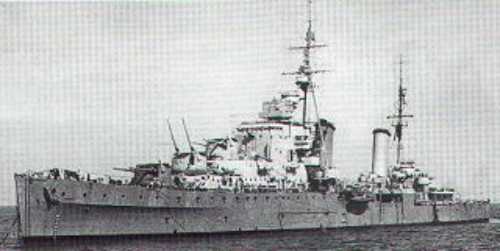
| Navy | The Royal Navy |
| Type | Light cruiser |
| Class | Dido |
| Pennant | 42 |
| Built by | Chatham Dockyard (Chatham, U.K.): Hawthorn Leslie & Co. (Hebburn-on-Tyne, U.K.) |
| Ordered | 16 Jun 1937 |
| Laid down | 21 Oct 1937 |
| Launched | 6 Jun 1939 |
| Commissioned | 30 Jun 1941 |
| End service | |
| History | Decommissioned into Reserve for the last time in November 1954. On 18 July 1959 Euryalus arrived at Blyth to be scrapped by Hughes Bolckow. |
Commands listed for HMS Euryalus (42)
Please note that we're still working on this section
and that we only list Commanding Officers for the duration of the Second World War.
| Commander | From | To | |
| 1 | Capt. Eric Wheeler Bush, DSO, DSC, RN | 31 Mar 1941 | 19 Sep 1943 |
| 2 | Capt. Richard Oliver-Bellasis, RN | 19 Sep 1943 | 25 Nov 1943 |
| 3 | Cdr. Edward Hale, RN | 25 Nov 1943 | 21 Dec 1943 |
| 4 | Cdr. Edward Gerard Le Geyt, RN | 21 Dec 1943 | 15 Jun 1944 |
| 5 | Capt. Richard Oliver-Bellasis, RN | 15 Jun 1944 | 24 Sep 1945 |
You can help improve our commands section
Click here to Submit events/comments/updates for this vessel.
Please use this if you spot mistakes or want to improve this ships page.
Notable events involving Euryalus include:
The page of HMS Euryalus was last updated in May 2022.
16 Jul 1941
HMS Euryalus (Capt. E.W. Bush, DSO, DSC, RN) proceeded from the Chatham Dockyard to Southend. (1)
17 Jul 1941
HMS Euryalus (Capt. E.W. Bush, DSO, DSC, RN) conducted D/G trials on the Tilbury D/G range following which she proceeded to Sheerness. (1)
18 Jul 1941
HMS Euryalus (Capt. E.W. Bush, DSO, DSC, RN) conducted gunnery trials off Sheerness. (1)
19 Jul 1941
HMS Euryalus (Capt. E.W. Bush, DSO, DSC, RN) departed Sheerness for Rosyth. On departure from Sheerness she was escorted by the destroyer HMS Worcester (Lt.Cdr. E.C. Coats, RN) and the escort destroyer HMS Cattistock (Lt. R.M.W. MacFarlan, RN). (1)
20 Jul 1941
HMS Euryalus (Capt. E.W. Bush, DSO, DSC, RN) arrived at Rosyth from Sheerness. In the afternoon, she had carried out trials off the Firth of Forth. (1)
22 Jul 1941
HMS Euryalus (Capt. E.W. Bush, DSO, DSC, RN) conducted trials off the Firth of Forth during which she was escorted by the destroyer HMS Worcester (Lt.Cdr. E.C. Coats, RN) (1)
24 Jul 1941
The light cruiser HMS Euryalus (Capt. E.W. Bush, DSO, DSC, RN) and the escort destroyer HMS Croome (Lt.Cdr. J.D. Hayes, RN) proceeded from Rosyth to Scapa Flow. (1)
29 Jul 1941
HMS Euryalus (Capt. E.W. Bush, DSO, DSC, RN) conducted trials and exercises off Scapa Flow. (1)
30 Jul 1941
HMS Euryalus (Capt. E.W. Bush, DSO, DSC, RN) conducted HA gunnery exercises off Scapa Flow followed by torpedo firing exercises at Scapa Flow. (1)
6 Aug 1941
HMS Euryalus (Capt. E.W. Bush, DSO, DSC, RN) conducted gunnery and torpedo firing exercises at Scapa Flow. These were followed by D/F calibration trials. (2)
8 Aug 1941
In the morning, HMS Euryalus (Capt. E.W. Bush, DSO, DSC, RN), conducted A/S exercises at Scapa Flow with HMS P 31 (Lt. J.B.de B. Kershaw, RN).
In the afternoon HMS Euryalus conducted torpedo firing and gunnery exercises at Scapa Flow. (2)
13 Aug 1941
HMS Euryalus (Capt. E.W. Bush, DSO, DSC, RN) conducted exercises at Scapa Flow. (2)
14 Aug 1941
In the morning HMS Euryalus (Capt. E.W. Bush, DSO, DSC, RN) conducted underway refuelling exercises with the RFA tanker Gold Ranger (3417 GRT, built 1941).
In the afternoon HMS Euryalus conducted AA gunnery exercises off Scapa Flow. (2)
15 Aug 1941
During 15/16 August 1941, HMS Devonshire (Capt. R.D. Oliver, DSC, RN, flying the flag of Rear-Admiral W.F. Wake-Walker CB, OBE, RN) and HMS Euryalus (Capt. E.W. Bush, DSO, DSC, RN) both conducted exercises off Scapa Flow. These included night exercises. (3)
19 Aug 1941
HMS Euryalus (Capt. E.W. Bush, DSO, DSC, RN) conducted gunnery exercises at Scapa Flow. (2)
21 Aug 1941
HMS Euryalus (Capt. E.W. Bush, DSO, DSC, RN) conducted gunnery and RDF exercises off Scapa Flow.
On return to Scapa flow A/S exercises were carried out with HMS P 31 (Lt. J.B.de B. Kershaw, RN). (2)
23 Aug 1941
HMS Euryalus (Capt. E.W. Bush, DSO, DSC, RN) conducted HA gunnery exercises off Scapa Flow. (2)
25 Aug 1941
HMS Prince of Wales (Capt. J.C. Leach, MVO, RN) conducted RD/F exercises to the west of Scapa Flow together with HMS Repulse (Capt. W.G. Tennant, CB, MVO, RN), HMS Euryalus (Capt. E.W. Bush, DSO, DSC, RN) and HMS Lively (Lt.Cdr. W.F.E. Hussey, DSC, RN).
During these exercises Prince of Wales was escorted by HMS Lamerton (Lt.Cdr. H.C. Simms, RN), HMS Puckeridge (Lt. H.B. Acworth, RN) and HMS Badsworth (Lt.Cdr. M.S. Townsend, DSC and Bar, OBE, RN). (4)
27 Aug 1941
Around 0100 hours the light cruiser HMS Euryalus (Capt. E.W. Bush, DSO, DSC, RN) and the escort destroyer HMS Puckeridge (Lt. H.B. Acworth, RN) departed Scapa Flow. They joined the battleship HMS Malaya (Capt. C. Coppinger, DSC, RN), which came from Rosyth, off May Island to escort her to Scapa Flow. The destroyer HMS Punjabi (Cdr. S.A. Buss, MVO, RN) had departed Rosyth HMS Malaya and was also bound for Scapa Flow escorting the battleship on the way. (5)
28 Aug 1941
In the morning HMS Euryalus (Capt. E.W. Bush, DSO, DSC, RN) conducted HA gunnery exercises off Scapa Flow. She then returned to Scapa Flow and then conducted speed trials on the measured mile.
In the afternoon she departed Scapa Flow again for tactical exercises with HMS Berwick (Capt. G.H. Faulkner, DSC, RN) in the Pentland Firth. (6)
30 Aug 1941
In the afternoon, HMS Kenya (Capt. M.M. Denny, CB, RN, flying the flag of Rear-Admiral H.M. Burrough, CB, RN) and HMS Euryalus (Capt. E.W. Bush, DSO, DSC, RN) conducted exercises off Scapa Flow.
HMS Kenya returned to Scapa Flow on completion of the exercises.
HMS Euryalus remained out and conducted night encounter exercises with HMS London (Capt. R.M. Servaes, CBE, RN). On completion of these exercises HMS Euryalus returned to Scapa Flow while HMS London set course for Akureyi, Iceland. (7)
2 Sep 1941
HMS Euryalus (Capt. E.W. Bush, DSO, DSC, RN) conducted a bombardment exercise at Scapa Flow. She then left Scapa Flow for gunnery exercises in the Pentland Firth on completion of which she set course to proceed to Rosyth. (8)
3 Sep 1941
HMS Euryalus (Capt. E.W. Bush, DSO, DSC, RN) arrived at Rosyth where she was immediately docked in No.3 Dock for a propeller change. (8)
6 Sep 1941
HMS Euryalus (Capt. E.W. Bush, DSO, DSC, RN) is undocked. (8)
13 Sep 1941
HMS Euryalus (Capt. E.W. Bush, DSO, DSC, RN) proceeded from Rosyth to Scapa flow. (8)
15 Sep 1941
The battleship HMS Prince of Wales (Capt. J.C. Leach, MVO, RN) and light cruiser HMS Euryalus (Capt. E.W. Bush, DSO, DSC, RN) departed Scapa Flow for Greenock where they arrived the following day. They were escorted by the destroyers HMS Eskimo (Cdr. E.G. Le Geyt, RN) and HMS Castleton (Cdr. (Retd.) F.H.E. Skyrme, RN). Later HMS Laforey (Capt. R.M.J. Hutton, DSO, RN) also joined the screen. (9)
17 Sep 1941
Convoy WS 11X, Troop convoy from Liverpool / Clyde to Gibraltar.
On 16 September 1941 the ships Ajax (7797 GRT, built 1931), City of Lincoln (8039 GRT, built 1938) departed from Liverpool to make rendes-vous the following day off Orsay Island with the following ships that had departed the Clyde on the 17th; City of Calcutta (8063 GRT, built 1940), Clan Ferguson (7347 GRT, built 1938), Clan Macdonald (9653 GRT, built 1939), Dunedin Star (11168 GRT, built 1936), Imperial Star (12427 GRT, built 1934), Rowallan Castle (7801 GRT, built 1939), HMS Breconshire (9776 GRT, built 1939) (Capt.(ret.) C.A.G. Hutchison, RN), HMS Princess Beatrix (4136 GRT, built 1939) (Cdr.(ret.) T.B. Brunton, RN), HMS Queen Emma (4136 GRT, built 1939) (Capt.(ret.) G.L.D. Gibbs, DSO, RN), HMS Royal Scotsman (3288 GRT, built 1936) (T/Cdr. J.W. Peters, RNR), HMS Ulster Monarch (3791 GRT, built 1929) (T/Cdr. J. Wilson, RNR) and Leinster (4302 GRT, built 1937).
Most of the ships of this convoy were to form the convoy for operation Halberd from Gibraltar to Malta. The following ships made only the passage to Gibraltar with convoy WS 11X; HMS Princess Beatrix, HMS Queen Emma, HMS Royal Scotsman, HMS Ulster Monarch and Leinster.
Escort for this convoy was provided by; battleship HMS Prince of Wales (Capt. J.C. Leach, MVO, RN), light cruisers HMS Kenya (Capt. M.M. Denny, CB, RN), HMS Euryalus (Capt. E.W. Bush, DSO, DSC, RN), destroyers HMS Laforey (Capt. R.M.J. Hutton, DSO, RN), HMS Lightning (Cdr. R.G. Stewart, RN), HMS Oribi (Lt.Cdr. J.E.H. McBeath, DSO, RN), HMS Havelock (Cdr. E.H. Thomas, DSC, RN), HMS Harvester (Lt.Cdr. M. Thornton, DSC, RN), HMS Whitehall (Lt.Cdr. A.B. Russell, RN), HMS Witch (Lt.Cdr. C.H. Holmes, RN), HMS Blankney (Lt.Cdr. P.F. Powlett, DSC, RN), ORP Piorun (Cdr. E.J.S. Plawski), ORP Garland (Lt.Cdr. K.F. Namiesniowski, ORP) and HrMs Isaac Sweers (Cdr. J. Houtsmuller, RNethN).
In the evening of the 19th (2115 hours, B.S.T.) the destroyers HMS Havelock and HMS Harvester were detached from the convoy to escort the liner (troopship) Stratheden (23722 GRT, built 1937) all the way to Halifax. Until that moment the Stratheden had also been part of convoy WS 11X. The position in which these ships were detached was 50°57'N, 24°55'E.
On 21 September the convoy was joined by three destroyers coming from Gibraltar; HMS Zulu (Cdr. H.R. Graham, DSO, RN), HMS Lance (Lt.Cdr. R.W.F. Northcott, RN), HMS Gurkha (Cdr. C.N. Lentaigne, RN). These destroyers had sailed from Gibraltar on the 18th.
Also sailed from Gibraltar on the 18th was the aircraft carrier HMS Furious (Capt. A.G. Talbot, DSO, RN) escorted the destroyers HMS Foresight (Cdr. J.S.C. Salter, RN), HMS Forester (Lt.Cdr. E.B. Tancock, DSC and Bar, RN), HMS Fury (Lt.Cdr. T.C. Robinson, RN) and HMS Legion (Cdr. R.F. Jessel, RN) to provide cover for the convoy. Following this HMS Furious was then to proceed to Bermuda and finally to the US for a refit. The destroyers then made rendes-vous with the British battleship HMS Rodney (Capt. J.W. Rivett-Carnac, DSC, RN) coming from a refit in the United States. They then provided cover for the convoy joining it around 1200/21. Shortly after Rodney had joined the convoy HMS Prince of Wales left the convoy for Gibraltar escorted by HMS Laforey, HMS Lightning and HMS Oribi. They arrived at Gibraltar to fuel late on the 23th. They departed Gibraltar around 0400/24 and rejoined the convoy west of Gibraltar around 1200/24. Before HMS Prince of Wales rejoined the convoy HMS Rodney had departed the convoy and also headed for Gibraltar escorted by the destroyers ORP Piorun, ORP Garland and HrMs Isaac Sweers. HMS Rodney and her escorting destroyers arrived at Gibraltar at 0900/24. In the evening of the 24th, HMS Nelson sailed westwards escorted by the same destroyers that had brought HMS Rodney in giving the German and Italian spies across the Bay in Spanish Algeciras the impression that HMS Rodney had just relieved HMS Nelson as flagship of Force H. This diversion seemed to have had the desired effect. During the night HMS Nelson and her escorting destroyers reversed course and passed the Straits of Gibraltar to the eastward unseen after dark.
On the 20th the cruiser HMS Sheffield (Capt. A.W. Clarke, RN) and the destroyer HMS Lively (Lt.Cdr. W.F.E. Hussey, DSC, RN) also departed Gibraltar to provide cover for the convoy.
On the 21th the cruisers HMS Kenya and HMS Euryalus departed the convoy for Gibraltar where they both arrived at 2300/22. After fuelling they departed before daylight on the 23th to rejoin the convoy to the west of Gibraltar. At Gibraltar Rear-Admiral H.M. Burrough, CB, RN, had hoised his flag on board HMS Kenya.
On the 23th the destroyer HMS Cossack (Capt. E.L. Berthon, DSC, RN) and escort destroyers HMS Heythrop (Lt.Cdr R.S. Stafford, RN) and HMS Farndale (Cdr. S.H. Carlill, RN) bolstered the escort in the approaches to Gibraltar joining the convoy around 0800/24. Also on the 24th light cruiser HMS Edinburgh (Capt. H.W. Faulkner, RN, flying the flag of Rear-Admiral E.N. Syfret, RN) departed Gibraltar at 1230 hours to join the convoy.
Also on the 24th two groups of destroyers arrived at Gibraltar to refuel. The destroyers HMS Foresight, HMS Forester, HMS Gurkha and HMS Lance arrived at 1600 hours. The destroyers HMS Legion, HMS Lively and HMS Zulu arrived at 1800 hours.
See 25 September 1941 'Convoy operation Halberd' for the continuation of the events..
25 Sep 1941
Operation Halberd Supply convoy to Malta.
Continuation of the events of 17 September 1941, convoy WS 11X.
Situation at 1800 hours on 24 September 1941.
At 1800B/24 the situation was as follows; Convoy WS 11X was to the west of Gibraltar escorted at that moment by the British battleship HMS Prince of Wales (Capt. J.C. Leach, MVO, RN, flying the flag of Vice-Admiral A.T.B. Curteis, CB, RN), the British light cruisers HMS Edinburgh (Capt. H.W. Faulkner, RN, flying the flag of Rear-Admiral E.N. Syfret, RN), HMS Kenya (Capt. M.M. Denny, CB, RN), HMS Euryalus (Capt. E.W. Bush, DSO, DSC, RN), HMS Sheffield (Capt. A.W. Clarke, RN), the British destroyers HMS Laforey (Capt. R.M.J. Hutton, DSO, RN), HMS Lightning (Cdr. R.G. Stewart, RN), HMS Oribi (Lt.Cdr. J.E.H. McBeath, DSO, RN), HMS Cossack (Capt. E.L. Berthon, DSC, RN), HMS Fury (Lt.Cdr. T.C. Robinson, RN), the British escort destroyers HMS Farndale (Cdr. S.H. Carlill, RN) and HMS Heythrop (Lt.Cdr R.S. Stafford, RN).
At Gibraltar were the British battleships HMS Nelson (Capt. T.H. Troubridge, RN, flying the flag of Vice-Admiral J.F. Somerville, KCB, DSO, RN), HMS Rodney (Capt. J.W. Rivett-Carnac, DSC, RN), the British aircraft carrier HMS Ark Royal (Capt. L.E.H. Maund, RN), the British light cruiser HMS Hermione (Capt. G.N. Oliver, RN), the British destroyers HMS Duncan (Lt.Cdr. A.N. Rowell, RN with Capt. D.(13) Capt. H.W. Williams, RN, on board), HMS Foresight (Cdr. J.S.C. Salter, RN), HMS Forester (Lt.Cdr. E.B. Tancock, DSC and Bar, RN), HMS Lively (Lt.Cdr. W.F.E. Hussey, DSC, RN), HMS Legion (Cdr. R.F. Jessel, RN), the Polish destroyers ORP Piorun (Kmdr.por. (Cdr.) E.J.S. Plawski), ORP Garland (Kmdr.por. (Cdr.) K.F. Namiesniowski) and the Dutch destroyer HrMs Isaac Sweers (Cdr. J. Houtsmuller, RNethN). Also at Gibraltar was the RFA oiler Brown Ranger (3417 GRT, built 1941) and the British corvette HMS Fleur de Lys (Lt.(Retd.) A. Collins, RNR).
Approaching Gibraltar from the west were the British destroyers HMS Zulu (Cdr. H.R. Graham, DSO, RN), HMS Gurkha (Cdr. C.N. Lentaigne, RN) and HMS Lance (Lt.Cdr. R.W.F. Northcott, RN).
Movement of forces on the night of 24/25 September.
At 1815 hours, HMS Nelson departed Gibraltar and after passing farewell messages to HMS Rodney she proceeded westwards screened by HrMs Isaac Sweers, ORP Piorun and ORP Garland. These ships reversed course at 2130 hours and proceeded eastwards.
Shortly after HMS Nelson and her three escorting destroyers had departed Gibraltar harbour HMS Gurkha, HMS Zulu and HMS Lance, wich had been sent ahead to fuel aft Gibraltar, entered harbour.
At 2030B/24 RFA Brown Ranger and her escort, corvette HMS Fleur de Lys departed Gibraltar to take up a position eastwards to fuel the destroyers that were to protect the Halberd convoy.
At 2300B/24 HMS Rodney, HMS Ark Royal, HMS Hermione escorted by HMS Duncan, HMS Foresight, HMS Forester, HMS Lively, HMS Zulu, HMS Gurkha, HMS Legion and HMS Lance departed from Gibraltar eastwards to simulate a normal sortie by 'Force H' and to rendezvous with the convoy to the eastward of Gibraltar at 0800B/25.
'Force Z', consisting of, HMS Princess Beatrix (4136 GRT, built 1939) (Cdr.(ret.) T.B. Brunton, RN), HMS Queen Emma (4136 GRT, built 1939) (Capt.(ret.) G.L.D. Gibbs, DSO, RN), HMS Royal Scotsman (3288 GRT, built 1936) (T/Cdr. J.W. Peters, RNR) (whose ultimate destination was Freetown), HMS Ulster Monarch (3791 GRT, built 1929) (T/Cdr. J. Wilson, RNR) and Leinster (4302 GRT, built 1937) escorted by the British corvettes HMS Jonquil (Lt.Cdr. R.E.H. Partington, RD, RNR), HMS Spiraea (T/Lt. L.C. Head, RNVR) and HMS Azalea (Lt. G.C. Geddes, RNR) had been stationed behind the main convoy at dusk was ordered to proceed into Gibraltar Bay. It was hoped that the presence of these ships in the Bay would lay suspicion in the event of the convoy having been sighted and reported while passing through the Straits.
The remainder of convoy WS 11X, made up of transport ships Ajax (7797 GRT, built 1931), City of Calcutta (8063 GRT, built 1940), City of Lincoln (8039 GRT, built 1938), Clan Ferguson (7347 GRT, built 1938), Clan Macdonald (9653 GRT, built 1939), Dunedin Star (11168 GRT, built 1936), Imperial Star (12427 GRT, built 1934), Rowallan Castle (7801 GRT, built 1939) and HMS Breconshire (9776 GRT, built 1939) (Capt.(ret.) C.A.G. Hutchison, RN), with the escort, organised in two groups one mile apart, and led by the Vice Admiral, 2nd in Command, Home Fleet in HMS Prince of Wales, and the Rear Admiral commanding 18th Cruiser Squadron in HMS Edinburgh respectively, passed south of Europa Point at 0130B/25. This disposition was adopted to reduce the frontage of the convoy during its passage through the Straits.
At 0730B/25 HMS Rodney, HMS Ark Royal and their screening destroyers were sighted from HMS Nelson at a range of about 10 nautical miles. Half an hour later the convoy and its escort was sighted.
The escorting force was now reorganised into two groups; Group 1: HMS Nelson, HMS Ark Royal, HMS Hermione, HMS Cossack, HMS Zulu, HMS Foresight, HMS Forester, HMS Laforey and HMS Lightning.
Group 2: HMS Prince of Wales, HMS Rodney, HMS Kenya, HMS Edinburgh, HMS Sheffield, HMS Euryalus, HMS Duncan, HMS Gurkha, HMS Legion, HMS Lance, HMS Lively, HMS Oribi, HrMs Iscaac Sweers, ORP Piorun, ORP Garland, HMS Fury, HMS Farndale and HMS Heytrop and the entire convoy.
Events of group 1 and group 2 during 25 September
At 1700B/25 (time zone -2) HMS Duncan obtained an Asdic contact in position 36°36'N, 01°58'W and attacked with a pattern of four depth charges (more were intended but the starboard thrower failed to fire. Another depth charge attack was carried out by HMS Grukha at 1716 hours. She dropped a pattern of fourteen depth charges. HMS Duncan attacked again at 1750 hours with a second depth charge pattern. Both destroyers then proceeded to rejoin the screen at 1758 hours. Both ships sighted bubbles rising to the surface possibly from a damaged submarine.
Meanwhile on the 25th all destroyers of group 2 were fuelled by RFA Brown Ranger but not without delay as Brown Rangers speed was slower then anticipated and she was therefore further to the west then anticipated. This resulted in that not all destroyers were back in position at dusk. HMS Oribi was unable to find group 2 during the night and joined up with group 1 until daylight of the 26th when she rejoined group 1.
Events of group 1 and group 2 during 26 September
At 0932B/26 lookouts on HMS Nelson spotted an Italian aircraft shadowing group 1 at a range of 10 miles. The aircraft was flying very low and had not been picked up by RDF. The fighters from HMS Ark Royal that were in the air failed to intercept this aircraft due to failure of the R/T equipment in the flight leaders aircraft. An enemy report from the aircraft was intercepted at 0935 hours. A re-broadcast of this signal by an Italian shore station was picked up 20 minutes later.
At 1300 hours Group 1 reversed course to close the distance to group 2 and HMS Hermione was stationed astern of HMS Ark Royal for RDF purposes and to give additional AA protection to the carrier.
At 1537 hours two aircraft were sighted low down to the eastward by HMS Zulu, HMS Nelson and HMS Hermione. These aircraft were at first thought to be Hudsons but turned out to be enemy when a signal they made was intercepted. By now it was too late to vector fighters towards them.
Movements of group 1 and group 2 and enemy air attacks during 27 September.
Around 0730B/27 group 1 and 2 joined. HMS Ark Royal was now protected by HMS Euryalus (ahead) and HMS Hermione (astern) as close escort. Four Fulmar fighters were flown off at 0800 hours. This number was increased to ten at 1000 hours and twelve at 1100 hours and finally to sixteen at 1200 hours when it was though most likely air attacks might develop due to the fact the the forcehad been shadowed and reported by enemy aircraft from at least 0810 hours.
At 1255 hours RDF picked up enemy aircraft formations closing in on the convoy, one from the north and one from the east, both 30 miles distant. Position was 37°48'N, 08°50'E. Fighters were vertored towards these formations and one enemy aircraft was shot down at 1300 hours. Six enemy torpedo bombers approached from the port bow and beam of the convoy. Two were shot down at 1302 hours, most likely by AA fire from HMS Rodney and HMS Prince of Wales. An unknown number of torpedoes were dropped by the other aircraft. No hits were obtained but HMS Lance was narrowly missed by two of these torpedoes. HrMs Isaac Sweers was missed with one torpedo by 30 yards and HMS Rodney by one torpedo by 100 yards. One of the attacking aircraft was shot down by the destroyers while another torpedo bomber meanwhile was shot down by the Fulmars from the Ark Royal. Finally at 1310 hours a Fulmar was accidentaly shot down by HMS Prince of Wales. The first attack was was now over.
At 1327B/27 RDF reported a group of aircraft splitting into two formations and approaching from the east. Destroyers on the starboard wing of the screen opened fire at 1329 hours when six or seven torpedo bombers (BR 20's) were seen approaching very low from the starboard bow and beam. Position was 37°49'N, 08°58'E.
Three of these aircraft pressed on through the barrage put up by the destroyers and made a most determined attack on HMS Nelson who was swinging to starboard to comb the tracks. On aircraft dropped its torpedo out 450 yards 20° on Nelson's starboard bow passing over the ship at a height of 200 feet. This aircraft was almost certainly shot down astern of HMS Nelson by HMS Sheffield and HMS Prince of Wales. The track of the torpedo was not seen until about 150 yards ahead of the ship and no avoiding action was possible and the torpedo hit HMS Nelson on the port bow 10 feet below the waterline. The speed of HMS Nelson was reduced to 18 knots.
The second aircraft of this formation missed HMS Nelson with its torpedo by about 100 yards while the third aircraft was claimed to have been shot down by HMS Laforey. It's W/T operator, the only one of the crew alive but wounded, was picked up by HMS Forester.
Three or four aircraft from this group attacked from the starboard quarted but without result.
One torpedo bomber was shot down by the Fulmars at 1336 hours. One of the Fulmars was now shot down by mistake by pompom fire from HMS Rodney but the crew was rescued by HMS Duncan.
At 1345 hours the third attack started. RDF reported a group coming in from the south-west. Ten or eleven S.79's split into two groups and were seen coming in low over the water and were taken under fire from the escorting ships on the starboard side of the convoy. Seven or eight of the attackers then retired to the south-west and disappeared but three others tried to work round the starboard bow of the convoy which then turned ay 60° to port. The three attackers were then driven off by gunfire from the destroyer screen and dropped their torpedoes at long range but one torpedo narrowly missed HMS Lightning. One of these aircraft was shot down by a Fulmar as it retired. Position of this attack was 37°50'N, 09°06'E.
At 1354 hours three of the aircraft that had initialy turned away returned from astern. Two of these retired again on being fired at but the third pressed on to attack HMS Ark Royal but it was shot down by AA fire from that ship and HMS Nelson before it had dropped it's torpedo.
At 1358 hours one aircraft, seen right ahead of HMS Nelson, dropped a torpedo outside the screen. HMS Cossack was able to avoid this torpedo by the HE of this torpedo being picked up by her Asdic set.
Attempt to intercept the Italian battlefleet
While the third air attack was still in progress at 1404 hours an emergency report was received from an aircraft operating from Malta that it had sighted two Italian battleships and eight destroyers in position 38°20'N, 10°40'E steering a course of 190° at 20 knots at 1340 hours. The position of HMS Nelson when this report was received was 37°46'N, 09°04'E so the enemy was only 70-75 miles away. At this time HMS Nelson, with it's gun armament unimpaired was thought to be capable of 18 knots or more. Admiral Somerville decided to proceed towards the enemy at best speed with HMS Nelson, HMS Prince of Wales, HMS Rodney and the destroyers HMS Duncan, HMS Gurkha, HMS Lance, HMS Lively, HrMs Isaac Sweers and ORP Garland, leaving HMS Kenya, HMS Edinburgh, HMS Sheffield and ten destroyers with the convoy. HMS Euryalus, HMS Hermione and the destoyers HMS Piorun and HMS Legion remained with the Ark Royal.
It was also decided to fly off two Swordfish aircraft from the Ark Royal to take over shadowing duties from the aircraft operating out of Malta and to arm and fly off air striking force as soon as possible.
Ark Royal launched the two Swordfish at 1448 hours. It was intended to have launched them earlier but the launch was delayed due to the main armamant of HMS Ark Royal being in action and the recovery of two Fulmar fighters which were short on fuel.
In the meantime, at 1425 hours, the aircraft that was in contact with the Italians now also reported four cruisers and eight destroyers 15 nautical miles west-south-west of the enemy battlefleet. They were steering the same course and speed.
Meanwhile, at 1417 hours, the battleships had been ordered to form on HMS Nelson who had increased speed and proceeded ahead of the convoy. However at 1433 hours it became necessary for HMS Nelson to reduce speed to avoid further flooding due to the damage sustained. The Vice Admiral, 2nd in Command, Home Fleet in HMS Prince of Wales was now ordered to proceed with his flagship, HMS Rodney, HMS Edinburgh, HMS Sheffield and six destroyers to close the enemy at best speed. HMS Nelson meanwhile took station astern of the convoy.
While these instructions were carried out a report was received that the enemy had reversed course to 360°. This was followed by a further report that the enemy was steering 060°. Also a report was received that the battleships were of the Littorio class and not Cavour's as was previously believed. It was now clear that the enemy tried to avoid contact. It was still hoped that a striking force from HMS Ark Royal would be able to inflict damage to the enemy and reduced his speed allowing our battleships to overtake him before dark.
At 1530 hours a Fulmar fighter which was short of fuel force landed on the water astern of the Ark Royal. The crew was picked up by ORP Piorun.
At 1540 hours, HMS Ark Royal launched her stiking force of twelve Swordfish and four Fulmars. These aircraft did not find the enemy force and all aircraft returned to HMS Ark Royal around 1900 hours.
Between 1620 and 1645 hours, Fulmars from the CAP drove off an air attack threatening from the port side of the convoy. Later a shadowing enemy aircraft was shot down by Fulmars.
At 1658 hours, the Vice Admiral, second in Command Home Fleet, was ordered to reverse course and rejoin the convoy which was done at 1851 hours. No further reports of the enemy had been received for almost two hours and even if the striking force from HMS Ark Royal was able to inflict damage on the enemy these could not be intercepted before dark.
Detachment of Force X and the convoy.
At 1855 hours, on reaching the Skerki Channel, the escort of the convoy was split up into two forces, Force A, made up of HMS Nelson, HMS Prince of Wales, HMS Rodney, HMS Ark Royal, HMS Duncan, HMS Gurkha, HMS Legion, HMS Lively, HMS Lance, HMS Fury, HrMs Isaac Sweers, ORP Piorun and ORP Garland split off from the convoy while Force X, made up of HMS Kenya, HMS Edinburg, HMS Sheffield, HMS Hermione, HMS Euryalus, HMS Cossack, HMS Zulu, HMS Foresight, HMS Forester, HMS Laforey, HMS Lightning, HMS Oribi, HMS Farndale and HMS Heythrop remained with the convoy.
Between 1915 and 1930 hours enemy aircraft twice approached the convoy but turned away after fire had been opened on them. They were probably CR.42 fighters.
Night T/B attack on Force X and the convoy and loss of the Imperial Star.
Between 2000 and 2040 hours four torpedo bomber attacks were made on the convoy and Force X from the port beam, two or three aircraft taking part in each attack. The first two attacks had no result for the Italians.
During the third attack the two rear ships in the port column of the convoy collided with each other, these were the Rowallan Castle and the City of Calcutta. No serious damage was sustained and both were able to proceed on their way.
During the fourth attack, at 2032 hours, in position 37°31'N, 10°46'E the Imperial Star was struck by a torpedo on her port side aft. HMS Oribi was also attacked and narrowly missed by a torpedo four minutes later. She was able to shoot down the aircraft that had dropped this torpedo with her pompom and oerlikons.
When the Imperial Star was torpedoed it is probable that the explosion blew away both propellers and her rudder. In addition no.6 hold and the after engine room were both flooded.
HMS Heythrop, the rear ship of the port screen, proceeded alongside, but did not attempt to take Imperial Star in tow as she did not consider she was a suitable vessel to do so.
About 2045 hours HMS Oribi was ordered by HMS Euryalus to go to the assistance of the Imperial Star. When Oribi closed Heythrop was already standing by, and while Heythtop took off the passengers of the Imperial Star, HMS Oribi proceeded alongside to receive a report of the damage. It was decided to attempt to tow her to Malta.
For two hours the most determined attemps were made by HMS Oribi to tow the Imperial Star to Malta and although a speed of 8 knots was obtained nothing could be done to prevent her steering in circles. At is thought that her damaged stern was now acting as rudder.
Eventually, at 0120B/28, HMS Oribi found herself being dragged stern first by her tow sheering off and she was forced to slip the tow. Oribi went alongside to consult again and it was reluctantly decided that there was no other choice then to scuttle the ship. Three depth charges were placed lashed together abreast a bulkhead and these were fired by a safety fuse.
HMS Oribi cast off 0340B/28 and the depth charges were fired eleven minutes later, starting a large fire aft. As this did not spread quickly, Oribi shelled Imperial Star with 4.7" S.A.P. shells. Oribi finally left her at 0452 hours. Imperial Star was by that time heavily on fire fore and aft and listing badly. Aircraft from Malta could not find the wreck of the Imperial Star so there is no doubt that she sank.
HMS Oribi then made off from the scene along the convoy route at 32 knots and came with them near Malta 1215B/28 having passed unmolested within 7 nautical miles from the Sicilian coast in daylight.
Passage of the convoy and Force X through the narrows.
In the meantime the convoy and Force X had proceeded through the narrows along the south coast of Sicily.
In the meantime. at 2030B/27, HMS Hermione had departed the convoy to carry out a bombardment of Pantellaria harbour. Having completed the bombardment HMS Hermione rejoined Force X at 0615B/28. At daylight HMS Farndale and HMS Heythrop were detached to fuel at Malta.
Although several formations of enemy aircraft were detected between dawn and the arrival of the convoy at Malta, the excellent protection given by shore based fighters from Malta prevented any attack from developing.
At 0800B/28 a report was received that no enemy surface forces were reported near the convoy. The cruisers HMS Kenya, HMS Sheffield, HMS Euryalus and HMS Hermione then proceeded ahead to Malta to fuel where they arrived at 1130 hours. The remainder of Force X and the entire convoy, with the exception of the Imperial Star, arrived later in the afternoon.
Movements of Force A during 28 September.
While Force X and the convoy continued on to Malta, Force A proceeded to the west at 14 knots, which was the best speed of HMS Nelson at that time.
At 0725B/28 HMS Ark Royal flew off one A/S patrol and three fighters. At 0812 hours one enemy shadower was seen but it escaped into a cloud.
At 1025 hours HMS Nelson sighted a Cant. 506 aircraft very low down and fighters were vectored in. After a chase to the south-east this aircraft was shot down near Cape de Fer, Algeria.
Shadowers were again reported at 1640 hours and again one hour later but due to a failure of the R/T transmitter in Ark Royal it was not possible to vector fighters in time to intercept. An enemy report made by Italian aircraft was intercepted at 1720 hours.
At 1942B/28 one of the destroyers of the screen, HMS Duncan, obtained an Asdic contact in position 37°30'N, 03°45'E. She carried out two depth charge attacks but with no apparent result. HMS Legion closed to co-operate but did not gain contact. Both ships left the area at 2012 hours to rejoin the screen.
At 2020 hours speed was reduced to 12 knots to reduce the strain on bulkheads and decks of HMS Nelson. At this time Nelson was about 8 feet down by the bows and it was estimated that 3500 tons of water had entered the ship.
At 2100B/28, HMS Prince of Wales, HMS Rodney, HMS Ark Royal, HMS Gurkha, HMS Lance, HMS Legion, HMS Lively, HMS Fury and HrMs Isaac Sweers were detached to proceed to the eastward and rendezvous with Force X. HMS Nelson, escorted by HMS Duncan, ORP Piorun and ORP Garland, continued on to Gibraltar.
At 0555B/29, in position 37°30'N, 06°25'E, HMS Prince of Wales obtained an RDF surface echo ahead, and an emergency turn of 40° to port was carried out with all ships at 0609 hours. Three minutes after this turn HMS Gurkha sighted a torpedo track approaching. It was too late to alter course to avoid. A second torpedo track followed a few seconds later. Both torpedoes appeared to pass underneath the ship. HMS Gurkha then turned to port in the direction from which the torpedoes had approached and HrMs Isaac Sweers also joined to hunt the submarine. No A/S contacts were obtained and no depth charges were dropped. HMS Gurkha and HrMs Isaac Sweers rejoined the screen at 0700B/29. The attacker was the Italian submarine Diaspro which managed to escape unharmed.
At 0810B/29 HMS Gurkha obtained an A/S contact in position 37°26'N, 07°14'E. At 0815 hours a pattern of fourteen depth charges was dropped. Six minutes later a heavy underwater explosion was heard. At 0841 hours HMS Gurkha was ordered to rejoin screen and the hunt was abandoned.
Movements of Force X during 28/29 September on the return trip from Malta.
In the meantime the ships that are part of Force X had all fuelled at Malta and at 1500B/28 the escort destroyers HMS Farndale and HMS Heythrop were sailed followed at 1615 hours by HMS Kenya, HMS Edinburgh and HMS Oribi. The remainder of Force X sailed at 1830 hours. HMS Farndale and HMS Heythrop joined Force A at 0835B/29. The remainder of Force X joined Force A at 1030B/29.
Movements of HMS Nelson and passage to Gibraltar.
In the meantime HMS Nelson and her three escorting destroyers were still proceeding to the west. They were joined by aircraft to provide additional A/S protection from 0730B/29 onwards.
At 1110B/29, ORP Piorun obtained a doubtful A/S contact and dropped one depth charge.
At 1909B/29, HMS Duncan also obtained A/S contact and dropped one depth charge.
At 1945B/29 the A/S screen was reinforced by the destroyer HMS Rockingham (Lt.Cdr. A.H.T. Johns, RN) coming from Gibraltar. Later in the evening four corvettes also joined for additional A/S protection of the damaged battleship, HMS Samphire (Lt.Cdr. F.T. Renny, DSC, RNR) joined at 2120B/29, HMS Jonquil (Lt.Cdr. R.E.H. Partington, RD, RNR) at 2140B/29, HMS Fleur de Lys at 2150B/29 and finally HMS Arbutus (T/Lt. A.L.W. Warren, DSC, RNR) at 2340B/29. Nelson's screen now consisted of four destroyers and four corvettes.
At 0130B/30 HMS Samphire and HMS Arbutus obtained an A/S contact and dropped depth charges without result, the contact was probably non-sub.
At 1200B/30 HMS Nelson entered Gibraltar Harbour.
Movements of Force A and Force X as of 1030 hours on 29 September.
Meanwhile after all ships of Force X had joined up with force A at 1030B/29 course was shaped to the westward, keeping 40 nautical miles clear of the African coast.
At 1645B/29, in position 37°26'N, 04°37'E, HMS Lively, sighted an object resembling a ship's lifeboat with mast at a range of 1000 yards. This was soon identified as the conning tower and periscope of a submarine momentarily breaking surface. Two torpedo tracks were sighted shortly afterwards. Lively immediately attacked with a pattern of fourteen depth charges at 1650 hours. HMS Legion, which was next to Lively in the destroyer screen, had already dropped a pattern of five depth charges about a minute and a half earlier. HMS Legion then joined up with HMS Lively to hunt this submarine.
At 1700 hours HMS Lively obtained a definate A/S contact and attacked with another pattern of fourteen depth charges five minutes later. After having dropped this pattern contact was regained at 1715 hours. Contact was however soon lost at and not regained. The hunt was abandoned at 1745 hours.
At 1930B/29, HMS Prince of Wales, HMS Kenya, HMS Sheffield, HMS Laforey, HMS Lightning, HMS Oribi, HMS Foresight, HMS Forester and HMS Fury parted company with the rest of the force and proceeded ahead to arrive at Gibraltar p.m. 30 September 1941. They arrived at Gibraltar at 1800B/30.
At 0928B/30, in position 37°10'N, 00°56'E, HMS Gurkha, obtained Asdic contact wich was confirmed as a submarine. She immediately attacked and fired a pattern if fourteen depth charges at 0935 hours. A black circular buoy with electric cable attached to it came to the surface after this attack. At 0945 hours a loud underwater explosion was heard and felt and oil started to come to the surface. Gurkha was unable to gain contact on the submarine from now on. HMS Legion who was by now assisting Gurkha in the hunt obtained contact and attacked with a fourteen depth charge pattern at 0955 hours. A second fourteen depth charge pattern was fired at 1009 hours. During Legion's second attack wreckage and oil came to the surface. Among the wreckage picked up was an Italian dictionary, a mattess, a pillow, numerous pieces of wood, some with bright screws and a piece of human scalp attached to a piece of wood by a splinter of metal. The interiors of the dictionary, the mattress and the pillow were dry. There was now no doubt that an Italian submarine was sunk by HMS Gurkha and HMS Legion.
All ships in this force entered Gibraltar harbour between 0700 and 0900 hours on 1 October.
Convoy MG 2, passage of three merchant vessels from Malta to Gibraltar.
At noon on the 26th the first out of three empty transports, the Melbourne Star (11076 GRT, built 1936), departed Malta for Gibraltar. At 1030B/27 the other two ships Port Chalmers (8535 GRT, built 1933) and City of Pretoria (8049 GRT, built 1937). These last two ships were escorted by the corvette HMS Gloxinia (Lt.Cdr. A.J.C. Pomeroy, RNVR) until 1930B/27. After an uneventful passage the Melbourne Star arrived at Gibraltar at 0700B/29. The Port Chalmers and City of Pretoria were spotted and reported by Italian aircraft at 1200B/27, shortly after leaving Malta. No enemy surface craft were seen until 2320B/27 when it was believed that an E-boat was sighted by the Port Chalmers which was following in the wake of the City of Pretoria. The Port Chalmers opened fire on the E-boats bow wave with it's 4" gun. The enemy then returned fire with a machine gun. After six rounds of 4" the enemy crossed the stern of the Port Chalmers and was not seen again. The City of Pretoria had not seen the enemy at all. The action had taken place about 15 nautical miles south-south-west of Pantelleria.
At 0535B/28 the Commodore of the convoy ordered he Port Chalmers to part company. Port Chalmers then proceeded at full speed, wearing French colours.
At 0915B/28 an Italian Cant. 506 seaplane approached from the direction of the French north African coast and circled the City of Pretoria. This aircraft then made off to the westward and gave the Port Chalmers the same attention. Both ships were wearing French colours and had taken care to keep all service personnel out of sight. Both ships were fully ready for action, but did not open fire as the aircraft took no offensive action.
At 1015B/28 the City of Pretoria was circled several times by a large three-engine seaplane, with distinct French markings, which approached from the direction of Bizerta.
At 1145B/28 the City of Pretoria sighted a twin-engined Italian seaplane stopped on the water, five nautical miles to the north. She lost sight of this aircraft at 1215 hours.
The Port Chalmers was circled by an Italian aircraft at 1555B/28. The aircraft did not attack.
At 1725B/28 the City of Pretoria was attacked by three Italian torpedo bombers. As the aircraft approached with obviously hostile intentions the British colours were hoised and fire was opened as soon as the leader came in range. By skilful handling all three torpedoes were avoided. A submarine periscope was then reported on the starboard quarter by two independent lookouts. Three smoke floats and a depth charge set to 150 feet were dropped and under the cover of the smoke the City of Pretoria turned away.
When the City of Pretoria was approaching Cape de Gata at 0200B/30 an unidentified vessel, possibly a submarine, was seen to be following. Two or three rapid shots, followed by a dull explosion, were heard. City of Pretoria made smoke and dropped smoke floats and then made close in Almeira Bay, into territorial waters, thus shaking off her pursuer.
The Port Chalmers arrived at Gibraltar at 0900B/30. City of Pretoria followed during the afternoon. (10)
2 Oct 1941
The light cruiser HMS Euryalus (Capt. E.W. Bush, DSO, DSC, RN) and the escort destroyers HMS Farndale (Cdr. S.H. Carlill, RN) and HMS Heythrop (Lt.Cdr R.S. Stafford, RN) departed Gibraltar for Freetown. They were escorting the British transports Port Chalmers (8535 GRT, built 1933) and Melbourne Star (11076 GRT, built 1936) which were to proceed to Buenas Aires, Argentina.
At 0930A/7, the transport parted company.
HMS Euryalus, HMS Farndale and HMS Heythrop arrived at Freetown in the morning of October, 8th. (11)
9 Oct 1941
The light cruiser HMS Euryalus (Capt. E.W. Bush, DSO, DSC, RN) and the escort destroyers HMS Farndale (Cdr. S.H. Carlill, RN) and HMS Heythrop (Lt.Cdr R.S. Stafford, RN) departed Freetown for Simonstown, South Africa via St. Helena where they were to top off with fuel. (12)
14 Oct 1941
The light cruiser HMS Euryalus (Capt. E.W. Bush, DSO, DSC, RN) and the escort destroyers HMS Farndale (Cdr. S.H. Carlill, RN) and HMS Heythrop (Lt.Cdr R.S. Stafford, RN) arrived at St. Helena to fuel. They departed for Simonstown later the same day. (12)
19 Oct 1941
The light cruiser HMS Euryalus (Capt. E.W. Bush, DSO, DSC, RN) and the escort destroyers HMS Farndale (Cdr. S.H. Carlill, RN) and HMS Heythrop (Lt.Cdr R.S. Stafford, RN) arrived at Simonstown. (13)
28 Oct 1941
HMS Euryalus (Capt. E.W. Bush, DSO, DSC, RN) departed Simonstown for Mombasa. (13)
3 Nov 1941
HMS Euryalus (Capt. E.W. Bush, DSO, DSC, RN) arrived at Mombasa. After fuelling she departed for Aden later the same day. (14)
7 Nov 1941
HMS Euryalus (Capt. E.W. Bush, DSO, DSC, RN) arrived at Aden. After fuelling she departed for Suez later the same day. (14)
10 Nov 1941
HMS Euryalus (Capt. E.W. Bush, DSO, DSC, RN) arrived at Suez. She immediately entered the Suez Canal passing it northbound and then set course to proceed direct to Alexandria. (14)
11 Nov 1941
HMS Euryalus (Capt. E.W. Bush, DSO, DSC, RN) arrived at Alexandria where she joined the Mediterranean Fleet. (14)
15 Nov 1941
HMS Naiad (Capt. M.H.A. Kelsey, DSC, RN, flying the flag of Rear-Admiral P.L. Vian, DSO and 2 Bars, RN) and HMS Euryalus (Capt. E.W. Bush, DSO, DSC, RN) conducted exercises off Alexandria which included a bombardment exercise. (15)
16 Nov 1941
Operation Chieftan
Dummy convoy to Malta from Gibraltar to create a diversion for the enemy during army operations in Libya.
16 November 1941.
Western Mediterranean.
On 16 November a dummy convoy departed Gibraltar and proceeded eastwards, it was made up of the merchant vessels; Baron Newlands (British, 3386 GRT, built 1928), Blairatholl (British, 3319 GRT, built 1925), Cisneros (British, 1886 GRT, built 1926), Ottinge (British, 2818 GRT, built 1940) and Shuna (British, 1575 GRT, built 1937).
The RFA tanker Brown Ranger (3417 GRT, built 1941) was also part of the convoy.
Escort was provided by the destroyer HMS Wild Swan (Lt.Cdr. C.E.L. Sclater, RN), sloop HMS Deptford (Lt.Cdr. H.R. White, RN), and the corvettes HMS Convolvulus (T/Lt. R.C. Connell, RNR), HMS Marigold (T/Lt. J. Renwick, RNR) and HMS Rhododendron (Lt.Cdr. W.N.H. Faichney, DSO, RNR).
HMS Wild Swan got an A/S contact and was detached to hunt it reinforced by the corvette HMS Samphire (Lt.Cdr. F.T. Renny, DSC, RNR) from Gibraltar.
The corvette Marigold detected and depth charged the German submarine U-433. The submarine surfaced and was sunk at 2155/6 on 16 November 1941 in the Mediterranean east of Gibraltar, in position 36°13'N, 04°42'W.
17 November 1941.
Western Mediterranean.
The dummy convoy turned back to the eastwards again on the 17th.
18 November 1941.
Western Mediterranean.
The dummy convoy arrived back at Gibraltar in the evening of the 18th.
Eastern Mediterranean.
Around 0730/18 the battleships HMS Queen Elizabeth (Capt. C.B. Barry, DSO, RN, flying the flag of Admiral Sir A.B. Cunningham, GCB, DSO and 2 Bars, RN), HMS Barham (Capt. G.C. Cooke, RN, flying the flag of Vice-Admiral H.D. Pridham-Whippell, KCB, CVO, RN), HMS Valiant (Capt. C.E. Morgan, DSO, RN), light cruisers HMS Naiad (Capt. M.H.A. Kelsey, DSC, RN, flying the flag of Rear-Admiral P.L. Vian, DSO and 2 Bars, RN), HMS Euryalus (Capt. E.W. Bush, DSO, DSC, RN), HMS Galatea (Capt. E.W.B. Sim, RN) and the destroyers HMS Jervis (Capt. P.J. Mack, DSO and Bar, RN), HMS Jackal (Lt.Cdr. R.McC.P. Jonas, DSC, RN), HMS Kimberley (Cdr. J.S.M. Richardson, DSO, RN), HMS Kingston (Lt.Cdr. P. Somerville, DSO, DSC, RN), HMS Kipling (Cdr. A. St.Clair Ford, RN), HMAS Napier (Capt. S.H.T. Arliss, RN), HMAS Nizam (Lt.Cdr. M.J. Clark, RAN), HMS Decoy (Lt.Cdr. J.M. Alliston, RN) and the escort destroyers HMS Avon Vale (Lt.Cdr. P.A.R. Withers, DSO, RN) and HMS Eridge (Lt.Cdr. W.F.N. Gregory-Smith, RN) departed Alexandria to be at sea to support several operations in the Mediterranean.
Around 1105B/18, the fleet was joined by the light cruisers HMS Ajax (Capt. E.D.B. McCarthy, DSO, RN, flying the flag of Rear-Admiral H.B. Rawlings, OBE, RN), HMS Neptune (Capt. R.C. O'Conor, RN), and HMAS Hobart (Capt. H.L. Howden, CBE, RAN) and the destroyers HMS Kandahar (Cdr. W.G.A. Robson, DSO, DSC, RN), HMS Hasty (Lt.Cdr. L.R.K. Tyrwhitt, DSC, RN) and HMS Hotspur (Lt. T.D. Herrick, DSC, RN) which had already been at sea.
The fleet turned back towards Alexandria after dark.
On the 18th HMS Naiad and HMS Euryalus split off together with the destroyers HMS Jackal and HMS Kipling for a night bombardment of the Helfaya pass area upon which they also returned to Alexandria. They too arrived before noon on the 19th.
' Force K ', made up of light cruisers HMS Aurora (Capt. W.G. Agnew, RN), HMS Penelope (Capt. A.D. Nicholl, RN) and the destroyers HMS Lance (Lt.Cdr. R.W.F. Northcott, RN) and HMS Lively (Lt.Cdr. W.F.E. Hussey, DSC, RN), departed Malta around 1845/18 to create a diversion during the night.
19 November 1941.
Eastern Mediterranean.
' Force K ' returned to Malta around 0730/19.
The fleet arrived back in harbour before noon on the 19th followed shortly afterwards by HMS Naiad, HMS Euryalus, HMS Jackal and HMS Kipling. (16)
21 Nov 1941
Operations ME 7 and Landmark.
Diversionary attack on Tripoli to divert enemy air strenght away from the Bardia / Halfaya pass area during land operations.
The battleships HMS Queen Elizabeth (Capt. C.B. Barry, DSO, RN, flying the flag of Admiral Sir A.B. Cunningham, GCB, DSO and 2 Bars, RN), HMS Barham (Capt. G.C. Cooke, RN, flying the flag of Vice-Admiral H.D. Pridham-Whippell, KCB, CVO, RN), HMS Valiant (Capt. C.E. Morgan, DSO, RN), light cruisers HMS Naiad (Capt. M.H.A. Kelsey, DSC, RN, flying the flag of Rear-Admiral P.L. Vian, DSO and 2 Bars, RN), HMS Euryalus (Capt. E.W. Bush, DSO, DSC, RN), HMS Galatea (Capt. E.W.B. Sim, RN) and the destroyers HMS Jervis (Capt. P.J. Mack, DSO and Bar, RN), HMS Jackal (Lt.Cdr. R.McC.P. Jonas, DSC, RN), HMS Kandahar (Cdr. W.G.A. Robson, DSO, DSC, RN), HMS Kimberley (Cdr. J.S.M. Richardson, DSO, RN), HMS Kingston (Lt.Cdr. P. Somerville, DSO, DSC, RN), HMS Kipling (Cdr. A. St.Clair Ford, RN), HMAS Napier (Capt. S.H.T. Arliss, RN), HMAS Nizam (Lt.Cdr. M.J. Clark, RAN), HMS Hasty (Lt.Cdr. L.R.K. Tyrwhitt, DSC, RN), HMS Hotspur (Lt. T.D. Herrick, DSC, RN) and HMS Decoy (Lt.Cdr. J.M. Alliston, RN) departed Alexandria for operation ME 7.
At noon, the light cruisers HMS Ajax (Capt. E.D.B. McCarthy, DSO, RN, flying the flag of Rear-Admiral H.B. Rawlings, OBE, RN), HMS Neptune (Capt. R.C. O'Conor, RN), HMAS Hobart (Capt. H.L. Howden, CBE, RAN) and the escort destroyers HMS Avon Vale (Lt.Cdr. P.A.R. Withers, DSO, RN), HMS Eridge (Lt.Cdr. W.F.N. Gregory-Smith, RN), HMS Farndale (Cdr. S.H. Carlill, RN) and HMS Heythrop (Lt.Cdr R.S. Stafford, RN) joined the fleet at sea having completed their bombardment. The four hunt-class destroyers were however detached to return to Alexandria where they arrived around 1500B/21.
After dark HMS Naiad, HMS Euryalus, HMS Galatea were detached after dark to make false W/T reports further to the west. The fleet then turned back towards Alexandria.
The fleet arrived back at Alexandria at daybreak on the 22nd. The detached cruisers arrived back later the same day.
To simulate a fake landing attempt on the coast near Tripoli (Operation Landmark) a convoy made up of the transports HMS Breconshire (9776 GRT, built 1939), Ajax (7540 GRT, built 1931), Clan Ferguson (7347 GRT, built 1938) and Sydney Star (12696 GRT, built 1936) departed Malta. It was escorted by the corvette HMS Gloxinia (Lt.Cdr. A.J.C. Pomeroy, RNVR) and cover was provided by ' Force K ', made up of HMS Aurora (Capt. W.G. Agnew, RN), HMS Penelope (Capt. A.D. Nicholl, RN) and the destroyers HMS Lance (Lt.Cdr. R.W.F. Northcott, RN) and HMS Lively (Lt.Cdr. W.F.E. Hussey, DSC, RN). These ships all departed Malta around 1415/21. [Both destroyers had actually departed around 1235/21, presumably to conduct an A/S sweep before the other ships departed the harbour.]
' Force K ' returned to Malta around 0600/22 followed around 2 hours later by the convoy. It does not appear the convoy had been sighted by the enemy. (16)
23 Nov 1941
Operations against enemy convoy's / Sinking of HMS Barham.
23 November 1941.
'Force K', made up of the light cruisers HMS Aurora (Capt. W.G. Agnew, RN), HMS Penelope (Capt. A.D. Nicholl, RN) and the destroyers HMS Lance (Lt.Cdr. R.W.F. Northcott, RN) and HMS Lively (Lt.Cdr. W.F.E. Hussey, DSC, RN), departed Malta around 2330B/23 to intercept reported enemy convoy's. They were to proceed to position 33°40'N, 21°14'E at first.
24 November 1941.
'Force B', made up of the light cuisers HMS Naiad (Capt. M.H.A. Kelsey, DSC, RN, flying the flag of Rear-Admiral P.L. Vian, DSO and 2 Bars, RN), HMS Euryalus (Capt. E.W. Bush, DSO, DSC, RN), HMS Ajax (Capt. E.D.B. McCarthy, DSO, RN, flying the flag of Rear-Admiral H.B. Rawlings, OBE, RN), HMS Neptune (Capt. R.C. O'Conor, RN), HMS Galatea (Capt. E.W.B. Sim, RN) and the destroyers HMS Kandahar (Cdr. W.G.A. Robson, DSO, DSC, RN), HMS Kimberley (Cdr. J.S.M. Richardson, DSO, RN), HMS Kingston (Lt.Cdr. P. Somerville, DSO, DSC, RN) and HMS Hotspur (Lt. T.D. Herrick, DSC, RN) departed Alexandria around 0500B/24 to also operate directly against the enemy convoy's.
A cover force, made up of the battleships HMS Queen Elizabeth (Capt. C.B. Barry, DSO, RN, flying the flag of Admiral Sir A.B. Cunningham, GCB, DSO and 2 Bars, RN), HMS Barham (Capt. G.C. Cooke, RN, flying the flag of Vice-Admiral H.D. Pridham-Whippell, KCB, CVO, RN), HMS Valiant (Capt. C.E. Morgan, DSO, RN) and the destroyers HMS Jervis (Capt. P.J. Mack, DSO and Bar, RN), HMS Griffin (Capt. H.St.L. Nicolson, DSO and Bar, RN) and HMS Decoy (Lt.Cdr. J.M. Alliston, RN) departed Alexandria around 1700 hours. They were joined at sea by the escort destroyers HMS Avon Vale (Lt.Cdr. P.A.R. Withers, DSO, RN), HMS Eridge (Lt.Cdr. W.F.N. Gregory-Smith, RN) and HMS Farndale (Cdr. S.H. Carlill, RN). Around 2245 hours these escort destroyers were relieved by the destroyers HMAS Napier (Capt. S.H.T. Arliss, RN), HMAS Nizam (Lt.Cdr. M.J. Clark, RAN), HMS Kipling (Cdr. A. St.Clair Ford, RN), HMS Jackal (Lt.Cdr. R.McC.P. Jonas, DSC, RN) and HMS Hasty (Lt.Cdr. L.R.K. Tyrwhitt, DSC, RN) which came from Alexandria but had not completed fuelling at the time the fleet sailed.
In the meantime the Italian submarine Luigi Settembrini had heard the HE of fast moving ships which was thought to be 'Force K'. This was reported shortly after 0500B/24. Enemy convoy's were then ordered to proceed to the nearest ports.
At 1040B/24, ' Force K ' was informed that an enemy convoy was in position 35°40'N, 22°22'E. Enemy course was 239° at 5 knots.
It appeared likely to Capt. Agnew, Senior Officer ' Force K ', that the emeny from the current position of ' Force K ' and its course would think his ships would be on passage from Malta to Alexandria. Therefore this course was held for as long as possible in order to mislead the enemy in order to avoid the possibility that the convoy would be turning back. Capt. Agnew also thought it wise to attack as late as possible in the day so that the convoy would be further away from Crete and that there would be less daylight left for the enemy to deliver dive-bombing attacks.
At 1310B/24, ' Force K ' altered course to 029° and the ships were spread five miles apart in the order, from left to right, HMS Lively, HMS Penelope, HMS Lance and HMS Aurora. For the next three hours enemy aircraft, mostly He-111's, ere seen apparently ferrying between Greece and Benghasi. These were engaged whenever they provided a suitable target.
At 1524B/24, HMS Lively and HMS Penelope sighted smoke bearing 005° and these reports were quickly followed by ' masts in sight '.
All the ships of ' Force K ' at once altered course to intercept. HMS Aurora and HMS Lance increasing to full speed.
During the approach a number of Ju-88's which had apparently been escorting the convoy, attacked with bombs in shallow dives. These attacks were ineffective.
HMS Penelope was now closing the convoy rapidly. HMS Lively was dropping back to clear Penelope's line of fire and to give her AA protection from an up-sun direction. The two enemy escorts were zig-zagging across the front of the merchant ships laying smoke and firing at HMS Penelope.
As ' Force K ' gradually closed, the enemy escorts made off to the northward, leaving the merchant ships to their fate.
Up to this point the merchant ships had been firing their guns, but when the destroyers left them they stopped engines and abandoned ship.
HMS Penelope then engaged the merchant ships which caught fire quickly and after about ten minutes blew up.
There were no casualties in ' Force K ' but HMS Penelope was holed above the waterline by splinters.
The action took place within 100 miles of Crete and there was over two hours of daylight remaining so at 1630B/24 ' Force K ' retired to the westward at 23 knots.
As there was insufficient fuel remaining in the destroyers for upcoming operations Capt. Agnew decided to retire to Malta to refuel.
One of the enemy convoys, which was en-route from the Aegean to Benghazi, however did not receive the order to return and it was this convoy that was attacked by ' Force K '. Both transports in the convoy, the Maritza (German, 2910 GRT, built 1936) and Procida (German, 1842 GRT, built 1927), were sunk but the two escorts, the Italian torpedo boats Cassiopea and Lupo managed to escape although Cassiopea was damaged by splinters.
25 November 1941.
'Force K' returned to Malta around 0745B/25.
'Force B' meanwhile had set course to conduct a sweep alongt the coast of Cyrenaica during the night of 25/26 November but they sighted nothing.
At 1629B/25, the fleet (cover force) was attacked north-north-east of Sidi Barrani, Egypt in position 32°34'N, 26°24'E by the German uboat U-331 and HMS Barham was hit on the port side by three torpedoes. She quickly rolled over and then a magazine exploded. She quickly sank. The destroyers HMS Jervis, HMS Jackal and HMAS Nizam were left behind to pick up survivors while the fleet continued on to the westward.
26 November 1941.
The fleet (cover force) returned to Alexandria around 1000B/26. The three detached destroyers returned at 1400B/26. A total of 449 survivors had been picked up from HMS Barham.
'Force B' returned to Alexandria around 1800B/26. (17)
27 Nov 1941
' Force B ' made up of the light cruisers HMS Ajax (Capt. E.D.B. McCarthy, DSO, RN, flying the flag of Rear-Admiral H.B. Rawlings, OBE, RN), HMS Neptune (Capt. R.C. O'Conor, RN) and the destroyers HMS Kimberley (Cdr. J.S.M. Richardson, DSO, RN) and HMS Kingston (Lt.Cdr. P. Somerville, DSO, DSC, RN) departed Alexandria 0500B/27 for Malta where they were to join ' Force K ' operating from there.
They were joined for the first part of the passage to Malta by the light cruisers HMS Naiad (Capt. M.H.A. Kelsey, DSC, RN, flying the flag of Rear-Admiral P.L. Vian, DSO and 2 Bars, RN), HMS Euryalus (Capt. E.W. Bush, DSO, DSC, RN) and the destroyers HMS Griffin (Capt. H.St.L. Nicolson, DSO and Bar, RN) and HMS Hotspur (Lt. T.D. Herrick, DSC, RN).
They remained in company until 1650B/27 after which they set course to return to Alexandria while making a sweep along the coast of Cyrenaica. They returned to Alexandria around 0845B/28.
' Force B '; HMS Ajax, HMS Neptune, HMS Kimberley and HMS Kingston arrived at Malta around 0845B/29. (16)
30 Nov 1941
The destroyers HMS Jervis (Capt. P.J. Mack, DSO and Bar, RN), HMS Jackal (Lt.Cdr. R.McC.P. Jonas, DSC, RN), HMS Jaguar (Lt.Cdr. J.F.W. Hine, RN) HMS Jaguar (Lt.Cdr. J.F.W. Hine, RN) departed Alexandria to intercept Italian convoys between Navarino and Derna. Cover was provided by the light cruisers HMS Naiad (Capt. M.A.H. Kelsey, DSC, RN, flying the flag of Rear-Admiral P.L. Vian, DSO and 2 Bars, RN), HMS Euryalus (Capt. E.W. Bush, DSO, DSC, RN) and the destroyers HMS Hasty (Lt.Cdr. L.R.K. Tyrwhitt, DSC, RN) and HMS Hero (Cdr. H.W. Biggs, DSO and Bar, RN).
The four destroyers patrolled off Derna during the night of 30 November / 1 December but no enemy ships were encountered.
At 1300/1 in position 32°15'N, 24°41'W, while on their way back to Alexandria carrying out an A/S sweep, the destroyers were attacked by three Italian torpedo bombers. HMS Jackal was hit right aft by a torpedo and damage was severe. She was however able to continue under her own power at 14 knots steering with her engines. The Commanding Officer of HMS Jaguar was killed when a shell from HMS Jervis exploded close to her.
All ships arrived back at Alexandria during the night of 2/3 December.
HMS Jackal was taken in hand for repairs at Alexandria. These were completed at the end of April 1942. (16)
8 Dec 1941
Around 0600B/8, the light cruiser HMS Euryalus (Capt. E.W. Bush, DSO, DSC, RN) and the destroyers HMS Hero (Cdr. H.W. Biggs, DSO and Bar, RN) and HMS Havock (Lt. G.R.G. Watkins, DSC, RN) departed Alexandria for the Derna Interception Patrol.
They patrolled off Derna without incident during the night of 8/9 December and then carried out an A/S sweep eastwards returning to Alexandria around 0145B/10. (18)
13 Dec 1941
The light cruisers HMS Naiad (Capt. M.A.H. Kelsey, DSC, RN flying the flag of Rear-Admiral P.L. Vian, DSO and 2 Bars, RN), HMS Euryalus (Capt. E.W. Bush, DSO, DSC, RN), HMS Galatea (Capt. E.W.B. Sim, RN) and the destroyers HMS Jervis (Capt. P.J. Mack, DSO and Bar, RN), HMS Kimberley (Cdr. J.S.M. Richardson, DSO, RN), HMS Kingston (Lt.Cdr. P. Somerville, DSO, DSC, RN), HMS Kipling (Cdr. A. St.Clair Ford, RN), HMAS Napier (Capt. S.H.T. Arliss, RN), HMAS Nizam (Lt.Cdr. M.J. Clark, RAN), HMS Griffin (Capt. H.St.L. Nicolson, DSO and Bar, RN), HMS Havock (Lt. G.R.G. Watkins, DSC, RN) and HMS Hotspur (Lt. T.D. Herrick, DSC, RN) departed Alexandria around 2130B/13 to intercept Axis convoys to North Africa and their covering Italian warships.
At 1800B/14 the destroyers HMAS Napier, HMAS Nizam, HMS Kipling and HMS Havock were detached to search for a reported enemy submarine.
Shortly before the force was ordered to return to Alexandria the enemy had been spotted returning to Italy.
While the force was returning to Alexandria HMS Galatea was torpedoed at 2359B/14 when about to enter the searched channel. The destroyer screen had just been released when she was torpedoed. She sank shortly afterwards. The destroyers, which returned, were able to pick up 13 officers and 131 ratings. The destroyers then conducted an A/S hunt and later also the destroyers that had been detached earlier searched the area before entering harbour but the attacker was not detected. (16)
15 Dec 1941
Operation MF 1 and the resulting first Battle of Sirte.
Operation MF 1, passage of the British supply ship HMS Breconshire to Malta.
Around 2200B/15 the British supply ship HMS Breconshire (9776 GRT, built 1939) departed Alexandria being escorted by HMS Naiad (Capt. M.A.H. Kelsey, DSC, RN flying the flag of Rear-Admiral P.L. Vian, DSO and 2 Bars, RN), HMS Euryalus (Capt. E.W. Bush, DSO, DSC, RN), HMS Carlisle (Capt. D.M.L. Neame, DSO, RN), HMS Jervis (Capt. P.J. Mack, DSO and Bar, RN), HMS Kimberley (Cdr. J.S.M. Richardson, DSO, RN), HMS Kingston (Lt.Cdr. P. Somerville, DSO, DSC, RN), HMS Kipling (Cdr. A. St.Clair Ford, RN), HMAS Nizam (Lt.Cdr. M.J. Clark, RAN), HMS Havock (Lt. G.R.G. Watkins, DSC, RN) and HMS Decoy (Lt.Cdr. J.M. Alliston, RN). This last destroyer was also to proceed to Malta for repairs to her bow that had been damaged in a collision at Alexandria on 4 December. HMS Breconshire was carrying oil fuel for Malta.
At 1100/16 the Allied destroyers HMS Sikh (Cdr. G.H. Stokes, DSC, RN), HMS Maori (Cdr. R.E. Courage, DSO, DSC and Bar, RN), HMS Legion (Cdr. R.F. Jessel, RN) and HrMs Isaac Sweers (Cdr. J. Houtsmuller, RNN) departed Malta. They joined up with the convoy at daylight on the 17th. During the day the convoy was attacked by enemy high level and torpedo bombers
These were followed at 1800B/16 by ‘Force K’; HMS Aurora (Capt. W.G. Agnew, CB, RN), HMS Penelope (Capt. A.D. Nicholl, RN), HMS Lance (Lt.Cdr. R.W.F. Northcott, RN) and HMS Lively (Lt.Cdr. W.F.E. Hussey, DSC, RN).
At dark on the 16th HMS Carlisle, HMS Havock and HMS Kingston were detached to make a W/T diversion to the eastward at midnight of the night of 16/17 and then to proceed to Alexandria. They were later joined by HMS Griffin (Capt. H.St.L. Nicolson, DSO and Bar, RN).
Enemy heavy forces were reported at sea at 2230B/16 by the submarines HMS Unbeaten (Lt. Cdr. E.A. Woodward, RN) and HMS Utmost (Lt.Cdr. R.D. Cayley, DSO, RN) in the Gulf of Taranto area. Neither submarine was able to attack. The Italians were at sea to cover an imported Axis convoy to North Africa.
From Taranto had departed the transports Monginevro (5324 GRT, built 1940), Napoli (6142 GRT, built 1941) and Vettor Pisani (6339 GRT, built 1939). They had a close escort of the destroyers Ugolino Vivaldi, Antonio Da Noli, Nicoloso da Recco, Lanzerotto Malocello, Emanuelle Pessagno, Nicolò Zeno. From Naples the German transport Ankara (4768 GRT, built 1937) departed on the same day. She had a close escort made up of the destroyer Saetta and the torpedo-boat Pegaso.
Cover was provided by two groups of warships. One group was made up of the battleship Caio Dulio, the light cruisers Emanuele Filiberto Duca D’Aosta, Muzio Attendolo, Raimondo Montecuccoli and the destroyers Aviere, Ascari and Camicia Nera. The other, and larger group, was made up of the battleships Littorio, Andrea Doria, Guilio Cesare, heavy cruisers Gorizia, Trento and the destroyers Granatiere, Bersagliere, Fuciliere, Alpino, Corazziere, Carabiniere, Antoniotto Usodimare, Maestrale, Alfredo Oriani and Vincenzo Gioberti.
The enemy heavy forces were reported by reconnaissance aircraft at 0825B/17 and again at 1525B/17 when they were with their convoy and only about 60 nautical miles from the Allied convoy. Very few Allied aircraft were available for reconnaissance and shadowing was therefore not carried out at all. At 1745B/17 the Allied convoy unexpectedly ran into the larger of the Italian cover forces. The Italian battleships opened fire but drew off to the northward when the Allied convoy escorts closed to attack. Contact was lost in the dark. When both forces made contact HMS Breconshire was detached with HMS Havock and HMS Decoy as escorts. They later made rendez-vous with ‘Force K’.
To reinforce the convoy HMS Neptune (Capt. R.C. O’Coner, RN), HMS Jaguar (Lt.Cdr. L.R.K. Tyrwhitt, DSC, RN) and HMS Kandahar (Cdr. W.G.A. Robson, DSO, DSC, RN) were sailed from Malta.
The original convoy escorts meanwhile retired to the eastward and then proceeded to the north of Benghazi to try to intercept the enemy convoy but as it was bound for Tripoli they made no contact. They therefore retired eastwards and arrived at Alexandria during the night of 18/19 December. HMS Kipling had been damaged by a near miss on the 17th. One rating had been killed during this attack.
HMS Breconshire and her escorts arrived safely at Malta in the afternoon of December 18th. (16)
19 Dec 1941
In the evening of the 18th, the Italian submarine Scirè launched three SLC (Siluro Lenta Corsa = Slow moving torpedo also known as Maiale = pig) near Ras El Tin.
These managed to pass through the gate with ships entering harbour. The boom had been opened several times; Around 2359B/18 the boom was ordered to be closed after the sloop HMS Flamingo (Cdr. R.J.O. Otway-Ruthven, RN) and the tugs HMS Roysterer and HMS St. Monance had just entered.
At 0024B/19, the boom, which had not yet been completely closed was ordered to be opened again. It was open by 0040B/19 after which first the light cuisers HMS Naiad (Capt. M.A.H. Kelsey, DSC, RN flying the flag of Rear-Admiral P.L. Vian, DSO and 2 Bars, RN), HMS Euryalus (Capt. E.W. Bush, DSO, DSC, RN). Followed not long after by the destroyers HMS Sikh (Cdr. G.H. Stokes, DSC, RN), HMS Maori (Cdr R.E. Courage, DSO, DSC and Bar, RN) and HMS Legion (Cdr. R.F. Jessel, RN). The destroyer HrMs Isaac Sweers (Cdr. J. Houtsmuller, RNN) had been with them but was a little behind and entered at 0120B/19 after which the boom was ordered to be closed which was completed at 0150B/19.
At 0225B/19 the boom was ordered to be opened again which was completed at 0242B/19 after which the destroyers HMS Jervis (Capt. P.J. Mack, DSO and Bar, RN), HMS Kimberley (Cdr. J.S.M. Richardson, DSO, RN), HMS Kipling (Cdr. A. St.Clair Ford, RN) and HMAS Nizam (Lt.Cdr. M.J. Clark, RAN) entered and the boom was ordered to be closed at 0300B/19. It was reported shut at 0315B/19.
One of the Maiale crew mentioned in interrogation that they had been able to get in together with three big destroyers, this might therefore have been HMS Sikh, HMS Maori and HMS Legion.
All three crews of the Maiale managed to place the explosive warheads. Warheads were attacked to the main targets, the battleships HMS Queen Elizabeth (Capt. C.B. Barry, DSO, RN, flying the flag of Admiral Sir A.B. Cunningham, GCB, DSO and 2 Bars, RN), HMS Valiant (Capt. C.E. Morgan, DSO, RN) and the tanker Sagona (Norwegian, 7554 GRT, built 1929).
At 0325B/19, two Italians were picked up which were on HMS Valiant's mooring buoy. Interrogation produced no result.
At 0547B/19, an explosion occured under the stern of the Sagona causing massive damage to the tanker. The bow of the destroyer HMS Jervis who was alongside was also damaged by the explosion.
At 0606B/19, an explosion occured under the "A" turret of HMS Valiant. She was heavily flooded forward and was down by the bow.
At 0610B/19, HMS Queen Elizabeth was rocketed by an explosion underneath the boiler rooms and as a result three boiler rooms were flooded. She was unable to raise steam and the submarines HMS Triumph (Lt. J.S. Huddart, RN) and HMS Trusty (Lt.Cdr. W.D.A. King, DSO, DSC, RN) were brought alongside either side to provide electricity. HMS Trusty leaves after a few hours but HMS Triumph remained alongside until 22 December.
Neither battleship could be docked immediately due to their current draught.
All six crew of the Maiale were captured by the British.
5 Jan 1942
Operation MF 2.
Passage of the transport Glengyle from Alexandria to Malta and the passage of the transport Breconshire from Malta to Alexandria.
Around 2230B/5 HMS Glengyle (A/Capt.(Retd.) C.H. Petrie, DSO, RN) departed Alexandria for Malta. She was escorted by Force B which was made up by the light cruisers HMS Naiad (Capt. M.A.H. Kelsey, DSC, RN flying the flag of Rear-Admiral P.L. Vian, DSO and 2 Bars, RN), HMS Euryalus (Capt. E.W. Bush, DSO, DSC, RN) and the destroyers HMS Sikh (Cdr. G.H. Stokes, DSC, RN), HMS Kipling (Cdr. A. St.Clair Ford, RN), HMS Kingston (Cdr. P. Somerville, DSO, DSC, RN), HMS Foxhound (Cdr. G.H. Peters, DSC, RN) and HMS Gurkha (Cdr. C.N. Lentaigne, RN).
The transport HMS Breconshire (9776 GRT, built 1939), escorted by Force C, made up of the destroyers HMS Lance (Lt.Cdr. R.W.F. Northcott, RN), HMS Lively (Lt.Cdr. W.F.E. Hussey, DSC, RN), HMS Jaguar (Lt.Cdr. L.R.K. Tyrwhitt, DSC, RN) and HMS Havock (Lt. G.R.G. Watkins, DSC, RN) departed Malta around 1830B/6.
Around 1300B/7 in position 33°50’N, 19°20’E both forces made rendez-vous and the transport Breconsihire and the destroyer Havock joined Force B to proceed to Alexandria and transport Glengyle and the destroyer Sikh joined Force C to proceed to Malta.
Force C arrived at Malta around 0800B/8. Force B arrived at Alexandria during the night of 8/9 January 1942. (19)
16 Jan 1942
Operation MF 3.
Two convoy’s (MW 8A and MW 8B) departed Alexandria on 16 January 1942 for Malta where they arrived on 19 January 1942.
Convoy MW 8A was made up of the transports Ajax (7540 GRT, built 1931) and Thermopylae (Norwegian, 6655 GRT, built 1930). Escort was provided by the light (AA) cruiser HMS Carlisle (Capt. D.M.L. Neame, DSO, RN) and the destroyers HMS Griffin (Capt. H.St.L. Nicolson, DSO and Bar, RN), HMS Arrow (Cdr. A.M. McKillop, RN), HMS Hasty (Lt. N.H.G. Austen, RN) and HMS Hero (Cdr. H.W. Biggs, DSO and Bar, RN). This convoy departed Alexandria around 0830B/16.
Convoy MW 8B was made up of the transports City of Calcutta (8063 GRT, built 1940) and Clan Ferguson (7347 GRT, built 1938). Escort was provided by the destroyers HMS Maori (Cdr R.E. Courage, DSO, DSC and Bar, RN), HMS Legion (Cdr. R.F. Jessel, DSC, RN), HMS Gurkha (Cdr. C.N. Lentaigne, RN) and HrMs Isaac Sweers (Cdr. W. Harmsen, RNN). This convoy, which had a higher speed, 14 instead of 12 knots, then convoy MW 8A, departed Alexandria around 1530B/16.
Both convoys were to converge later but they were delayed by heavy weather.
Cover for the convoy was provided by ‘Force B’ made up of the light cruisers HMS Naiad (Capt. G. Grantham, DSO, RN, flying the flag of Rear-Admiral P.L. Vian, DSO and 2 Bars, RN), HMS Euryalus (Capt. E.W. Bush, DSO, DSC, RN), HMS Dido (Capt. H.W.U. McCall, RN) and the destroyers HMS Kelvin (Cdr. J.H. Alliston, DSO, RN), HMS Kipling (Cdr. A. St.Clair Ford, DSO, RN), HMS Kingston (Cdr. P. Somerville, DSO, DSC and Bar, RN), HMS Foxhound (Cdr. G.H. Peters, DSC, RN), HMS Hotspur (Lt. T.D. Herrick, DSC, RN) and HMS Havock (Lt. G.R.G. Watkins, DSC, RN). This force was due to sail at 2359B/16. However when they left the harbour Alexandria was struck suddenly by very bad weather resulting in HMS Kingston and HMS Foxhound colliding with each other causing serious damage to both ships and they were unable to proceed. HMS Hotspur then fouled a propeller and was also unable to proceed. HMS Dido was delayed for a few hours and sailed only around 0545B/17 while the remaining ships had departed around 0240B/17.
HMS Gurkha, escorting convoy MW 8B, was torpedoed at 0740B/17 by the German U-boat U-133 in position 31°50'N, 26°15'E. She was towed clear of the burning oil by HrMs Isaac Sweers which managed to rescue 240 survivors. Only 9 of the crew of the Gurkha lost their lives. While rescueing the crew of the Gurkha, HMS Maori screened them and hunted the attacker but she was unable to obtain contact. HMS Gurkha sank at 0917B/17. HrMs Isaac Sweers and HMS Maori then rejoined convoy MW 8B at 1125 hours. HrMs Isaac Sweers was detached at 1540B/17 to land the survivors at Tobruk where she arrived around 1745B17 and already left again around 1830B/17. She rejoined the convoy the following day around 0200B/18.
’Force K’, made up of the light cruiser HMS Penelope (Capt. A.D. Nicholl, RN) and the destroyers HMS Sikh (Cdr. G.H. Stokes, DSC, RN), HMS Zulu (Cdr. H.R. Graham, DSO, DSC, RN), HMS Lance (Lt.Cdr. R.W.F. Northcott, RN), HMS Lively (Lt.Cdr. W.F.E. Hussey, DSC, RN) and HMS Jaguar (Lt.Cdr. L.R.K. Tyrwhitt, DSO, DSC, RN), left Malta around 1900B/17 to make rendez-vous with the convoy on the morning of the 18th.
Both convoy and ’Force B’ eventually joined up at 1100B/18. ‘Force K’ made contact at 1315B/18 and the convoy then proceeded westwards. There were a number of attacks by single German Ju-88 aircraft during the day but without damage to any of the ships.
Before ‘Force K ‘had joined the transport Thermopylae was detached at 1130B/18 due to engine defects and was ordered to proceed to Benghazi escorted by HMS Carlisle, HMS Arrow and HMS Havock. She was later able to make 13 knots and was then ordered to return to Alexandria.
At 1930 hours on the 18th, air reconnaissance had not sighted any enemy warships so HMS Naiad, HMS Euryalus, HMS Dido, HMS Griffin, Kelvin, HMS Kipling, HMS Hero, HMS Hasty, HrMs Isaac Sweers and HMS Jaguar set course to return to Alexandria. HMS Maori joined ‘Force K’ vice HMS Jaguar and HMS Legion also proceeded to Malta as she was to dock there. At daylight on the 19th HMS Hero and HMS Hasty were detached to join the ships escorting the Thermopylae.
However at 0945B/19 the Thermopylae was hit by two bombs in the engine room during a bombing attack by a single German JU-88 pressed right home. The ship caught fire and could not be saved. She was eventually scuttled at 1153B/19 in position 33°02'N, 24°16'E by a torpedo from HMS Havock.
The remaining ships of the convoy arrived safely at Malta around 1530B/19. Heavy enemy air attacks having been held off by effective fighter protection.
’Force B’ had also been attacked on the way back to Alexandria by single German JU-88’s. The only damage done was to HMS Naiad by a near-miss. In the afternoon of the 19th, HMS Kelvin was detached and ordered to proceed to Tobruk to pick up the survivors from HMS Gurkha and take them to Alexandria.
The first ships to return to Alexandria were the ones from ‘Force B’. They arrived around 0830B/20. HMS Carlisle, HMS Arrow, HMS Havock, HMS Hasty and HMS Hero arrived shortly afterwards as did HMS Kelvin later on the day with the survivors of HMS Gurkha. (19)
24 Jan 1942
Operation MF 4.
The passage of HMS Breconshire from Alexandria to Malta from 24 to 27 January and the passage of convoy ME 9 from Malta to Alexandria from 25 to 28 January 1942.
In the morning on of 24 January 1942, HMS Breconshire (9776 GRT, built 1939) departed Alexandria with stores for Malta. Escort was provided by ‘Force B’ which was made up of the light cruisers HMS Naiad (Capt. G. Grantham, DSO, RN, flying the flag of Rear-Admiral P.L. Vian, DSO and 2 Bars, RN), HMS Euryalus (Capt. E.W. Bush, DSO, DSC, RN), HMS Dido (Capt. H.W.U. McCall, RN), HMS Carlisle (Capt. D.M.L. Neame, DSO, RN) and the destroyers HMS Griffin (Capt. H.St.L. Nicolson, DSO and Bar, RN), HMS Arrow (Cdr. A,M. McKillop, RN), HMS Hasty (Lt. N.H.G. Austen, RN), HMS Jaguar (Lt.Cdr. L.R.K. Tyrwhitt, DSC, RN), HMS Kelvin (Cdr. J.H. Alliston, DSO, RN), HMS Kipling (Cdr. A. St.Clair Ford, RN), HrMs Isaac Sweers (Cdr. W. Harmsen, RNN) and HMS Kingston (Cdr. P. Somerville, DSO, DSC and Bar, RN). HMS Kingston was to proceed to Malta for docking and repairs.
In the morning of 25 January 1942, convoy ME 9 departed Malta for Alexandria. This convoy was made up of the transports HMS Glengyle (A/Capt.(Retd.) C.H. Petrie, DSO and Bar, RN) (9919 GRT, built 1939) and Rowallan Castle (7801 GRT, built 1939). Escort was provided by ‘Force K’ which was made up of the light cruiser HMS Penelope (Capt. A.D. Nicholl, RN) and the destroyers HMS Zulu (Cdr. H.R. Graham, DSO, DSC, RN), HMS Maori (Cdr R.E. Courage, DSO, DSC and Bar, RN), HMS Lance (Lt.Cdr. R.W.F. Northcott, RN), HMS Legion (Cdr. R.F. Jessel, DSC, RN) and HMS Lively (Lt.Cdr. W.F.E. Hussey, DSC, RN). 'Force K' had departed Malta around 1930B/25.
On the 25th HMS Breconshire and ‘Force B’ were shadowed by enemy aircraft. They were attacked by eight German JU-88 bombers between 1445 and 1520 hours. No ships were seriously damaged. HrMs Isaac Sweers sustained six near misses causing the Asdic and Gyro compass to be out of action for a few hours. Two JU-88’s are thought to have been shot down during the attacks. The enemy aircraft are thought to have been damaged.
At noon on the 26h both forces made rendez-vous. ‘Force B’ then turned back with the ships of convoy ME 9 while ‘Force K’ took over HMS Breconshire. Also HMS Lance joined ‘Force B’ vice HMS Kingston.
’Force K’ was bombed during the afternoon and both ‘Force B’ and ‘Force K’ were attacked during the afternoon by enemy torpedo bombers. No ships were damaged although HrMs Isaac Sweers was missed by a few hundred yards by a torpedo down the starboard side.
’Force K’ and HMS Breconshire arrived at Malta around 1000B/27.
’Force B’ and convoy ME 9 arrived at Alexandria around 1100B/28. (19)
31 Jan 1942
HMS Euryalus (Capt. E.W. Bush, DSO, DSC, RN) is docked in the Gabbari Dock at Alexandria. (20)
2 Feb 1942
HMS Euryalus (Capt. E.W. Bush, DSO, DSC, RN) is undocked. (21)
12 Feb 1942
Operation MF 5.
Passage convoy MW 9A and MW 9B from Alexandria to Malta and passage of convoy ME 10 from Malta to Alexandria / Port Said.
Timespan: 12 to 16 February 1942.
Convoy MW 9A made up of the transports Clan Campbell (British, 7255 GRT, built 1937) and Clan Chattan (British, 7262 GRT, built 1937) departed Alexandria around 1600B/12. Close escort was provided by the AA cruiser HMS Carlisle (Capt. D.M.L. Neame, DSO, RN), destroyer HMS Lance (Lt.Cdr. R.W.F. Northcott, RN) and the escort destroyers HMS Avon Vale (Lt.Cdr. P.A.R. Withers, DSO, RN), HMS Eridge (Lt.Cdr. W.F.N. Gregory-Smith, DSC, RN) and HMS Heythrop (Lt.Cdr R.S. Stafford, RN).
Convoy MW 9B made up of the transport Rowallan Castle (British, 7801 GRT, built 1939) and Clan Chattan (British, 7262 GRT, built 1937) departed Alexandria around 1700B/12. Close escort was provided by the escort destroyers HMS Beaufort (Lt.Cdr. S.O’G Roche, RN), HMS Dulverton (Lt.Cdr. W.N. Petch, OBE, RN), HMS Hurworth (Lt.Cdr. J.T.B. Birch, RN) and HMS Southwold (Cdr. C.T. Jellicoe, DSC, RN).
A cover force (Force B) for these convoys departed Alexandria around 0200B/13 and was made up of the light cruisers HMS Naiad (Capt. G. Grantham, DSO, RN, flying the flag of Rear-Admiral P.L. Vian, DSO and 2 Bars, RN), HMS Euryalus (Capt. E.W. Bush, DSO, DSC, RN), HMS Dido (Capt. H.W.U. McCall, RN) and the destroyers HMS Jervis (Capt. P.J. Mack, DSO and Bar, RN), HMS Jaguar (Lt.Cdr. L.R.K. Tyrwhitt, DSO, DSC, RN), HMS Kipling (Cdr. A. St.Clair Ford, DSO, RN), HMS Kelvin (Cdr. J.H. Alliston, DSO, RN), HMS Griffin (Capt. H.St.L. Nicolson, DSO and Bar, RN), HMS Hasty (Lt. N.H.G. Austen, RN), HMS Havock (Lt.Cdr. G.R.G. Watkins, DSC, RN) and HMS Arrow (Cdr. A.M. McKillop, RN).
At 1730B/13, the transport Clan Campbell was damaged by bombing in position 32.22’N, 24.22’E and detached to Tobruk escorted by HMS Avon Vale and HMS Eridge. The escort destroyer were ordered to rejoin the convoy as soon as possible.
Convoy MB 9B was attacked from the air but no damage was sustained.
The cover force (Force B) was also attacked by enemy bombers at dusk but no damage was sustained by any of the ships.
After dark on 13 February, convoy ME 10, made up of the transports Ajax (British, 7540 GRT, built 1931), HMS Breconshire (British, GRT, built ), City of Calcutta (British, 8063 GRT, built 1940) and Clan Ferguson (British, 7347 GRT, built 1938) departed Malta for Alexandria / Port Said. Close cover was provided by Force K made up of the light cruiser HMS Penelope (Capt. A.D. Nicholl, RN) and the destroyers HMS Sikh (Cdr. G.H. Stokes, DSC, RN), HMS Zulu (Cdr. H.R. Graham, DSO, DSC, RN), HMS Legion (Cdr. R.F. Jessel, DSC, RN), HMS Lively (Lt.Cdr. W.F.E. Hussey, DSC, RN), HMS Fortune (Lt.Cdr. R.D.H.S. Pankhurst, RN) and HMS Decoy (Lt.Cdr. J.M. Alliston, RN) which had departed Malta around 1945B/13.
At 0700B/14, convoy MW 9A, convoy MW 9B and Force B joined. They were shadowed throughout the day. High level and dive bombing attacks started at 1345 and continued until 1600 hours. The transport Clan Chatten was hit and badly damaged in position 35°01’N, 20°11’E. She was later scuttled by our own forces after all crew and passengers had been taken off.
Force K and convoy ME 10 was met at 1440B/14 hours. HMS Lance then joined Force K while HMS Fortune and HMS Decoy from Force K, which had just completed repairs at Malta (she had undocked on 11 February), joined Force B. Force K then turned back to Malta escorting Rowallan Castle.
Both forces continued to be attacked by enemy aircraft and at 1515B/14 Rowallan Castle was near missed in position 35°34’N, 19°40’E. Her engines were disabled and she was taken in tow by HMS Zulu but she could not make sufficient speed to reach Malta safely and the transport had to be sunk which was done at 1956B/14.
HMS Penelope, HMS Lance and HMS Lively were ordered to continue to Malta where they arrived around 0800B/15, while HMS Sikh, HMS Zulu and HMS Legion were ordered to join Force B.
Meanwhile two ships of the close escort of convoy ME 10, HMS Carlisle and HMS Eridge had sustained some minor damage in enemy air attacks in the afternoon of the 14th.
Force B and convoy ME 10 were bombed throughout the day on the 15th by single aircraft but no damage was done to any of the ships.
During the day, HMS Beaufort, HMS Dulverton, HMS Hurworth and HMS Southwold were detached to Tobruk. They left there around 1830B/15 escorting the damaged transport Clan Campbell back to Alexandria.
Light cruisers HMS Naiad, HMS Dido, HMS Euryalus, destroyers HMS Sikh, HMS Zulu, HMS Legion, HMS Hasty, HMS Havock, Griffin, HMS Decoy, HMS Arrow and the escort destroyers HMS Avon Vale, HMS Eridge and HMS Heythrop arrived at Alexandria around 0130B/16 with the transport HMS Breconshire.
The transports Ajax, City of Calcutta and Clan Ferguson continued on to Port Said escorted by the destroyers HMS Jervis, HMS Jaguar, HMS Kelvin, HMS Kipling and HMS Fortune. They arrived at Port Said P.M. on the 16th. HMS Kelvin, HMS Jaguar and HMS Fortune then immediately proceeded to Alexandria (arriving on February, 17th), while HMS Jervis and HMS Kipling remained at Port Said.
The damaged transport Clan Campbell and the escort destroyers HMS Beaufort, HMS Dulverton, HMS Hurworth and HMS Southwold arrived at Alexandria P.M. on the 16th coming from Tobruk. (19)
24 Feb 1942
The light cruisers HMS Naiad (Capt. G. Grantham, DSO, RN, flying the flag of Rear-Admiral P.L. Vian, DSO and 2 Bars, RN), HMS Euryalus (Capt. E.W. Bush, DSO, DSC, RN), HMS Dido (Capt. H.W.U. McCall, RN) and the destroyers HMS Jervis (Capt. P.J. Mack, DSO and Bar, RN), HMS Jaguar (Lt.Cdr. L.R.K. Tyrwhitt, DSO, DSC, RN), HMS Kelvin (Cdr. J.H. Alliston, DSO, RN), HMS Kipling (Cdr. A. St.Clair Ford, DSO, RN), HMS Zulu (Cdr. H.R. Graham, DSO, DSC, RN) and HMS Lively (Lt.Cdr. W.F.E. Hussey, DSC, RN) conducted exercises off Alexandria. (22)
3 Mar 1942
The light cruisers HMS Euryalus (Capt. E.W. Bush, DSO, DSC, RN, flying the flag of Rear-Admiral P.L. Vian, DSO and 2 Bars, RN [for this day only !]), HMS Naiad (Capt. G. Grantham, DSO, RN), HMS Dido (Capt. H.W.U. McCall, RN) and the destroyers HMS Jervis (Capt. P.J. Mack, DSO and Bar, RN), HMS Jaguar (Lt.Cdr. L.R.K. Tyrwhitt, DSO, DSC, RN), HMS Kelvin (Cdr. J.H. Alliston, DSO, RN), HMS Lively (Lt.Cdr. W.F.E. Hussey, DSC, RN), HMS Hero (Cdr. H.W. Biggs, DSO and Bar, RN) and the escort destroyers HMS Eridge (Lt.Cdr. W.F.N. Gregory-Smith, DSC, RN) and HMS Southwold (Cdr. C.T. Jellicoe, DSC, RN) conducted exercises off Alexandria. (23)
10 Mar 1942
Reports had been received about Axis convoy movements in the Central Mediterranean. Then a report was received that an Italian cruiser had been disabled in an air attack and in response Allied warships sailed from Alexandria to intercept. Also they could then bring out a light cruiser and a destroyer which had completed repairs at Malta.
The force that sailed from Alexandria departed around 0400B/10 and was made up of the light cruisers HMS Naiad (Capt. G. Grantham, DSO, RN, flying the flag of Rear-Admiral P.L. Vian, DSO and 2 Bars, RN), HMS Euryalus (Capt. E.W. Bush, DSO, DSC, RN), HMS Dido (Capt. H.W.U. McCall, RN) and the destroyers HMS Sikh (Capt. St.J.A. Micklethwait, DSO and Bar, RN), HMS Zulu (Cdr. H.R. Graham, DSO, DSC, RN), HMS Lively (Lt.Cdr. W.F.E. Hussey, DSO, DSC, RN), HMS Hasty (Lt. N.H.G. Austen, RN), HMS Havock (Lt.Cdr. G.R.G. Watkins, DSC, RN), HMS Hero (Cdr. H.W. Biggs, DSO and Bar, RN), HMS Jervis (Capt. P.J. Mack, DSO and Bar, RN), HMS Kipling (Cdr. A. St.Clair Ford, DSO, RN) and HMS Kelvin (Cdr. J.H. Alliston, DSO, RN).
HMS Cleopatra (Capt. M.S. Slattery, RN) and the destroyer HMS Kingston (Cdr. P. Somerville, DSO, DSC and Bar, RN) sailed around 2000B/10 to join the force coming from Alexandria.
Both forces met at 0800B/11 and in the absence of further reports on the damaged Italian cruiser they set course for Alexandria at high speed. Throughout the day the force was attacked by about 80 enemy aircraft but no ship sustained any damage.
Then at 2005B/11, HMS Naiad was hit amidships by a torpedo from the German submarine U-565. The cruiser immediately took up a heavy list and sank after 20 minutes. Survivors were picked up by HMS Jervis, HMS Kipling and HMS Lively. HMS Zulu attacked the U-boat but without result.
Around 0800B/12, HMS Dido (now flying the flag of Rear-Admiral Vian), HMS Euryalus, HMS Cleopatra, HMS Sikh, HMS Hasty, HMS Havock, HMS Hero, HMS Kelvin and HMS Kingston arrived at Alexandria shortly afterwards followed by HMS Kipling and HMS Lively.
HMS Zulu and HMS Jervis continued to hunt the U-boat until daylight on the 12th. They arrived around Alexandria at 1400B/12. (19)
14 Mar 1942
Operation MF 8.
Bombardment of Rhodes.
Around 0100B/14, the light cruisers HMS Dido (Capt. H.W.U. McCall, RN), HMS Euryalus (Capt. E.W. Bush, DSO, DSC, RN) and the destroyers HMS Sikh (Capt. St.J.A. Micklethwait, DSO and Bar, RN), HMS Zulu (Cdr. H.R. Graham, DSO, DSC, RN), HMS Lively (Lt.Cdr. W.F.E. Hussey, DSO, DSC, RN), HMS Hasty (Lt. N.H.G. Austen, RN), HMS Havock (Lt.Cdr. G.R.G. Watkins, DSC, RN) and HMS Hero (Cdr. H.W. Biggs, DSO and Bar, RN) departed Alexandria to proceed north-eastwards towards Cyprus. Fighter protection had been arranged from Cyprus. The force appeared not to have been sighted by enemy air reconnaissance.
Between 0130B/15 and 0145B/15 military installations were bombarded on Rhodes. The cruisers each fired around 150 rounds of 5.25" and the destroyer each around 100 rounds of 4.7" or 4" (HMS Lively). The RAF provided a diversion by bombing and also provided good illumination for the main target. HMS Dido and HMS Euryalus with HMS Hasty, HMS Havock and HMS Hero providing minesweeping protection with their minesweeping gear streamed, engaged the Alliotti Flour Mills as well as hangars and workshops in the vicinity. Fires were started and direct hits were seen on the flour mills. HMS Sikh, HMS Zulu and HMS Lively engaged harbour installations and shipping but the results could not be assesed. No surface craft were encountered and the opposition from shore batteries was negligible.
The force withdrew to the eastward at 0145B/15 and returned to Alexandria at high speed routed again close west of Cyprus. No enemy air attacks developed. Beaufighters drove off one shadower.
The force returned to Alexandria around 0930B/16. (24)
20 Mar 1942
Operation MG 1 and the resulting second Battle of Sirte.
Operation MG 1, passage of convoy MW 10 to Malta.
Around 0700B/20 convoy MW 10 departed Alexandria for Malta. This convoy was made up of the transports HMS Breconshire (9776 GRT, built 1939), Clan Campbell (British, 7255 GRT, built 1937), Pampas (British, 5415 GRT, built 1941) and Talabot (British, 6798 GRT, built 1936). Close escort was provided by the AA cruiser HMS Carlisle (Capt. D.M.L. Neame, DSO, RN) and the destroyers HMS Sikh (Capt. St.J.A. Micklethwait, DSO and Bar, RN), HMS Zulu (Cdr. H.R. Graham, DSO, DSC, RN), HMS Lively (Lt.Cdr. W.F.E. Hussey, DSO, DSC, RN), HMS Hasty (Lt.Cdr. N.H.G. Austen, RN), HMS Havock (Lt.Cdr. G.R.G. Watkins, DSC, RN) and HMS Hero (Cdr. H.W. Biggs, DSO and Bar, RN).
Cover for this convoy was provided by Force B, made up of the light cruisers HMS Cleopatra (Capt. G. Grantham, DSO, RN, flying the flag of Rear-Admiral P.L. Vian, DSO and 2 Bars, RN), HMS Dido (Capt. H.W.U. McCall, RN), HMS Euryalus (Capt. E.W. Bush, DSO, DSC, RN) and the destroyers HMS Jervis (Capt. A.L. Poland, DSO and Bar, DSC, RN), HMS Kelvin (Cdr. J.H. Alliston, DSO, RN), HMS Kingston (Cdr. P. Somerville, DSO, DSC and Bar, RN) and HMS Kipling (Cdr. A. St.Clair Ford, DSO, RN). This cover force departed Alexandria around 1800B/20.
At daylight on 21 March the convoy escort was reinfored by the escort destroyers HMS Avon Vale (Lt.Cdr. P.A.R. Withers, DSO, RN), HMS Dulverton (Lt.Cdr. W.N. Petch, OBE, RN), HMS Eridge (Lt.Cdr. W.F.N. Gregory-Smith, DSC, RN), HMS Hurworth (Lt.Cdr. J.T.B. Birch, RN) and HMS Southwold (Cdr. C.T. Jellicoe, DSC, RN). These escort destroyers had departed Alexandria already on the 19th to proceed to Tobruk while conducting an A/S sweep and fuel there before joining the convoy. A sixth escort destroyer joined later as she had been delayed at Tobruk with a fouled propeller. This was HMS Beaufort (Lt.Cdr. S.O’G Roche, RN) and she sailed from Tobruk around 0945B/21. Another escort destroyer, HMS Heythrop (Lt.Cdr R.S. Stafford, RN), was torpedoed at 1100B/20 in position 32°22'N, 25°28'E by the German submarine U-652 while the escort destroyers were conducting their A/S sweep. The stricken ship was taken in tow towards Tobruk by HMS Eridge but she sank at 1600B/20 in position 32°13'N, 25°33'E.
Shortly after the escort destroyers had joined the convoy escort, Force B made contact with the convoy. The fleet destroyers that had been escorting the convoy the joined that force.
After dark on March 21st, around 2015B/21, the light cruiser HMS Penelope (Capt. A.D. Nicholl, RN) and the destroyer HMS Legion (Cdr. R.F. Jessel, DSC, RN) departed Malta and joined Force B in the morning of March 22nd.
At 0130B/22, the submarine HMS P 36 (Lt. H.N. Edmonds, DSC, RN) reported enemy heavy ships leaving Taranto.
In the forenoon light enemy air attacks commenced on the convoy. These developed into heavy air attacks in the afternoon. A total of about 150 enemy aircraft were counted attacking. They concentrated mainly on the convoy but no ships were hit.
At 1430B/22 Force B sighted four enemy cruisers to the north-east in position 33°53'N, 17°47'E. These were then driven off.
At 1640B/22 Force B sighted a Littorio class battleship, two heavy cruisers and some destroyers to the northward. A delaying action was then fought by the cruisers and destroyers of Force B making full use of smoke while the convoy continued on to the westward. Destroyers pressed home a torpedo attack to 6000 yards and reported a hit on the battleship (this was not the case). The battleship was also hit by gunfire and was seen to be on fire aft. One enemy cruiser was seriously damaged and the other was also hit. HMS Cleopatra was hit on the bridge but only sustained minor damage. HMS Kingston was hit in an engine room and HMS Havock in a boiler room. Both destroyers had their speed reduced to 15 knots. HMS Lively was hit forward but was not seriously damaged.
At 1900B/22 (dusk) the enemy, who had never got within range of the convoy, withdrew to the northward while the convoy was dispersed to Malta with the escorts proceeding with the individual ships. HMS Penelope, HMS Havock, HMS Kingston and HMS Legion were also detached to Malta. Force B set course to Alexandria.
The Italian ships encountered were the following; battleship Vittorio Veneto, heavy cruisers Bolzano, Trento, light cruiser Giovanni Delle Bande Nere and the destroyers Alpino, Bersagliere, Fuciliere, Lanciere, Ascari, Aviere, Geniere, Grecale, Alfredo Oriani and Scirocco.
From daylight on March 23rd the ships of the convoy were again subjected to heavy air attacks as they were approaching Malta. At 1040B/23 Clan Campbell was bombed and sunk in position 35°33'N, 14°35'E. HMS Eridge rescued 113 men. Breconshire was hit in the engine room at 1030B/23 wen about eight miles from Grand Harbour. She was disabled and attempts by HMS Penelope to take her in tow failed. She drifted towards the shore and came to anchor. Owning to the gale and heavy swell attempts to tow her had to be abandoned.
Pampas and Talabot arrived in harbour safely. HMS Legion was hit but reached Marsaxlokk Harbour and anchored in shallow water.
HMS Carlisle and the Hunt class escort destroyers remained at Malta to provide AA protection for Breconshire. HMS Avon Vale was damaged when she collided with Breconshire and by a near miss. She was unseaworthy. The damaged HMS Kingston and HMS Havock were able to reach Malta safely.
Force B, on their passage east, were delayed by heavy weather. Some of the destroyers sustaining weather damage. The force was bombed during the day but no ship sustained any damage due to the bombing.
An aircraft search for the Italian fleet failed to find any enemy ships.
Shortly after noon on the 24th HMS Cleopatra, HMS Dido, HMS Euryalus, HMS Sikh, HMS Zulu, HMS Hasty, HMS Hero, HMS Jervis, HMS Kelvin and HMS Kipling entered harbour at Alexandria. All ships had sustained some form of weather damage. HMS Lively arrived later due to flooding forward. HMS Zulu and HMS Lively were out of action for some weeks.
Meanwhile at Malta weather was still unsuitable to tow Breconshire into the harbour. HMS Southwold was mined while operating near her. She sank while under tow to the harbour. Breconshire was finally towed into the harbour in the morning of the 25th. (19)
16 Apr 1942
HMS Otus (Lt. R.M. Favell, RN) conducted exercises off Alexandria together with HMS Euryalus (Capt. E.W. Bush, DSO, DSC, RN), HMS Sikh (Capt. St.J.A. Micklethwait, DSO and Bar, RN) and HMS Hero (Cdr. H.W. Biggs, DSO and Bar, RN). (25)
16 Apr 1942
HMS Cleopatra (Capt. G. Grantham, DSO, RN, flying the flag of Rear-Admiral P.L. Vian, KBE, DSO and 2 Bars, RN), HMS Euryalus (Capt. E.W. Bush, DSO, DSC, RN), HMS Jervis (Capt. A.L. Poland, DSO and Bar, DSC, RN), HMS Sikh (Capt. St.J.A. Micklethwait, DSO and Bar, RN), HMS Hero (Cdr. H.W. Biggs, DSO and Bar, RN), RHS Vasilissa Olga (Lt.Cdr. G. Blessas, RHN) and MTB's conducted exercises off Alexandria. (26)
4 May 1942
HMS Cleopatra (Capt. G. Grantham, DSO, RN, flying the flag of Rear-Admiral P.L. Vian, KBE, DSO and 2 Bars, RN), HMS Euryalus (Capt. E.W. Bush, DSO, DSC, RN), HMS Dido (Capt. H.W.U. McCall, RN), HMS Coventry (Capt. R.J.R. Dendy, RN), HMS Jervis (Capt. A.L. Poland, CB, DSO and Bar, DSC, RN), HMS Jackal (Cdr. C.T. Jellicoe, DSC, RN), HMS Janus (Cdr. J.A.W. Tothill, DSC, RN), HMS Kelvin (Cdr. M.S. Townsend, OBE, DSC and Bar, RN), HMS Kipling (Cdr. A. St. Clair-Ford, DSO, RN), HMS Sikh (Capt. St.J.A. Micklethwait, DSO and Bar, RN) and HMS Lively (Lt.Cdr. W.F.E. Hussey, DSO, DSC, RN) conducted exercises off Alexandria. (27)
20 May 1942
HMS Cleopatra (Capt. G. Grantham, DSO, RN, flying the flag of Rear-Admiral P.L. Vian, KBE, DSO and 2 Bars, RN), HMS Euryalus (Capt. E.W. Bush, DSO, DSC, RN), HMS Dido (Capt. H.W.U. McCall, RN), HMS Jervis (Capt. A.L. Poland, CB, DSO and Bar, DSC, RN), HMS Kelvin (Cdr. M.S. Townsend, OBE, DSC and Bar, RN), HMS Sikh (Capt. St.J.A. Micklethwait, DSO and Bar, RN), RHS Aetos, RHS Kondouriotis, HMS Airedale (Lt.Cdr. A.G. Forman, DSC, RN) and HMS Aldenham (Lt. H.A. Stuart-Menteth, RN) conducted exercises off Alexandria.
Later the AA cruiser HMS Coventry (Capt. R.J.R. Dendy, RN) also went to sea. (27)
27 May 1942
HMS Cleopatra (Capt. G. Grantham, DSO, RN, flying the flag of Rear-Admiral P.L. Vian, KBE, DSO and 2 Bars, RN), HMS Euryalus (Capt. E.W. Bush, DSO, DSC, RN), HMS Dido (Capt. H.W.U. McCall, RN), HMS Coventry (Capt. R.J.R. Dendy, RN), HMS Jervis (Capt. A.L. Poland, CB, DSO and Bar, DSC, RN), HMS Kelvin (Cdr. M.S. Townsend, OBE, DSC and Bar, RN), HMS Sikh (Capt. St.J.A. Micklethwait, DSO and Bar, RN), RHS Aetos, RHS Kondouriotis, HMS Croome (Lt.Cdr. R.C. Egan, RN) and HMS Exmoor (Lt.Cdr. L.StG. Rich, RN) conducted exercises off Alexandria. (27)
30 May 1942
HMS Cleopatra (Capt. G. Grantham, DSO, RN, flying the flag of Rear-Admiral P.L. Vian, KBE, DSO and 2 Bars, RN), HMS Euryalus (Capt. E.W. Bush, DSO, DSC, RN), HMS Dido (Capt. H.W.U. McCall, RN), HMS Coventry (Capt. R.J.R. Dendy, RN), HMS Jervis (Capt. A.L. Poland, CB, DSO and Bar, DSC, RN), HMS Janus (Cdr. J.A.W. Tothill, DSC, RN), HMS Kelvin (Cdr. M.S. Townsend, OBE, DSC and Bar, RN), HMS Sikh (Capt. St.J.A. Micklethwait, DSO and Bar, RN), HMS Hero (Lt. W. Scott, RN), HMS Beaufort (Lt.Cdr. S.O’G Roche, RN), HMS Croome (Lt.Cdr. R.C. Egan, RN), HMS Dulverton (Lt.Cdr. W.N. Petch, OBE, RN), HMS Eridge (Lt.Cdr. W.F.N. Gregory-Smith, DSC, RN), HMS Exmoor (Lt.Cdr. L.StG. Rich, RN) and HMS Hurworth (Lt.Cdr. J.T.B. Birch, RN). conducted exercises off Alexandria. (27)
11 Jun 1942
Operation Vigorous.
Convoy MW 11 from ports in the Eastern Mediterranean to Malta.
Operation Vigorous in the Eastern Mediterranean took place at the same time of Operation Harpoon in the Western Mediterranean.
11 June 1942.
On 11 June 1942, a diversionary convoy, MW 11C, departed Port Said for Malta. It was made up of the following transports; Aagtekerk (Dutch, 6811 GRT, built 1934), Bhutan (British, 6104 GRT, built 1929), City of Calcutta (British, 8063 GRT, built 1940) and Rembrandt (Dutch, 8126 GRT, built 1941).
The convoy was escorted by the AA cruiser HMS Coventry (Capt. R.J.R. Dendy, RN) and the escort destroyers HMS Airedale (Lt.Cdr. A.G. Forman, DSC, RN), HMS Aldenham (Lt. H.A. Stuart-Menteth, RN), HMS Beaufort (Lt.Cdr. S.O’G Roche, RN), HMS Croome (Lt.Cdr. R.C. Egan, RN), HMS Dulverton (Lt.Cdr. W.N. Petch, OBE, RN), HMS Eridge (Lt.Cdr. W.F.N. Gregory-Smith, DSC, RN) and HMS Hurworth (Lt.Cdr. J.T.B. Birch, RN).
The four transports all had an MTB in tow. These were HMS MTB 259, HMS MTB 261, HMS MTB 262 and HMS MTB 264.
The convoy proceeded eastwards and on 12 June the convoy was joined while near Alexandria by the escort destroyer HMS Exmoor (Lt.Cdr. L.StG. Rich, RN).
12 June 1942.
On 12 June 1942, convoy MW 11A departed Haifa for Malta. It was made up of the following transports; Ajax (British, 7540 GRT, built 1931), City of Edinburgh (British, 8036 GRT, built 1938), City of Lincoln (British, 8039 GRT, built 1938), City of Pretoria (British, 8049 GRT, built 1937), Elizabeth Bakke (British, 5450 GRT, built 1937) and Princess Marguerite (Canadian, 5875 GRT, built 1925).
On depature from Haifa this part of the convoy was escorted by the detroyers HMAS Napier (Capt. S.H.T. Arliss, DSO, RN), HMAS Nestor (Cdr. A.S. Rosenthal, DSO and Bar, RAN), HMAS Nizam (Lt.Cdr. M.J. Clark, DSC, RAN), HMAS Norman (Cdr. H.M. Burrell, RAN), HMS Inconstant (Lt.Cdr. W.S. Clouston, RN) and HMS Hotspur (Lt. T.D. Herrick, DSC and Bar, RN).
Also on 12 June 1942, convoy MW 11B departed Port Said to join up with convoy MW 11A. It was made up of the following merchant vessels; Bulkoil (American (tanker), 8071 GRT, built 1942) and Potaro (British, 5410, built 1940).
It was escorted by the destroyers HMS Pakenham (Capt. E.B.K. Stevens, DSO, DSC, RN), HMS Paladin (Cdr. A.D. Pugsley, RN) and HMS Fortune (Lt.Cdr. R.D.H.S. Pankhurst, RN).
13 June 1942.
Convoy MW 11C turned back eastward after dark on the 12th and joined convoys MW 11A and MW 11B near Alexandria on the 13th. The Hunt-class escort destroyers escorting convoy MW 11C were sent to Alexandria to fuel.
The transport City of Calcutta had been damaged by a near miss at 2100C/12 while the convoy was still proceeding to the west. She had been detached and was now escorted to Tobruk by HMS Croome and HMS Exmoor. The four MTB's that were in tow of the four merchant ships of convoy MW 11C, were slipped and also sent to Tobruk due to the bad weather conditions. MTB 259 however was damaged and sunk.
The transport Elizabeth Bakke was unable to keep up with the convoy and was therefore detached from convoy MW 11A to return to Alexandria. The decoy ship Centurion joined the convoy from Alexandria. This ship was disguised as a battleship.
The destroyers HMS Jervis (Capt. A.L. Poland, CB, DSO and Bar, DSC, RN), HMS Javelin (Lt.Cdr. G.E. Fardell, RN), HMS Kelvin (Cdr. M.S. Townsend, OBE, DSC and Bar, RN), HMS Sikh (Capt. St.J.A. Micklethwait, DSO and Bar, RN), HMS Zulu (Cdr. R.T. White, DSO and Bar, RN), HMS Hasty (Lt.Cdr. N.H.G. Austen, RN) and HMS Hero (Lt. W. Scott, RN) departed Alexandria in the afternoon to relieve all the fleet destroyers which were with the convoy at that time. The rescue ships Antwerp (British, 2957 GRT, built 1920) and Malines (British, 2969 GRT, built 1921) took passage to the convoy with these destroyers. The destroyers they were to relieve were then to proceed to Alexandria to fuel. The corvettes HMS Delphinium (Cdr.(Retd.) R.L. Spalding, RN), HMS Erica (Lt.Cdr. W.C. Riley, RNR), HMS Primula (Lt.Cdr.(Retd.) J.H. Fuller, RNR) and HMS Snapdragon (T/Lt. P.H. Potter, RNR) also joined the convoy escort from Alexandria.
At 1730C/13 the Rear Admiral Commanding, Fifteenth Cruiser Squadron, which was in overal command, sailed from Alexandria in HMS Cleopatra (Capt. G. Grantham, DSO, RN, flying the flag of Rear-Admiral P.L. Vian, KBE, DSO and 2 Bars, RN) with HMS Dido (Capt. H.W.U. McCall, RN), HMS Hermione (Capt. G.N. Oliver, DSO, RN), HMS Euryalus (Capt. E.W. Bush, DSO, DSC, RN), HMS Newcastle (Capt. P.B.R.W. William-Powlett, DSO, RN, flying the flag of Rear Admiral W.G. Tennant, CB, MVO, RN), HMS Birmingham (Capt. H.B. Crane, RN) and HMS Arethusa (Capt. A.C. Chapman, RN). They were escorted by the destroyers: HMAS Napier, HMAS Nestor, HMAS Nizam, HMAS Norman, HMS Pakenham, HMS Paladin, HMS Inconstant, HMS Fortune, HMS Griffin (Lt.Cdr. A.N. Rowell, RN), HMS Hotspur and the escort destroyers HMS Dulverton, HMS Airedale, HMS Aldenham, HMS Beaufort, HMS Eridge, HMS Hurworth and HMS Tetcott (Lt. R.H. Rycroft, RN).
14 June 1942.
HMS Erica had to be detached to Mersa Matruh during night of 13th/14th due to defects.
The escort destroyers HMS Croome and HMS Exmoor rejoined the convoy at daylight coming from Tobruk.
The transport Aagtekerk was unable to keep up with the convoy and was ordered to proceed to Tobruk escorted by HMS Tetcott and HMS Primula. She was later attacked by aircraft, set on fire and had to be grounded near Tobruk. She was later declared a total loss.
The minesweepers HMS Boston (Lt. D.H.G. Coughlan, RNR) and HMS Seaham (Lt.Cdr. R.E. Brett, RNR) joined the convoy coming from Tobruk.
During the afternoon and evening the convoy and escort were heavily bombed. The transport Bhutan was hit and sank while the transport Potaro was damaged but she was able to remain with the convoy. The rescue ships picked up crew and passengers from the Bhutan following which they parted company with the convoy and proceeded to Tobruk.
In the early evening it was reported that Italian warships had left Taranto.
15 June 1942.
Rear-Admiral Vian ordered the convoy to turn back at 0145C/15 so that an air attack could launched on the enemy fleet before contact could be made. During the night of the 14th/15th the convoy was constantly illuminated by aircraft flares and was also attacked by E-Boats and submarines. HMS Newcastle was hit forward by an E boat (S 56) torpedo around 0300C/15, her speed being reduced to 24 knots and her forward turret was put out of action. HMS Hasty was torpedoed and damaged also byan E boat (S 55) at 0525C/15 and later had to be scuttled by HMS Hotspur which also rescued her crew, only 12 of the crew of HMS Hasty were lost.
At 0630C/15 the convoy turned west again, but had to turn back to the east at 0930C/15 when the enemy was only 100 miles to the west and air attacks had not developed. At 1115C/15 a Beaufort torpedo bomber striking force reported hits on the two Littorio battleships, and the Commander in Chief Mediterranean ordered the convoy to turn westward once again. However the enemy continued to proceed to the south-east, apparently not reduced in speed. Rear-Admiral Vian, therefore, maintained his course to the eastward.
There were heavy air attacks with mainly Ju-88's and Ju-87's throughout the day and torpedo bombers attacked at dusk. Both Centurion and HMS Birmingham were damaged, but were able to continue. HMS Airedale was hit and she was later scuttled by HMS Aldenham and HMS Hurworth, casualties were fortunately once again slight. HMAS Nestor was also hit and immobilized but she did not sink and taken in tow by HMS Javelin with HMS Beaufort and HMS Eridge escorting the tow.
By 1630C/15 it had been reported that the enemy fleet had turned northward and the Commander in Chief Mediterranean again ordered the convoy to turn to the westward if in any way possible. Shortage of fuel and ammunition, however, did not permit this, and Rear-Admiral Vian was instructed to return to Alexandria with his whole force.
Submarines then intercepted the enemy fleet, but a simultaneous air attack caused the enemy to alter course and unfortunately the attacks could not be pressed home. The heavy cruiser Trento was damaged by the air attack and later sunk by HMS P 35 (Lt. S.L.C. Maydon, RN) while making her way back to Italy. HMS P 35 also reported one torpedo hit on a Littorio-class battleship but this was not the cast, she had missed the Vittorio Veneto.
16 June 1942.
At 0126C/16 HMS Hermione was torpedoed by the German submarine U-205 and sank shortly afterwards taking 88 of her crew with her. HMS Aldenham, HMS Beaufort and HMS Exmoorrescued 498 of her crew.
The efforts to tow the damaged HMAS Nestor had to be abandoned at 0530C/16 and she was scuttled by HMS Javelin who then proceeded to rejoin the 15th Cruiser Squadron and its escort.
During the day several attacks on A/S contacts were carried out by the convoy escort, but there was no evidence of damage or a submarine sunk.
In the early evening ships started to arrive back at Alexandria and all the remaining ships arrived there during the evening except the merchant vessels Bulkoil and Ajax which went on to Port Said escorted by HMS Pakenham, HMS Inconstant, HMS Griffin and HMS Fortune. (28)
27 Jun 1942
The battleship HMS Queen Elizabeth (A/Capt. R. Gotto, DSO, RN) is undocked at Alexandria. She departed for Port Said later the same day escorted by the light cruiser HMS Euryalus (Capt. E.W. Bush, DSO, DSC, RN), destroyers HMS Sikh (Capt. St.J.A. Micklethwait, DSO and Bar, RN), HMS Zulu (Cdr. R.T. White, DSO and Bar, RN), HMS Jervis (Capt. A.L. Poland, CB, DSO and Bar, DSC, RN), HMS Javelin (Lt.Cdr. G.E. Fardell, RN), HMS Hero (Lt. W. Scott, RN) and the escort destroyer HMS Eridge (Lt.Cdr. W.F.N. Gregory-Smith, DSC, RN).
Around 0630C/28, all escorts parted company to return to Alexandria, where they arrived later the same day, except HMS Sikh and HMS Zulu which parted company with the battleship when it was about to enter the Suez Canal around 0730C/28. (29)
28 Jun 1942
A convoy made up of the destroyer tender HMS Woolwich (Capt.(Retd.) L.H. Bayley, RN), repair ship HMS Resource (Capt.(Retd.) D.B. O’Connell, RN) and four transports, (this appears to be the City of Calcutta (British, 8063 GRT, built 1940), City of Edinburgh (British, 8036 GRT, built 1938), City of Lincoln (British, 8039 GRT, built 1938) and Llandovery Castle (British, 10609 GRT, 1925) departed Alexandria for Port Said (Suez Canal). They were escorted by the light cruiser HMS Euryalus (Capt. E.W. Bush, DSO, DSC, RN), destroyers HMS Jervis (Capt. A.L. Poland, CB, DSO and Bar, DSC, RN), HMS Javelin (Lt.Cdr. G.E. Fardell, RN) and the escort destroyers HMS Aldenham (Lt. H.A. Stuart-Menteth, RN), HMS Beaufort (Lt.Cdr. S.O’G Roche, RN), HMS Eridge (Lt.Cdr. W.F.N. Gregory-Smith, DSC, RN) and HMS Exmoor (Lt.Cdr. L.StG. Rich, RN).
On arrival at Port Said, in the afternoon of the 29th, the convoy entered the Suez Canal to proceed southwards while the escort entered Port Said harbour. (30)
19 Jul 1942
Around 1130C/19, the light cruisers HMS Dido (Capt. H.W.U. McCall, RN, flying the flag of Rear-Admiral I.G. Glennie, RN), HMS Euryalus (Capt. E.W. Bush, DSO, DSC, RN) and the destroyers HMS Jervis (Capt. A.L. Poland, DSO and Bar, DSC, RN), HMS Javelin (Cdr. G.E. Fardell, RN), HMS Pakenham (Capt. E.B.K. Stevens, DSO, DSC, RN) and HMS Paladin (Cdr. A.F. Pugsley, RN) departed Port Said to carry out a bombardment of the Mersa Matruh harbour area.
The bombardment was carried out between about 0130C/20 and 0145C/20. Aircraft spotting had been excellent and the cruisers had fired about 400 rounds of 5.25" of which it was estimated 60% landed in the target area.
At the same time the escort destroyers HMS Aldenham (Lt. H.A. Stuart-Menteth, RN) and HMS Dulverton(Lt.Cdr. W.N. Petch, OBE, RN) carried out an inshore anti-Eboat sweep.
The ships returned to Port Said around 1615C/20. (31)
22 Jul 1942
Around 1000C/22, the light cruisers HMS Dido (Capt. H.W.U. McCall, RN, flying the flag of Rear-Admiral I.G. Glennie, RN), HMS Euryalus (Capt. E.W. Bush, DSO, DSC, RN), destroyers HMS Jervis (Capt. A.L. Poland, DSO and Bar, DSC, RN), HMS Javelin (Cdr. G.E. Fardell, RN), HMS Pakenham (Capt. E.B.K. Stevens, DSO, DSC, RN), HMS Paladin (Cdr. A.F. Pugsley, RN) and the escort destroyers HMS Belvoir (Lt. J.F.D. Bush, DSC and Bar, RN) and HMS Hursley (Lt. W.J.P. Church, DSC, RN) departed Port Said to carry out a repeat bombardment of the Mersa Matruh harbour area.
The bombardment commenced at 0215C/23 when HMS Dido started firing but after two salvoes fire was ceased due to the failure of the aircraft to illuminate the target area with flares. This was due to the low cloud.
At the same time the escort destroyers HMS Dulverton (Lt.Cdr. W.N. Petch, OBE, RN) and HMS Hurworth (Lt.Cdr. J.T.B. Birch, RN), which joined around 1950C/22, coming from Alexandria, were to carry out an inshore anti-Eboat sweep.
The ships returned to Port Said around 1630C/23. (31)
2 Aug 1942
Convoy WS 21S and Operation Pedestal.
Convoy WS 21S and the concentration of the escort forces
Convoy WS 21S departed the Clyde on 2 August 1942. The convoy was made up of the following ships; American freighters; Almeria Lykes (7773 GRT, built 1940), Santa Elisa (8379 GRT, built 1941), British freighters; Brisbane Star (12791 GRT, built 1937), Clan Ferguson (7347 GRT, built 1938), Deucalion (7516 GRT, built 1930), Dorset (10624 GRT, built 1934), Empire Hope (12688 GRT, built 1941), Glenorchy (8982 GRT, built 1939), Melbourne Star (11076 GRT, built 1936), Port Chalmers (8535 GRT, built 1933), Rochester Castle (7795 GRT, built 1937), Waimarama (12843 GRT, built 1938), Wairangi (12436 GRT, built 1935), and the American tanker; Ohio (9264 GRT, built 1940).
These ships were escorted by light cruisers HMS Nigeria (Capt. S.H. Paton, RN, flying the flag of the Rear-Admiral 10th C.S., H.M. Burrough, CB, DSO, RN), HMS Kenya (Capt. A.S. Russell, RN) and the destroyers HMS Wishart (Cdr. H.G. Scott, RN), HMS Venomous (Cdr. H.W. Falcon-Stewart, RN), HMS Wolverine (Lt.Cdr. P.W. Gretton, OBE, DSC, RN), HMS Malcolm (A/Cdr. A.B. Russell, RN), HMS Amazon (Lt.Cdr.(Emgy) Lord Teynham, RN), HMS Derwent (Cdr. R.H. Wright, DSC, RN) and HMS Zetland (Lt. J.V. Wilkinson, RN).
A cover force made up of departed Scapa Flow on the same day. This force was made up of the battleships HMS Nelson (Capt. H.B. Jacomb, RN, flying the flag of Vice-Admiral E.N. Syfret, CB, RN) and HMS Rodney (Capt. J.W. Rivett-Carnac, DSC, RN). They were escorted by the destroyers HMS Ashanti (Cdr. R.G. Onslow, DSO, RN), HMS Eskimo (Cdr. E.G. Le Geyt, RN), HMS Somali (Cdr. E.N.V. Currey, DSC, RN), HMS Tartar (Cdr. St.J.R.J. Tyrwhitt, DSC, RN), HMS Pathfinder (Cdr. E.A. Gibbs, DSO and Bar, RN), HMS Penn (Lt.Cdr. J.H. Swain, RN) and HMS Quentin (Lt.Cdr. A.H.P. Noble, DSC, RN). They were to rendez-vous with convoy WS 21S at sea on 3 August. HMS Penn was delayed by a defect and after topping off with fuel at Moville, Northern Ireland overtook the force and joined at sea.
The aircraft carrier HMS Victorious (Capt. H.C. Bovell, CBE, RN, flying the flag of Rear Admiral A.L.St.G. Lyster, CB, CVO, DSO, RN) and the light cruiser HMS Sirius (Capt. P.W.B. Brooking, RN) meanwhile had already left Scapa Flow on 31 July 1941 to rendez-vous with the convoy. They were escorted by the destroyers HMS Intrepid (Cdr. C.A.deW. Kitcat, RN), HMS Icarus (Lt.Cdr. C.D. Maud, DSC and Bar, RN), HMS Fury (Lt.Cdr. C.H. Campbell, DSC and Bar, RN) and HMS Foresight (Lt.Cdr. R.A. Fell, RN). These ships were joined at sea on 1 August 1942 by the aircraft carrier HMS Argus (Capt. G.T. Philip, RN), loaded with spare fighter aircraft for the operation, and her two escorts the destroyers HMS Buxton (Lt.Cdr. I.J. Tyson, RD, RNR) and HMS Sardonyx (Lt.Cdr. A.F.C. Gray, RNR). HMS Argus and her two escorting destroyers had departed the Clyde on 31 July. HMS Buxton later split off and proceeded towards Canada and HMS Sardonyx proceeded to Londonderry.
The last ships to take part in the operation to depart the U.K. (Clyde around midnight during the night of 4/5 August) were the aircraft carrier HMS Furious (Capt. T.O. Bulteel, RN), loaded with Hurricane fighters for Malta, and her escorts, the light cruiser HMS Manchester (Capt. H. Drew, DSC, RN) and the Polish destroyer ORP Blyscawica (Lt.Cdr. L. Lichodziejewski, ORP). They were joined at sea, around dawn, by HMS Sardonyx coming from Londonderry. The destroyers parted company around midnight during the night of 5/6 August. They arrived at Londonderry on 7 August. HMS Furious and HMS Manchester then joined convoy WS 21S around midnight of the next night but HMS Manchester parted company shortly afterwards to proceed ahead of the convoy and fuel at Gibraltar.
On 1 August 1942 the aircraft carrier HMS Indomitable (Capt. T.H. Troubridge, RN), light cruiser HMS Phoebe (Capt. C.P. Frend, RN) and the destroyers HMS Laforey (Capt. R.M.J. Hutton, RN), HMS Lightning (Cdr. H.G. Walters, DSC, RN) and HMS Lookout (Lt.Cdr. A.G. Forman, DSC, RN) departed Freetown to proceed to a rendez-vous position off the Azores.
On 5 August 1942, the aircraft carrier HMS Eagle (Capt. L.D. Mackintosh, DSC, RN), light cruiser HMS Charybdis (Capt. G.A.W. Voelcker, RN) and the the destroyers HMS Wrestler (Lt. R.W.B. Lacon, DSC, RN), HMS Westcott (Cdr. I.H. Bockett-Pugh, DSO, RN) and HMS Vansittart (Lt.Cdr. T. Johnston, RN) departed Gibraltar also to the rendez-vous position off the Azores.
The convoy conducted maneuvering and AA exercises with the escorts between the Azores and Gibraltar during the period of 6 to 9 August. (Operation Berserk). Also dummy air attacks were carried out by aircraft from the carriers.
Passage of the Straits of Gibraltar and organization of escort forces.
The convoy then passed the Straits of Gibraltar during the night of 9/10 August 1942 in dense fog but despite this the convoy was detected by German and Italian spies and reported.
After passing the Straits of Gibraltar the convoy was organized as follows; The actual convoy was protected a large force of warships until the whole force would split up before entering the Sicilian narrows after which ‘Force X’ under command of Rear-Admiral Sir H.M. Burrough, CB, DSO, RN was to accompany the convoy to the approaches to Malta where they would be met by the Malta Minesweeping Flotilla, which was then to sweep the convoy into the harbour. Force X was made up of the following ships: Licht cruisers: HMS Nigeria (flagship), HMS Kenya,, HMS Manchester. AA cruiser: HMS Cairo (A/Capt. C.C. Hardy, DSO, RN). Destroyers: HMS Ashanti, HMS Fury, HMS Foresight, HMS Icarus, HMS Intrepid, HMS Pathfinder and HMS Penn. Escort destroyers: HMS Derwent, HMS Bicester (Lt.Cdr. S.W.F. Bennetts, RN), HMS Bramham (Lt. E.F. Baines, RN), HMS Ledbury (Lt.Cdr. R.P. Hill, RN) and HMS Wilton (Lt. A.P. Northey, RN). Also the rescue tug HMS Jaunty was to be part of this force.
After the escort was to be split up cover was provided by ‘Force Z’ under Vice-Admiral E.N. Syfret, CB, RN. This force was made up of the following ships: Battleships: HMS Nelson (flagship) and HMS Rodney. Aircraft carriers: HMS Victorious, HMS Indomitable and HMS Eagle. Light cruisers: HMS Phoebe, HMS Sirius and HMS Charybdis. Destroyers: HMS Laforey, HMS Lightning, HMS Lookout, HMS Eskimo, HMS Somali, HMS Tartar, HMS Quentin, HMS Ithuriel (Lt.Cdr. D.H. Maitland-Makgill-Crichton, DSC, RN), HMS Antelope (Lt.Cdr. E.N. Sinclair), HMS Wishart and HMS Vansittart. Escort destroyer: HMS Zetland. Also attached were the aircraft carrier HMS Furious (for Operation Bellows, the launching of Hurricane fighters for Malta. HMS Furious only carried four Albacore aircraft for A/S searches after the Hurricanes had been launched) and the ‘spare’ destroyers HMS Keppel (Cdr. J.E. Broome, RN), HMS Malcolm, HMS Venomous, HMS Vidette (Lt.Cdr. E.N. Walmsley, DSC, RN), HMS Westcott, HMS Wolverine, HMS Wrestler and HMS Amazon. These ‘spare’ destroyers were to take the place of destroyers in the screen ‘Force Z’ if needed, escort HMS Furious during her return passage to Gibraltar after she had completed Operation Bellows and / or strengthen the escort of ‘Force R’.
Then there was also ‘Force R’, the fuelling force. This force was made up of the following ships: Corvettes: HMS Jonquil (Lt.Cdr. R.E.H. Partington, RD, RNR), HMS Spiraea (Lt.Cdr. R.S. Miller, DSC, RNR), HMS Geranium (T/Lt. A. Foxall, RNR) and HMS Coltsfoot (T/Lt. the Hon. W.K. Rous, RNVR). Rescue tug: HMS Salvonia. RFA tankers: RFA Brown Ranger (3417 GRT, built 1941, Master D.B.C. Ralph) and RFA Dingledale (8145 GRT, built 1941, Master R.T. Duthie).
Before we give an account of the passage of the main convoy we will now first describe the operations taking place in the Eastern Mediterranean (Operations MG 3 and MG 4), the launching of the Hurricane fighters for Malta by HMS Furious (Operation Bellows) and the return convoy from Malta (Operation Ascendant) as well as on submarine operations / dispositions.
Diversion in the Eastern Mediterranean.
As part of the plan for Operation Pedestal the Mediterranean Fleet had to carry out a diversion in the Eastern part of the Mediterranean. Before we go to the operations in the Western Mediterranean we will first give an account of the events in the Eastern Mediterranean.
It was at this time not possible to sent any supplies from Egypt to Malta as all supplies and forces were much needed for the upcoming land battle at El Alamein it was agreed that ‘a dummy convoy’ would be sent towards Malta with the object of preventing the enemy to direct the full weight of their air and naval power towards the Western Mediterranean.
In the evening of 10 August 1942 a ‘convoy’ (MG 3) of three merchant ships departed Port Said escorted by three cruisers and ten destroyers. Next morning one more merchant ship departed Haifa escorted by two cruisers and five destroyers. The two forces joined that day (the 11th) and then turned back dispersing during the night. The Italian fleet however did not go to sea to attack ‘the bait’.
The forces taking part in this operation were: From Port Said: Merchant vessels City of Edinburgh (8036 GRT, built 1938), City of Lincoln (8039 GRT, built 1938) and City of Pretoria (8049 GRT, built 1937) escorted by the light cruisers HMS Arethusa (Capt. A.C. Chapman, RN, flying the flag of Rear-Admiral I.G. Glennie, RN), HMS Euryalus (Capt. E.W. Bush, DSO, DSC, RN), the AA cruiser HMS Coventry (Capt. R.J.R. Dendy, RN) and the destroyers HMS Jervis (Capt. A.L. Poland, DSO and Bar, DSC, RN), HMS Kelvin (Cdr. M.S. Townsend, OBE, DSC and Bar, RN), HMS Pakenham (Capt. E.B.K. Stevens, DSO, DSC, RN), HMS Paladin (Cdr. A.F. Pugsley, RN) and the escort destroyers HMS Dulverton(Lt.Cdr. W.N. Petch, OBE, RN), HMS Hurworth (Lt.Cdr. J.T.B. Birch, RN), HMS Eridge (Lt.Cdr. W.F.N. Gregory-Smith, DSC, RN), HMS Hursley (Lt. W.J.P. Church, DSC, RN), HMS Beaufort (Lt.Cdr. S.O’G Roche, RN) and HMS Belvoir (Lt. J.F.D. Bush, DSC and Bar, RN).
From Haifa: Merchant vessel Ajax (7797 GRT, built 1931) escorted by the light cruisers HMS Cleopatra (Capt. G. Grantham, DSO, RN, flagship of Rear-Admiral P.L. Vian, KBE, DSO and 2 Bars, RN), HMS Dido (Capt. H.W.U. McCall, RN), the destroyers HMS Sikh (Capt. St.J. A. Micklethwait, DSO and Bar, RN), HMS Zulu (Cdr. R.T. White, DSO and Bar, RN), HMS Javelin (Cdr. G.E. Fardell, RN) and the escort destroyers HMS Tetcott (Lt. H.R. Rycroft, RN) and HMS Croome (Lt.Cdr. R.C. Egan, RN).
After dark on 11 August 1942 the force turned back and the City of Pretoria returned to Port Said escorted by HMS Eridge and HMS Hursley. The City of Edinburgh, escorted by HMS Beaufort and HMS Belvoir proceeded to Haifa. The City of Lincoln escorted by HMS Dulverton and HMS Hurworth proceeded to Beirut and finally the Ajax, escorted by HMS Tetcott and HMS Croome returned to Haifa. HMS Dido had to return to Port Said with hull defects. She was escorted by HMS Pakenham, HMS Paladin and HMS Jervis.
HMS Cleopatra, HMS Arethusa, HMS Sikh, HMS Zulu, HMS Javelin and HMS Kelvin then proceeded to carry out another diversion (Operation MG 4). They bombarded Rhodes harbour and the Alliotti Flour Mills during the night of 12/13 August but did little damage. On the way back HMS Javelin attacked a submarine contact in position 34°45’N, 31°04’E between 0654 and 0804 hours. She reported that there was no doubt that the submarine was sunk but no Axis submarines were operating in this area so the attack must have been bogus. This force returned to Haifa at 1900B/13.
Operation Bellows.
During operation Bellows, the aircraft carrier HMS Furious, started 37 Spitfire which were to proceed to Malta, when south of the Balearic Islands. The Admiralty had decided to carry out this operation at the same time as Operation Pedestal.
HMS Furious remained with the convoy until 1200B/11. She then launched the Spitfires for Malta in 5 batches between 1230 and 1515 hours. During these flying off operations she acted independently with the destroyers HMS Lookout and HMS Lightning. After having launched the last batch of Spitfires she briefly re-joined to convoy until around 1700 hours when she split off and set course for Gibraltar escorted by the destroyers HMS Malcolm, HMS Wolverine and HMS Wrestler. These were joined shortly afterwards by HMS Keppel and HMS Venomous.
Around 0100B/12, HMS Wolverine, rammed and sank the Italian submarine Dagabur which was trying to attack HMS Furious. Around 0200 hours, HMS Wolverine reported that she was stopped due to the damage she had sustained in the ramming. HMS Malcolm was detached to assist her.
At 1530B/12, the destroyer HMS Vidette joined the screen. The force then entered Gibraltar Bay around 1930B/12. The damaged HMS Wolverine arrived at Gibraltar at 1230B/13 followed by HMS Malcolm around 1530B/13.
Operation Ascendant
On 10 August 1942 the empty transports Troilus (7648 GRT, built 1921) and Orari (10107 GRT, built 1931) departed Malta after dark for Gibraltar. They were escorted by the destroyer HMS Matchless (Lt.Cdr. J. Mowlam, RN) and the escort destroyer HMS Badsworth (Lt. G.T.S. Gray, DSC, RN). They first proceeded to the south of Lampedusa, then hugged the Tunisian coast as far as Galita Island. Near Cape Bon they encountered the Italian destroyer Lanzerotto Malocello that was laying a minefield. They had a brief gunfight but this was soon ended as both sides were thinking the enemy was Vichy-French. The remained of the passage to Gibraltar was uneventful and the convoy arrived at Gibraltar shortly before noon on 14 August 1942.
Submarine operations / dispositions. Eight submarines took part in the operation; these were HMS Utmost (Lt. A.W. Langridge, RN), HMS P 31 (Lt. J.B.de B. Kershaw, DSO, RN), HMS P 34 (Lt. P.R.H. Harrison, DSC, RN), HMS P 42 (Lt. A.C.G. Mars, RN), HMS P 44 (Lt. T.E. Barlow, RN), HMS P 46 (Lt. J.S. Stevens, DSC, RN), HMS P 211 (Cdr. B. Bryant, DSC, RN), HMS P 222 (Lt.Cdr. A.J. MacKenzie, RN). Two of these were to carry out normal dived patrol to the north of Sicily, one off Palermo, the other off Milazzo which is futher to the east. The other six submarines were given alternative patrol lines south of Pantelleria, one od which they were to take up at dawn on 13 August 1942, according to the movements of enemy surface ships that might threathen the convoy from the westward. When the convoy had passed the patrol line, which it should have done by that time, the submarines were to proceed on the surface parallel to the convoy as a screen and to dive away clear of the convoy at noon. It was expressly intended that they should be seen on the surface and reported by enemy aircraft in order to deter enemy warships from attacking the convoy.
Enemy warships did go to sea but as soon as it was clear that the enemy ships could not reach the convoy the sunmarines were ordered to dive and retire. These six sumarines had no contact with the enemy. One of the the two submarines off the north coast of Sicily, HMS P 42, managed to torpedo two Italian cruisers near Stromboli on the morning of 13 August 1942.
Now we return to the main convoy to Malta.
Passage eastwards after passing the Straits of Gibraltar.
10 and 11 August 1942.
After passing through the Straits of Gibraltar in the early hours of 10 August 1942, in dense fog, the convoy was first sighted by an Italian passenger aircraft, which sighted the convoy in the afternoon of the same day. German reconnaissance aircraft started shadowing the convoy from dawn on the 11th, and thereafter they or Italian aircraft kept the convoy under continuous observation, despite the effort of the fighters from the carriers to shoot them down or drive them off. At 1315 hours, HMS Eagle, was hit an sunk by torpedoes from the German submarine U-73 which had penetrated the destroyer screen. At that moment there were thirteen destroyers in the screen, the remainder was away from the main convoy, escorting HMS Furious during the flying off operations of the Hurricane fighters for Malta or oiling from and screening ‘Force R’ which was several miles away. Between 1430B/10 and and 2030B/11 no less then three cruisers and twenty-four destroyers fuelled from the two oilers of ‘Force R’.
At the time of the torpedoing of HMS Eagle the convoy was in four columns, zigzagging at 13 knots, with the heavy ships stationed close round it and a destroyer screen ahead. HMS Eagle was on the starboard quarter of the convoy. She was hit on her starboard side by four torpedoes which had dived through the destroyer screen and the convoy columns undetected and then torpedoed and sank the Eagle in position 38°05’N, 03°02’E (Another source gives 03°12’E but this might be a typo). The carrier sank quickly in about 8 minutes, 926 of her crew, including the Commanding Officer, were rescued by the destroyers HMS Laforey and HMS Lookout and the rescue tug HMS Jaunty. At the time of her sinking, HMS Eagle had four aircraft on patrol. These landed on the other carriers. All other aircraft were lost with the ship. The survivors picked up were later transferred to the destroyers HMS Keppel, HMS Malcolm and HMS Venomous that were to escort HMS Furious back to Gibraltar. The tug HMS Jaunty that had been involved in picking up survivors was never able to rejoin the convoy due to her slow speed.
Late in the afternoon air attacks were expected so Vice-Admiral Syfret ordered the destroyer to form an all-round screen. Indeed the air attacks started around sunset, 2045 hours. The last destroyers had just returned from oiling from ‘Force R’. The enemy aircraft that were attacking were 36 German bombers and torpedo aircraft, Ju 88’s and He 111’s, most of which attacked the convoy but a few attacked ‘Force R’ to the southward. The Junkers arrived first, diving down from 8000 feet to 2000 / 3000 feet to drop their bombs. They claimed to have hit an aircraft carrier and one of the merchant ships. Then the Heinkels attacked, they claimed to have torpedoed a cruiser but during the attacks no ship was hit. The British fighter cover was unable to attack / find the enemy in the failing light. Four enemy aircraft were claimed shot down by the ships AA fire but it appears only two JU 88’s were in fact shot down.
12 August 1942
At 0915B/12 another wave of German aircraft attacked the convoy. Some twenty or more JU 88’s approached the convoy out of the sun ahead. They were intercepted by fighters about 25 miles from the convoy. About a dozen got through to the convoy, making high-level or shallow dive-bombing attacks individually but without any result. Eight German aircraft were claimed to be shot down by the fighters and two more by AA guns from the ships. The fighters meanwhile were also busy dealng with shadowers, three of which are claimed to have been shot down before the morning attack. Around this time destroyers were also busy with numerous submarine contact which were attacked by depth charges.
Around noon the enemy launched heavy air attacks from the Sardinian airfields. Seventy aircraft approached which were heavily escorted by fighters. They attacked in stages and employed new methods.
First ten Italian torpedo-bombers were each to drop some sort of circling torpedo or mine a few hundred yards ahead of the British force, while eight fighter bombers made dive-bombing and machine-gun attacks. The object at this stage was clearly to dislocate the formation of the force and to draw anti-aircraft fire, making the ships more vulnerable to a torpedo attack which soon followed with over forty aircraft. They attacked in two groups, one on either bow of the convoy. The next stage was a shallow dive-bombing attack by German aircraft, after which two Italian Reggiane 2001 fighters, each with a single heavy armour-piercing bomb were to dive bomb on one of the aircraft carriers, whilst yet another new form of attack was to be employed against the other carrier, but defects in the weapon prevented this attack from taking place.
The enemy attack went according to plan besides that the torpedo attack was only made half an our after the ‘mines’ were dropped instead of five minutes. British fighters met the minelaying aircraft, they shot down one of them as they approached. The remaining nine aircraft dropped their ‘mines’ at 1215 hours in the path of the force, which turned to avoid the danger. The mines were heard to explode several minutes later. Only three of the fighter-bombers of this stage of the attack appear to have reached as far the screen, but HMS Lightning had a narrow escape from their bombs.
The torpedo-aircraft appeared at 1245 hours. Their number were brought down a bit due to British fighters. The remaining aircraft, estimated at 25 to 30 machines, attacked from the port bow, port beam and starboard quarter. They dropped their torpedoes well outside the screen some 8000 yards from the merchant ships which they had been ordered to attack. The force turned 45° to port and then back to starboard to avoid the attack.
In the next stage, around 1318 hours, the German bombing attack, the enemy scored their one success. These aircraft were also intercepted on their way in but about a dozen of about twenty aircraft came through. They crossed the convoy from starboard to port and then dived to 3000 feet. They managed to damage the transport Deucalion which was leading the port wing column. More bombs fell close to several other ships.
Finally, at 1345 hours, the two Reggiane fighters approached HMS Victorious as if to land on. They looked like Hurricanes and HMS Victorious was at that time engaged in landing her own fighters. They managed to drop their bombs and one hit the flight deck amidships. Fortunately the bomb broke up without exploding. By the time HMS Victorious could open fire both fighters were out of range.
The Deucalion could no longer keep up with the convoy and was ordered to follow the inshore route along the Tunisian coast escorted by HMS Bramham. Two bombers found these ships late in the afternoon, but their bombs missed. At 1940 hours, however, near the Cani Rocks, two torpedo aircraft attacked and a torpedo hit the Deucalion. She caught fire and eventually blew up.
The convoy passed some 20 miles north of Galita Island and spent the afternoon avoiding enemy submarines which were known to be concentrated in these waters. There were innumerable reports of sightings and Asdic contacts and at least two submarines proved dangerous. At 1616 hours, HMS Pathfinder and HMS Zetland attacked one on the port bow of the convoy and hunted her until the convoy was out of reach. HMS Ithuriel, stationed on the quarter, then attacked, forced the enemy to surface and finally rammed her. She proved to be the Italian submarine Cobalto. Meanwhile HMS Tartar, on the starboard quarter, saw six torpedoes fired at close range at 1640 hours, and the next destroyer in the screen, HMS Lookout sighted a periscope. Together they attacked the submarine, continuing until it was no longer dangerous. There was no evidence this submarine was sunk.
At 1750 hours, HMS Ithuriel, which was on her way back to the convoy after sinking the Italian submarine Cobalto was attacked by a few dive-bombers, when still a dozen miles astern of the convoy. At this time the convoy came under attack by aircraft stationed on Sicily. This force numbered nearly 100 aircraft. Ju.87 dive-bombers as well as Ju.88’s and SM-79’s all with a strong escort of fighters. The enemy started attacking at 1835 hours, the bombers attacking from both ahead and astern which last was the direction of the sun. The torpedo aircraft came from ahead to attack on the starboard bow and beam of the convoy.
The Italian SM-79’s torpedo bombers dropped their torpedoes from ranges of about 3000 yards outside the destroyer screen, and once again the convoy turned away to avoid them. However the destroyer HMS Foresight was hit by a torpedo and disabled. The bombers chose HMS Indomitable as their main target. She was astern of HMS Rodney at the time on the port quarter of the convoy. Four Ju.88’s and eight Ju.87’s came suddenly out of the sun and dived steeply towards HMS Indomitable from astern. Some of the Ju.87 came down to 1000 feet and the carrier received three hits and her flight deck was put out of action. Her airborne fighters eventually had to land on HMS Victorious. HMS Rodney meanwhile had a narrow escape when a bomber attacked from ahead. One enemy aircraft was claimed to have been shot down by AA fire from the ships while the fighters claimed nine more although there were about twice as much enemy fighters in the air then British.
HMS Tartar took the damaged HMS Foresight in tow and proceeded westward for Gibraltar. Next day, as they were shadowed by enemy aircraft, and enemy submarines were known to be in the area, it was decided to scuttle the cripple before both ships might be lost. HMS Tartar then torpedoed HMS Foresight a few miles from Galita Island.
Passage through the narrows, 12-13 August 1942, and the loss off HMS Manchester.
These last air attacks took place about 20 nautical miles west of the Skerki Channel and at 1900 hours, when the attacks were clearly over, Vice-Admiral Syfret turned away with ‘Force Z’. It was now up to Rear-Admiral Burrough with ‘Force X’ to take the convoy to Malta.
At 2000 hours, when the convoy was changing it’s formation from four to two columns, the convoy was attacked by Italian submarines. The submarine Dessiè attacked a freighter with four torpedoes and claimed three hits. The sound of the torpedo hits was however not caused by her attack but by an attack by the Axum which hit three ships, HMS Nigeria, HMS Cairo and the tanker Ohio.
HMS Nigeria had to turn back to make for Gibraltar escorted by the escort destroyers HMS Derwent, HMS Wilton and HMS Bicester. Rear-Admiral Burrough transferred his flag to the destroyer HMS Ashanti. The stern of HMS Cairo had been blown off and she had to be sunk as she was beyond salvage with both engines also out of action. She was scuttled by HMS Pathfinder. The Ohio meanwhile managed to struggle on.
At this time the convoy was still trying to form up the the submarine attacks messed things up and right at thus time the convoy was once more attacked from the air in the growing dusk at 2030 hours. About 20 German aircraft, Ju-88’s made dive bombing and torpedo attacks, hitting the Empire Hope with a bomb and the Clan Ferguson and Brisbane Star with torpedoes. The first of these ships had to be sunk (by HMS Bramham, the second blew up but the last eventually reached Malta. Soon after this attack, at 2111 hours, HMS Kenya was torpedoed by the Italian submarine Alagi. She was able to evade three of the four torpedoes but was hit in the bow by the fouth. She was however able to remain with the convoy.
The situation was then as follows. HMS Kenya and HMS Manchester with two merchant ships, and with the minesweeping destroyers HMS Intrepid, HMS Icarus and HMS Fury sweeping ahead, had passed the Skerki Channel and were steering to pass Zembra Island on the way to Cape Bon. HMS Ashanti, with Rear-Admiral Burrough on board was fast overhauling these ships. The other two destroyers HMS Pathfinder, HMS Penn and the escort destroyer HMS Ledbury, were rounding up the remaining nine merchant ships. The escort destroyer HMS Bramham was also catching up after having escorted the single Deucalion until she sank.
On learing about the fate of HMS Nigeria and HMS Cairo, Vice-Admiral Syfret detached HMS Charybdis, HMS Eskimo and HMS Somali to reinforce Rear-Admiral Burrough. It would take these ships several hourse to catch up with the convoy.
The main body of the convoy passed Cape Bon around midnight. Fourty minutes later enemy Motor Torpedo Boats appeared and started to attack. Their first victim was HMS Manchester which was torpedoed at 0120B/13 by the Italian MS 16 or MS 22. She had to be scuttled by her own crew. Many of her ships company landed in Tunisia and were interned by the Vichy-French but about 300 were picked up by destroyers (first by HMS Pathfinder, and later by HMS Eskimo and HMS Somali. These last two destoyers then set off towards Gibraltar.)
Four and possibly five of the merchant ships were also hit by the Motor Torpedo Boats. These were the Wairangi, Rochester Castle, Almeria Lykes, Santa Elisa and probably the Glenorchy. They were attacked between 0315 and 0430 hours about 15 nautical miles south-east of Kelibia whilst taking a short cut to overhaul the main body of the convoy. Four were lost, only the Rochester Castle survived and she managed to catch up with the main body of the convoy at 0530 hours. The Glenorchy was sunk by the Italian MS 31, the other four, of which the Rochester Castle survived as mentioned earlier, were hit by the German S 30 and S 36 as well as the Italian MAS 554 and MAS 557.
Shortly before 0530 hours HMS Charybdis, HMS Eskimo and HMS Somali had joined the main body of the convoy making the force now two cruisers and seven destroyers with the transports Rochester Castle, Waimarama and Melbourne Star. The damaged tanker Ohio was slowly catching up. With her was the escort destroyer HMS Ledbury. Astern of the main body was the Port Chalmers escorted by the destroyer HMS Penn and the escort destroyer HMS Bramham. The destroyers recued the crew of the Santa Elisa when the passed by the abandoned ship which was afterwards finished off by a German bomber. The Dorset was proceeding without escort and lastly the damaged Brisbane Star was still keeping close to the Tunisian coast independently, intending to steer towards Malta after nightfall.
At 0730 hours, Rear-Admiral Burrough, sent back HMS Tartar and HMS Somali to Kelibia to assist HMS Manchester and then go to Gibraltar. When they arrived they found out that the Manchester had been scuttled several hours earlier so they rescued those of her crew that had not reached the shore yet and then made off to Gibraltar as ordered. Besides crew of the Manchester they also picked up survivors from the Almeria Lykes and Wairangi.
The next encounter with the enemy was an air attack on the main body of the convoy at 0800 hours by German bombers. About 12 Ju.88’s made a shallow diving attack coming down from 6000 feet to 2000 feet to drop their bombs. Two dived on the Waimarama hitting her several times and she blew up immediately, one of the bombers was even destroyed in the explosion. HMS Ledbury saved some of her crew out of the blazing sea. At 0925 hours, when the Ohio, Port Chalmers and Dorset where with the main body again, a few Ju.87’s escorted by Italian fighters attacked. They dived down to 1500 to 1000 feet. HMS Kenya leading the port column, and the Ohio last ship but one in the starboard column, had narrow escapes. One of the enemy aircraft crashed on board the Ohio just after having released it’s bomb after being damaged by gunfire from the Ohio and HMS Ashanti. Another aircraft was claimed to have been shot down by fighters from Malta that had been patrolling overhead since daybreak.
Arrivals at Malta 13-15 August 1942.
At 1050 hours, about 20 bombers, mostly Ju.88’s with a few Ju.87’s, came in to attack. Target was the Ohio and she received four or five near misses and her engines were disabled. At the same time the Rochester Castle in the port column was near-missed and set on fire but she continued with the convoy. The Dorset which was astern of her was hit and stopped. The convoy went on leaving the Dorset behind with the Ohio and two destroyers.
At 1125 hours the last air attack on the main body took place. Five Italian SM.79’s attacked with torpedoes and almost hit the Port Chalmers as the torpedo got stuck in the paravane. Further attacks on the main body were held of by fighters from Malta. At 1430 hours, four minesweepers from Malta joined the main body of the convoy, these were HMS Speedy (Lt.Cdr. A.E. Doran, RN, with the group’s commander A/Cdr. H.J.A.S. Jerome, RN on board), HMS Hebe, HMS Rye and HMS Heyte. Also with them were seven Motor Launches; ML 121, ML 126, ML 134, ML 135, ML 168, ML 459 and ML 462. HMS Rye and two of the ML’s were sent towards the damaged Ohio which was ‘vital for Malta’, according to A/Cdr. Jerome.
At 1600 hours, Rear-Admiral Burrough, set course to the west with his two cruisers and with five destroyers. The Port Chalmers, Melbourne Star and Rochester Castle arrived in Grand Harbour around 1800 hours with the force of A/Cdr. Jerome. The Rochester Castle was by that time very low in the water, she had just made it into port on time.
Out were still the Ohio, Dorset and the Brisbane Star. The valuable Ohio had been helpless with HMS Penn and HMS Bramham. When HMS Rye arrived at 1730 hours, HMS Penn took the Ohio in tow. Meanwhile HMS Bramham was sent to the Dorset but soon afterwards German bombers came again and the ships were attacked repeatedly until dark. Both merchantman were hit around 1900 hours and the Dorset sank.
At daylight on the 14th HMS Ledbury arrived to help bringing the Ohio to Malta. HMS Speedy also soon arrived on the scene with two ML’s. The rest of his force he had sent to search for the Brisbane Star. At 1045 hours, enemy aircraft made their last attempt, causing the parting of the tow. Fighter from Malta shot down two of the attackers. The tow was passed again and the slow procession went on and in the morning of the 15th the vital tanker finally reached Malta.
The Brisbane Star had by then also arrived. She left the Tunisian coast at dusk on the 13th. Aircraft had attacked her unsuccessfully and one of the attackers was shot down by a Beaufighter escort that had been sent from Malta. She arrived at Malta in the afternoon of the 14th.
Italian surface ships to operate against the convoy ?
The convoy had experienced the violence of the enemy in every shape except that of an attack by large surface ships. Yet Italian cruisers and destroyers had been at sea to intercept and attack it. Two light cruiser had left Cagliari in the evening of 11 August 1942 and the heavy cruisers Gorizia and Bolzano from Messina, and a light cruiser from Naples had sailed on the morning of the 12th. That evening reconnaissance aircraft reported one heavy and two light cruisers with eight destroyers about 80 nautical miles to the north of the western tip of Sicily and steering south. It would have been possible for this force to meet the convoy at dawn on the 13th so the shadowing aircraft was therefore ordered in plain language to illuminate and attack. This apparently influenced the Italians as they had limited air cover and they turned back at 0130B/13 when near Cape San Vito. At 0140 hours the aircraft reported that it had dropped its bombs but no hits had been obtained. Similar orders were signalled, in plain language, to relief shadowers and to report the position of the enemy force to the benefit of imaginary Liberator bombers in case the Italians would change their minds and turn back. They however held on to the eastward.
The submarine HMS P 42 sighted them around 0800B/13 off Stromboli and attacked with four torpedoes claiming two hits. She had in fact hit the heavy cruiser Bolzano which was able to proceed northwards and the light cruiser Muzio Attendolo which managed to reach Messina with her bows blown off. The other cruisers went to Naples. Following the attack P 42 was heavily depth charged by the destroyers but managed to escape.
In fact the following Italian ships had been at sea; heavy cruisers Gorizia, Trieste, Bolzano, light cruisers Eugenio di Savoia Raimondo Montecuccoli, Muzio Attendolo. They were escorted by eleven destroyers; Ascari, Aviere, Camicia Nera, Corsaro, Fuceliere, Geniere, Legionaro, Vincenzo Gioberti, Alfredo Oriani, Grecale and Maestrale.
The return to Gibraltar.
The British ships returning to Gibraltar had better fortune. Having left the convoy off Malta in the afternoon of the 13th, they rounded Cape Bon around 0130B/14 and from that point until past Zembra Island they successful ran the gauntled of E-boats laying in wait.
at 0450B/14, near the Fratelli Rocks, a submarine fired torpedoes at HMS Ashanti from the surface. She was nearly rammed by HMS Kenya, which was next astern of the ‘flagship’ (Rear-Admiral Burrough was still in HMS Ashanti). The inevitable shadowers arrived soon after daylight to herald their air attacks that began at 0730 hours. They lasted until around 1315 hours. German bombers came in first with three attemps by a few Ju.88’s. This was followed by a more severe attack with about 30 bombers, Ju-88’s and Ju-87’s between 1030 and 1050 hours. An hour later 15 Savoia high-level bombers attacked followed until 1315 hours by torpedo-carrying Savoia’s. Around 20 aircraft attacking single or in pairs. Also aircraft are though to be laying mines ahead. Several ships were near missed, but no further damage was sustained. After these attacks the British were left alone and in the evening they joined ‘Force Z’.
Vice-Admiral Syfret had gone as far west as 01’E where he ordered the damaged carrier HMS Indomitable to proceed to Malta with HMS Rodney and a destroyer screen made up of HMS Ithuriel, HMS Antelope, HMS Amazon, HMS Westcott, HMS Wishart and HMS Zetland. He then turned back to the east to make rendez-vous with Rear-Admiral Burrough. HMS Rodney, HMS Indomitable, HMS Ithuriel, HMS Antelope, HMS Amazon, HMS Westcott, HMS Wishart and HMS Zetland arrived at Gibraltar in the evening of the 14th.
A few hours before they arrived the damaged HMS Nigeria and her escort had also entered port, as had HMS Tartar, HMS Eskimo and HMS Somali. On her way back HMS Nigeria had been attacked by torpedo-bombers and a submarine but she had not been hit.
Conclusion.
Out of the fourteen ships that had sailed only five arrived ‘safe’ at Malta. This was not a very high score also given the very heavy escort that had been provided also taken in mind that an aircraft carrier, a light cruiser, an AA cruiser an a destroyer had been lost and two heavy cruiser had been damaged. But the convoy had to meet very heavy air attacks by over 150 bombers and 80 torpedo aircraft, all in the space of two days. Also these aircraft were protected by fighter in much greater strength that the carriers and Malta could provide. And there were also the enemy submarines and E-boats.
The spirit in which to operation was carried out appears in Vice-Admiral Syfret’s report: ‘ Tribute has been paid to the personnel of His Majesty’s Ships, both the officers and men will desire to give first place to the conduct, courage, and determination of the masters, officers, and men of the merchant ships. The steadfast manner in which these ships pressed on their way to Malta through all attacks, answering every maneuvering order like a well trained fleet unit, was a most inspiring sight. Many of these fine men and their ships were lost. But the memory of their conduct will remain an inspiration to all who were privileged to sail with them. ‘ (32)
15 Aug 1942
Around 1700C/15 the light cruiser HMS Euryalus (Capt. E.W. Bush, DSO, DSC, RN), AA cruiser HMS Coventry (Capt. R.J.R. Dendy, RN) and the destroyers HMS Jervis (Capt. A.L. Poland, DSO and Bar, DSC, RN) and HMS Paladin (Cdr. A.F. Pugsley, RN) departed Port Said for Beirut.
At 0500C/16, HMS Euryalus parted company with HMS Coventry, HMS Jervis and HMS Paladin which then continued on to Beirut arriving there around 0745C/16.
At 0520C/16, HMS Euryalus was joined by the destroyers HMS Javelin (LLt.Cdr. G.E. Fardell, RN), HMS Hero (Lt. W. Scott, RN) and the escort destroyers HMS Dulverton (Lt.Cdr. W.N. Petch, OBE, RN) and HMS Hurworth (Lt.Cdr. J.T.B. Birch, RN). These ships then proceeded to Haifa around 0900C/16. (33)
2 Sep 1942
At 2000/2 the light cruisers HMS Cleopatra (Capt. G. Grantham, DSO, RN, flying the flag of Rear-Admiral P.L. Vian, KBE, DSO and 2 Bars, RN), HMS Dido (Capt. H.W.U. McCall, RN) and HMS Arethusa (Capt. A.C. Chapman, RN) departed Port Said. The were escorted by the destroyers HMS Jervis (Capt. A.L. Poland, DSO and Bar, DSC, RN), HMS Javelin (Cdr. G.E. Fardell, RN), HMS Kelvin (Cdr. M.S. Townsend, OBE, DSC and Bar, RN) and HMS Pakenham (Capt. E.B.K. Stevens, DSO, DSC, RN).
From Haifa the light cruiser HMS Euryalus (Capt. E.W. Bush, DSO, DSC, RN) sailed escorted by the destroyer HMS Hero (Lt. W. Scott, RN) and the escort destroyers HMS Dulverton (Lt.Cdr. W.N. Petch, OBE, RN), HMS Exmoor (Lt.Cdr. L.StG. Rich, RN) and HMS Tetcott (Lt.Cdr. H.R. Rycroft, RN).
Both forces then conducted night exercises on completion of which HMS Dido and HMS Euryalus swiched forces.
Both forces then returned to Port Said / Haifa arriving at their destinations on September, 3rd. (34)
4 Sep 1942
HMS Euryalus (Capt. E.W. Bush, DSO, DSC, RN) departed Port Said, transited the Suez Canal southbound, and set course for Massawa. (35)
6 Sep 1942
HMS Euryalus (Capt. E.W. Bush, DSO, DSC, RN) arrived at Massawa. (35)
7 Sep 1942
HMS Euryalus (Capt. E.W. Bush, DSO, DSC, RN) is docked at Massawa. (35)
12 Sep 1942
HMS Euryalus (Capt. E.W. Bush, DSO and Bar, DSC, RN) is undocked. (35)
13 Sep 1942
HMS Euryalus (Capt. E.W. Bush, DSO and Bar, DSC, RN) departed Massawa for Port Said. (35)
15 Sep 1942
HMS Euryalus (Capt. E.W. Bush, DSO and Bar, DSC, RN) arrived at Port Said. (35)
15 Sep 1942
Rear-Admiral A.J. Power, CB, CVO, RN, transferred his flag from HMS Cleopatra (Capt. G. Grantham, CB, DSO, RN) to HMS Euryalus (Capt. E.W. Bush, DSO and Bar, DSC, RN). (36)
19 Sep 1942
Light cruiser HMS Euryalus (Capt. E.W. Bush, DSO and Bar, DSC, RN, flying the flag of Rear-Admiral A.J. Power, CB, CVO, RN) escorted by the escort destroyers HMS Exmoor (Lt.Cdr. L.StG. Rich, RN) and HMS Belvoir (Lt. J.F.D. Bush, DSC and Bar, RN) departed Alexandria for Haifa. Light cruiser HMS Orion (Capt. G.C.P. Menzies, RN), escorted by the destroyers HMS Jervis (Capt. A.L. Poland, CB, DSO and Bar, DSC, RN), HMS Javelin (Cdr. G.E. Fardell, RN) and HMS Kelvin (Cdr. M.S. Townsend, OBE, DSC and Bar, RN) departed Haifa for Alexandria.
When the two forces met they carrier out execises after which the 'Euryalus group' proceeded to Haifa and the 'Orion-group' proceeded to Port Said. (34)
24 Sep 1942
At 2109/23 the radar station at Paphos, Cyprus reported surface craft moving at high speed about 30 nautical miles to the south-west of Paphos.
In response, light cruiser HMS Euryalus (Capt. E.W. Bush, DSO and Bar, DSC, RN, flying the flag of Rear-Admiral A.J. Power, CB, CVO, RN) escorted by the escort destroyers HMS Exmoor (Lt.Cdr. L.StG. Rich, RN) and HMS Aldenham (Lt. H.A. Stuart-Menteth, RN), HMS Belvoir (Lt. J.F.D. Bush, DSC and Bar, RN) sailed from Haifa early on the 24th, and light cruisers HMS Orion (Capt. G.C.P. Menzies, RN) and HMS Arethusa (Capt. A.C. Chapman, RN), escorted by HMS Jervis (Capt. A.L. Poland, CB, DSO and Bar, DSC, RN), HMS Javelin (Cdr. G.E. Fardell, RN), HMS Kelvin (Cdr. M.S. Townsend, OBE, DSC and Bar, RN), HMS Pakenham (Capt. E.B.K. Stevens, DSO, DSC, RN) and HMS Paladin (Cdr. A.F. Pugsley, RN) were sailed from Port Said. Nothing was found and all forces returned to Haifa / Port Said without incident. (37)
30 Sep 1942
The light cruiser HMS Euryalus (Capt. E.W. Bush, DSO and Bar, DSC, RN, flying the flag of Rear-Admiral A.J. Power, CB, CVO, RN) escorted by the escort destroyers HMS Exmoor (Lt.Cdr. L.StG. Rich, RN) and HMS Aldenham (Lt. H.A. Stuart-Menteth, RN), HMS Belvoir (Lt. J.F.D. Bush, DSC and Bar, RN) departed Haifa.
The light cruisers HMS Orion (Capt. G.C.P. Menzies, RN) and HMS Arethusa (Capt. A.C. Chapman, RN), escorted by the destroyers HMS Jervis (Capt. A.L. Poland, CB, DSO and Bar, DSC, RN), HMS Kelvin (Cdr. M.S. Townsend, OBE, DSC and Bar, RN), HMS Pakenham (Capt. E.B.K. Stevens, DSO, DSC, RN), HMS Paladin (Cdr. A.F. Pugsley, RN) and HMS Petard (Lt.Cdr. M. Thornton, DSC, RN) departed Port Said.
When the forces met night exercises were carried out.
Op completion of the exercises HMS Arethusa, HMS Paladin, HMS Aldenham and HMS Belvoir proceeded to Haifa arriving on October, 1st.
All other ships proceeded to Port Said also arriving on October, 1st.
HMS Exmoor transited the Suez Canal southwards and arrived at Suez for repairs and refit. (34)
2 Oct 1942
HMS Cleopatra (Capt. G. Grantham, CB, DSO, RN) proceeded from Abu Zenima to Port Said.
The flag of Rear-Admiral A.J. Power, CB, CVO, RN, was then transferred from HMS Euryalus (Capt. E.W. Bush, DSO and Bar, DSC, RN) to HMS Cleopatra. (38)
6 Oct 1942
HMS Euryalus (Capt. E.W. Bush, DSO and Bar, DSC, RN) conducted D/G trials off Port Said. (39)
7 Oct 1942
The light cruisers HMS Cleopatra (Capt. G. Grantham, CB, DSO, RN, flying the flag of Rear-Admiral A.J. Power, CB, CVO, RN), HMS Euryalus (Capt. E.W. Bush, DSO and Bar, DSC, RN), HMS Orion (Capt. G.C.P. Menzies, RN) and the destroyers HMS Pakenham (Capt. E.B.K. Stevens, DSO, DSC, RN), HMS Paladin (Cdr. A.F. Pugsley, RN), HMS Petard (Lt.Cdr. M. Thornton, DSC, RN), HMS Javelin (Lt.Cdr. W.F.N. Gregory-Smith, DSO and Bar, DSC, RN) and HMS Kelvin (Cdr. M.S. Townsend, OBE, DSC and Bar, RN) carried out exercises off Port Said.
On completion of the exercises all ships returned to Port Said except HMS Cleopatra which proceeded to Alexandria escorted by HMS Javelin and HMS Kelvin. (34)
16 Oct 1942
HMS Euryalus (Capt. E.W. Bush, DSO and Bar, DSC, RN) departed Port Said, passed the Suez Canal southbound, and arrived at Suez. (39)
17 Oct 1942
HMS Euryalus (Capt. E.W. Bush, DSO and Bar, DSC, RN) proceeded from Suez to Abu Zenima where she was to act as AA guardship. (39)
20 Oct 1942
HMS Euryalus (Capt. E.W. Bush, DSO and Bar, DSC, RN) conducted exercises off Abu Zenima. (39)
21 Oct 1942
HMS Euryalus (Capt. E.W. Bush, DSO and Bar, DSC, RN) proceeded from Abu Zenima to Suez to embark provisions and then back to Abu Zenima. (39)
23 Oct 1942
HMS Euryalus (Capt. E.W. Bush, DSO and Bar, DSC, RN) conducted exercises off Abu Zenima. (39)
25 Oct 1942
HMS Euryalus (Capt. E.W. Bush, DSO and Bar, DSC, RN) proceeded from Abu Zenima to Suez. (39)
26 Oct 1942
HMS Euryalus (Capt. E.W. Bush, DSO and Bar, DSC, RN) conducted exercises off Suez. (39)
28 Oct 1942
HMS Euryalus (Capt. E.W. Bush, DSO and Bar, DSC, RN) departed Suez, transited the Suez Canal northbound and arrived at Port Said. (39)
2 Nov 1942
The light cruisers HMS Orion (Capt. G.C.P. Menzies, RN), HMS Arethusa (Capt. A.C. Chapman, RN), HMS Euryalus (Capt. E.W. Bush, DSO and Bar, DSC, RN), destroyers HMS Pakenham (Capt. E.B.K. Stevens, DSO, DSC, RN), HMS Javelin (Lt.Cdr. W.F.N. Gregory-Smith, DSO and Bar, DSC, RN) and the escort destroyers HMS Croome (Lt.Cdr. R.C. Egan, RN) and HMS Hurworth (Lt.Cdr. J.T.B. Birch, DSO, DSC, RN) conducted exercises off Port Said. (40)
7 Nov 1942
The light cruisers HMS Cleopatra (Capt. J.F. Stevens, RN, flying the flag of Rear-Admiral A.J. Power, CB, CVO, RN), HMS Euryalus (Capt. E.W. Bush, DSO and Bar, DSC, RN), HMS Orion (Capt. G.C.P. Menzies, RN), HMS Arethusa (Capt. A.C. Chapman, RN) and the destroyers HMS Pakenham (Capt. E.B.K. Stevens, DSO, DSC, RN), HMS Paladin (Cdr. A.F. Pugsley, RN), HMS Petard (Lt.Cdr. M. Thornton, DSC, RN), HMS Kelvin (Cdr. M.S. Townsend, OBE, DSC and Bar, RN), HMS Javelin (Lt.Cdr. W.F.N. Gregory-Smith, DSO and Bar, DSC, RN) and HMS Hero (Lt. W. Scott, DSC, RN) departed Port Said for exercises. At sea they were joined by the escort destroyers HMS Croome (Lt.Cdr. R.C. Egan, RN) and HMS Aldenham (Lt. H.A. Stuart-Menteth, RN). (41)
8 Nov 1942
The light cruisers HMS Cleopatra (Capt. J.F. Stevens, RN, flying the flag of Rear-Admiral A.J. Power, CB, CVO, RN), HMS Euryalus (Capt. E.W. Bush, DSO and Bar, DSC, RN), HMS Orion (Capt. G.C.P. Menzies, RN), HMS Arethusa (Capt. A.C. Chapman, RN) destroyers HMS Pakenham (Capt. E.B.K. Stevens, DSO, DSC, RN), HMS Paladin (Cdr. A.F. Pugsley, RN), HMS Petard (Lt.Cdr. M. Thornton, DSC, RN), HMS Kelvin (Cdr. M.S. Townsend, OBE, DSC and Bar, RN), HMS Javelin (Lt.Cdr. W.F.N. Gregory-Smith, DSO and Bar, DSC, RN) and HMS Hero (Lt. W. Scott, DSC, RN) and the escort HMS Croome (Lt.Cdr. R.C. Egan, RN) and HMS Aldenham (Lt. H.A. Stuart-Menteth, RN) returned to Port Said from exercises. (41)
16 Nov 1942
Convoy MW 13.
This convoy departed Port Said on 16 November 1942 and arrived at Malta on 20 November 1942.
The convoy was made up of the following transports; Bantan (Dutch, 9312 GRT, built 1939), Denbighshire (British, 8983 GRT, built 1938), Mormacmoon (American, 7939 GRT, built 1940) and Robin Locksley (American, 7101 GRT, built 1941).
The convoy was escorted on departure from Port Said by the light cruiser HMS Euryalus (Capt. E.W. Bush, DSO and Bar, DSC, RN) and the destroyers HMS Pakenham (Capt. E.B.K. Stevens, DSO, DSC, RN), HMS Paladin (Cdr. A.F. Pugsley, RN), HMS Petard (Lt.Cdr. M. Thornton, DSC, RN), HMS Nubian (Cdr. D.E. Holland-Martin, DSC, RN), HMS Jervis (Capt. A.L. Poland, CB, DSO and Bar, DSC, RN), HMS Kelvin (Cdr. M.S. Townsend, OBE, DSC and Bar, RN) and HMS Javelin (Lt.Cdr. W.F.N. Gregory-Smith, DSO and Bar, DSC, RN).
At 0700B/17, while off Alexandria all destroyers parted company and the escort destroyers HMS Aldenham (Lt. H.A. Stuart-Menteth, RN), HMS Beaufort (Lt.Cdr. S.O’G Roche, DSO, RN), HMS Belvoir (Lt. J.F.D. Bush, DSC and Bar, RN), HMS Croome (Lt.Cdr. R.C. Egan, RN), HMS Dulverton (Lt.Cdr. W.N. Petch, DSO, OBE, RN), HMS Exmoor (Lt.Cdr. L.StG. Rich, RN), HMS Hursley (Lt.Cdr. W.J.P. Church, DSC, RN), HMS Hurworth (Lt.Cdr. J.T.B. Birch, DSO, DSC, RN), HMS Tetcott (Lt.Cdr. H.R. Rycroft, RN) and Pindos joined the convoy.
The seven fleet destroyers arrived at Alexanrdria at 0745B/17.
Shortly after 1300B/17 the light cruisers HMS Cleopatra (Capt. J.F. Stevens, RN, flying the flag of Rear-Admiral A.J. Power, CB, CVO, RN), HMS Dido (Capt. H.W.U. McCall, RN), HMS Arethusa (Capt. A.C. Chapman, RN) and HMS Orion (Capt. G.C.P. Menzies, RN) departed Alexandria to join the convoy at dawn the following morning. They were escorted by the seven fleet destroyers that had arrived at Alexandria a few hours before.
At 1110B/18, air attacks commenced on the convoy but no damage was done.
At 1700B/18, the cruisers (minus HMS Euryalus) and the fleet destroyers parted company with the convoy to take up a position to the north of the convoy during the night.
At 1805B/18, in a dusk torpedo attack, when in position 33°36'N, 20°44'E, HMS Arethusa was hit abreast 'B' turret and took on heavy list to port. HMS Jervis, HMS Javelin and HMS Petard stood by the damaged cruiser. HMS Jervis and HMS Javelin however soon rejoined the cruiser force. HMS Arethusa and HMS Petard were to try to make it back to Alexandria.
Around 1400B/19, HMS Cleopatra, HMS Dido, HMS Orion, HMS Pakenham, HMS Paladin, HMS Nubian, HMS Jervis, HMS Javelin and HMS Kelvin set course to return to Alexandria.
At 2045B/19, the corvette HMS Gloxinia (Lt. A.F. Harkness, DSC, OBE, RNR) joined HMS Arethusa and HMS Petard.
The convoy and the ramaining escort arrived safely at Malta in the early hours of November, 20th.
Around 0800B/20, the destroyer HMS Janus (Lt.Cdr. J.M. Alliston, DSC, RN) joined HMS Arethusa and her escorts.
At 1340B/20, HMS Arethusa was taken in tow, stern first, by HMS Petard. Shorty after 1805B/20 the tugs HMS Brigand and HMS Roysterer took over the tow.
Around 0600B/21, HMS Cleopatra, HMS Dido, HMS Orion, HMS Pakenham, HMS Paladin, HMS Nubian, HMS Jervis, HMS Javelin and HMS Kelvin arrived at Alexandria.
HMS Arethusa, her escorts and the two tugs arrived at Alexandria in the late afteroon of 21 November. (42)
25 Nov 1942
The light cruisers HMS Cleopatra (Capt. J.F. Stevens, RN, flying the flag of Rear-Admiral A.J. Power, CB, CVO, RN), HMS Dido (Capt. H.W.U. McCall, RN), HMS Euryalus (Capt. E.W. Bush, DSO and Bar, DSC, RN) and the destroyers HMS Jervis (Capt. A.L. Poland, CB, DSO and Bar, DSC, RN), HMS Javelin (Lt.Cdr. W.F.N. Gregory-Smith, DSO and Bar, DSC, RN), HMS Kelvin (Cdr. M.S. Townsend, OBE, DSC and Bar, RN) and HMS Nubian (Cdr. D.E. Holland-Martin, DSC, RN) departed Alexandria for Malta. (34)
27 Nov 1942
The light cruisers HMS Cleopatra (Capt. J.F. Stevens, RN, flying the flag of Rear-Admiral A.J. Power, CB, CVO, RN), HMS Dido (Capt. H.W.U. McCall, RN), HMS Euryalus (Capt. E.W. Bush, DSO and Bar, DSC, RN) and the destroyers HMS Jervis (Capt. A.L. Poland, CB, DSO and Bar, DSC, RN), HMS Javelin (Lt.Cdr. W.F.N. Gregory-Smith, DSO and Bar, DSC, RN or Lt.Cdr. J.M. Alliston, DSC, RN), HMS Kelvin (Cdr. M.S. Townsend, OBE, DSC and Bar, RN) and HMS Nubian (Cdr. D.E. Holland-Martin, DSC, RN) arrived at Malta. (34)
1 Dec 1942
Convoy MW 14.
This convoy departed Port Said on 1 December 1942 and arrived at Malta on 5 December 1942.
The convoy was made up of the following transports; Agwimonte (American, 6679 GRT, built 1941), Alcoa Prospector (American, 6796 GRT, built 1941), Glenartney (British, 9795 GRT, built 1940) and Suffolk (British, 11063 GRT, built 1939).
The convoy was escorted on departure from Port Said by the destroyers HMS Pakenham (Capt. E.B.K. Stevens, DSO, DSC, RN), HMS Petard (Lt.Cdr. M. Thornton, DSC, RN), RHS Vasilissa Olga (Lt.Cdr. G. Blessas, RHN) and the escort destroyers HMS Belvoir (Lt. J.F.D. Bush, DSC and Bar, RN) and HMS Hursley (Lt.Cdr. W.J.P. Church, DSC, RN).
Around 0300B/2 the light cruiser HMS Orion (Capt. G.C.P. Menzies, RN), destroyer HMS Paladin (Cdr. A.F. Pugsley, RN) and the escort destroyers HMS Aldenham (Lt. H.A. Stuart-Menteth, RN), HMS Dulverton (Lt.Cdr. W.N. Petch, DSO, OBE, RN), HMS Exmoor (Lt.Cdr. L.StG. Rich, RN), HMS Hurworth (Lt.Cdr. J.T.B. Birch, DSO, RN) and Pindos was sailed from Alexandria to rendezvous with the convoy which they did around 0700B/2.
Around 1800B/2, HMS Hurworth was detached and returned to Alexandria with defects.
Also on 2 December the escort destroyers HMS Croome (Lt.Cdr. R.C. Egan, RN) and HMS Tetcott (Lt.Cdr. H.R. Rycroft, RN) departed Malta for Benghazi.
The tanker Yorba Linda (Panamanian, 6900 GRT, built 1921), escorted by HMS Croome and HMS Tetcott sailed from Benghazi. They joined the convoy around 1700B/3.
At 1900A/3, 'Force K', light cruisers HMS Cleopatra (Capt. J.F. Stevens, RN, flying the flag of Rear-Admiral A.J. Power, CB, CVO, RN), HMS Dido (Capt. H.W.U. McCall, RN), HMS Euryalus (Capt. E.W. Bush, DSO and Bar, DSC, RN) and the destroyers HMS Jervis (Capt. A.L. Poland, CB, DSO and Bar, DSC, RN), HMS Kelvin (Cdr. M.S. Townsend, OBE, DSC and Bar, RN) and HMS Nubian (Cdr. D.E. Holland-Martin, DSC, RN) departed Malta to provide cover for the convoy during the night of 3rd/4th December. They joined the convoy at dawn on the 4th.
The convoy arrived safely at Malta on 5 December. (43)
3 Dec 1942
HMS Cleopatra (Capt. J.F. Stevens, RN, flying the flag of Rear-Admiral A.J. Power, CB, CVO, RN), HMS Dido (Capt. H.W.U. McCall, RN), HMS Euryalus (Capt. E.W. Bush, DSO and Bar, DSC, RN), HMS Jervis (Capt. A.L. Poland, CB, DSO and Bar, DSC, RN), HMS Kelvin (Cdr. M.S. Townsend, OBE, DSC and Bar, RN) and HMS Nubian (Cdr. D.E. Holland-Martin, DSC, RN) departed Malta for escort duty.
[See the event ' Convoy MW 14 ' for 1 December 1942 for more information.] (34)
6 Dec 1942
Convoy MW 15.
This convoy departed Alexandria on 6 December 1942 and arrived at Malta on 10 December 1942.
The convoy was made up of the following transports; American Packer (American, 6802 GRT, built 1941) and Ozarda (British, 6985 GRT, built 1940).
The convoy was escorted on departure from Alexandria by the minesweepers HMS Boston (Lt. D.H.G. Coughlan, RNR), HMS Cromarty (Lt.Cdr. C.G. Palmer, DSC, RNZNVR) and HMS Whitehaven (Lt.Cdr.(Retd.) G.W.A.T. Irvine, RNR).
Around 0900B/9, the light cruiser HMS Orion (Capt. G.C.P. Menzies, RN) and the escort destroyers HMS Aldenham (Lt. H.A. Stuart-Menteth, RN), HMS Croome (Lt.Cdr. R.C. Egan, RN), HMS Exmoor (Lt.Cdr. L.StG. Rich, RN) and HMS Hursley (Lt.Cdr. W.J.P. Church, DSC, RN) joined the convoy.
Around 1100A/10, the light cruisers HMS Cleopatra (Capt. J.F. Stevens, RN, flying the flag of Rear-Admiral A.J. Power, CB, CVO, RN), HMS Euryalus (Capt. E.W. Bush, DSO and Bar, DSC, RN) and the destroyers HMS Jervis (Capt. A.L. Poland, CB, DSO and Bar, DSC, RN), HMS Kelvin (Cdr. M.S. Townsend, OBE, DSC and Bar, RN) and HMS Nubian (Cdr. D.E. Holland-Martin, DSC, RN) departed Malta to provide cover for the convoy. Air reconnaissance had failed to locate three Italian cruisers at Messina. Later it became clear that there was no threat to the convoy and they were recalled around 1315A/10. They returned to Malta around 1815A/10.
The convoy arrived safely at Malta late on December, 10th. (44)
10 Dec 1942
HMS Cleopatra (Capt. J.F. Stevens, RN, flying the flag of Rear-Admiral A.J. Power, CB, CVO, RN), HMS Euryalus (Capt. E.W. Bush, DSO and Bar, DSC, RN), HMS Jervis (Capt. A.L. Poland, CB, DSO and Bar, DSC, RN), HMS Kelvin (Cdr. M.S. Townsend, OBE, DSC and Bar, RN) and HMS Nubian (Cdr. D.E. Holland-Martin, DSC, RN) departed Malta to provide cover for convoy MW 15. They returned to Malta later the same day.
[See the event ' Convoy MW 15 ' for 6 December 1942 for more info on this convoy.] (45)
13 Dec 1942
'Force K' departed Malta around 1800A/13 for opertions against enemy shipping bound for Tripoli.
The force was later split up into two setions;
'Force A' was made up of HMS Cleopatra (Capt. J.F. Stevens, RN, flying the flag of Rear-Admiral A.J. Power, CB, CVO, RN), HMS Orion (Capt. G.C.P. Menzies, RN), HMS Kelvin (Cdr. M.S. Townsend, OBE, DSC and Bar, RN) and HMS Paladin (Cdr. A.F. Pugsley, RN).
'Force B' was made up of HMS Euryalus (Capt. E.W. Bush, DSO and Bar, DSC, RN), HMS Jervis (Capt. A.L. Poland, CB, DSO and Bar, DSC, RN) and HMS Nubian (Cdr. D.E. Holland-Martin, DSC, RN).
'Force A' returned to Malta around 1115A/14.
'Force B' returned to Malta around 1340A/14.
Both forces sighted no targets during their sweeps. The target they had been sent out for had turned back. (45)
26 Dec 1942
The light cruisers HMS Cleopatra (Capt. J.F. Stevens, RN, flying the flag of Rear-Admiral A.J. Power, CB, CVO, RN), HMS Euryalus (Capt. E.W. Bush, DSO and Bar, DSC, RN) conducted exercises off Malta. Destroyers were also participating in these exercises, these were most likely the following destroyers; HMS Jervis (Capt. A.L. Poland, CB, DSO and Bar, DSC, RN), HMS Javelin (Lt.Cdr. J.M. Alliston, DSC, RN), HMS Kelvin (Cdr. M.S. Townsend, OBE, DSC and Bar, RN), HMS Nubian (Cdr. D.E. Holland-Martin, DSC, RN), HMS Pakenham (Capt. E.B.K. Stevens, DSO, DSC, RN) and HMS Paladin (Cdr. A.F. Pugsley, RN). (46)
28 Dec 1942
Convoy ME 14.
This convoy departed Malta on 28 December 1942. It arrived at Port Said on 2 January 1943.
The convoy was made up of the following transports; American Packer (American, 6802 GRT, built 1941), Clan MacIndoe (British, 4635 GRT, built 1920), Erinna (Dutch (tanker), 6233 GRT, built 1936) and Ozarda (British, 6985 GRT, built 1940).
On departure from Malta the convoy was escorted by the light cruiser HMS Euryalus (Capt. E.W. Bush, DSO and Bar, DSC, RN) and the escort destroyers HMS Beaufort (Lt.Cdr. S.O’G Roche, DSO, RN), HMS Dulverton (Lt.Cdr. W.N. Petch, DSO, OBE, RN), HMS Tetcott (Lt.Cdr. H.R. Rycroft, RN) and Pindos.
At 1546A/30, the convoy was attacked by the German submarine U-617 which had fired four torpedoes. Three of the torpedoes were seen by the convoy at 1550A/28. No ships were hit. HMS Beaufort was detached for a while from the escort to hunt the enemy submarine.
At 1643A/30, HMS Euryalus was detached from the convoy to return to Malta at high speed.
On 1 January 1943, the transports American Packer and Clan MacIndoe were detached to Alexandria where they arrived later the same day escorted by HMS Beaufort and RHS Pindos.
The remainder of the convoy arrived at Port Said on 2 January 1943. (47)
31 Dec 1942
Around 0625A/31, HMS Euryalus (Capt. E.W. Bush, DSO and Bar, DSC, RN) was joined by the destroyers HMS Pakenham (Capt. E.B.K. Stevens, DSO, DSC, RN) and HMS Javelin (Lt.Cdr. J.M. Alliston, DSC, RN) which were coming from Benghazi.
The three ships arrived at Malta around 1200A/31. (48)
7 Jan 1943
Convoy MW 19.
This convoy departed Port Said on 7 January 1943 and arrived at Malta on 11 January 1943.
The convoy was made up of the following transports; Erinna (Dutch (tanker), 6233 GRT, built 1936), Greystoke Castle (British, 5853 GRT, built 1928), O'Henry (American, 7181 GRT, built 1942), Pierre DuPont (American, 7176 GRT, built 1942) and Tosari (Dutch, 7029 GRT, built 1919).
The convoy was escorted on departure from Port Said by the Greek destroyer RHS Vasilissa Olga (Lt.Cdr. G. Blessas, RHN) and the escort destroyers HMS Aldenham (Lt. H.A. Stuart-Menteth, RN), HMS Beaufort (Lt.Cdr. S.O’G Roche, DSO, RN), HMS Belvoir (Lt. J.F.D. Bush, DSC and Bar, RN), HMS Dulverton (Lt.Cdr. W.N. Petch, DSO, OBE, RN), HMS Exmoor (Lt.Cdr. L.StG. Rich, RN), HMS Hursley (Lt.Cdr. W.J.P. Church, DSC, RN), HMS Hurworth (Lt.Cdr. J.T.B. Birch, DSO, RN) and HMS Tetcott (Lt.Cdr. H.R. Rycroft, RN).
Shortly before 1800A/9, the light cruiser HMS Euryalus (Capt. E.W. Bush, DSO and Bar, DSC, RN) and the destroyers HMS Jervis (Capt. A.F. Pugsley, RN) and HMS Kelvin (Cdr. M.S. Townsend, OBE, DSC and Bar, RN) departed Malta to make rendez-vous with the convoy.
Around 1015A/10, HMS Euryalus, HMS Jervis and HMS Kipling joined the convoy escort.
Around 1700A/11, the minesweeper HMS Speedy (Lt. J.G. Brookes, DSC, RN) sailed to sweep the convoy in.
The convoy arrived at Malta in the evening of January, 11th.
9 Jan 1943
Shortly before 1800/9, the light cruiser HMS Euryalus (Capt. E.W. Bush, DSO and Bar, DSC, RN) and the destroyers HMS Jervis (Capt. A.F. Pugsley, RN) and HMS Kelvin (Cdr. M.S. Townsend, OBE, DSC and Bar, RN) departed Malta to make rendez-vous with convoy MW 19.
For more information on this convoy see the event ' Convoy MW 19 ' for 7 January 1943.] (49)
13 Jan 1943
The light cruisers HMS Cleopatra (Capt. J.F. Stevens, RN, flying the flag of Rear-Admiral A.J. Power, CB, CVO, RN), HMS Euryalus (Capt. E.W. Bush, DSO and Bar, DSC, RN), HMS Orion (Capt. G.C.P. Menzies, RN) and the escort destroyers HMS Dulverton (Cdr. S.A. Buss, MVO, RN), HMS Hursley (Lt.Cdr. W.J.P. Church, DSC, RN) and HMS Tetcott (Lt.Cdr. H.R. Rycroft, RN) departed Malta for exercises. The excercise programme had however to be cancelled due to the unsuitable weather conditions and the ships returned to Malta after a few hours. (50)
20 Jan 1943
The light cruisers HMS Cleopatra (Capt. J.F. Stevens, RN, flying the flag of Rear-Admiral A.J. Power, CB, CVO, RN), HMS Euryalus (Capt. E.W. Bush, DSO and Bar, DSC, RN), HMS Orion (Capt. G.C.P. Menzies, RN) and the destroyers HMS Jervis (Capt. A.F. Pugsley, RN), HMS Nubian (Cdr. D.E. Holland-Martin, DSC, RN), HMS Pakenham (Capt. E.B.K. Stevens, DSO, DSC, RN) and RHS Vasilissa Olga (Lt.Cdr. G. Blessas, RHN) departed Malta for exercises. At sea they were joined by the destroyers HMS Kelvin (Cdr. M.S. Townsend, OBE, DSC, RN) and HMS Javelin (Lt.Cdr. J.M. Alliston, DSC, RN) which just returned from patrol.
All ships returned to Malta in the afternoon except HMS Jervis and HMS Nubian which proceeded on patrol.
22 Jan 1943
The light cruisers HMS Cleopatra (Capt. J.F. Stevens, RN, flying the flag of Rear-Admiral A.J. Power, CB, CVO, RN), HMS Euryalus (Capt. E.W. Bush, DSO and Bar, DSC, RN) and the destroyers HMS Jervis (Capt. A.F. Pugsley, RN), HMS Javelin (Lt.Cdr. J.M. Alliston, DSC, RN), HMS Kelvin (Cdr. M.S. Townsend, OBE, DSC and Bar, RN) and HMS Nubian (Cdr. D.E. Holland-Martin, DSC, RN) departed Malta early in the afternoon. They carried out a bombardment of Zuara between 0130 and 0230/23 after which they returned to Malta arriving around 1000/23. (49)
6 Feb 1943
Convoy's MW 20 / XT 2.
This convoy departed Alexandria on 6 February 1943 and was to split up into two on 9 February. Convoy MW 20 was to proceed to Malta where it arrived on 10 February. Convoy XT 2 was to proceed to Tripoli where it also arrived on 10 February.
The combined convoy was made of the following ships; American Packer (American, 6802 GRT, built 1941), Clan Macindoe (British, 4635 GRT, built 1920), Daniel H. Lownsdale (American, 7176 GRT, built 1942), Egra (British, 5108 GRT, built 1911), Erinna (Dutch (tanker), 6233 GRT, built 1936), Glaucus (British, 7596 GRT, built 1921), Manaar (British, 8007 GRT, built 1942), Ocean Voyager (British, 7174 GRT, built 1942), Phemius (British, 7406 GRT, built 1921), Robert Maersk (British, 2290 GRT, built 1937), Tureby (British, 4372 GRT, built 1936) and Yorba Linda (Panamanian (tanker), 6900 GRT, built 1921).
On departure from Alexandria the convoy was escorted by the destroyers HMS Jervis (Capt. A.F. Pugsley, RN), HMS Javelin (Lt.Cdr. J.M. Alliston, DSC, RN), HMS Kelvin (Cdr. M.S. Townsend, OBE, DSC and Bar, RN), RHS Kondouriotis and the escort destroyers HMS Aldenham (Lt. H.A. Stuart-Menteth, RN), HMS Beaufort (Lt.Cdr. S.O’G Roche, DSO, RN), HMS Belvoir (Lt. J.F.D. Bush, DSC and Bar, RN), HMS Exmoor (Lt. D.T. McBarnet, RN), HMS Hurworth (Lt.Cdr. J.T.B. Birch, DSO, RN), HMS Tetcott (Lt.Cdr. H.R. Rycroft, RN), RHS Kanaris and Pindos.
On 7 February the Greek destroyer Kondouriotis detached to Tobruk to fuel and rejoin the convoy on completion.
Around 1800/8, the light cuiser HMS Euryalus (Capt. E.W. Bush, DSO and Bar, DSC, RN) and the destoyers HMS Nubian (Cdr. D.E. Holland-Martin, DSC, RN) and HMS Paladin (Lt.Cdr. L.St.G. Rich, RN) departed Malta to join the convoy at dawn the following day.
Around 0745/9, HMS Euryalus, HMS Nubian and HMS Paladin joined the convoy.
At 2000/9, the convoy split up into two sections, the Malta section (MW 20) was made up of the; Egra, Erinna, Glaucus, Manaar, Phemius and Yorba Linda and escorted by HMS Euryalus, HMS Jervis, HMS Javelin, HMS Kelvin, HMS Nubian, HMS Paladin, RHS Kondouriotis, HMS Aldenhan, HMS Beaufort, HMS Belvoir, HMS Exmoor, HMS Hurworth and RHS Kanaris.
The other ships proceeded to Tripoli escorted by HMS Tetcott and RHS Pindos. At Tripoli the convoy was swept in the the minesweepers HMS Boston (Lt. D.H.G. Coughlan, RNR), HMS Cromarty (Lt.Cdr. C.G. Palmer, DSC, RNZNVR) and HMS Whitehaven (Lt.Cdr.(Retd.) G.W.A.T. Irvine, RNR).
HMS Tetcott and RHS Pindos then proceeded to Malta. (49)
16 Feb 1943
HMS Euryalus (Capt. E.W. Bush, DSO and Bar, DSC, RN) conducted bombardment exercises off Malta. (51)
23 Feb 1943
HMS Euryalus (Capt. E.W. Bush, DSO and Bar, DSC, RN) is docked in No.5 Dock at Malta. (51)
26 Feb 1943
HMS Euryalus (Capt. E.W. Bush, DSO and Bar, DSC, RN) is undocked. (51)
8 Mar 1943
The light cruisers HMS Cleopatra (Capt. J.F. Stevens, RN, flying the flag of Rear-Admiral A.J. Power, CB, CVO, RN), HMS Euryalus (Capt. E.W. Bush, DSO and Bar, DSC, RN), destroyers HMS Kelvin (Cdr. M.S. Townsend, OBE, DSC and Bar, RN), RHS Vasilissa Olga (Lt.Cdr. G. Blessas) and the escort destroyers HMS Rockwood (Lt. S.R. Le H. Lombard-Hobson, RN) and Pindos conducted exercises off Malta. (52)
12 Mar 1943
The light cruisers HMS Cleopatra (Capt. J.F. Stevens, RN, flying the flag of Rear-Admiral A.J. Power, CB, CVO, RN), HMS Euryalus (Capt. E.W. Bush, DSO and Bar, DSC, RN) and the destroyers HMS Pakenham (Cdr. B. Jones, DSC, RN), HMS Paladin (Lt.Cdr. L.St.G. Rich, RN), HMS Petard (Lt.Cdr. R.C. Egan, RN) and RHS Vasilissa Olga (Lt.Cdr. G. Blessas) conducted exercises off Malta. (52)
21 Mar 1943
HMS Euryalus (Capt. E.W. Bush, DSO and Bar, DSC, RN), HMS Kelvin (Cdr. M.S. Townsend, OBE, DSC and Bar, RN) and HMS Javelin (Lt.Cdr. J.M. Alliston, DSC, RN) departed Malta for Alexandria. (53)
23 Mar 1943
HMS Euryalus (Capt. E.W. Bush, DSO and Bar, DSC, RN), HMS Kelvin (Cdr. M.S. Townsend, OBE, DSC and Bar, RN) and HMS Javelin (Lt.Cdr. J.M. Alliston, DSC, RN) arrived at Alexandria. (53)
14 Apr 1943
HMS Euryalus (Capt. E.W. Bush, DSO and Bar, DSC, RN) departed Alexandria for Suez where she arrived later the same day having passed the Suez Canal southbound. (54)
15 Apr 1943
HMS Euryalus (Capt. E.W. Bush, DSO and Bar, DSC, RN) conducted exercises off Suez. (54)
16 Apr 1943
HMS Euryalus (Capt. E.W. Bush, DSO and Bar, DSC, RN) conducted exercises off Suez. (54)
17 Apr 1943
HMS Euryalus (Capt. E.W. Bush, DSO and Bar, DSC, RN) conducted exercises off Suez. (54)
18 Apr 1943
During 18/19 August 1943, HMS Euryalus (Capt. E.W. Bush, DSO and Bar, DSC, RN), conducted exercises off Suez. Thee included night exercises. (54)
20 Apr 1943
HMS Euryalus (Capt. E.W. Bush, DSO and Bar, DSC, RN) proceeded from Suez to Port Said passing the Suez Canal northbound.
She departed Port Said for Alexandria later the same day. (54)
21 Apr 1943
Around 0700C/21, the light cruiser HMS Euryalus (Capt. E.W. Bush, DSO and Bar, DSC, RN), arrived at Alexandria.
She departed for Malta around 1900C/21 together with the destroyer RHS Kondouriotis. HMS Euryalus had Army and RAF personnel on board.
Around 0100C/22, the Kondouriotis developed engine trouble and was detached to return to Alexandria.
Around 0900C/22, the destroyer HMS Jervis (Capt. A.F. Pugsley, DSO, RN) and escort destroyers HMS Dulverton (Cdr. S.A. Buss, MVO, RN) and HMS Exmoor (Lt. D.T. McBarnet, RN) joined HMS Euryalus coming from Tobruk.
Around 1730C/22, HMS Dulverton and HMS Exmoor parted company.
Around 1000B/23, HMS Euryalus and HMS Jervis arrived at Malta. (54)
7 May 1943
The light cruisers HMS Cleopatra (Capt. J.F. Stevens, RN, flying the flag of Rear-Admiral A.J. Power, CB, CVO, RN), HMS Euryalus (Capt. E.W. Bush, DSO and Bar, DSC, RN) conducted exercises off Malta. (55)
18 May 1943
The light cruisers HMS Cleopatra (Capt. J.F. Stevens, RN, flying the flag of Rear-Admiral A.J. Power, CB, CVO, RN), HMS Euryalus (Capt. E.W. Bush, DSO and Bar, DSC, RN) and the destroyers HMS Jervis (Capt. A.F. Pugsley, DSO, RN) and HMS Nubian (Cdr. D.E. Holland-Martin, DSC, RN) conducted exercises off Malta. (55)
25 May 1943
The light cruisers HMS Cleopatra (Capt. J.F. Stevens, RN, flying the flag of Rear-Admiral A.J. Power, CB, CVO, RN), HMS Euryalus (Capt. E.W. Bush, DSO and Bar, DSC, RN) and the destroyers HMS Jervis (Capt. A.F. Pugsley, DSO, RN) and HMS Nubian (Cdr. D.E. Holland-Martin, DSC, RN) conducted exercises off Malta.
HMS Cleopatra departed Malta later the same day for Algiers escorted by the destroyer HMS Tartar (Cdr. St.J.R.J. Tyrwhitt, DSC, RN) and the escort destroyers HMS Eggesford (Lt.Cdr. D.W. Austin, RN), HMS Oakley (Lt.Cdr. T.A. Pack-Beresford, RN) and HMS Whaddon (Lt.Cdr. J.B. Palmer, RN). (55)
5 Jun 1943
Around 2215B/5, the light cruiser HMS Euryalus (Capt. E.W. Bush, DSO and Bar, DSC, RN) and the destroyers HMS Troubridge (Capt. C.L. Firth, MVO, RN) and HMS Paladin (Lt.Cdr. L. St.G. Rich, DSO, RN), departed Malta for Algiers / Bizerta.
At 1012B/6, HMS Troubridge and HMS Paladin parted company to proceed to Bizerta.
At 1047B/6, HMS Euryalus reversed course to return to Malta having been ordered to do so.
Around 2245B/6, HMS Euryalus arrived back at Malta. (56)
7 Jun 1943
Around 2015B/7, the light cruisers HMS Newfoundland (Capt. W.R. Slayter, DSC, RN, flying the flag of Rear-Admiral C.H.J. Harcourt, CBE, RN), HMS Euryalus (Capt. E.W. Bush, DSO and Bar, DSC, RN), HMS Penelope (Capt. G.D. Belben, DSC, AM, RN), HMS Orion (Capt. G.C.P. Menzies, RN) and the destroyers HMS Laforey (Capt. R.M.J. Hutton, DSO, RN), HMS Lookout (Lt.Cdr. A.G. Forman, DSC, RN), HMS Loyal (Lt.Cdr. H.E.F. Tweedie, DSC, RN), HMS Jervis (Capt. A.F. Pugsley, DSO, RN), HMS Nubian (Cdr. D.E. Holland-Martin, DSC, RN) and HMS Tartar (Cdr. St.J.R.J. Tyrwhitt, DSC, RN) departed Malta to bombard Pantellaria.
Around 0800B/8, the light cruiser HMS Aurora (Commodore W.G. Agnew, CB, RN, with General Eisenhower and Admiral Cunningham on board) departed Bone to join the other ships. At sea, around 0620B/8, she was joined by the destroyer HMS Troubridge (Capt. C.L. Firth, MVO, RN).
The island was bombarded between approximately 1115B/8 and 1215B/8. HMS Aurora also bombarded the island (harbour area). She opened fire at 1126 and ceased fire after having fired 35 round of 6".
Following the bombardment HMS Newfoundland, HMS Penelope, HMS Orion and the destroyers returned to Malta arriving around 2230B/8. HMS Euryalus proceeded to Bone where she arrived around 2130B/8. En-route to Bone HMS Euryalus, was attacked at 1405B/8, near Cape Bon in position 36°59'N, 11°17'E, by seven FW 109's but she was not damaged despite being near-missed several times. HMS Euryalus arrived at Bone around 2100B/8.
HMS Aurora, still escorted by HMS Troubridge, proceeded to Bizerta to land the General and the Admiral. She arrived there around 1700B/8. A little over an hour later she departed Bizerta for Malta escorted by HMS Troubridge and RHS Vasilissa Olga (Lt.Cdr. G. Blessas). They arrived at Malta around 0715B/9. (57)
18 Jun 1943
HMS Cleopatra (Capt. J.F. Stevens, RN) and HMS Euryalus (Capt. E.W. Bush, DSO and Bar, DSC, RN) conducted exercises off Bone. (58)
21 Jun 1943
Around 2045B/21, HMS Euryalus (Capt. E.W. Bush, DSO and Bar, DSC, RN) departed Bone for Algiers where she arrived around 0820B/22. (59)
6 Jul 1943
Around 1415B/6, ' Force H, 1st Division ', which was made up of the battleships HMS Nelson (Capt. G.H.E. Russell, RN, flying the flag of Vice-Admiral A.U. Willis, KCB, DSO, RN), HMS Rodney (Capt. J.W. Rivett-Carnac, DSC, RN), aircraft carrier HMS Indomitable (Capt. G. Grantham, CB, DSO, RN, flying the flag of Rear-Admiral C. Moody, RN), light cruisers HMS Cleopatra (Capt. J.F. Stevens, RN), HMS Euryalus (Capt. E.W. Bush, DSO and Bar, DSC, RN) and the destroyers HMS Troubridge (Capt. C.L. Firth, MVO, RN), HMS Tumult (Lt.Cdr. N. Lanyon, RN), HMS Tyrian (Cdr. C.W. Greening, RN), HMS Quilliam (Capt. S.H. Carlill, DSO, RN), HMS Quail (Lt.Cdr. R.F. Jenks, RN), HMS Queenborough (Cdr. E.P. Hinton, DSO and Bar, MVO, RN), HMS Petard (Lt.Cdr. R.C. Egan, RN), HMS Offa (Lt.Cdr. R.F. Leonard, RN) and ORP Piorun (Cdr. S.T. Dzienisiewicz), departed Algiers for their role in ' Operation Husky ', the Allied landings on Sicily. ' Force H ' was the main cover force for the operation and was divided into three ' divisions '.
They were to proceed to a position to the south of Malta to be in a position to intervene in the case the Italian Fleet would come out to attack the landing forces. (60)
8 Jul 1943
Around 0530B/8, the destroyers HMS Eskimo (Capt. J.W.M. Eaton, DSO, DSC, RN), HMS Nubian (Cdr. D.E. Holland-Martin, DSC, RN), HMS Tartar (Cdr. St.J.R.J. Tyrwhitt, DSC, RN), HMS Laforey (Capt. R.M.J. Hutton, DSO, RN), HMS Lookout (Lt.Cdr. A.G. Forman, DSC, RN) and HMS Loyal (Lt.Cdr. H.E.F. Tweedie, DSC, RN), which came from Malta, joined ' Force H, 1st Division ', which was at that time made up of the battleships HMS Nelson (Capt. G.H.E. Russell, RN, flying the flag of Vice-Admiral A.U. Willis, KCB, DSO, RN), HMS Rodney (Capt. J.W. Rivett-Carnac, DSC, RN), aircraft carrier HMS Indomitable (Capt. G. Grantham, CB, DSO, RN, flying the flag of Rear-Admiral C. Moody, RN), light cruisers HMS Cleopatra (Capt. J.F. Stevens, RN), HMS Euryalus (Capt. E.W. Bush, DSO and Bar, DSC, RN) and the destroyers HMS Troubridge (Capt. C.L. Firth, MVO, RN), HMS Tumult (Lt.Cdr. N. Lanyon, RN), HMS Tyrian (Cdr. C.W. Greening, RN), HMS Quilliam (Capt. S.H. Carlill, DSO, RN), HMS Quail (Lt.Cdr. R.F. Jenks, RN), HMS Queenborough (Cdr. E.P. Hinton, DSO and Bar, MVO, RN), HMS Petard (Lt.Cdr. R.C. Egan, RN), HMS Offa (Lt.Cdr. R.F. Leonard, RN) and ORP Piorun (Cdr. S.T. Dzienisiewicz).
The original destroyer screen then proceeded to Malta to refuel. They returned later the same day, around 1720B/8, after which the relief destroyers were detached to convoys MWF 36 and KMF 18. HMS Quilliam, HMS Quail and HMS Queenborough had already rejoined around 1505B/8.
The light cruisers HMS Aurora (Commodore W.G. Agnew, CB, RN), HMS Penelope (Capt. G.D. Belben, DSC, AM, RN) also joined early on the day. They then proceeded to Malta around 1100B/8 to refuel. They rejoined around 0900B/9.
HMS Cleopatra and HMS Euryalus were detached at 1450B/8 to Tripoli to refuel there. They rejoined around 1140B/9. (60)
9 Jul 1943
The 1st and 2nd divisions of ' Force H ', the main cover force for Operation Husky, were operating in the area the south of Malta. They had met around dawn.
The ' 1st Division ', was at that time made up of the battleships HMS Nelson (Capt. G.H.E. Russell, RN, flying the flag of Vice-Admiral A.U. Willis, KCB, DSO, RN), HMS Rodney (Rear-Admiral. J.W. Rivett-Carnac, DSC, RN), aircraft carrier HMS Indomitable (Capt. G. Grantham, CB, DSO, RN, flying the flag of Rear-Admiral C. Moody, RN) and the destroyers HMS Troubridge (Capt. C.L. Firth, MVO, RN), HMS Tumult (Lt.Cdr. N. Lanyon, RN), HMS Tyrian (Cdr. C.W. Greening, RN), HMS Quilliam (Capt. S.H. Carlill, DSO, RN), HMS Quail (Lt.Cdr. R.F. Jenks, RN), HMS Queenborough (Cdr. E.P. Hinton, DSO and Bar, MVO, RN), HMS Petard (Lt.Cdr. R.C. Egan, RN), HMS Offa (Lt.Cdr. R.F. Leonard, RN) and ORP Piorun (Cdr. S.T. Dzienisiewicz).
The ' 2nd Division ' was at that time made up of the battleships HMS Warspite (Capt. H.A. Packer, RN, flying the flag of Rear-Admiral A.W.LaT. Bisset, RN), HMS Valiant (Capt. L.H. Ashmore, RN), aircraft carrier HMS Formidable (Capt. A.G. Talbot, DSO, RN) and the destroyers HMS Faulknor (Capt. A.K. Scott-Moncrieff, DSO, RN), HMS Fury (Cdr. C.H. Campbell, DSC and Bar, RN), HMS Echo (Lt. R.H.C. Wyld, RN), HMS Eclipse (Lt.Cdr. E. Mack, DSO, DSC, RN), HMS Inglefield (Cdr. C.F.H. Churchill, RN), HMS Ilex (Lt.Cdr. V.A. Wight-Boycott, OBE, RN), HMS Intrepid (Cdr. C.A.de W. Kitcat, RN), HMS Raider (Lt.Cdr. K.W. Michell, RN) and RHS Vasilissa Olga (Lt.Cdr. G. Blessas).
Also operating in the area was ' Force R ', the battlefleet oiling force, it was made up of the RFA tankers Pearleaf (5911 GRT, built 1917) [this tanker was apparently not present at the moment] and Cedardale (8132 GRT, built 1939). These tankers were escorted by the corvettes HMS Delphinium (Cdr. V.F. Smith, DSO, RD, RNR), the A/S trawler HMS Wolborough (T/Lt. H.S. May, RNR), A/S whalers HMSAS Protea (Lt. G. Burn-Wood, SANF), HMSAS Southern Isles (Lt. M.R.T. Terry-Lloyd, SANF), HMSAS Southern Sea (Lt. W.L. Graham, SANF) and the M/S trawler HMS Romeo (T/S.Lt. G. Clixby, RNVR). During the day twelve destroyers were fuelled by this force which then proceeded to Benghazi.
The light cruisers HMS Aurora (Commodore W.G. Agnew, CB, RN), HMS Penelope (Capt. G.D. Belben, DSC, AM, RN) rejoined the ' 1st Division ' around 0900B/9 having been detached around 1100B/8 to refuel at Malta.
The light cruisers HMS Cleopatra (Capt. J.F. Stevens, RN), HMS Euryalus (Capt. E.W. Bush, DSO and Bar, DSC, RN) rejoined the ' 1st Division ' around 1140B/9 having been detached around 1450B/8 to refuel at Tripoli.
At 1255B/9, ' Force Q ', made up of HMS Aurora, HMS Penelope, HMS Inglefield and HMS Offa parted company to patrol to the east of the south-east tip of Sicily and for bombardment duties. (60)
10 Jul 1943
The 1st and 2nd divisions of ' Force H ', the main cover force for Operation Husky, were still operating in the area the south of Malta.
The ' 1st Division ', was made up of the battleships HMS Nelson (Capt. G.H.E. Russell, RN, flying the flag of Vice-Admiral A.U. Willis, KCB, DSO, RN), HMS Rodney (Rear-Admiral. J.W. Rivett-Carnac, DSC, RN), aircraft carrier HMS Indomitable (Capt. G. Grantham, CB, DSO, RN, flying the flag of Rear-Admiral C. Moody, RN), light cruisers HMS Cleopatra (Capt. J.F. Stevens, RN), HMS Euryalus (Capt. E.W. Bush, DSO and Bar, DSC, RN) and the destroyers HMS Troubridge (Capt. C.L. Firth, MVO, RN), HMS Tumult (Lt.Cdr. N. Lanyon, RN), HMS Tyrian (Cdr. C.W. Greening, RN), HMS Quilliam (Capt. S.H. Carlill, DSO, RN), HMS Quail (Lt.Cdr. R.F. Jenks, RN), HMS Queenborough (Cdr. E.P. Hinton, DSO and Bar, MVO, RN), HMS Petard (Lt.Cdr. R.C. Egan, RN) and ORP Piorun (Cdr. S.T. Dzienisiewicz).
The ' 2nd Division ' was made up of the battleships HMS Warspite (Capt. H.A. Packer, RN, flying the flag of Rear-Admiral A.W.LaT. Bisset, RN), HMS Valiant (Capt. L.H. Ashmore, RN), aircraft carrier HMS Formidable (Capt. A.G. Talbot, DSO, RN) and the destroyers HMS Faulknor (Capt. A.K. Scott-Moncrieff, DSO, RN), HMS Fury (Cdr. C.H. Campbell, DSC and Bar, RN), HMS Echo (Lt. R.H.C. Wyld, RN), HMS Eclipse (Lt.Cdr. E. Mack, DSO, DSC, RN), HMS Ilex (Lt.Cdr. V.A. Wight-Boycott, OBE, RN), HMS Intrepid (Cdr. C.A.de W. Kitcat, RN), HMS Raider (Lt.Cdr. K.W. Michell, RN) and RHS Vasilissa Olga (Lt.Cdr. G. Blessas).
Around 0630B/10, ' Force Q ', made up of the light cruisers HMS Aurora (Commodore W.G. Agnew, CB, RN), HMS Penelope (Capt. G.D. Belben, DSC, AM, RN) and the destroyers HMS Inglefield (Cdr. C.F.H. Churchill, RN) and HMS Offa (Lt.Cdr. R.F. Leonard, RN) rejoined after patrol and bombardment duties during the night.
Around 1930B/10, ' Force Q ', now made up of the same light cruiser but now with the destroyers HMS Ilex and HMS Raider parted company to patrol the northern flank of the assault area. (60)
11 Jul 1943
The 1st and 2nd divisions of ' Force H ', the main cover force for Operation Husky, continue to operate in the Ionian Sea near Malta.
The ' 1st Division ', was made up of the battleships HMS Nelson (Capt. G.H.E. Russell, RN, flying the flag of Vice-Admiral A.U. Willis, KCB, DSO, RN), HMS Rodney (Rear-Admiral. J.W. Rivett-Carnac, DSC, RN), aircraft carrier HMS Indomitable (Capt. G. Grantham, CB, DSO, RN, flying the flag of Rear-Admiral C. Moody, RN), light cruisers HMS Cleopatra (Capt. J.F. Stevens, RN), HMS Euryalus (Capt. E.W. Bush, DSO and Bar, DSC, RN) and the destroyers HMS Troubridge (Capt. C.L. Firth, MVO, RN), HMS Tumult (Lt.Cdr. N. Lanyon, RN), HMS Tyrian (Cdr. C.W. Greening, RN), HMS Quilliam (Capt. S.H. Carlill, DSO, RN), HMS Quail (Lt.Cdr. R.F. Jenks, RN), HMS Queenborough (Cdr. E.P. Hinton, DSO and Bar, MVO, RN), HMS Petard (Lt.Cdr. R.C. Egan, RN), HMS Offa (Lt.Cdr. R.F. Leonard, RN) and ORP Piorun (Cdr. S.T. Dzienisiewicz).
The ' 2nd Division ' was made up of the battleships HMS Warspite (Capt. H.A. Packer, RN, flying the flag of Rear-Admiral A.W.LaT. Bisset, RN), HMS Valiant (Capt. L.H. Ashmore, RN), aircraft carrier HMS Formidable (Capt. A.G. Talbot, DSO, RN) and the destroyers HMS Faulknor (Capt. A.K. Scott-Moncrieff, DSO, RN), HMS Fury (Cdr. C.H. Campbell, DSC and Bar, RN), HMS Echo (Lt. R.H.C. Wyld, RN), HMS Eclipse (Lt.Cdr. E. Mack, DSO, DSC, RN), HMS Inglefield (Cdr. C.F.H. Churchill, RN), HMS Intrepid (Cdr. C.A.de W. Kitcat, RN) and RHS Vasilissa Olga (Lt.Cdr. G. Blessas).
' Force R ', the battlefleet oiling force, departed Benghazi to rendezvous with ' Force H '. ' Force R ' was made up of the RFA tankers Pearleaf (5911 GRT, built 1917) and Cedardale (8132 GRT, built 1939). These tankers were escorted by the corvettes HMS Delphinium (Cdr. V.F. Smith, DSO, RD, RNR), the A/S trawler HMS Wolborough (T/Lt. H.S. May, RNR), A/S whalers HMSAS Protea (Lt. G. Burn-Wood, SANF), HMSAS Southern Isles (Lt. M.R.T. Terry-Lloyd, SANF) and HMSAS Southern Sea (Lt. W.L. Graham, SANF).
Around 0700B/10, ' Force Q ', made up of the light cruisers HMS Aurora (Commodore W.G. Agnew, CB, RN), HMS Penelope (Capt. G.D. Belben, DSC, AM, RN) and the destroyers HMS Ilex (Lt.Cdr. V.A. Wight-Boycott, OBE, RN) and HMS Raider (Lt.Cdr. K.W. Michell, RN) rejoined after a patrol to the east of Sicily.
At 0900B/11, HMS Aurora and HMS Penelope parted company to proceed to Malta to refuel. They rejoined around 2000B/11.
Around 1530B/11, HMS Petard which was required for other duties was relieved by the escort destroyer HMS Brecon (Lt.Cdr. T.D. Herrick, DSC and Bar, RN).
Around 1700B/11, ' Force Q ', now made up of the light cruisers HMS Cleopatra, HMS Euryalus and the destroyers HMS Ilex and HMS Echo parted company to patrol to the east of Sicily during the night. They were to proceed to Malta to refuel upon completion of their patrol.
' Force R ' departed Benghazi on this day to rejoin. (60)
12 Jul 1943
Between about 0900B/12 and 1315B/12, the capital ships of ' Force H, 1st Division ', which made up of the battleships HMS Nelson (Capt. G.H.E. Russell, RN, flying the flag of Vice-Admiral A.U. Willis, KCB, DSO, RN), HMS Rodney (Rear-Admiral. J.W. Rivett-Carnac, DSC, RN), aircraft carrier HMS Indomitable (Capt. G. Grantham, CB, DSO, RN, flying the flag of Rear-Admiral C. Moody, RN), destroyers HMS Troubridge (Capt. C.L. Firth, MVO, RN), HMS Tumult (Lt.Cdr. N. Lanyon, RN), HMS Tyrian (Cdr. C.W. Greening, RN), HMS Quilliam (Capt. S.H. Carlill, DSO, RN), HMS Quail (Lt.Cdr. R.F. Jenks, RN), HMS Queenborough (Cdr. E.P. Hinton, DSO and Bar, MVO, RN) and ORP Piorun (Cdr. S.T. Dzienisiewicz) and the escort destoyer HMS Brecon (Lt.Cdr. T.D. Herrick, DSC and Bar, RN), anchored off Valetta, Malta while their escorting destroyers went into the harbour to fuel.
When they departed from Malta ' Force H, 2nd division was approaching to do the same as the 1st division. The second division at that time made up of the battleships HMS Warspite (Capt. H.A. Packer, RN, flying the flag of Rear-Admiral A.W.LaT. Bisset, RN), HMS Valiant (Capt. L.H. Ashmore, RN), aircraft carrier HMS Formidable (Capt. A.G. Talbot, DSO, RN) and the destroyers HMS Faulknor (Capt. A.K. Scott-Moncrieff, DSO, RN), HMS Fury (Cdr. C.H. Campbell, DSC and Bar, RN), HMS Eclipse (Lt.Cdr. E. Mack, DSO, DSC, RN), HMS Inglefield (Cdr. C.F.H. Churchill, RN), HMS Intrepid (Cdr. C.A.de W. Kitcat, RN), HMS Raider (Lt.Cdr. K.W. Michell, RN) and RHS Vasilissa Olga (Lt.Cdr. G. Blessas). The ' 2nd Division 'departed Malta again around 1930B/12.
In the meantime the light cruisers HMS Aurora (Commodore W.G. Agnew, CB, RN), HMS Penelope (Capt. G.D. Belben, DSC, AM, RN), which had fuelled the previous day, remained underway near Malta.
Around 1715B/12, ' Force Q ', still made up of light cruisers HMS Cleopatra (Capt. J.F. Stevens, RN), HMS Euryalus (Capt. E.W. Bush, DSO and Bar, DSC, RN) and the destroyers HMS Ilex (Lt.Cdr. V.A. Wight-Boycott, OBE, RN) and HMS Echo (Lt. R.H.C. Wyld, RN), departed Malta to operate off the east coast of Sicily during the night. (60)
13 Jul 1943
The 1st and 2nd divisions of ' Force H ', the main cover force for Operation Husky, were still operating in the Ionian Sea near Malta.
The ' 1st Division ', was made up of the battleships HMS Nelson (Capt. G.H.E. Russell, RN, flying the flag of Vice-Admiral A.U. Willis, KCB, DSO, RN), HMS Rodney (Rear-Admiral. J.W. Rivett-Carnac, DSC, RN), aircraft carrier HMS Indomitable (Capt. G. Grantham, CB, DSO, RN, flying the flag of Rear-Admiral C. Moody, RN), light cruisers HMS Aurora (Commodore W.G. Agnew, CB, RN), HMS Penelope (Capt. G.D. Belben, DSC, AM, RN) and the destroyers HMS Troubridge (Capt. C.L. Firth, MVO, RN), HMS Tumult (Lt.Cdr. N. Lanyon, RN), HMS Tyrian (Cdr. C.W. Greening, RN), HMS Quilliam (Capt. S.H. Carlill, DSO, RN), HMS Quail (Lt.Cdr. R.F. Jenks, RN), HMS Queenborough (Cdr. E.P. Hinton, DSO and Bar, MVO, RN), HMS Offa (Lt.Cdr. R.F. Leonard, RN), ORP Piorun (Cdr. S.T. Dzienisiewicz) and the escort destroyer HMS Brecon (Lt.Cdr. T.D. Herrick, DSC and Bar, RN). At dawn HMS Petard (Lt.Cdr. R.C. Egan, RN) relieved HMS Brecon which was then detached to Malta.
The ' 2nd Division ' was made up of the battleships HMS Warspite (Capt. H.A. Packer, RN, flying the flag of Rear-Admiral A.W.LaT. Bisset, RN), HMS Valiant (Capt. L.H. Ashmore, RN), aircraft carrier HMS Formidable (Capt. A.G. Talbot, DSO, RN) and the destroyers HMS Faulknor (Capt. A.K. Scott-Moncrieff, DSO, RN), HMS Fury (Cdr. C.H. Campbell, DSC and Bar, RN), HMS Eclipse (Lt.Cdr. E. Mack, DSO, DSC, RN), HMS Inglefield (Cdr. C.F.H. Churchill, RN), HMS Intrepid (Cdr. C.A.de W. Kitcat, RN), HMS Raider (Lt.Cdr. K.W. Michell, RN) and RHS Vasilissa Olga (Lt.Cdr. G. Blessas).
' Force Q ', still made up of light cruisers HMS Cleopatra (Capt. J.F. Stevens, RN), HMS Euryalus (Capt. E.W. Bush, DSO and Bar, DSC, RN) and the destroyers HMS Ilex (Lt.Cdr. V.A. Wight-Boycott, OBE, RN) and HMS Echo (Lt. R.H.C. Wyld, RN) was operating to the east of Sicily. At 0420B/13, when HMS Euryalus detected a surface contact at a range of 10200 yards. The squadron then proceeded as to get into a favourable position relative to the moon. The radar reports, continuing, at 0432B/13, HMS Euryalus fired starshell at the target, which was now at a range of 5800 yards, which in the starshell's illumintation was seen to be a submarine on the surface. The squadron was immediately turned 90° to starboard and HMS Ilex and HMS Echo were detached to hunt the enemy. They had orders to rejoin an hour later if not in contact. At 0535B/13, when in position 37°25'N, 16°07'E, HMS Ilex obtained a firm contact about 700 yards away on her starboard bow. HMS Ilex made six depth charge attacks while HMS Echo made three attacks. After HMS Echo's last attack the Italian submarine Nereide surfaced at 0655B/13. Both destroyers immediately opened fire. HMS Echo scored a hit on the hull below the subvmarines conning tower and while passing ahead of the enemy she dropped four depth charges set to 50 feet. The Italian crew began to jump overboard and the Italian submarine sank within a minute or so after surfacing. HMS Echo picked up five officers and fifteen men, including the Commanding Officer. HMS Ilex picked up seven men. The destroyers then left the area at high speed and at 0812B/13 they rejoined HMS Cleopatra and HMS Euryalus. ' Force Q ' then joined ' Force H '.
At 1715B/13, ' Force Q ' parted company for another patrol during the night. ' Force Q ' was now made up of HMS Cleopatra, HMS Euryalus, HMS Quilliam and HMS Quail.
At 1820B/13, the ' 1st Division' and ' 2nd Division ' parted company. At 1925B/13, a requist came in for a battleship bombardment of Catania airport. The ' 2nd Division ' was closest to Catania and proceeded at 20 knots to comply. Course was reversed however when the bombardment was later cancelled. (60)
14 Jul 1943
At 0206B/14, ' Force Q ', made up of the light cruisers HMS Cleopatra (Capt. J.F. Stevens, RN), HMS Euryalus (Capt. E.W. Bush, DSO and Bar, DSC, RN) and the destroyers HMS Quilliam (Capt. S.H. Carlill, DSO, RN), HMS Quail (Lt.Cdr. R.F. Jenks, RN), was attacked by six enemy torpedo bombers. HMS Euryalus reported sighting two torpedoes and HMS Quail reported being missed by one by 100 yards.
At 0715B/14, ' Force Q ' joined ' Force H, 2nd Division ' which was made up of the battleships HMS Warspite (Capt. H.A. Packer, RN, flying the flag of Rear-Admiral A.W.LaT. Bisset, RN), HMS Valiant (Capt. L.H. Ashmore, RN), aircraft carrier HMS Formidable (Capt. A.G. Talbot, DSO, RN), destroyers HMS Faulknor (Capt. A.K. Scott-Moncrieff, DSO, RN), HMS Fury (Cdr. C.H. Campbell, DSC and Bar, RN), HMS Eclipse (Lt.Cdr. E. Mack, DSO, DSC, RN), HMS Inglefield (Cdr. C.F.H. Churchill, RN), HMS Intrepid (Cdr. C.A.de W. Kitcat, RN), HMS Raider (Lt.Cdr. K.W. Michell, RN) and RHS Vasilissa Olga (Lt.Cdr. G. Blessas).
Around 1215B/14, ' Force Q ' was ordered to refuel at Malta and was detached from ' Force H, 2nd Division. They were however recalled at 1750B/14 and rejoined after dark.
In the aftenoon, ' Force H, 1st Division ', arrived at Malta to fuel. These were the battleships HMS Nelson (Capt. G.H.E. Russell, RN, flying the flag of Vice-Admiral A.U. Willis, KCB, DSO, RN), HMS Rodney (Rear-Admiral. J.W. Rivett-Carnac, DSC, RN), aircraft carrier HMS Indomitable (Capt. G. Grantham, CB, DSO, RN, flying the flag of Rear-Admiral C. Moody, RN), light cruisers HMS Aurora (Commodore W.G. Agnew, CB, RN), HMS Penelope (Capt. G.D. Belben, DSC, AM, RN), and the destroyers HMS Troubridge (Capt. C.L. Firth, MVO, RN), HMS Tumult (Lt.Cdr. N. Lanyon, RN), HMS Tyrian (Cdr. C.W. Greening, RN), HMS Queenborough (Cdr. E.P. Hinton, DSO and Bar, MVO, RN), HMS Offa (Lt.Cdr. R.F. Leonard, RN), HMS Petard (Lt.Cdr. R.C. Egan, RN), ORP Piorun (Cdr. S.T. Dzienisiewicz), HMS Ilex (Lt.Cdr. V.A. Wight-Boycott, OBE, RN) and HMS Echo (Lt. R.H.C. Wyld, RN). (61)
15 Jul 1943
' Force H, 2nd Division ' which was made up of the battleships HMS Warspite (Capt. H.A. Packer, RN, flying the flag of Rear-Admiral A.W.LaT. Bisset, RN), HMS Valiant (Capt. L.H. Ashmore, RN), aircraft carrier HMS Formidable (Capt. A.G. Talbot, DSO, RN), destroyers HMS Faulknor (Capt. A.K. Scott-Moncrieff, DSO, RN), HMS Fury (Cdr. C.H. Campbell, DSC and Bar, RN), HMS Eclipse (Lt.Cdr. E. Mack, DSO, DSC, RN), HMS Inglefield (Cdr. C.F.H. Churchill, RN), HMS Intrepid (Cdr. C.A.de W. Kitcat, RN), HMS Raider (Lt.Cdr. K.W. Michell, RN) and RHS Vasilissa Olga (Lt.Cdr. G. Blessas) kept patrolling the area during the day. ' Force Q ', made up of the light cruisers HMS Cleopatra (Capt. J.F. Stevens, RN), HMS Euryalus (Capt. E.W. Bush, DSO and Bar, DSC, RN) and the destroyers HMS Quilliam (Capt. S.H. Carlill, DSO, RN), HMS Quail (Lt.Cdr. R.F. Jenks, RN) was with ' Force H, 2nd Division ' during the day. ' Force Q ' was detached at 1700B/15 for yet another patrol to the east of Sicily.
Early in the evening, ' Force H, 1st Division ', made up of the battleships HMS Nelson (Capt. G.H.E. Russell, RN, flying the flag of Vice-Admiral A.U. Willis, KCB, DSO, RN), HMS Rodney (Rear-Admiral. J.W. Rivett-Carnac, DSC, RN), aircraft carrier HMS Indomitable (Capt. G. Grantham, CB, DSO, RN, flying the flag of Rear-Admiral C. Moody, RN), light cruisers HMS Aurora (Commodore W.G. Agnew, CB, RN), HMS Penelope (Capt. G.D. Belben, DSC, AM, RN), and the destroyers HMS Troubridge (Capt. C.L. Firth, MVO, RN), HMS Tumult (Lt.Cdr. N. Lanyon, RN), HMS Tyrian (Cdr. C.W. Greening, RN), HMS Queenborough (Cdr. E.P. Hinton, DSO and Bar, MVO, RN), HMS Petard (Lt.Cdr. R.C. Egan, RN), HMS Offa (Lt.Cdr. R.F. Leonard, RN), ORP Piorun (Cdr. S.T. Dzienisiewicz), HMS Ilex (Lt.Cdr. V.A. Wight-Boycott, OBE, RN) and HMS Echo (Lt. R.H.C. Wyld, RN) departed Malta to resume their patrol off Sicily to provide cover for the ships participating in the landings. (61)
16 Jul 1943
At 0617B/16, HMS Cleopatra (Capt. J.F. Stevens, RN) was torpedoed amidships and heavily damaged off Sicily in position 37°06'N, 16°04'E by the Italian submarine Alagi.
HMS Cleopatra was part of ' Force Q ' at that time together with her sister ship HMS Euryalus (Capt. E.W. Bush, DSO and Bar, DSC, RN) and the destroyers HMS Quilliam (Capt. S.H. Carlill, DSO, RN), HMS Quail (Lt.Cdr. R.F. Jenks, RN). They had been operating east of Sicily during the night.
At 0920B/16, HMS Cleopatra was joined by the tug HMS Oriana.
At 0940B/16, the escort destroyer HMS Eggesford (Lt.Cdr. D.W. Austin, RN) and minesweepers HMS Poole (Lt. W.L.G. Dutton, RNR) and HMS Seaham (Lt.Cdr. R.E. Brett, RNR) joined as A/S screen.
HMS Euryalus, HMS Quilliam and HMS Quail remained with HMS Cleopatra until about 1530B/16 when they set course to proceed to Malta arriving around 1645B/16. Around the same time the Oriana parted company to return to Syracuse.
HMS Cleopatra limped into Malta around 1800B/16.
One officer and twenty-one ratrings were killed in the attack.
17 Jul 1943
Around 1245B/17, the battleship HMS Warspite (Capt. H.A. Packer, RN, flying the flag of Rear-Admiral A.W.LaT. Bisset, RN), light cruiser HMS Euryalus (Capt. E.W. Bush, DSO and Bar, DSC, RN) and the destroyers HMS Faulknor (Capt. A.K. Scott-Moncrieff, DSO, RN), HMS Fury (Cdr. C.H. Campbell, DSC and Bar, RN), HMS Eclipse (Lt.Cdr. E. Mack, DSO, DSC, RN), HMS Inglefield (Cdr. C.F.H. Churchill, RN), HMS Intrepid (Cdr. C.A.de W. Kitcat, RN), HMS Petard (Lt.Cdr. R.C. Egan, RN), HMS Raider (Lt.Cdr. K.W. Michell, RN) and RHS Vasilissa Olga (Lt.Cdr. G. Blessas) departed Malta. HMS Warspite was to conduct a bombardment of Catania which she did between 1842B/17 and 1902B/17.
The force returned to Malta around 0700B/18. (62)
20 Jul 1943
Around 2100B/20, HMS Euryalus (Capt. E.W. Bush, DSO and Bar, DSC, RN) departed Malta for Bone where she arrived around 1430B/21. (63)
26 Jul 1943
Around 1415B/26, the damaged aircraft carrier HMS Indomitable (Capt. G. Grantham, CB, DSO, RN, flying the flag of Rear-Admiral C. Moody, RN) departed Malta for trials. After these were successfully completed she departed for Gibraltar around 1715B/26 escorted by the destroyers HMS Antelope (Lt.Cdr. E.N. Sinclair, RN), HMS Boreas (Lt.Cdr. E.L. Jones, DSC, RN), HMS Intrepid (Cdr. C.A.de W. Kitcat, RN) and RHS Vasilissa Olga (Lt.Cdr. G. Blessas).
Around 1800B/26, the battleships HMS Howe (Capt. C.H.L. Woodhouse, CB, RN), HMS King George V (Capt. T.E. Halsey, DSO, RN) and the destroyers HMS Jervis (Capt. J.S. Crawford, DSO, RN), HMS Paladin (Lt. E.A.S. Bailey DSC, MBE, RN), HMS Panther (Lt.Cdr. R.W. Jocelyn, RN), HMS Pathfinder (Cdr. E.A. Gibbs, DSO and 3 Bars, RN), HMS Penn (Lt.Cdr. J.H. Swain, DSO, RN) and HMS Arrow (Lt.Cdr. W.W. Fitzroy, RN) departed Algiers to make rendezvous with HMS Indomitable and her escort.
Around 0300B/27, the light cruisers HMS Dido (Capt. J. Terry, RN) and HMS Euryalus (Capt. E.W. Bush, DSO and Bar, DSC, RN) departed Bone to make rendezvous with the battleships and their escort. Rendezvous was effected around 0530B/27.
Around 1200B/27, HMS Indomitable and her escort made rendezvous with the battleships and the cruisers and their escort. HMS Intrepid and RHS Vasilissa Olga then parted company to return to Malta where they arrived on the 28th.
Around 0700B/28, HMS Dido and HMS Euryalus parted company to return to Bone where they arrived around 1430B/28.
Around 1100B/28, HMS Howe, HMS King George V, HMS Jervis, Paladin, Panther, Pathfinder, Penn and Arrow parted company to return to Algiers where they arrived around 1430B/28.
HMS Indomitable, HMS Antelope, HMS Boreas, HMS Wishart (Cdr. A.F. Campbell, OBE, RN) and HMS Witherington (Lt.Cdr. R.B.S. Tennant, RN) arrived at Gibraltar around 1830B/29. The last two destroyers had probably joined around the time the battleships and their escorts had parted company on the 28th. (64)
31 Jul 1943
Around 0730B/31 the light cruisers HMS Sirius (Capt. P.B.W. Brooking, DSO, RN), HMS Euryalus (Capt. E.W. Bush, DSO and Bar, DSC, RN), HMS Dido (Capt. J. Terry, RN) and the destroyers HMS Jervis (Capt. J.S. Crawford, DSO, RN), HMS Paladin (Lt. E.A.S. Bailey DSC, MBE, RN), HMS Panther (Lt.Cdr. R.W. Jocelyn, RN), HMS Pathfinder (Cdr. E.A. Gibbs, DSO and 3 Bars, RN) and HMS Penn (Lt.Cdr. J.H. Swain, DSO, RN) departed Bone for the Sicilian Narrows.
Soon after departure HMS Penn developed engine trouble and returned to Bone.
HMS Euryalus parted company around 0830B/1 and proceeded to Malta where she arrived around 1930B/1.
The remainder of the ships returned to Bone arriving around 1830B/1. (65)
11 Aug 1943
Around 1850B/11, HMS Euryalus (Capt. E.W. Bush, DSO and Bar, DSC, RN), departed Malta for Bizerta where she arrived around 1045B/12. (66)
16 Aug 1943
Around 0945/16, the light cruisers HMS Penelope (Capt. G.D. Belben, DSC, AM, RN), HMS Euryalus (Capt. E.W. Bush, DSO and Bar, DSC, RN) and the destroyers HMS Jervis (Capt. J.S. Crawford, DSO, RN) and HMS Paladin (Lt. E.A.S. Bailey DSC, MBE, RN) departed Bizerta for a sweep along the northern coast of Sicily towards the Italian mainland.
The force arrived at Palermo around 0815/17. They had sighted nothing. (67)
17 Aug 1943
Around 1745/17, the light cruisers HMS Penelope (Capt. G.D. Belben, DSC, AM, RN), HMS Euryalus (Capt. E.W. Bush, DSO and Bar, DSC, RN) and the destroyers HMS Jervis (Capt. J.S. Crawford, DSO, RN) and HMS Paladin (Lt. E.A.S. Bailey DSC, MBE, RN) departed Palermo for a sweep along the northern coast of Sicily towards the Italian mainland and a bombardment of Scalea, Cosenza, Italy.
The bombardment commenced around 0120/18 and was completed about 10 minutes later. Course was then set to proceed to Bizerta.
Around 1130/18, HMS Euryalus was detached to proceed to Malta where she arrived around 2000/18.
HMS Penelope, HMS Jervis and HMS Paladin arrived at Bizerta around 1530/18. (68)
26 Aug 1943
Around 1200B/26, HMS Euryalus (Capt. E.W. Bush, DSO and Bar, DSC, RN), departed Malta for Algiers where she arrived around 1145B/27. (66)
27 Aug 1943
Rear-Admiral P.L. Vian, KBE, DSO and 2 Bars, RN, hoisted his flag in HMS Euryalus (Capt. E.W. Bush, DSO and 2 Bars, DSC, RN) which departed Algiers around 1500B/27 for Gibraltar where she arrived around 0815B/28. (66)
29 Aug 1943
Ships from the newly formed ' Force V ' for the upcoming landings at Salerno conducted exercises off Gibraltar. The ships participating in the exercises were the aircraft carrier HMS Unicorn (Capt. Q.D. Graham, CBE, DSO, RN), escort carriers HMS Attacker (Capt. W.W.P. Shirley-Rollison, RN), HMS Battler (A/Capt. F.M.R. Stephenson, RN), HMS Hunter (Capt. H.H. McWilliam, RN), HMS Stalker (Capt. H.S. Murray-Smith, RN), light cruiser HMS Euryalus (Capt. E.W. Bush, DSO and Bar, DSC, RN, flying the flag of Rear-Admiral P.L. Vian, KBE, DSO and 2 Bars, RN), AA cruiser, HMS Scylla (Capt. I.A.P. Macintyre, CBE, DSO, RN) and ten (?) destroyers / escort destroyers [unable to establish their precise identity for the moment.] (69)
30 Aug 1943
HMS Euryalus (Capt. E.W. Bush, DSO and Bar, DSC, RN, flying the flag of Rear-Admiral P.L. Vian, KBE, DSO and 2 Bars, RN) departed Gibraltar for Algiers. (66)
31 Aug 1943
HMS Euryalus (Capt. E.W. Bush, DSO and Bar, DSC, RN, flying the flag of Rear-Admiral P.L. Vian, KBE, DSO and 2 Bars, RN) arrived at Algiers from Gibraltar. (66)
4 Sep 1943
Around 1600B/4, the escort carrier HMS Hunter (Capt. H.H. McWilliam, RN), AA cruisers HMS Charybdis (Capt. G.A.W. Voelcker, RN), HMS Scylla (Capt. I.A.P. Macintyre, CBE, DSO, RN) and the escort destroyers HMS Atherstone (Lt.Cdr. E.N. Wood, DSC, RNVR), HMS Catterick (Lt.Cdr. A. Tyson, RN) and HMS Holcombe (Lt. F.M. Graves, RN) departed Gibraltar for Malta.
They were joined around 0730B/5 by the escort carrier HMS Attacker (Capt. W.W.P. Shirley-Rollison, RN) and the escort destroyers HMS Cleveland (Lt. J.K. Hamilton, RN) and ORP Slazak (Kmdr.ppor. (Cdr.) R. Nalecz-Tyminski) coming from Oran.
More ships joined around 1940B/5. These were the aircraft carrier HMS Unicorn (Capt. Q.D. Graham, CBE, DSO, RN, flying the flag of Rear-Admiral C. Moody, RN), light cruiser HMS Euryalus (Capt. E.W. Bush, DSO and Bar, DSC, RN, flying the flag of Rear-Admiral P.L. Vian, KBE, DSO and 2 Bars, RN) and the escort destroyers HMS Calpe (Lt.Cdr. H. Kirkwood, DSC, RN), HMS Liddesdale (Lt.Cdr. A.A. Mackenzie, RNR) and ORP Krakowiak (Kpt.mar. (Lt.Cdr.) W. Maracewicz). These ships had departed Algiers around 1845B/5.
These ships were to join forces at Malta with a few more ships which had already left earlier escorting an eastbound convoy. These ships were to form ' Force V ' for the upcoming landings at Salerno.
All ships listed above arrived at Malta in the morning of September, 7th except for HMS Euryalus which proceeded ahead already arriving late on the 6th. (70)
8 Sep 1943
Operations of ' Force V ' during operation Avalanche.
Around 1100B/8, ' Force V ' departed Malta for the Tyrrhenian sea. ' Force V ' was made up of the HMS Unicorn (Capt. Q.D. Graham, CBE, DSO, RN), escort carriers HMS Attacker (Capt. W.W.P. Shirley-Rollison, RN), HMS Battler (A/Capt. F.M.R. Stephenson, RN), HMS Hunter (Capt. H.H. McWilliam, RN), HMS Stalker ( Capt. H.S. Murray-Smith, RN), light cruiser HMS Euryalus (Capt. E.W. Bush, DSO and Bar, DSC, RN, flying the flag of Rear-Admiral P.L. Vian, KBE, DSO and 2 Bars, RN), AA cruisers HMS Charybdis (Capt. G.A.W. Voelcker, RN), HMS Scylla (Capt. I.A.P. Macintyre, CBE, DSO, RN) and the escort destroyers HMS Atherstone (Lt.Cdr. E.N. Wood, DSC, RNVR), HMS Calpe (Lt.Cdr. H. Kirkwood, DSC, RN), HMS Catterick (Lt.Cdr. A. Tyson, RN), HMS Cleveland (Lt. J.K. Hamilton, RN), HMS Farndale (Cdr. D.P. Trentham, RN), HMS Haydon (Lt.Cdr. R.C. Watkin, RN), HMS Holcombe (Lt. F.M. Graves, RN), HMS Liddesdale (Lt.Cdr. A.A. Mackenzie, RNR), ORP Slazak (Kmdr.ppor. (Cdr.) R. Nalecz-Tyminski) and ORP Krakowiak (Kpt.mar. (Lt.Cdr.) W. Maracewicz).
They passed through the Messina Strait during the night of 8/9 September. At dawn on the 9th ' Force V ' arrived in the assault area. The first sortie was flown off at 0615B/9 and subsequently at hourly intervals. The aircraft maintained patrols of 80 minutes until 1930B/9 when the last aircraft landed on.
' Force V ' operated in an area 30 miles square, to the southward of the assault area, approaching the island of Capri from time to time in order to obtain accurate fixes. Three types of patrol were flown; a) A standing patrol south and east of Capri by seafires from the escort carriers. b) A high patrol over the beaches from about sunrise until 0745 hours and from 1810 hours until just before sunset by seafires from HMS Unicorn. This was during the period that fighter cover was not provided from Sicilian airfields. c) A standing high patrol over the low patrol in the Capri area during the remainder of the day by Seafires from HMS Unicorn.
A total of 265 sorties were flown on the first day. Cover over ' Force V ' was maintained by aircraft from the fleet carriers of ' Force H '. During the dark hours the force was withdrawn to the southward and operated to the east of a line joining Salerno and Palermo so as to keep clear of the convoy routes, returning to the flying-off area at dawn.
During 10 September the flying programme was repeated and 232 sorties were flown.
It had been hoped that ' Force V ' could be withdrawn on the 10th and that Montecorvino airfield could be used. The airfield had indeed been captured as planned but it remained under heavy enemy artillery fire and could only be used for forced landings. ' Force V ' therefore had to remain in the assault area, though its flying efficieny had decreased and the fuel situation of the escort destroyers was becoming difficult.
On 11 September the number of sorties flown decreased to 160. At 1900B/11, ' Force H ' on leaving for Malta flew 17 aircraft over to join ' Force V ', which now had to provide its own fighter cover. Montecorvino was still under fire and patrols were again flows off at dawn on 12 September. The total number of sorties flown on 12 September was 56.
A landing strip had been laid out at Paestrum and orders were received that all available fighters should land ashore and that ' Force V ' could then withdraw. This signal, though sent at 0909 hours was not received until 1230 hours. 26 Seafires were then flown off and ' Force V ' then withdrew arriving at Palermo around 1930B/12.
' Force V ' departed from Palermo around 0600B/13 for Bizerta arriving there around 1830B/13. (71)
14 Sep 1943
The light cruiser HMS Euryalus (Capt. E.W. Bush, DSO and Bar, DSC, RN, flying the flag of Rear-Admiral P.L. Vian, KBE, DSO and 2 Bars, RN) and the AA cruisers HMS Charybdis (Capt. G.A.W. Voelcker, RN), HMS Scylla (Capt. I.A.P. Macintyre, CBE, DSO, RN) departed Bizerta for Tripoli where they arrived around 0800B/15. (72)
15 Sep 1943
After embarking troops for Salerno, the light cruiser HMS Euryalus (Capt. E.W. Bush, DSO and Bar, DSC, RN, flying the flag of Rear-Admiral P.L. Vian, KBE, DSO and 2 Bars, RN) and the AA cruisers HMS Charybdis (Capt. G.A.W. Voelcker, RN), HMS Scylla (Capt. I.A.P. Macintyre, CBE, DSO, RN) departed Tripoli around 1930B/15.
They arrived off Salerno around 1230B/16. Troops commenced disembarking around 1300B/16 and was completed after around one hour.
They then left to proceed to Bizerta but HMS Euryalus and HMS Scylla were diverted to go the assistance of the damaged battleship Warspite. (see 16 September 1943).
HMS Charybdis continued on to Bizerta as she was needed to take General Eisenhower from Bizerta to Salerno for a visit. (72)
16 Sep 1943
Around 0530 hours, HMS Valiant (Capt. L.H. Ashmore, RN), HMS Warspite (Capt. H.A. Packer, RN), HMS Jervis (Capt. J.S. Crawford, DSO, RN), HMS Panther (Lt.Cdr. R.W. Jocelyn, RN), HMS Pathfinder (Cdr. E.A. Gibbs, DSO and 3 Bars, RN), HMS Penn (Lt.Cdr. J.H. Swain, DSO, RN), HMS Petard (Lt.Cdr. R.C. Egan, RN) and HMS Ilex (Lt.Cdr. V.A. Wight-Boycott, OBE, RN), returned to the assault area.
HMS Valiant took up a bombarding position off the northern beaches while HMS Warspite went to the same position as on the previous day. Once again HMS Valiant had great difficulty in obtaining contact with her forward observer and it was not until 1648 hours that she was able to open fire on the Nocera area. She ceased fire at 1728 hours having fired 19 rounds. She retired from the area at dusk screened by the escort destroyers HMS Calpe (Lt.Cdr. H. Kirkwood, DSC, RN), HMS Catterick (Lt.Cdr. A. Tyson, RN) and HMS Haydon (Lt.Cdr. R.C. Watkin, RN). They eventually went to Augusta arriving there on the 17th.
Meanwhile HMS Warpite had sustained a heavy air attack. She had difficulty owing to enemy jamming in communicating with her F.O. but eventually opened fire at 1309 hours on ammunition dumps and traffic concentration near Altaville. 32 rounds were fired of which half landed dead on the target and 8 within 100 yards of it.
At 1410 hours, HMS Warspite was proceeding towards the northern area for further bombardment when she was attacked by about 10 FW 190's one of which was shot down. Immediately afterwards, three remote-controlled bombs were sighted almost overhead at 6000 to 8000 feet, their parent aircraft being at 20000 feet. No radar report of their presence had been received. The bombs dived vertically on to the ship which could take no avoiding action in this congested area. Two of the bombs near missed the ship but one hit the ship penetrating into No.4 boiler room where it burst. The concussion was terrific, five of the ships boiler rooms were flooded almost at once, though the ship was able to proceed at slow speed on the starboard engines until about 1500 hours when the last boiler room filled with water and all steam failed.
The USN tugs USS Hopi and USS Moreno arrived quickly on the spot and had the ship in tow by 1700 hours. Speed was 4 knots. Escort was now provided by the AA cruiser HMS Delhi (Capt. A.T.G.C. Peachey, RN) and the destroyers HMS Panther, HMS Pathfinder and escort destroyers HMS Atherstone (Lt.Cdr. E.N. Wood, DSC, RNVR), HMS Cleveland (Lt.Cdr. J.K. Hamilton, RN) and ORP Slazak (Lt.Cdr. R. Nalecz-Tyminski, ORP).
At 1930 hours the light cruisers HMS Euryalus (Capt. E.W. Bush, DSO and Bar, DSC, RN, flying the flag of Rear-Admiral P.L. Vian, KBE, DSO and 2 Bars, RN) and HMS Scylla (Capt. I.A.P. Macintyre, CBE, DSO, RN) joined them with HMS Euryalus taking over the tow with the intention to leave the area at a higher speed. However the cable parted and the USN again took the damaged battleship in tow. To everyone's surprise, in spite of a night of full moonlight, no air attacks were made by the enemy. In the morning, Spitfires arrived to give fighter cover, followed by two more tugs, HMS Nimble, HMS Oriana and the salvage vessel HMS Salveda. Around 2300 hours, another tug, USS Narragansett joined just as HMS Warspite was to enter the straits of Messina. It took the Warspite five hours to negotiate the Straits due to the strong current. She finally arrived safely at Malta around 0800 hours on 19 September. HMS Euryalus, HMS Scylla had parted company around 1030B/18 and arrived at Bizerta around 0145B/19. (73)
19 Sep 1943
Rear-Admiral P.L. Vian, KBE, DSO and 2 Bars, RN, struck his flag in HMS Euryalus (Capt. R. Oliver-Bellasis, RN).
Capt. R. Oliver-Bellasis, RN had taken over command from Capt. E.W. Bush, DSO and Bar, DSC, RN, earlier in the day.
HMS Euryalus departed Bizerta for Salerno around 2315B/19. (74)
20 Sep 1943
HMS Euryalus (Capt. R. Oliver-Bellasis, RN) arrived off the Salerno beaches around 1700B/20. She then patrolled the area before anchoring for the night around 2010B/20. (74)
21 Sep 1943
HMS Euryalus (Capt. R. Oliver-Bellasis, RN) commenced patrolling off the Salerno beaches around 0625B/21. At 0807B/21 she set course to proceed to Malta where she arrived around 2215B/21. (74)
22 Sep 1943
Around 1815B/22, the light cruiser HMS Euryalus (Capt. R. Oliver-Bellasis, RN) and the destroyer HMS Raider (Lt.Cdr. K.W. Michell, RN) departed Malta for Taranto where they arrived around 1000B/23.
On board HMS Euryalus was the Commander-in-Chief Mediterranean, Admiral of the Fleet, Sir A.B. Cunningham, GCB, DSO and 2 Bars, RN, for passage from Malta to Taranto. (75)
23 Sep 1943
Around 1615B/23, the light cruiser HMS Euryalus (Capt. R. Oliver-Bellasis, RN) and the destroyer HMS Raider (Lt.Cdr. K.W. Michell, RN) departed Taranto to return to Malta where they arrived around 0815B/24. (75)
27 Sep 1943
Around 1015A/27, HMS Euryalus (Capt. R. Oliver-Bellasis, RN), departed Malta for Algiers. (74)
28 Sep 1943
Around 1500A/28, HMS Euryalus (Capt. R. Oliver-Bellasis, RN), arrived at Algiers from Malta.
There she embarked the US secretary of the Navy, Frank Knox, and his staff to ferry them to Bizerta.
HMS Euryalus departed Algiers for Bizerta around 1845A/28. (74)
29 Sep 1943
Around 1015A/29, HMS Euryalus (Capt. R. Oliver-Bellasis, RN), arrived at Bizerta from Algiers. The US passengers then disembarked.
HMS Euryalus departed Bizerta around 1530A/29 to return to Algiers. (74)
30 Sep 1943
Around 1015A/30, HMS Euryalus (Capt. R. Oliver-Bellasis, RN) arrived at Algiers from Bizerta. (74)
1 Oct 1943
Around 1330A/1, HMS Euryalus (Capt. R. Oliver-Bellasis, RN) departed Algiers for Gibraltar. HMS Euryalus is to proceed to the U.K. for a much needed refit. (76)
2 Oct 1943
Around 1100A/2, HMS Euryalus (Capt. R. Oliver-Bellasis, RN) arrived at Gibraltar from Algiers.
She departed for Greenock around 1700A/2. (77)
6 Oct 1943
Around 1300A/6, HMS Euryalus (Capt. R. Oliver-Bellasis, RN) arrived at Greenock from Gibraltar. (77)
16 Oct 1943
HMS Euryalus (Capt. R. Oliver-Bellasis, RN) proceeded from Greenock to Glasgow where she will taken in hand for refit and modernisation at the John Brown Clydebank Shipyard. (77)
19 Jul 1944
With her refit and modification completed, HMS Euryalus (Capt. R. Oliver-Bellasis, RN), proceeded from Govan to Greenock. (78)
22 Jul 1944
With her refit and modification completed, HMS Euryalus (Capt. R. Oliver-Bellasis, RN), proceeded from Greenock to Govan. (78)
24 Jul 1944
With her refit and modification completed, HMS Euryalus (Capt. R. Oliver-Bellasis, RN), proceeded from Govan to Greenock. (78)
25 Jul 1944
HMS Euryalus (Capt. R. Oliver-Bellasis, RN) conducted D/F calibration trials in the Clyde area. (78)
26 Jul 1944
HMS Euryalus (Capt. R. Oliver-Bellasis, RN) conducted D/G trials off Greenock. (78)
27 Jul 1944
HMS Euryalus (Capt. R. Oliver-Bellasis, RN) conducted D/G trials off Greenock. (78)
28 Jul 1944
HMS Euryalus (Capt. R. Oliver-Bellasis, RN) conducted speed trials on the Arran measured mile. (78)
29 Jul 1944
HMS Euryalus (Capt. R. Oliver-Bellasis, RN) conducted gunnery trials in the Clyde area. (78)
3 Aug 1944
HMS Euryalus (Capt. R. Oliver-Bellasis, RN) departed Greenock for Scapa Flow. (79)
4 Aug 1944
HMS Euryalus (Capt. R. Oliver-Bellasis, RN) arrived at Scapa Flow from Greenock. (79)
15 Aug 1944
HMS Euryalus (Capt. R. Oliver-Bellasis, RN) conducted torpedo firing and close range AA gunnery exercises off Scapa Flow. (79)
16 Aug 1944
HMS Devonshire (Capt. D.K. Bain, DSO, RN) and HMS Euryalus (Capt. R. Oliver-Bellesis, RN) conducted exercises off Scapa Flow. (80)
17 Aug 1944
HMS Euryalus (Capt. R. Oliver-Bellasis, RN) conducted exercises off Scapa Flow. (79)
22 Aug 1944
In the morning HMS Euryalus (Capt. R. Oliver-Bellasis, RN) conducted A/S exercises at Scapa Flow with HMS Selene (Lt.Cdr. H.R.B. Newton, DSC, RN).
She then departed Scapa Flow for exercises in the Pentland Firth the HMS King George V (Capt. T.E. Halsey, DSO, RN).
On return to Scapa Flow HMS Euryalus conducted torpedo firing exercises in the flow. (79)
25 Aug 1944
HMS Euryalus (Capt. R. Oliver-Bellasis, RN) conducted exercises off Scapa Flow. On her return to Scapa Flow she conducted a torpedo firing exercise inside the Flow. (79)
1 Sep 1944
HMS Euryalus (Capt. R. Oliver-Bellasis, RN) conducted torpedo firing exercises inside the Flow.
She then left Scapa Flow for exercises only returning in the early hours of the 2nd as night exercises had also been carried out. (81)
5 Sep 1944
At / off Scapa Flow, HMS Trusty (Lt. L.E. Herrick, DSO, RN) conducts attack exercises for the Commanding Officer Qualifying Course with the light cruiser HMS Euryalus (Capt. R. Oliver-Bellesis, RN).
Following the exercises with the submarine HMS Euryalus conducted a rangefinding and inclination exercise with the destroyer HMS Cambrian (Lt.Cdr. H.T. Harrel, RN). (82)
6 Sep 1944
In the morning HMS Euryalus (Capt. R. Oliver-Bellesis, RN) conducted torpedo firing and gunnery exercises at Scapa Flow.
In the afternoon HMS King George V (Capt. T.E. Halsey, DSO, RN) and HMS Euryalus conducted exercises off Scapa Flow. These included night exercises and the returned to Scapa Flow in the early hours of September 7th. (83)
8 Sep 1944
During 8/9 September 1944, HMS King George V (Capt. T.E. Halsey, DSO, RN) and HMS Euryalus (Capt. R. Oliver-Bellasis, RN), conducted exercises off Scapa Flow. These included night exercises. (83)
9 Sep 1944
Around 2200B/9, HMS Euryalus (Capt. R. Oliver-Bellesis, RN), departed Scapa Flow for the Tyne. She arrived at North Shields around 1345B/10. (81)
11 Sep 1944
HMS Euryalus (Capt. R. Oliver-Bellesis, RN) is towed from North Shields to the Swan Hunter Shipyard at Wallsend where she is immediately docked. (81)
13 Sep 1944
HMS Euryalus (Capt. R. Oliver-Bellesis, RN) is undocked and then towed to North Shields. (81)
20 Sep 1944
HMS Euryalus (Capt. R. Oliver-Bellesis, RN) proceeded from North Shields to Scapa Flow. (81)
21 Sep 1944
HMS Euryalus (Capt. R. Oliver-Bellesis, RN) conducted exercises off Scapa Flow. (81)
25 Sep 1944
HMS King George V (Capt. T.E. Halsey, DSO, RN), HMS Euryalus (Capt. R. Oliver-Bellasis, RN), HMS Caprice (Lt.Cdr. G.W. McKendrick, RN) and HNoMS Stord (Lt.Cdr. H. Øi) conducted exercises off Scapa Flow. She returned to Scapa Flow in the early hours of the 26th. (83)
28 Sep 1944
Operation Tenable.
Laying of air laid mines in Ramisoysund, Lepsoyrev, and Harhamsfjord.
The light cruiser HMS Euryalus (Capt. R. Oliver-Bellasis, RN), escort carriers HMS Fencer (A/Capt. W.W.R. Bentinck, OBE, RN), HMS Trumpeter (A/Capt. K.S. Colquhoun, RN) and the destroyers HMS Myngs (Capt. M.L. Power, CBE, RN), HMS Zambesi (Lt.Cdr. W. Scott, DSC and Bar, RN), HMS Savage (Lt.Cdr. C.W. Malins, DSO, DSC and Bar, RN), HMS Cambrian (Lt.Cdr. H.T. Harrel, RN), HMS Caprice (Lt.Cdr. G.W. McKendrick, RN) and HMS Cassandra (Cdr. P.F. Powlett, DSO and Bar, DSC, RN) departed Scapa Flow around 0800A/28.
The Force reached the operational area, but the operation had to be abandoned owing to the persistent bad weather conditions and the force returned to Scapa Flow around 1630A/5 after having conducted an A/S patrol for which the 6th Escort Group also joined. This group was at that moment made up of the frigates HMCS New Waterford (T/A/Cdr. W.E.S. Briggs, DSC, RCNR, Senior Officer of the 6th Escort Group), HMCS Annan (T/A/Lt.Cdr C.P. Balfry, RCNR), HMCS Cape Breton (T/Lt.Cdr. A.M. McLarnon, RCNR), HMCS Grou (T/Lt.Cdr. H.G. Dupont, RCNR), HMCS Outremont (T/Lt.Cdr. F.O. Gerity, RCNR) and HMCS Loch Achanalt (T/Lt. R.W. Hart, RCNVR). The 6th Escort Group did not return to Scapa Flow on the 5th though but remained at sea.
HMS Euryalus had already parted company around 0810A/2 to return to Scapa Flow where she arrived around 2345A/2. (84)
4 Oct 1944
HMS Euryalus (Capt. R. Oliver-Bellasis, RN) conducted turning trials at Scapa Flow. (85)
6 Oct 1944
At / off Scapa Flow, HMS Trusty (Lt. L.E. Herrick, DSO, RN) conducts attack exercises for the Commanding Officer Qualifying Course off Scapa Flow with HMS Euryalus (Capt. R. Oliver-Bellesis, RN) and later with HMS Apollo (Capt. J.A. Grindle, CBE, RN). (86)
7 Oct 1944
HMS Euryalus (Capt. R. Oliver-Bellasis, RN) conducted gunnery exercises off Scapa Flow. (85)
9 Oct 1944
HMS Trusty (Lt. L.E. Herrick, DSO, RN) conducts attack exercises for the Commanding Officer Qualifying Course off Scapa Flow with HMS Euryalus (Capt. R. Oliver-Bellesis, RN).
Following these exercises HMS Euryalus conducted gunnery exercises before returning to Scapa Flow. (86)
10 Oct 1944
The heavy cruiser HMS Kent (Capt. G.A.B. Hawkins, DSC, MVO, RN, flying the flag of Rear-Admiral R.R. McGrigor, CB, DSO, RN), HMS Berwick (Capt. S.H.T. Arliss, DSO, RN), light cruiser HMS Euryalus (Capt. R. Oliver-Bellesis, RN) and the fast minelayer HMS Apollo (Capt. J.A. Grindle, CBE, RN) conducted exercises off Scapa Flow. (87)
13 Oct 1944
Operation Lycidas.
Laying of air laid mines in Lepsoyrev, Ramsoyund and Harhamsfjord.
Around 1030A/13, the light cruiser HMS Euryalus (Capt. R. Oliver-Bellasis, RN), escort carriers HMS Fencer (A/Capt. W.W.R. Bentinck, OBE, RN), HMS Trumpeter (A/Capt. K.S. Colquhoun, RN) and the destroyers HMS Myngs (Capt. M.L. Power, CBE, RN), HMS Zambesi (Lt.Cdr. W. Scott, DSC and Bar, RN), HMS Savage (Lt.Cdr. C.W. Malins, DSO, DSC and Bar, RN), HMS Cambrian (Lt.Cdr. H.T. Harrel, RN), HMS Caprice (Lt.Cdr. G.W. McKendrick, RN) and HMS Cassandra (Cdr. P.F. Powlett, DSO and Bar, DSC, RN) departed Scapa Flow for this operation.
The Force reached the operational area, but just like with operation Tenable (28 September - 2 October) the operation had to be abandoned owing to the weather conditions and the force returned to Scapa Flow around 0845A/17. (88)
31 Oct 1944
HMS Euryalus (Capt. R. Oliver-Bellasis, RN) conducted exercises and compass adjustment trials at Scapa Flow. (85)
1 Nov 1944
HMS Kent (Capt. G.A.B. Hawkins, DSC, MVO, RN, flying the flag of Rear-Admiral R.R. McGrigor, CB, DSO, RN), HMS Devonshire (Capt. D.K. Bain, DSO, RN), HMS Euryalus (Capt. R. Oliver-Bellasis, RN) and HMS Bellona (Capt. C.F.W. Norris, RN) conducted exercises off Scapa Flow. (89)
8 Nov 1944
HMS Euryalus (Capt. R. Oliver-Bellasis, RN) conducted exercises off Scapa Flow. (90)
8 Nov 1944
Operations Counterblast and Steak, first attempt, aborted.
Operation Counterblast.
The object of this operation was the destruction of shipping off the south west coast of Norway.
On 8 November 1944, the heavy cruiser HMS Kent (Capt. G.A.B. Hawkins, DSC, MVO, RN, flying the flag of Rear-Admiral R.R. McGrigor, CB, DSO, RN), light cruiser HMS Bellona (Capt. C.F.W. Norris, DSO, RN) and the destroyers HMS Myngs (Capt. M.L. Power, CBE, RN), HMS Zambesi (Lt.Cdr. W. Scott, DSC and Bar, RN), HMS Verulam ( Lt.Cdr. M Thornton, DSO, DSC, RN) and HMCS Algonquin (Lt.Cdr. D.W. Piers, DSC, RCN) departed Scapa Flow around 1800A/8.
Operation Steak.
This operation had two objectives; 1) To provide fighter cover for operation Counterblast.
2) To carry out an air attacks by fighter aircraft on shipping in the Vingvaagen anchorage or sweep off the Leads to the westward.
On 9 November 1944, the escort carrier HMS Pursuer (A/Capt. H.R. Graham, DSO, DSC, RN), light cruiser HMS Euryalus (Capt. R. Oliver-Bellesis, RN) and the destroyers HMS Caesar (Capt. G.N. Brewer, DSO, RN), HMS Zephyr (Lt.Cdr. J.F.D. Bush, DSC and 2 Bars, RN), HMS Venus (Cdr. H.G.D. De Chair, DSC with Bar, RN) and HMS Nubian (Lt.Cdr. T.A. Pack-Beresford, RN) departed Scapa Flow around 0900A/9.
Weather conditions were found to be unsuitable and the operations were cancelled / postponed and both forces returned to Scapa Flow arriving late in the afternoon of the 9th. (91)
11 Nov 1944
Operations Counterblast and Steak, second, successful, attempt.
Operation Counterblast.
The object of this operation was the destruction of shipping off the south west coast of Norway.
Around 2100A/11, the heavy cruiser HMS Kent (Capt. G.A.B. Hawkins, DSC, MVO, RN, flying the flag of Rear-Admiral R.R. McGrigor, CB, DSO, RN), light cruiser HMS Bellona (Capt. C.F.W. Norris, DSO, RN) and the destroyers HMS Myngs (Capt. M.L. Power, CBE, RN), HMS Zambesi (Lt.Cdr. W. Scott, DSC and Bar, RN), HMS Verulam ( Lt.Cdr. M Thornton, DSO, DSC, RN) and HMCS Algonquin (Lt.Cdr. D.W. Piers, DSC, RCN) departed Scapa Flow.
Operation Steak.
This operation had two objectives; 1) To provide fighter cover for operation Counterblast.
2) To carry out an air attacks by fighter aircraft on shipping in the Vingvaagen anchorage or sweep off the Leads to the westward.
Around 0800A/12, the escort carrier HMS Pursuer (A/Capt. H.R. Graham, DSO, DSC, RN), light cruiser HMS Euryalus (Capt. R. Oliver-Bellesis, RN) and the destroyers HMS Caesar (Capt. G.N. Brewer, DSO, RN), HMS Zephyr (Lt.Cdr. J.F.D. Bush, DSC and 2 Bars, RN), HMS Venus (Cdr. H.G.D. De Chair, DSC with Bar, RN) and HMS Nubian (Lt.Cdr. T.A. Pack-Beresford, RN) departed Scapa Flow.
During operations Counterblast / Steak the German convoy KS-357-ST was attacked near the Lister Fjord (south-east of Egersund). Out of four merchant vessels in the convoy the Greif (996 GRT, built 1923) and Cornouaille (former Belgian, 3303 GRT, built 1928) were sunk. From the six escorts five were sunk. These were minesweepers M 416, M 427, and the submarine chasers UJ 1221, UJ 1223 and UJ 1713. Also a German radar station was destroyed by the aircraft of HMS Pursuer.
All ships returned to Scapa Flow in the morning of November 16th except for HMS Euryalus which had parted company with her force at 1600A/15 and then set course for Rosyth where she also arrived in the morning of the 16th. At Rosyth she was then taken in hand by the dockyard. (91)
13 Dec 1944
HMS Euryalus (Capt. R. Oliver-Bellesis, RN) departed Rosyth for Liverpool. (92)
15 Dec 1944
HMS Euryalus (Capt. R. Oliver-Bellesis, RN) arrived at Liverpool from Rosyth. (92)
16 Dec 1944
The transport / troopship Rimutaka (British, 16576 GRT, built 1923) departed Liverpool for Australia. She had on board the Duke and Duchess of Gloucester, their children and their staff. The light cruiser HMS Euryalus (Capt. R. Oliver-Bellesis, RN) and the destroyers HMS Ulster (Lt.Cdr. R.J. Hanson, DSO and Bar, DSC, RN) and HMS Urchin (Lt.Cdr. A.F. Harkness, DSC, OBE, RD, RNR) provided escort. (92)
21 Dec 1944
The transport / troopship Rimutaka (British, 16576 GRT, built 1923) and her escort, the light cruiser HMS Euryalus (Capt. R. Oliver-Bellesis, RN) and the destroyers HMS Ulster (Lt.Cdr. R.J. Hanson, DSO and Bar, DSC, RN) and HMS Urchin (Lt.Cdr. A.F. Harkness, DSC, OBE, RD, RNR) arrived at Gibraltar from Liverpool. (92)
22 Dec 1944
The transport / troopship Rimutaka (British, 16576 GRT, built 1923) and her escort, the light cruiser HMS Euryalus (Capt. R. Oliver-Bellesis, RN) and the destroyers HMS Ulster (Lt.Cdr. R.J. Hanson, DSO and Bar, DSC, RN) and HMS Urchin (Lt.Cdr. A.F. Harkness, DSC, OBE, RD, RNR) departed Gibraltar for Malta. (92)
25 Dec 1944
The transport / troopship Rimutaka (British, 16576 GRT, built 1923) and her escort, the light cruiser HMS Euryalus (Capt. R. Oliver-Bellesis, RN) and the destroyers HMS Ulster (Lt.Cdr. R.J. Hanson, DSO and Bar, DSC, RN) and HMS Urchin (Lt.Cdr. A.F. Harkness, DSC, OBE, RD, RNR) arrived at Malta from Gibraltar.
They departed for Suez later the same day. (92)
29 Dec 1944
The transport / troopship Rimutaka (British, 16576 GRT, built 1923) and her escort, the light cruiser HMS Euryalus (Capt. R. Oliver-Bellesis, RN) and the destroyers HMS Ulster (Lt.Cdr. R.J. Hanson, DSO and Bar, DSC, RN) and HMS Urchin (Lt.Cdr. A.F. Harkness, DSC, OBE, RD, RNR) arrived at Suez from Malta.
They departed for Aden later the same day. (92)
2 Jan 1945
The transport / troopship Rimutaka (British, 16576 GRT, built 1923) and her escort, the light cruiser HMS Euryalus (Capt. R. Oliver-Bellesis, RN) and the destroyers HMS Ulster (Lt.Cdr. R.J. Hanson, DSO and Bar, DSC, RN) and HMS Urchin (Lt.Cdr. A.F. Harkness, DSC, OBE, RD, RNR) arrived at Aden from Suez. (93)
3 Jan 1945
The transport / troopship Rimutaka (British, 16576 GRT, built 1923) and her escort, the light cruiser HMS Euryalus (Capt. R. Oliver-Bellesis, RN) and the destroyers HMS Ulster (Lt.Cdr. R.J. Hanson, DSO and Bar, DSC, RN) and HMS Urchin (Lt.Cdr. A.F. Harkness, DSC, OBE, RD, RNR) departed Suez for Colombo. (93)
9 Jan 1945
The transport / troopship Rimutaka (British, 16576 GRT, built 1923) and her escort, the light cruiser HMS Euryalus (Capt. R. Oliver-Bellesis, RN) and the destroyers HMS Ulster (Lt.Cdr. R.J. Hanson, DSO and Bar, DSC, RN) and HMS Urchin (Lt.Cdr. A.F. Harkness, DSC, OBE, RD, RNR) arrived at Colombo from Aden. (93)
10 Jan 1945
HMS Euryalus (Capt. R. Oliver-Bellesis, RN) departed Colombo for Trincomalee. (93)
11 Jan 1945
HMS Euryalus (Capt. R. Oliver-Bellesis, RN) arrived at Trincomalee from Colombo. (93)
16 Jan 1945
Operation Meridian.
Air strikes against oil installations in the Palembang area (South-East Sumatra).
On 16 January 1945 ' Force 63 ' made up of the battleship HMS King George V (Capt. T.E. Halsey, DSO, RN, flying the flag of Vice Admiral H.B. Rawlings, KCB, OBE, RN), aircraft carriers HMS Indomitable (Capt. J.A.S. Eccles, RN, flying the flag of Rear Admiral P.L. Vian, KCB, KBE, DSO and 2 Bars, RN), HMS Illustrious (Capt. C.E. Lambe, CB, CVO, RN), HMS Victorious (Capt. M.M. Denny, CB, CBE, RN), HMS Indefatigable (Capt. Q.D. Graham, CBE, DSO, RN), light cruisers HMS Argonaut (Capt. W.P. McCarthy, RN), HMS Euryalus (Capt. R. Oliver-Bellesis, RN), HMS Black Prince (Capt. D.M. Lees, DSO, RN), HMS Ceylon (Capt. G.B. Amery-Parkes, RN) and the destroyers HMS Grenville (Capt. H.P. Henderson, RN), HMS Undaunted (Lt.Cdr. C.E.R. Sharp, RN), HMS Undine (Cdr. T.C. Robinson, RN), HMS Ursa (Cdr. D.B. Wyburd, DSC, RN), HMS Kempenfelt (Capt. E.G. McGregor, DSO, RN), HMS Wager (Lt.Cdr. R.C. Watkin, RN), HMS Wakeful (Lt.Cdr. G.D. Pound, DSC, RN), HMS Wessex (Lt.Cdr. R. Horncastle, RN), HMS Whelp (Cdr. G.A.F. Norfolk, RN) and Whirlwind (Cdr. W.A.F. Hawkins, DSO, DSC, OBE, RN).
HMS Wessex apparently sailed from Trincomalee on the 17th and joined the Force at sea on the 19th.
An oiling force (' Force 69 ') made up of the tankers Echodale (8150 GRT, built 1941), Wave King (8159 GRT, built 1944) and Empire Salvage (10746 GRT, built 1940) had already departed Trincomalee on 13 January. They were escorted by the destroyer HMS Urchin (Lt.Cdr. A.F. Harkness, DSC, OBE, RD, RNR). A fouth tanker, the Arndale (8296 GRT, built 1937) joined ' force 69 ' on 23 January coming from Fremantle.
The submarines HMS Tantalus (Lt.Cdr. H.S. Mackenzie, DSO and Bar, RN), HMS Tantivy (Lt. P.S. May, RN) and HMS Sturdy (Lt. W.St.G. Anderson, DSC, RNR) were positioned for air/sea rescue duties. (Tantalus east of Sumatra, Tantivy west of Sumatra and Sturdy in the Sunda Strait area.)
On 20 January ships from ' Force 63 ' were refuelled by ' Force 69 '. Due to the weather conditions this was done only with difficulty and some of the refuelling gear of the tankers was damaged. HMS Ceylon was now assigned to ' Force 69 ' to give protection to this Force. [Note: Arndale at this moment was not yet with ' Force 69 '.]
' Force 63 ' then proceeded on the first phase of the operation, to launch air strikes on the oil installations at Pladjoe (north of Palembang) which were to be flown off on 21 January but the weather prevented this. It was only at 24 January that the weather had cleared to enable flying operations. 43 Avengers, 12 Firefly's (equipped with rockets) and 50 Hellcat, Corsair and Seafire fighters were flown off. The enemy installations were damaged but at the cost of no less then 32 aircraft due to enemy action (7) or crash landings (25). 14 enemy fighters were reported shot down in the air and 38 aircraft were reported to have been destroyed on the gound.
' Force 63 ' then retired from the area to rendezvous with ' Force 69 ' and refuel. This was done on 26 / 27 January.
' Force 63 ' then proceeded to the launch position for the second phase of operation during which air attacks were to be made on oil installations at Soengi-Gerong (also near Palembang). 48 Avenger, 10 Fireflies, 24 Corsairs and 16 Hellcats were launched. During dogfight 30 Japanese aircraft were shot down and another 38 were reported as having been destroyed on the ground. 16 aircraft did not return to the carriers.
A Japanese counter attack with 12 bombers failed. All were shot down by fighters from the Combat Air Patrol or AA fire from the ships.
' Force 63 ' then fuelled again from ' Force 69 ' on 30 January.
' Force 63 ' arrived at Fremantle on 4 February 1945.
' Force 69 ', minus Arndale and Wave King returned to Trincomalee on 6 February 1945. The other two tankers went to Australia. HMS Ceylon had parted company with ' Force 69 ' on 4 February and arrived at Trincomalee on 5 February.
5 Feb 1945
The battleship HMS King George V (Capt. T.E. Halsey, DSO, RN, flying the flag of Vice Admiral H.B. Rawlings, KCB, OBE, RN), aircraft carrier HMS Victorious (Capt. M.M. Denny, CB, CBE, RN), light cruiser HMS Euryalus (Capt. R. Oliver-Bellesis, RN) and the destroyers HMS Kempenfelt (Capt. E.G. McGregor, DSO, RN), HMS Wakeful (Lt.Cdr. G.D. Pound, DSC, RN), HMS Whelp (Cdr. G.A.F. Norfolk, RN), Whirlwind (Cdr. W.A.F. Hawkins, DSO, DSC, OBE, RN) and HMS Ursa (Cdr. D.B. Wyburd, DSC, RN) departed Fremantle for Sydney. (94)
11 Feb 1945
The battleship HMS King George V (Capt. T.E. Halsey, DSO, RN, flying the flag of Vice Admiral H.B. Rawlings, KCB, OBE, RN), aircraft carrier HMS Victorious (Capt. M.M. Denny, CB, CBE, RN), light cruiser HMS Euryalus (Capt. R. Oliver-Bellesis, RN) and the destroyers HMS Kempenfelt (Capt. E.G. McGregor, DSO, RN), HMS Wakeful (Lt.Cdr. G.D. Pound, DSC, RN), HMS Whelp (Cdr. G.A.F. Norfolk, RN), Whirlwind (Cdr. W.A.F. Hawkins, DSO, DSC, OBE, RN) and HMS Ursa (Cdr. D.B. Wyburd, DSC, RN) arrived at Sydney from Fremantle. (95)
13 Feb 1945
HMS Euryalus (Capt. R. Oliver-Bellesis, RN) is docked at the Cockatoo Docks & Engineering Company at Sydney. (96)
18 Feb 1945
HMS Euryalus (Capt. R. Oliver-Bellesis, RN) is undocked. (96)
27 Feb 1945
On 27 February 1945, the 1st Aircraft Carrier Squadron, made up of the aircraft carriers HMS Indomitable (Capt. J.A.S. Eccles, RN, flying the flag of Rear Admiral P.L. Vian, KCB, KBE, DSO and 2 Bars, RN), HMS Victorious (Capt. M.M. Denny, CB, CBE, RN) and HMS Indefatigable (Capt. Q.D. Graham, CBE, DSO, RN) departed Sydney for exercises and the flying on of their aircraft. They were escorted by the destroyers HMAS Quickmatch (Cdr. O.H. Becher, DSC and Bar, RAN, with Capt. R.G. Onslow, DSO and 2 Bars, RN, on board), HMAS Quiberon (Lt.Cdr. G.F.E. Knox, RAN), HMS Queenborough (Cdr. P.L. Saumarez, DSC and Bar, RN) and HMS Quality (Lt.Cdr. the Viscount Jocelyn, RN).
The remainder of Task Force 113, the battleships HMS King George V (Capt. T.E. Halsey, DSO, RN, flying the flag of Vice Admiral H.B. Rawlings, KCB, OBE, RN), HMS Howe (Capt. H.W.U. McCall, DSO, RN), maintenance carrier HMS Unicorn (A/Capt.(Retd.) C.M. Merewether, RN), light cruisers HMS Swiftsure (Capt. P.V. McLaughlin, RN, flying the flag of Rear-Admiral E.J.P. Brind, CBE, CB, RN), HMNZS Gambia (Capt. N.J.W. William-Powlett, DSC, RN), HMS Argonaut (Capt. W.P. McCarthy, RN), HMS Euryalus (Capt. R. Oliver-Bellesis, RN, flying the flag of Rear-Admiral J.H. Edelsten, CB, CBE, RN), HMS Black Prince (Capt. D.M. Lees, DSO, RN) and the destroyers HMS Grenville (Capt. H.P. Henderson, RN), HMS Ulster (Lt.Cdr. R.J. Hanson, DSO and Bar, DSC, RN), HMS Undine (Cdr. T.C. Robinson, RN), HMS Urania (Lt.Cdr. D.H.P. Gardiner, DSC, RN), HMS Ursa (Cdr. D.B. Wyburd, DSC, RN), HMS Kempenfelt (Capt. E.G. McGregor, DSO, RN), HMS Wakeful (Lt.Cdr. G.D. Pound, DSC, RN), HMS Wessex (Lt.Cdr. R. Horncastle, RN), HMS Whelp (Cdr. G.A.F. Norfolk, RN) and HMS Whirlwind (Cdr. W.A.F. Hawkins, DSO, DSC, OBE, RN) departed Sydney on the 28th.
Both forces made rendezvous P.M. on the 28th and course was set to proceed to Manus.
On 2 March, HMS Urania was detached to return to Sydney as ordered in a signal from the Commander-in-Chief British Pacific Fleet.
Also on 2 March the cruisers and destroyers were fuelled by a tanker force made up of the RFA tankers Wave King (8159 GRT, built 1944), Arndale (8296 GRT, built 1937), Cedardale (8132 GRT, built 1939) and San Adolpho (7365 GRT, built 1935) escorted by the corvette (minesweeper) HMAS Whyalla (A/Cdr. N.R. Read, RAN).
Task Force 113 arrived at Manus in the afternoon of March 7th. En-route from Sydney various exercises had been carried out. (94)
18 Mar 1945
Task Force 113 departed Manus for Ulithi in two groups.
The 1st group was made up of the battleships HMS King George V (Capt. T.E. Halsey, DSO, RN, flying the flag of Vice Admiral H.B. Rawlings, KCB, OBE, RN), HMS Howe (Capt. H.W.U. McCall, DSO, RN), light cruisers HMS Swiftsure (Capt. P.V. McLaughlin, RN, flying the flag of Rear-Admiral E.J.P. Brind, CBE, CB, RN), HMNZS Gambia (Capt. N.J.W. William-Powlett, DSC, RN), HMS Argonaut (Capt. W.P. McCarthy, RN), HMS Euryalus (Capt. R. Oliver-Bellesis, RN) and the destroyers HMS Grenville (Capt. H.P. Henderson, RN), HMS Ulster (Lt.Cdr. R.J. Hanson, DSO and Bar, DSC, RN), HMS Undaunted (Lt.Cdr. C.E.R. Sharp, RN), HMS Undine (Cdr. T.C. Robinson, RN), HMS Urania (Lt.Cdr. D.H.P. Gardiner, DSC, RN).
The 2nd group was made up of the aircraft carriers HMS Indomitable (Capt. J.A.S. Eccles, RN, flying the flag of Rear Admiral P.L. Vian, KCB, KBE, DSO and 2 Bars, RN), HMS Illustrious (Capt. C.E. Lambe, CB, CVO, RN), HMS Victorious (Capt. M.M. Denny, CB, CBE, RN) and HMS Indefatigable (Capt. Q.D. Graham, CBE, DSO, RN). They were escorted by the destroyers HMAS Quickmatch (Cdr. O.H. Becher, DSC and Bar, RAN, with Capt. R.G. Onslow, DSO and 2 Bars, RN, on board), HMAS Quiberon (Lt.Cdr. G.F.E. Knox, RAN), HMS Queenborough (Cdr. P.L. Saumarez, DSC and Bar, RN), HMS Quality (Lt.Cdr. the Viscount Jocelyn, RN), HMS Wager (Lt.Cdr. R.C. Watkin, RN) and HMS Whelp (Cdr. G.A.F. Norfolk, RN).
The 1st group arrived at Ulithi in the morning of March 20th. The 2nd group arrived in the afternoon.
As usual while en-route exercises had been carried out. (94)
23 Mar 1945
The British Pacific Fleet during Operation Iceberg, the landings on Okinawa (1st phase).
The British Pacific Fleet, now known as Task Force 57, departed Ulithi for the operations area near Okinawa.
The task for Task Force 57 is to neutralize airfields in the Sakishima Gunto to the south-west of Okinawa.
Task Force 57 was made up of the battleships HMS King George V (Capt. T.E. Halsey, DSO, RN, flying the flag of Vice-Admiral H.B. Rawlings, KCB, OBE, RN), HMS Howe (Capt. H.W.U. McCall, DSO, RN), aircraft carriers HMS Indomitable (Capt. J.A.S. Eccles, RN, flying the flag of Rear- Admiral P.L. Vian, KCB, KBE, DSO and 2 Bars, RN), HMS Illustrious (Capt. C.E. Lambe, CB, CVO, RN), HMS Victorious (Capt. M.M. Denny, CB, CBE, RN) and HMS Indefatigable (Capt. Q.D. Graham, CBE, DSO, RN), light cruisers HMS Swiftsure (Capt. P.V. McLaughlin, RN, flying the flag of Rear-Admiral E.J.P. Brind, CBE, CB, RN), HMNZS Gambia (Capt. N.J.W. William-Powlett, DSC, RN), HMS Argonaut (Capt. W.P. McCarthy, RN), HMS Euryalus (Capt. R. Oliver-Bellasis, RN, flying the flag of Rear-Admiral J.H. Edelsten, CB, CBE, RN), HMS Black Prince (Capt. D.M. Lees, DSO, RN) and the destroyers HMS Grenville (Capt. H.P. Henderson, RN), HMS Ulster (Lt.Cdr. R.J. Hanson, DSO and Bar, DSC, RN), HMS Undaunted (Lt.Cdr. C.E.R. Sharp, RN), HMS Undine (Cdr. T.C. Robinson, RN), HMS Urania (Lt.Cdr. D.H.P. Gardiner, DSC, RN), HMAS Quickmatch (Cdr. O.H. Becher, DSC and Bar, RAN, with Capt. R.G. Onslow, DSO and 2 Bars, RN, on board), HMAS Quiberon (Lt.Cdr. G.F.E. Knox, RAN), HMS Queenborough (Cdr. P.L. Saumarez, DSC and Bar, RN), HMS Quality (Lt.Cdr. the Viscount Jocelyn, RN), HMS Wager (Lt.Cdr. R.C. Watkin, RN) and HMS Whelp (Cdr. G.A.F. Norfolk, RN).
On 25 March the fleet met with the replenishment groups Task Group 112.2.1 and Task Group 112.2.5 and the cruisers and destroyers fuelled throughout the morning and first part of the afternoon. Weather conditions were not suitable and not all ships were able to complete with fuel for 100%.
These two Task Groups had departed Manus on 17 March 1945 and their composition was as follows; Task Group 112.2.1, was made up of the escort carrier HMS Striker (Capt. W.P. Carne, RN) (with replacement aircraft) and the RFA tankers Cedardale (8132 GRT, built 1939), San Ambrosio (7410 GRT, built 1935) and San Adolpho (7365 GRT, built 1935). They were escorted by the destroyer Whirlwind (Cdr. W.A.F. Hawkins, DSO, DSC, OBE, RN), sloop HMS Crane (Lt.Cdr. R.G. Jenkins, DSC, RN) and frigate HMS Findhorn (Lt.Cdr. J.C. Dawson, RNR).
Task Group 112.2.5 was made up of the escort carrier HMS Speaker (A/Capt. U.H.R. James, RN) (for Combat Air Patrol duties), destroyer HMS Kempenfelt (Capt. E.G. McGregor, DSO, RN) and sloop HMS Pheasant (Lt.Cdr. J.B. Palmer, RN).
HMS Wager, which had bearing trouble joined Task Group 112.2.1 being substituted with HMS Whirlwind (Cdr. W.A.F. Hawkins, DSO, DSC, OBE, RN).
HMS Quality, which also had defects, was substituted with HMS Kempenfelt (Capt. E.G. McGregor, DSO, RN) from Task Group 112.2.5.
26 March 1945.
Task Force 57 arrived in her operations area.
At 0605I/26, the Combat Air Patrol and A/S patrol were flown off, whilst HMS Argonaut and HMS Kempenfelt were detached to carry out picket duties warning the Fleet in advance of the possible approach of enemy aircraft.
At sunrise, at 0635I/26 strong fighter sweeps were flown off from a position 100 miles 180° from Miyako Jima to attack the enemy airfields at Ishigaki and Miyako. They reported little activity there. At 0850I/26, one aircraft was reported to have ditched 20 miles from Tarima Shima. A Walrus aircraft was flown off and subsequently rescued the pilot.
These fighter sweeps were followed by two escorted bombers strikes and one fighter bomber strike with airfields and associated buildings as targets. Withdrawal was begun at dusk.
At 0940I/26, a Mitsubishi Ki-46 ' Dinah ' was intercepted by the Combat Air Patrol but it managed to escape. It was apparent that the Fleet had been reported but no attacks developed.
After the last aircraft had flown on Task Group 57 disengaged to the south-eastward. The night was fine and the moon bright and an enemy air attack was considered likely.
27 March 1945.
At 0245I/27, a bogey to the eastward was contacted by radar. As it seemed that Task Force 57 was being shadowed course was altered in an attempt to shake off the aircraft.
At 0307I/27, HMS Euryalus was ordered to open out from the screen and fire at the enemy aircraft which then remained at a respectful distance for a time. A Hellcat was then flown off to intercept but the moon became obscured by a cloud and the enemy made good his escape. At 0305I/27 Japanese transmissions had been reported and Task Force 57 commenced jamming.
At sunrise a fighter sweep was sent to Ishigaki only from a flying off position 100 miles 180° from Miyako Jima. No increased acitivity was reported. Two bomber strikes were directed against radio stations, barracks and airfields not covered the previous day. Coasters off the islands were also attacked. The final strike was a small fighter bomber strike. Withdrawal was begun at dusk.
At 1130I/27, HMS Undine escorted by fighters was despatched to the rescue of an aircraft which had ditched 56 miles from the flying off position. At 1750I/27, she rejoined the Fleet having picked up the Avenger crew and also a United States Corsair pilot who was discovered after having been adrift for 48 hours.
The American (rescue) submarine USS Kingfish (T/Lt.Cdr. T.E. Harper, USN) was requisted to keep a good lookout for any of our ditched aircrews, but apparently she had not been fully instructed by the American authorities as she replied that 'she would have to ask her boss first'. The first situation was soon clarified and USS Kingfish was ordered to act as rescue submarine when required. At 1805I/27, USS Kingfish reported that she had rescued the pilot of one of HMS Illustrious's Avengers.
It had been intended that Task Force 57 should continue operating off Sakishimi Gunto, the day's programme to include a bombardment of Ishigaki, but Guam reported a typhoon to the southward whose position and estimated track appeared to threaten the fuelling area. The risk of bad weather completely dislocating fuelling for some time would have precluded Task Force 57 from returning to the operating area during the time of the initial landings on Okinawa. This was not acceptable. The necessity to withdraw to the fuelling area was accentuated by certain ships having been short of fuel at the commencement of the operation.
28 March 1945.
At 0730I/28 made contact with Task Unit 112.2.5 and Task Unit 112.2.1 in area Midge, a rectangle extending 50 miles to the south and 100 miles to the west of 19°55'N, 129°40'E. Fuelling and transfer of replacement aircraft continued throughout the day. The Fleet disengaged from the tanker group for the night.
At 1835I/28, HMS Striker parted company with the Fleet Train to proceed to Leyte escorted by HMS Crane.
29 March 1945.
The fuelling of the Fleet proceeded with constant interruptions and delays caused by hoses parting etc. Aircraft carriers experienced great difficulty in obtaining supplies of Avgas for this reason.
Rear-Admiral J.H. Edelsten transferred his flag from HMS Euryalus to HMS Whirlwind and proceeded in the afternoon with HMS Striker and HMS Crane for Leyte. HMS Quality and HMS Whelp rejoined Task Force 57, HMS Kempenfelt and HMS Whirlwind rejoining Task Unit 112.2.5 and 112.2.1 repectively.
30 March 1945.
At 1430I/30 after many more delays due to leaking hoses fuelling was completed and Task Force 57 departed at 22 knots for the operating area.
31 March 1945.
As usual the Combat Air Patrol and A/S Patrol were flown off around dawn. At 0530I/31, HMS Argonaut and HMS Wager were detached to a position 300°, 30 miles from the Fleet centre to act as pickets to prevent enemy aircraft returning with our own strikes. HMS Argonaut was chosen for this purpose as having the most suitable radar outfit.
At 0630I/31, a fighter sweep was sent in from a flying-off position 23°10'N, 125°23'E and thereafter fighter patrols were maintained over Ishigaki and Miyako. There appeared to be little activity in either island. Two bomber strikes were sent against Ishigaki airfield, installations and barracks. USS Kingfish again did useful service and rescued the crew of an Avenger which had ditched. At dusk the Fleet disengaged to the south-westward. Two fighters were kept at readiness from moonrise but the Fleet was not shadowed.
1 April 1945.
Around dawn HMS Argonaut and HMS Wager were again detached to proceed to their picket positions and at 0640I/1 a fighter sweep was sent in from a flying off position 23°26'N, 125°25'E.
At 0650I/1, bogeys were detected by radar 75 miles to the westward at a height of 8000 feet closing at 210 knots. The fighter sweep was recalled to intercept and additional fighters were flown off.
The raid split up more then 40 miles from the Fleet. The first interception was by Corsairs from HMS Victorious which shot down one enemy. Seafires shot down two more close to the Fleet and a fourth was destroyed by Hellcats recalled from the fighter sweep. At 0705I/1 the Fleet had been alerted to ' Flash Red ' and a few minutes later the enemy planes commenced their attacks.
One enemy single engined aircraft machine-gunned HMS Indomitable in a low attack killing one rating and wounding two officers and four ratings. Still flying very low it made a similar attack on HMS King George V but without causing casualties. Considerable difficulty was experienced in identifying enemy from our own planes who where hard on the enemy heels.
At 0727I/1, an enemy plane dived into the base of HMS Indefatigable's island. Four officers and ten ratings were killed and sixteen of her complement were wounded. The flight deck was put temporarily out of action, but within a remarkale short time, and in a most creditable manner, aircraft were again being operated from this ship athough that day on a reduced scale.
At about 0755I/1, HMS Ulster was near missed by what appeared to be a 500lb. bomb from an aircraft then being chased by one of our fighters. She reported that the bulkhead between the engine-room and the after boiler room had blown, flooding both compardments, but that the ship was floating well. Casualties were two killed and one seriously wounded. She was unable to steam but her armament remained effective. HMAS Quiberon was ordered to stand by her and as soon as the raid was over, HMNZS Gambia was ordered to tow her to Leyte.
At 1215I/1, a bombing strike was sent in against Ishigaki to bomb airfields and runways. No activity was noted. At 1430I/1, reports were received from combat patrols over the islands that more aircraft had been sighted at Hirara and Ishigaki airfields. These were attacked by the fighter patrols and were followed by a fighter sweep. It was estimated that about 14 enemy aircraft were detroyed on the ground during this attack and others damaged.
At 1730I/1, a low flying bogey was detected by radar at a range of 15 miles to the north-westward. Hellcats were sent to intercept this raid which developed into 2 plus but the enemy avoided them in cloid. Soon afterwards the Fleet sighted the enemy and opened fire, sometimes it is regretted, at fiendly fighters. One enemy aircraft dived on HMS Victorious, her swing under full helm was successful and the plane touched its wing only on the flight deck edge spinning harmlessly into the sea where its bomb exploded clear of the ship. The manuscript instructions to the pilot were blown on board HMS Victorious. This interesting document donoting priority of targets for suicide planes, has been translated and the contents forwarded to intelligence centre. It seems certain that Victorious's guns hit this aircraft during its dive.
At dusk the Fleet disengaged to the south-eastward.
2 April 1945.
It was evident from experience the day before that the Japanese had started staging ito the Sakishima airfields and it was therefore decided to cancel the planned bombardment in favour of air operations.
The absence of enemy activity noticed by the first fighter sweep the previous day made it appear likely that enemy might be leaving the airfields at first light. In consequence two aircraft from HMS Indomitable, having been flown off by moonlight, were sent to Ishigaki at 0510I/2. Two other aircraft flown off at the same time and destined for Miyako were unable to proceed owing to radio failures. No activity was reported from Ishigaki.
At 0630I/2, from a flying off position 23°12'N, 126°02'E a fighter Ramrod left to attack all airfields before the Fleet withdrew. Little activity was noticed, but one airborne Zeke (Mitsubishi A6M 'Zero') was shot down over Ishigaki by Hellcats.
After landing on the fighter Ramrod at 1045I/2, the Fleet withdrew to fuelling area Midge, maintaining a Combat Air Patrol (CAP) of 12 aircraft until 1600I/2, and a CAP of 8 aircraft until dark.
It was very disappointing to cancel the bombardment again. Once however enemy aircraft begin staging through or operating from an aerodrome the most profitable means of destroying them is by air and not by guns.
At 1450I/2, HMS Illustrious reported man overboard. Fighters of the CAP and destroyers were sent to search and the Fleet was turned 360° for a period. Unfortunately the man was not recovered.
3 April 1945.
At 0630I/3, there was no sign of the tanker group in rendezvous position Midge One (19°12'N, 128°00'E). Weather was a heavy N.E. swell, wind north force 5. Spread HMS Swiftsure, HMS Argonaut and HMS Euryalus to carry out a search.
At 0900I/3, W/T contact was made with the tanker group.
At 1320I/3, contact was made with Task Units 112.2.5 and 112.2.2. The weather and cross swell were too heavy to attempt fuelling. The Fleet remained in the area throughout the day, but towards the evening, meteorological information suggesting more suitable weather to the westward, the Fleet with tankers turned west towards area Mosquito.
An American Task Group of Task Force 58 had meanwhile been ordered to cover Sakishima Gunto during Task Force 57's underway replenishment.
4 April 1945.
0630I/4, Task Units 112.2.2 and 112.2.3 joined from Leyte. These were made up of the escort carrier HMS Slinger (Capt. B.L. Moore, RN) (with replacement aircraft) and the tankers Wave King (8159 GRT, built 1944), Wave Monarch (8159 GRT, built 1944), Arndale (8296 GRT, built 1937), Dingledale (8145 GRT, built 1941) and Aase Maersk (6184 GRT, built 1930). They were escorted by the sloop HMS Woodcock (A/Lt.Cdr. S.J. Parsons, DSC, RN), frigates HMS Avon (Lt.Cdr. P.G.A. King, RD, RNR), HMS Parrett (Lt.Cdr.(Retd.) T. Hood, RNR) and the corvettes (minesweepers) HMAS Bendigo (Lt. W. Jackson, RANVR) and HMAS Pirie (A/Cdr. A.J. Travis, RAN).
At 0730I/4, fuelling was commenced as well as stores being transferred and replacement aircraft being flown over. The swell was heavy in position Mosquito One (19°37'N, 124°42'E). Fuelling proceeded throughout the day with many interruptions due to weak oiling gear and especially due to parting Avgas hoses.
At 1920I/4, the Fleet disengaged from the tanker group for the night.
5 April 1945.
At 0630I/5, the Fleet continued to fuel in position Mosquito One, the weather conditions having considerably improved. The transfer of essential stores, correspondence mail and casualties by destroyers and escort vessels seriously weakened the A/S screen and for future replenishment operation additional A/S escorts were requisted.
At 1930I/5, the Fleet disengaged from the tanker group and set course at 20 knots to the operations area. Some ships of the Fleet train also started their return trip to Leyte.
The two battleships had not completed fully with fuel and the aircraft carriers had only been able to embark sufficient Avgas for the forthcoming two days of operation. Staying longer with the tanker group was not possible in order to be back at the time promised to the Americans.
6 April 1945.
At 0450I/6, four fighters were flown off from HMS Indomitable, two each to Miyako and Ishigaki airfields to attack any enemy aircraft taking off at dawn but early reports from these planes indicated little or no activity in the islands. Heavy low cloud over the islands impeded operations, but eight enemy aircraft not previously noticed at Ishigaki were attacked with apparent result.
At 0530I/6, HMS Argonaut and HMS Urania with a CAP patrol were detached to act as picket to the north-westward.
At 0625I/6, CAP (Combat Air Patrol) and ASP (A/S Patrol) for the Fleet were flown off.
At 0635I/6, In position 23°16'N, 125°36'E CAPS were flown off to cover both islands. The craters in the runway at Miyako were observed to be filled in.
At 0650I/6, HMS Argonaut and HMS Urania were ordered to rejoin the Fleet. No being required under the circumstances.
At 0850I/6, the Fleet was detected by an enemy aircraft who escaped in cloud cover.
Hellcats returning from Miyako in the forenoon shot down a Francies after a 30 mile chase.
Avengers bombed and hit Hirara runway and town, and bombed Nobara, Sukhama and Myara airstrips causing fires.
Fighters attacked radio and radar stations, sank two junks and blew up a bowser.
At about 1700I/6, bogeys were detected on the radar screen. Fighters intercepted them and splasged one Judy. One enemy aircraft out of an estimated raid of four broke through in cloud and later dived on HMS Illustrious, who took radical avoiding action. The suicider's wingtip hit the island, spinning the aircraft into the sea where the bomb exploded. Only slight damage and no casualties were caused. The ship probably hit the aircraft during her dive.
One Judy and another unidentified enemy plane flying low were engaged by destroyers one the screen. One being hit by gunfire. Corsairs and Hellcats closed the Judy and shot it down in flames after it had jettisoned its bomb. The other plane was seen in flames on the horizon about five minutes later and is considered to have been destroyed by the destroyers. A second Judy orbiting the Fleet at about 10 miles range was intercepted by Corsairs and Hellcats and splashed.
Unfortunately one Seafire was shot down by gunfire from the Fleet during the raid. The pilot was not recovered.
This raid was preceded by enemy jamming out fighter direction frequencies, its source appearing to be airborne. This disorganised the fighter defence to some extent, but pilots and fighter direction operators and had since become well drilled in shifting from jammed frequencies.
During the day our own losses were the one Seafire shot down by the Fleet, two Corsairs by bomb blast and one Avenger which crashed on taking off. Total enemy losses for the day were estimated as six aircraft destroyed and six damaged. Two junks were sunk.
After the dusk CAP had been flown on, the Fleet disengaged to the south-eastward.
7 April 1945.
A report was received that an enemy surface force had been sighted in the early hours leaving the Inland Sea and steering to the southward.
The plan for the day was to maintain a constant CAP over the enemy airfields during daylight bombing and straffing when targets offered. The weather at dawn was good and the clouds higher the yesterday.
At 0530I/7, HMS Argonaut and HMS Urania were detached to the north-westward to act as picket, with orders to rejoin at 0810I/7.
At 0610I/7, CAP's for the Fleet and Islands and ASP were flown off from position 23°16'N, 125°36'E. The Islands CAP's reported little activity on the islands, but noticed that bomb craters on Ishigaki had been filled in, abd that Hirara and Nobara airfields appeared serviceable. It was therefore decided to send in three bomber strikes during the day to recrater these fields. This was successfully carried out without loss.
In the afternoon HMS Urania escorted by two fighters was despatched to the rescue of a Corsair pilot who had lost his way and landed in the sea abbout 70 miles from the Fleet. An American Privateer having reported him dropped dinghies and remained in the vicinity until relieved by Fireflys. HMS Urania recovered the pilot but he was unfortunately found to be dead. The afternoon strike destroyed oneand damaged other aircraft found on the ground at Nobara.
Enemy search planes were again active early in the day making intelligent use of the 9/10 cloud cover they were not sighted by the fighters sent to intercept.
By the end of the day all runways in the islands were left well cratered and unserviceable. All visible aircraft had been attacked and there was no activity on any airfield.
During the day the enemy lost three aircraft destroyed on the ground and four were damaged. Four fishing vessels and three luggers were also claimed to have been damaged.
Own losses were two aircraft shot down by flak and four lost from other causes.
Task Force 57 then set course to refuel in area Cootie. This was an American area closer to our operating area that areas Midge or Mosquito. In the evening it was also leart that US aircraft of Task Force 58 had dealt with the Japanese surface force that had been reported proceeding towards Okinawa. Reports, indicated that the enemy lost one battleship, one cruiser and four destroyers and two more destroyers reported to be on fire.
American Task Force 52 was ordered to cover Sakishima during the absence of Task Force 57.
8 April 1945.
0600I/8, Task Force 57 made rendezvous with Task Unit 112.2.5 and Task Unit 112.2.1 in position Cootie One (21°12'N, 128°44'E), and commenced to refuel the fleet in excellent weather conditions. By dusk all ships except one battleship and one carrier had fuelled from the five tankers. The light cruiser HMCS Uganda (Capt. E.R. Mainguy, OBE, RCN) and the destroyers HMS Urchin (Lt.Cdr. A.F. Harkness, DSC, OBE, RD, RNR) and HMS Ursa (Cdr. D.B. Wyburd, DSC, RN) reinforce Task Force 57 as did the light cruiser HMNZS Gambia which returned from Leyte having towed the damaged destroyer HMS Ulster there.
As structural defects in HMS Illustrious were beginning to increase and her pilots were showing signs of operational fatigue, HMS Kempenfelt was detached a signal ordering HMS Formidable (Capt. P. Ruck-Keene, CBE, RN) from Leyte, to join the Fleet on the next occasion of fuelling. These structural defects in HMS Illustrious, the legacy of past underwater damage, were found on arrival in harbour to be rather more serious than had been thought. HMS Kempenfelt was routed to Leyte to act as additional escort to HMS Formidable.
9 April 1945.
At 0630I/9, Task Force 57 recommenced fuelling, which was completed by 1500I/9. HMS Undaunted from Leyte rejoined Task Unit 112.2.5 and HMS Whirlwind joined Task Force 57 from Task Unit 112.2.5. HMS Whelp, which had a defective Asdic dome was ordered to proceed to Leyte.
1315I/9, HMS Swiftsure, HMNZS Gambia and HMCS Uganda carried out independent exercises until 1615I/9.
At 1530I/9, Task Force 57 proceeded, setting course to carry out final air strikes on Sakishima on 10 and 11 April. It was intended to proceed to Leyte afterwards.
However shortly afterwards signals were received that the Americans would continue to deal with Sakishima Gunto and that Task Force 57 was to attack airfield in northern Formosa.
10 April 1945.
The Fleet was getting into position to launch strikes against Matsuyama and Shinchiku airfields on Formosa on the forenoons of 11th and 12th April from approximate position Samson (196° 30 miles from western tip of Yonaguni Jima flying off at 0700I each day. Then to withdraw to replanish area Cootie for replenishment on 13 April and arrive at Leyte about 16 April.
11 April 1945.
At 0600I/11, Task Force 57 arrived in flying-off position 30 miles 202° from Yonaguni Shima. There was a fresh north-north-east wind and a moderate sea and short swell. Cloud base was about 1000 feet with intermittent rain and drizzle.
Course was reversed and in daylight it was seen apparent that conditions were unlikely to improve in the flying area during the day while weather reports showed that conditions over Natsuyama precluded any hope of attack. It was considered that a small fighter sweep coasting round north Formosa might find Shinchiku, but that their return journey would be a considerable gamble and surprise lost. Conditions were most unsuitable also for air sea rescue. Operations were accordingly postponed 24 hours and the Fleet continued to the south-eastward.
Early in the evening all Task Group commanders were informed by signal that heavy enemy air attacks were to be expected the following day.
Course was reversed during the night so as to be in the flying off position at dawn. Task Force 58 reported being under heavy air attack all afternoon, with the enemy showing a preference to commit suicide by crashing on the decks of radar pickets.
12 April 1945.
The weather had improved considerable during the night.
Enemy reconnaissance aircraft possibly detected the Fleet at 0555I/12 and soon afterwards enemy air activity was detected to the northward. CAP was flown off at 0615I/12 and at 0704 Seafires had an inconclusive encounter with four eastbound Zeke's, one of which was shot down.
The main strikes, each of 24 bombers and 20 fighters were flown off at 0715I/12 from position 23°58'N, 122°46'E and proceeded in company around the coast.
Cloud prevented the strikes going over the mountains. One strike bombed Shinchiku airfields with delay fuzed bombs and attacked dispersals. There was flak but no airborne opposition. Due to cloud conditions over Matsuyama airfield the other strike attacked their alternative target, Kiirun harbour where hits were observed on the chemical plant, dock area and shipping.
One flight investigated Matsuama and found little activity. A rearby railway station and factory were attacked. A bridge over the river south of Matsuama was destroyed and shipping at Tansui shot up.
Two Fireflies which had been sent to rendezvous with Dumbo aircraft at Yonaguni Shima shot down four out of five eastbound Sonias (Mitsubishi Ki-51) and damaged the remaining one at 0920I/12. As these aircraft had not been detected by radar, fighters were thereafter maintained over the island.
Corsairs attacked aircraft which had force landed on Yonagumi Shimi and set fire to a Sally (Mitsubishi Ki-21).
At 1135I/12, a shadowing Dinah (Mitsubishi Ki-46), was chased by Corsairs, which, after releasing their drop tanks, caught and destroyed it.
At 1410I/12, another Dinah escorted by two Oscars (Nakajima Ki-43) escaped from the CAP fighters in a cloud.
At 1430I/12, Hellcats to the north-westward of the Fleet shot down a Zeke.
In the evening the enemy made a sortie from Ishigaki, which was intercepted by fighters, no enemy getting within sight of the Fleet. Hellcats spalshed four Oscars and two Tomies and damaged two more. Corsairs splashed a Val (Aichi D3A) and one Oscar. They also damaged an Oscar. One Hellcat was badly damaged in the engagement the pilot being killed when making a forced landing.
During the day, except for the evening sortie and one shadower, all enemy air traffic appeared to have been between Formosa and Sakishima. Fighter direction of our fighters during the day was well carried out, and some excellend interceptions were made. The score for the day was 17 enemy aircraft destroyer, 16 of which were airborne and 1 on the ground. Two more aircraft were probably destroyed. Two enemy aircraft were claimed to have been damaged. Own losses were 4 aircraft.
After dark an enemy plane carried out an unsuccessful box search for the Fleet which had disengaged to the south-eastward for the night.
It was clear that from signals received that the enemy were engaging in very heavy air attacks on American forces in the Okinawa area, and that Formosa based planes were taking part. Vice-Admiral Rawlings came to the conclusion during the evening that Task Force 57 was to remain operating in this area for a further period, even if they could do little more than occasionally strike at the Sakishima Gunto Task Force 57 should anyhow provide an alternative target to take some of the weight. Rear-Admiral Vian, by himself, had meanwhile come to the same conclusion, and he informed Vice-Admiral Rawlings accordingly. The US Commander of the 5th Fleet was informed of the decision by signal.
13 April 1945.
At 0550I/13, four fighters were flown off. A bogey originally detected at 0540I/13 developed into an ineffective raid by four Vals accomanied by a radar fitted search plane probably performing the dual role of pilot plane and 'Gestapo'. One Val dive bombed, but missed, HMS Indomitable. This aricraft switched on navigation lights and fired an incorrect recognition cartridge. It was engaged but probably not hit. A second Val was shot down by gunfire from the Fleet. Unfortunately gunfire also shot down one Hellcat which failed to clear the Fleet during the attack, and the pilot was killed.
At 0615I/13, the proper CAP was flown off in position 23°58'N, 122°46'E.
At 0640I/13, a small group of bogeys was intercepted 25 miles to the north-west of the Fleet. Two Zekes were splashed by Corsairs and the remainder retired to the northward.
At 0645I/13, Avenger strikes were flown off to attack Matsuyama and Shinchiku airfields on Formosa. The weather over Matsutyama was fair, runways, barracks and dispersal points were successfully bombad and a petrol or ammunition dump was blown up. Few aircraft were seen on the airfield.
The other Avenger force bombed Shinchiku airfield through low cloud, hitting the runway intersections and installations. No aircraft were lost in either of these strikes and there was no airborne opposition.
Fireflies attacked the suspected radar station on Yonakuni Shima with rockets and apparently destroyed it. When relieved, they also shot up luggers and small craft in the harbour close to Iriizaki.
After these bomber strikes were flown on, Task Force 57 disengaged to the south-eastward to refuel.
1300I/13, Hellcats intercepted 3 Zekes about 40 miles north of the Fleet, and Corsairs intercepted a Dinah escorted by Tojo's (Nakajima Ki-44). All the enemy aircraft escaped in the clouds.
Enemy losses were thought to be 8 aircraft destroyed and 1 probably damaged. 1 of our own aircraft was lost in combat.
A signal was received thanking the British for their initiative to stay in the area longer and they were ordered to cover Sakishima on 16 and 17 April unless otherwise directed prior to that time.
14 April 1945.
At 0630I/14, Task Force 57 made contact with task Unit 112.2.5 and the tanker group (five tankers) in position Cootie One (21°12'N, 128°44'E).
The aircraft carrier HMS Formidable and the destroyers HMS Kempenfelt and HMS Wessex (Lt.Cdr. R. Horncastle, RN) joined Task Force 57.
Fuelling was commenced in fine weather and proceeded with less delays then usual.
HMS Illustrious was sailed for Leyte at 1755I/14 escorted by HMS Urania and HMS Quality.
The Fleet disengaged from the tanker force for the night.
15 April 1945.
The Fleet joined the tanker group, now consisting of three tankers, fuelling and general replenishing was completed by 1400I/15 when Task Force 57 disengaged and took departure to cover the Sakishima area again. No supply of new aircraft were available during this replenishment period.
16 April 1945.
No picket cruiser was stationed owing to the shortage of fighter aircraft.
0600I/16, the CAP was flown off in position 23°28'N, 125°18'E, 17 minutes before sunrise and in excellent operating weather.
At 0622I/16, an enemy snooper at 20000 feet escaped before the CAP had time to gain height.
At 0630I/16, the first strike took off to attack Ishigaki aircfields. This attack, and a further one flow off at 1230I/16, left all the runways unserviceable.
At 0930I/16, the second strike took off to attack Miyako airfields where previous craters were found to be filled in and every endeavour had been made to keep the airfields serviceable. This attack, together with another flow off at 1533I/16, left all Miyako airfields out of action.
CAP's were left over both islands during the day. Rocket firing Fireflies staffed a radar station at Miyako and ground installations, barracks and grounded aircraft generally were straffed. These was no airborn opposition over the targets and flack was moderate.
At 0700I/16, bad height estimation was the cause of failure to interceot a bogey which crossed ahead of the Fleet from east to west.
At 1441I/16, two divisions of fighters staggered in height and range get close to an erratic and fast moving bogey but were unable to find any target. More fast moving bogeys were reported during the afternoon. These were thought to be flying bombs launched too far away from the Fleet and exhausting their fuel before reaching the Fleet.
At 1722I/16, Hellcats shot down a Myrt (Nakajima C6N) which was apparently stalking an American Privateer search plane.
A Seafire landing on HMS Indefatigable bounced, cleared the barriers and crashed. The pilot was unhurt but the plane wrecked an Avenger, damaged a Firefly, and knocked two ratings over the side. HMAS Quiberon picked up one but the other was unfortunately not recovered.
In spite of having received no replenishment aircraft since April 9th, and the lack of fighters consequently felt, Rear-Admiral Vian, considered a sixth opertional period possible, if confined to one day of operations. He informed Vice-Admiral Rawlings accordingly.
As the Americans were still under heavy air attacks in the Okinawa area Vice-Admiral Rawlings reported this to the Commander 5th Fleet.
17 April 1945.
At 0600I/17, the CAP was flown off from position 23°34'N, 125°38'E.
In view if the apparent success of yesterday's neutralisation, the number of bombers in the main strikes was reduced, the first strike taking off at 0630I/17. First reports showed that considerable effort had been made to fill in the runway craters at Miyako but none at Ishigaki. Consequently no bombing strike was sent to Ishigaki. Of the three strikes sent to Miyako, the first two left all airfields unservicable and the third attacked municipal buildings and barracks.
In the last attack an Avenger was shot down and one of the crew succeeded in baling out and alighted on the water 1.5 miles from Hirara Town. A Walrus was quickly flow off and rescued the airman, whilst a fighter escort kept down fire which was opened from the town.
CAP's were maintained over both islands, but reported no activity on any airfield, all of which remained unservicable at the end of the day. No operational aircraft could be found on the ground.
At 0609I/17, a few bogeys were detected to the north-west of the Fleet. Fighters sent to investigate splashed one Zeke.
At 1627I/17, bogeys were detected 110 miles west of the Fleet. Fighters intercepted at 55 miles and two out of six Zeke's were shot down. The others escaped into the clouds.
At 1750I/17, close range weapons in HMS King George V suddenly opened fire on what appeared to be a blazing aircraft diving virtically on the ship. It turned out to be a drop tank from a Corsair overhead.
During the day three airborne enemy aircraft were destroyed and several small ship were claimed to have been damaged. One own aircraft was lost in combat.
At 1915I/17, Task Force 57 withdrew to fuel in area Mosquito. It was intended to return to the operations area for on more day, April 20th.
18 April 1945.
At 0630I/18, commenced fuelling in area Mosquito from the tanker group, now made up of five tankers. Four additional destroyers were also with them, HMAS Napier (Capt. H.J. Buchanan, DSO, RAN), HMAS Nepal (Lt.Cdr. C.J. Stephenson, RAN), HMAS Norman (Cdr. J. Plunkett-Cole, RAN) and HMS Undaunted.
Mails, stores and correspondence were transferred but no replenishment aircraft were available. Owing to the extention of operation programme none had been expected.
By dusk the Fleet had completed fuelling and disengaged from the tanker group for the night. Three of the five tankers then set course to return to Leyte escorted by HMS Pheasant.
19 April 1945.
At 0730I/19, the Fleet rejoined the remaining two tankers and the destroyers were then topped off with fuel. This second day in the replenishing area was necessary in order to rest aircrews and for maintenance work on aircraft.
At 1300I/19, the Fleet disengaged and took departure for the Sakishima area, leaving two tankers, HMS Speaker, HMS Kempenfelt, HMS Woodcock and HMS Findhorn in the fuelling area with orders to proceed to Leyte at dawn on 21 April.
20 April 1945.
At 0555I/20, the CAP was flown off in position 23°33'N, 125°02'E. The plan for the day followed generally the pattern of previous strikes, namely to crater the runways on all Myako and Ishigaki airfields and to maintain a CAP over them to prevent repair work, destroying any enemy airborne, and to strafe any grounded planes. In addition two strikes by rocket firing Fireflies were ordered to attack coastal shipping and ground installations.
Four bomber strikes were sent in, and found that most craters had been filled in on runways at both islands. By the end of the day all airfield runways on both islands were left unserviceable, with the exception of these at Hirara (Miyako) which were only partially cratered.
There was no enemy airborne opposition over the islands and none came near the Fleet. The several bogeys detected during the day were all found to be friendly search planes when intercepted. A lugger and some junks were rocketed and left burning, as were a possible radar station and barracks.
One Avenger reported ditching 10 miles south of Ishigaki. The position was searched all the afternoon and evening without success, but the survivors were fortunately rescued the following afternoon by a US seaplane.
One enemy aircraft was damaged on the ground and one own aircraft was lost.
At 1910I/20, Task Force 57 set course for Leyte having completed 12 strike days out of 26 days bwtween first and last strikes.
21 April 1945.
At 0650I/21, HMS Crane was met who had sailed from Leyte to bring out to the Fleet a slightly overdue airmail. She also brought out Commodore Evans-Lombe, Chief Staff officer to the C-in-C, British Pacific Fleet. He was transferred to HMS King George V. HMS Crane was then despatched to overtake the tanker group who were on their way to Leyte, to relieve HMS Kempenfelt who was ordered to proceed at best speed to Leyte.
It was decided that every destroyer was to boiler clear at Leyte and that the battleships and cruisers were to assist them doing so.
22 April 1945.
At 2000I/22, HMS Euryalus, HMNZS Gambia and HMCS Uganda were ordered to proceed ahead of the Fleet to Leyte where they arrived around 0900I/23.
23 April 1945.
At 0700I/23, the Fleet was formed into two groups for proceeding up Leyte Gulf. They were brought to anchor around 1245I/23 in San Pedro Bay. (97)
23 Apr 1945
Around 0900I/23, HMS Euryalus (Capt. R. Oliver-Bellasis, RN, flying the flag of Rear-Admiral J.H. Edelsten, CB, CBE, RN), HMNZS Gambia (Capt. N.J.W. William-Powlett, DSC, RN) and HMCS Uganda (Capt. E.R. Mainguy, OBE, RCN) arrived at Leyte from operations. (98)
1 May 1945
The British Pacific Fleet during Operation Iceberg, consolidating the Okinawa area (2nd phase).
The British Pacific Fleet, still known as Task Force 57, departed Leyte for the operations area near Okinawa.
1 May 1945.
On departure Task Force 57 was made up of the battleships HMS King George V (Capt. T.E. Halsey, DSO, RN, flying the flag of Vice-Admiral H.B. Rawlings, KCB, OBE, RN), HMS Howe (Capt. H.W.U. McCall, DSO, RN), aircraft carriers HMS Indomitable (Capt. J.A.S. Eccles, RN, flying the flag of Rear- Admiral P.L. Vian, KCB, KBE, DSO and 2 Bars, RN), HMS Formidable (Capt. P. Ruck-Keene, CBE, RN), HMS Victorious (Capt. M.M. Denny, CB, CBE, RN) and HMS Indefatigable (Capt. Q.D. Graham, CBE, DSO, RN), light cruisers HMS Swiftsure (Capt. P.V. McLaughlin, RN, flying the flag of Rear-Admiral E.J.P. Brind, CBE, CB, RN), HMNZS Gambia (Capt. R.A.B. Edwards, CBE, RN), HMCS Uganda (Capt. E.R. Mainguy, OBE, RCN), HMS Euryalus (Capt. R. Oliver-Bellasis, RN), the flag of Rear-Admiral J.H. Edelsten, CB, CBE, RN), HMS Black Prince (Capt. D.M. Lees, DSO, RN) and the destroyers HMS Grenville (Capt. H.P. Henderson, RN), HMS Undaunted (Lt.Cdr. C.E.R. Sharp, RN), HMS Undine (Cdr. T.C. Robinson, RN), HMS Urania (Lt.Cdr. D.H.P. Gardiner, DSC, RN), HMS Urchin (Lt.Cdr. A.F. Harkness, DSC, OBE, RD, RNR), HMS Ursa (Cdr. D.B. Wyburd, DSC, RN), HMS Kempenfelt (Capt. E.G. McGregor, DSO, RN), HMS Wessex (Lt.Cdr. R. Horncastle, RN), HMS Whirlwind (Cdr. W.A.F. Hawkins, DSO, DSC, OBE, RN), HMS Quilliam (Capt. R.G. Onslow, DSO and 2 Bars, RN), HMS Quality (Lt.Cdr. the Viscount Jocelyn, RN), HMS Queenborough (Cdr. P.L. Saumarez, DSC and Bar, RN), HMAS Quiberon (Lt.Cdr. G.F.E. Knox, RAN) and HMAS Quickmatch (Cdr. O.H. Becher, DSC and Bar, RAN).
During the day various exercises were carried out.
2 May 1945.
During the day various exercises were carried out.
3 May 1945.
At 0600I/1, Task Force 57 made rendezvous in position Mosquito One with the logistic support group made up of the RFA tankers Cedardale (8132 GRT, built 1939), San Ambrosio (7410 GRT, built 1935) and San Adolpho (7365 GRT, built 1935). These tankers were escorted by the sloops HMS Crane (Lt.Cdr. R.G. Jenkins, DSC, RN), HMS Whimbrel (Lt.Cdr. N.R. Murch, RN) and the frigate HMS Avon (Lt.Cdr. P.G.A. King, RD, RNR).
All cruisers and destroyers topped up with fuel. While getting clear of a tanker HMCS Uganda fouled a propeller on an oil hose. It was cleared by making the use of shallow water divers.
At 1530I/3, oiling was completed. The Fleet took departure for the operations area and the tanker group for area Cootie.
The plan for the opening operations was: 1) To make airfields of the Sakishima Gunto unserviceable by bombing runways and air installations.
2) To conduct an offensive against flak positions and to assist in cratering runways by ship bombardment.
3) To maintain an offensive CAP over the islands.
The particular plan for the first day was for the bombarding force to bombard Miyako airfields and flak position at about noon, from medium range, with the carrier force about 30 miles to the southward, so that their radar would no be fouled by land.
4 May 1945.
At 0540I/4, the CAP was flown off in position 23°44'N, 125°11'E.
At 0550I/4, enemy air activity in the vicinity of Sakishima was detacted, the general trend of traffic being to the eastward. One small group approached the Fleet and Hellcats shot down one Zeke (Mitsubishi A6M 'Zero') before the others escaped into the clouds.
At 0605I/4, bomber strikes were flown off for Myako and at 0815I/4, for Ishigaki. At Miyako the weather was good and visibility was excellent. All AA batteries opened fire on our aircraft. Conditions for bombardment appeared good. At Ishigaki the runway of Myara airfield was found serviceable and left well cratered. When taking off for the Ishigaki strike, an Avenger crashed into the sea, the crew being rescued by the safety destroyer.
At 0827I/4, an enemy aircraft approached the Force at a great heinght. Out figthers could not get high enough to intercept through lack of oxygen, and the enemy entered the artillery zone. Fire was opened in blind control, but the enemy was never seen and retired to the westward.
Before deciding to disengage from the carriers for bombardment Vice-Admiral Rawlings weighted up the following considerations. 1) The need for bombardment in an endeavour to reduce AA fire ashore. 2) Conditions for bombardment near the target had been reported as excellent. 3) The effect on morale of ships of the bombarding force would be most benificial. To be balanced against this he took into consideration the fact that the Fleet had been sighted. That in itself was nothing strange, and had happened several times before without being followed by any attack on the Fleet.
After discussing the situation with Rear-Admiral Vian, the bombarding force detached at 1000I/4, in position 23°54'N, 125°10'E and closed Miyako at 24 knots. The carriers provided additional CAP for this force as well as aircraft for spotting.
At 1155I/4, the bombarding force passed through position 24°33'5"N, 125°10'E on the bombarding course of 070° at 15 knots. HMS King George V and HMS Howe were in open order line ahead and screened by HMS Euryalus, HMS Black Prince, HMS Grenville, HMS Undaunted, HMS Undine, HMS Urania, HMS Urchin and HMS Ursa. The cruisers occupied the two inshore positions of the screen.
HMS Swiftsure, HMNZS Gambia and HMCS Uganda, in open order line ahead, were stationed 270°, 3 miles, i.e. fire of port quarter of the Fleet flagship. Conditions were ideal.
At 1205I/4 fire was opened. HMS King George V and HMS Howe bombarded Hirara airfield and the AA. defence area to the north of the airfield, respectively.
HMS Euryalus and HMS Black Prince carried out a simultaneous air burst shoot on the AA defence area of Nobara airfield.
On completion of the air burst shoot, HMS Swiftsure and HMNZS Gambia bombarded Nobara airfiel while HMCS Uganda bombarded Sukama air strip.
In spite of comparatively close ranges, no form of opposition from the shore was encountered.
Around 1250/4, fire was checked and the bombarding force rejoined the carriers around 1500I/4.
In all 195 round of 14" HE, 598 round of 6" HE and 378 round of 5.25" HE had been fired.
Photographs show that the runways at Nobara and Sukuma were well hit and that all rounds from HMS Howe fell in the target area, but no photographs were obtained to show the results by HMS King George V.
A few minutes after the bombardment was commenced Vice-Admiral Rawlings received a signal from Rear-Admiral Vian that HMS Formidable had been hit and that her speed had been reduced to 18 knots. Vice-Admiral Rawlings accordingly informed the bombarding force and instructed the ships to speed up the bombardment. As signals were corrupt and the situation not quite clear Vice-Admiral Rawlings ordered the cease fire a little earlier than planned and turned the force to the southward to close the carriers at 25 knots.
As soon as the bombarding force had disengaged Rear-Admiral Vian formed the eight destroyers left with him so that two destroyers were equilly speced between each carrier and on the line joining adjacent carriers. This provided the best natural gun support and clear arcs of fire.
At about 1100I/4, three small groups of bogeys were detected to the westward, and were soon followed up by a fourth. Probably 16 to 20 enemy aircraft were employed with some acting as decoys. Fighters engaged one group working round to the southward, but one Kamikaze group penetrated to the carriers and was first detected when a plane was seen diving on the carrier force.
There were no bandits on the screen within 20 miles when at 1131I/4, a Zeke was seen diving from a great height on to HMS Formidable and engaged by gunfire. Rear-Admiral Vian manoeuvred his force under wheel at high speed by successive emergency turns. Though reported hit by close range weapons from his target, the Kamikaze crashed into the flight deck of HMS Formidable rear the island structure and started a large fire in the deck park of aircraft. Rear-Admiral Vian maoeuvred the formation to keep in close touch with the damaged ship, whose speed was temporarily reduced to 18 knots.
The Kamikaze appeared to release his bomb just before the aircraft hit the deck, causing the following damage; caualties 8 killed and 47 wounded. 1 Corsair and 10 Avengers were damaged beyond repair. All Radar, except type 277 put out of action. Both barriers were damaged, the forward one irreparable. The flight deck was holed 2 feet square, indentation 10 feet square and 2 feet deep at the centre. Armoured deck splinter passed through the hangar deck, horizontal partition between down takes, escape hatch which was shut, and so to the centre boiler room where it caused slight damage and loss of steam, and finally pierces the inner bottom.
Two minutes later, at 1133I/4, 2 enemy aircraft crashed in flames ten miles to the southward, the result of the CAP.
At 1134I/4, a Zeke flying from forward to aft off the starboard bow of HMS Indomitable was engaged by her 4.5" guns and temporarily disappeared in cloud. It soon reappeared diving at the ship as steeply as about 60° from the starboard beam. The force was turning to starboard at the time and HMS Indomitable's wheel was increased to hard over. As the plane approached it was heavily engaged by close range weapons from the ship and set on fire, it flattened out at the last moment, deck landed on the flight deck, and bounded over the side, taking the radar arrays of the port midships directions with it. The bomb appeared to explode shortly after the plane submerged.
At 1142I/4, another Zeke dived steeply on HMS Indomitable whose close range weapons and those of HMS Quality hit him hard and often. The aircraft burst into flames and crashed into the sea about 10 yards off the starboard bow of the ship.
No damage nor casualties were sustained in either of these two attacks, apart from that caused to the radar arrays.
Meanwhile the fires in HMS Formidable were soon under control, and by 1254I/4, the ship was capable of 24 knots. It was estimated that one barrier would be in action by 1600I/4 and that the flight deck hole would be patched by then.
At 1215I/4, it became necessary to turn into the wind and land on fighters, although enemy aircraft were known to be still in the vicinity. Aircraft from HMS Formidable were landed on the other carriers.
At 1220I/4, a Jill (Nakajima B6N Tenzan) was shot down by fighters from HMS Indomitable and half an hour later a Val (Aichi D3A) met the same fate by Seafires from HMS Indefatigable. By 1420I/4 the Bombarding Force was being manoeuvred close to the Carrier Force, and the Fleet reformed which was completed at 1450I/4.
As the strike programme planned for the day had been completed, and as cosiderable reorganisation was necessary with the flight deck of HMS Formidable out of action, the Fleet commenced withdrawing to the south-eastward. By 1700I/4, HMS Formidable was able to receive 13 of her Corsairs.
At about 1515I/4, Corsairs from HMS Victorious intercepted and shot down a Judy (Yokosuka D4Y Suisei) to the northward.
Although at various times during the afternoon there were enemy aircraft in the vicinity, it was not until 1720I/4, that development of another attack became evident. This was however broken up very satisfactorily by our fighters.
At 1721I/4, a Judy, believed to be the 'Gestapo' of the group, was shot down from 24000 feet to the eastward by fighters. A few minutes later Seafires from HMS Indefatigable intercepted 4 Zekes to the southwand and shot down 3 before the other escaped to the northward.
At 1732I/4, a Hellcat retuning for an emergency landing was fired on by HMS Formidable and hit. The aircraft crashed but the pilot was rescued unhurt by HMS Undaunted.
At 1820I/4, Corsairs from HMS Victorious were sent to intercept a bogey to the northward. They found and shot down a Zeke.
Durning the day a total of 14 enemy aircraft, all airborne, were destroyed. 11 by fighters, 2 shot down by gunfire and 1 which had been damaged by gunfire which completed its suicide dive on HMS Formidable. Several small vessels around the islands were damaged. Own losses totalled 15 aircraft. In combat only one Avenger was lost. 11 Avengers, 1 Seafire, 1 Hellcat, 1 Corsair were lost from other causes, these included the ones damaged beyond repair on the light deck of HMS Formidable.
5 May 1945.
As the state of affairs on HMS Formidable was not clear, the programme for the day was arrangded on the basis that the ship would keep 8 fighters at readiness to reinforce the CAP if required. At 0420I/5, the ship reported that repairs to her centre boiler room were complete and that full speed was available.
At 0545I/5, the first CAP was flown off from position 23°10'N, 125°29'E.
Runways on Miyako and Ishigaki were well bombed again, and all of them left unserviceable by the end of the day. A CAP was maintained over each island.
Three operational aircraft were found on the ground and destroyer and a petrol dump was left blazing. It was noteworthy that no flack at all was encountered over Miyako and it is hoped that the previous day's bombardment was responsable for this at least temporary change for the airmen.
A high snooper was detected at about 0730I/5 and a long chase of 300 miles followed. This eventually finished at 0920I/5 when Corsairs from HMS Formidable, but operating from HMS Victorious, splashed the Zeke 80 miles from the Fleet and from 30000 feet.
During the day 2 Avengers escorted by fighters were sent to Keramo Retto with press material and Cdr. A. Kimmins, RN.
Enemy losses were 4 aircraft destroyed, 1 in the air and 3 on the ground. Also 2 aircraft were thought to have been damaged on the ground. Own losses were 1 Corsair and 2 Seafires.
At 1905I/5, the Fleet withdew and set course for area Cootie.
6 May 1945.
At 0640I/6, Task Force 57 made rendezvous in area Cootie the Fleet Train made up of the tankers Wave King (8159 GRT, built 1944), Wave Monarch (8159 GRT, built 1944), Cedardale (8132 GRT, built 1939), San Ambrosio (7410 GRT, built 1935) and San Adolpho (7365 GRT, built 1935). Also present were the escort carriers HMS Ruler (Capt. H.P. Currey, OBE, RN) (for fighter protection of the Fleet Train) and HMS Striker (Capt. W.P. Carne, RN) (with replacement aircraft for Task Force 57). The Fleet Train was escorted by the destroyers HMAS Napier (Capt. H.J. Buchanan, DSO, RAN), HMAS Nepal (Lt.Cdr. C.J. Stephenson, RAN), HMAS Norman (Cdr. J. Plunkett-Cole, RAN), sloops HMS Crane, HMS Pheasant (Lt.Cdr. J.B. Palmer, RN), HMS Whimbrel and the frigate HMS Avon.
HMAS Napier joined Task Force 57 to replace HMS Kempenfelt which had reported defects.
Casualties from HMS Formidable were transferred to HMS Striker who in company with HMS Kempenfelt, took departure at 1915I/6 for Leyte.
At 1534I/6, CAP aircraft were sent to investigate a surface radar contact to the north-eastward and identified a north bound US armed merchant vessel in company with a US hospital ship.
At 1845I/6, the Fleet detached from the tanker group for the night.
During the refuelling period of Task Force 57, US Task Group 52.1 covered Sakishima.
7 May 1945.
At 0615I/7, fuelling recommenced.
By 1400I/7, fuelling and exchange of stores, mail and correspondence were completed, when the Fleet disengaged from the tankers.
HMAS Norman was ordered to escort the tankers Wave King and Wave Monarch to Leyte, and HMS Whimbrel and HMS Avon similarly escorted Cedardale, San Ambrosio and San Adolpho.
During the last two days HMS Formidable was busy making good bomb damage and in the end became fully operational again.
At 1400I/7, Task Force 57 took departure to return to the operations area.
8 May 1945.
The plan for the day was to bomb Miyako and Ishigaki, to maintain the usual island CAP's, and also to bombard Ishigaki runways and AA positions with the battleships and 6" cruisers. The carrier squadron, supported by both 5.25" cruisers and 8 destroyers were to close Ishigaki behind the bombarding force until such time as land echoes would just not interfere with air warning.
The weather deteriorated during the night, and at 0400I/8 the forecast gave no hope of improvenemt, the pan to bombard was cancelled in favour of one to carry out four bomber strikes following previous patterns.
At 0600I/8, CAP's for the islands and the Fleet were flown off in position 22°53'N, 125°40'E. The weather was overcast and raining at the time, and the island CAP's soon reported similar conditions with the islands difficult to locate. The first strike was therefore cancelled. It was decided to remain in the operating area to await better weather, but at 1015I/8 the island CAP's reported no improvement and rthe meteorological chart showed Formosa to be shut down by similar weather.
Since it was thus evident that Sakishima could be of no use to the enemy in such conditions, at 1050I/8 the Fleet withdrew to the south-eastward, maintaining a reduced CAP.
Although the weather forecast for the following day promised deterioration rather then improvement, Vice-Admiral Rawlings imformed the Commander 5th Fleet of the withdrawal due to weather and that he intended to strike on 9 and 10 May. Plans for a bombardment on 9 May were abandoned. At 1805I/8, just after the last CAP for the day had been flown off, visibility shut down completely with continuous heavy rain. Course was shaped to the westward in search of better weather. It was with difficulty that fighters were vectored back to the Fleet and searchlights were burned to aid them. At 1905I/8, the fighters at sea level, having sighted the searchlights, reached the Fleet and were flown on.
9 May 1945.
The weather, although showery, was much improved and continued to do so during the day. At 0545I/9, the CAP's were flown off in position 23°06'N, 126°00'E. Weather over the targets was reported as sitisfactory. All runways at Hirara were reported as serviceable.
Four bomber strikes were flown off during the day, two to each island, the first being launched at 0830I/9 in position 23°40'N, 125°34'E. All runways were recratered and a direct hit was scored on one aircraft on the ground at Miyako. A motor transport park at Ishigaki was attacked, three vehicles being destroyed for certain.
Low flying fighters discovered a Val hidden in a cave. Firing through the entance to the cave they destroyed the enemy in flames.
At 1145I/9, the Fleet was sighted by a bogey which approached within 30 miles. Fighters drove it off but were unable to catch it.
At 1645I/9, bogeys were detected very low 22 miles to the westward, coming in fast. Four Seafires intercepted at 15 miles, but allowed themselves to be all decoyed away by one aircraft which they shot down. Meanwhile four other enemy planes evaded another division of Seafires and after climbing to about 3000 feet penetrated to the Fleet.
From 1650I/9, onwards the Fleet was redically manoeuvred by emergency turns at 22 knots. One minute after such a turn of 60° to starboard was executed, a suicider made a 10° angle dive onto HMS Victorious from her starboard quarter. The emeny was well hit by close range weapons but crashed onto the flight deck near the forward lift. The resulting fire was quickly brought under control but the bomb explosion holed the flight deck, put the accelerator out of action, rendered one 4.5" gun unserviceable, and damaged one lift hoisting motor.
At 1656I/9, another Kamikaze made a shallow power glide from astern on HMS Victorious. Though hit hard by gunfire, and well on fire, it hit the flight deck aft a glancing blow, and burning furiously passed over the side. Damage to the ship was confined to one arrester unit out of action, a 40mm gun director destroyer, and four Corsairs on deck damaged beyond repair.
Casualties from both these attacks were 3 killed, 4 seriously injured and 15 wounded.
At 1657I/9, a third suicider made a pass at HMS Victorious but then shifted target to HMS Howe furher ahead, and approached her from the starboard quarter in a long shallow dive. This time the attacker was hit at a more reasonable range, and continued to be so until he crashed in flames 100 yards from HMS Howe after passing over the quarterdeck.
At 1705I/9, a fourth Kamikaze approached HMS Formidable and then HMS Indomitable, being engaged by both ships without apparent result. It then turned and dived into the after deck park of HMS Formidable. There was a large explosion and fire and a great deal of smoke. Speed was reduced to 15 knots to aid control of the fire which was extinguished at 1720I/9. Six Corsairs and one Avenger were destroyed by fire on deck. The explosion blew out a flight deck rivet and thus allowed buring petrol to fall into the hanger which had to be strayed. As a result three further Avengers and eight Corsairs were damaged. The total replacement required were therefore four Avengers and fourteen Corsairs. Casualties were fortunately light, one killed and a few injured.
At 1755I/9, HMS Formidable reported being fit to land on aircraft and that during the engagement she had definately shot down one enemy by gunfire.
The state of the Carrier Squadron was as follows; HMS Formidable and HMS Victorious could operate, but the former had only four bombers and eleven fighters serviceable and had two Pom Poms mountings out of action. HMS Victorious could operate a few aircraft at a time, but the damage to her lift seriously reduced her speed of handling. In the circumstances Vice-Admiral Rawlings concurred with Vice-Admiral (promoted on the 8th) Vian's suggestion that the Fleet should withdraw to fuel, sort out and made good the damage, etc, and then return to strike on 12 and 13 May. The commander 5th Fleet was informed of this intention and at 1950I/9 the Fleet set course for area Cootie.
During the day 8 enemy aircraft were destroyed, 2 on the ground, 3 by suicide, 2 by gunfire and 1 by fighters. Also on the ground 1 was probably destroyed and 1 probably damaged. Own losses were 1 Corsair lost in combat and by bomb damage, 10 Corsairs destroyed, 7 Corsairs and 1 Avenger damaged, probably beyond repair. Several small craft near Ishigaki suicide boat base were damaged, and one was sunk.
10 May 1945.
At 0610I/10, Task Force 57 made rendezvous with the tanker group consisting of the escort carriers HMS Speaker (A/Capt. U.H.R. James, RN) (with replacement aircraft), tankers Arndale (8296 GRT, built 1937), Dingledale (8145 GRT, built 1941), Aase Maersk (6184 GRT, built 1930) and San Amado (7316 GRT, built 1935) and tug HMS Weazel. They were escorted by the escort carrier HMS Ruler (for CAP and A/S services), destroyer HMAS Nepal, sloops HMS Crane, HMS Pheasant, HMS Woodcock (A/Lt.Cdr. S.J. Parsons, DSC, RN) and the minesweepers/corvettes HMAS Ballarat (Cdr. F.B. Morris, RAN) and HMAS Whyalla (A/Cdr. N.R. Read, RAN).
The usual fuelling, exchange of mail and stores as well as the replenishment of aircraft continued throughout the day. Vice-Admiral Vian visited HMS Formidable and HMS Victorious to inspect the damage and found that temporary repairs being carried out showed that both ships would be sufficiently operational to continue the programme of strikes. Vice-Admiral Vian and Rear-Admiral Brind also visited Vice-Admiral Rawlings for discussions on the operation stratigy.
At 1915I/10 the Fleet disengaged from the Tanker Group for the night.
11 May 1945.
At 0640I/11, the Tanker Group was met again and resupply was completed at 1640I/11. HMS Kempenfelt rejoined the Fleet having made repairs at Leyte. HMAS Nepal also joined the Fleet.
HMS Speaker parted company in the afternoon to return to Leyte. She was escorted by HMS Queenborough which had developed shaft vibration and was to return to Leyte for repairs. Also returning to Leyte were the tankers Aase Maersk and San Amado escorted by HMAS Ballarat and HMAS Whyalla.
American Task Unit 52.1.3 covered Sakishima during 10 and 11 May and reported the result of their neutralising operations there.
12 May 1945.
At 0520I/12, four counter Kamikaze destroyers took station one close astern of each of the four carriers.
The radar pickets, HMS Swiftsure and HMS Kempenfelt and HMCS Uganda and HMS Wessex were stationed 315° and 225° respectively from the Fleet centre. This were measurements taken against the Kamikaze threat.
In overcast weather the Fleet and Island CAP's and the first bomber strike were flown off at 0540I/12, twelve minutes before sunrise, from position 23°40'N, 126°51'E.
Four bomber strikes were flown off during the day. One attacked Ishigaki and three Miyako. A second strike on Ishigaki had been planned but had to be cancelled owing to weather conditions. At Ishigaki and Myara runways were found to be serviceable, were again put out of action and AA and dispersal areas were straffed. No new aircraft nor activity were found. The Squadron Leader of 1844 Squadron was unfortunately lost in his Hellcat to AA fire when bombing AA positions.
At Miyako, one runway at Hirara and both at Nobara were found to be serviceable. By the end of the first strike this position was reversed, and subsequent strikes attacked AA positions and installations. A large oil fire was started, a direct hit made on a 4" AA battery, Hirara barracks hit, and three aircraft found on the ground were probably damaged.
An Avenger with engine trouble ditched 75 miles west of the Fleet at 0805I/12. The submarine USS Bluefish proceeded to the position and at 1515I/12 rescued the crew. A CAP of four Corsairs was sent to cover the submarine.
At 0937I/12, another Avenger was forced to ditch, giving a position 100 miles in error from the actual position. The helio flashing of the crew at 1540I/12 was fortunately seen by Fireflies returning to the Fleet, and HMS Kempenfelt was led to the spot and rescued them.
No enemy aircraft were airborne in the vicinity of the Fleet or islands during the day.
At 1915I/12 the radar pickets rejoined. At 1930I/12 the dusk CAP was landed on an the Fleet withdrew to the southward for the night.
The score for the day was, 3 enemy aircraft probably damaged on the ground. 65.5 tons of bombs and 32 rockets were directed at targets. A 200 ton coaster was claimed to have been damaged. Own losses were 1 Hellcat, 2 Avengers, 1 Corsair and 1 Seafire.
13 May 1945.
Radar pickets and counter Kamikaze destroyers were stationed and at 0540I/13, Fleet and island CAP's were flown off in position 24°20'N, 126°55'E in fine weather.
The island CAP's reported that Ishigaki runwatts were again serviceable and a thin strip of Miyara runway had been repaired. At Miyako one runway at Hirara and both at Nobara had been made possibly serviceable.
Four bomber strikes were flown during the day, three to Miyako and one to Ishigaki.
At Miyako all runways were left unserviceable, a barracks was straffed, 8 barges were hit, and 3 major oil fires started.
The position of a new, revetted dispersal area discovered at Hirara was reported to the Commander 5th Fleet and other interested US Authorities.
At Ishigaki camouflaged buildings and storage dumps were hit, as were two radio stations one of which was left in flames.
At 0948I/13, a possible S/M contact was obtained close to the Fleet in position 24°20'N, 126°48'E. Three destroyers were detached with a CAP of 4 Corsairs.
At 1203I/13, a possible contact was attacked with depth charges and 2 Avengers were flown off for Fleet ASP and another armed with depth charges was sent to assist the hunt. The possible contact was later reported as stationary, and although the hunt was continued throughout the afternoon no submarine contact was found, nor is it afterwards considered that a submarine was ever present.
An Avenger returning to land on HMS Formidable was unable to lower flaps and one wheel. As it was undesirable to risk damage to the only remaining barrier in HMS Formidable the aircraft was ordered to land on HMS Indomitable. This the pilot did with skipp and judgement and with very minor damage to his aircraft.
Again there was no enemy air activity near the Fleet or islands.
At 1920I/13 the dusk CAP was landed on and the Fleet withdrew to fuel in area Cootie.
The score for the day was no enemy aircraft destroyed or damaged. 62.25 tons of bombs were dropped on targets as well as 34 rockets. 9 camouflaged barges and a few small craft were damaged. One own Seafire was lost.
14 May 1945.
At 0630I/14, in area Cootie the RFA tankers Arndale, Dingledale and tug HMS Weazel were met and fuelling commenced. These two tankers were escorted by HMS Ruler, HMS Crane, HMS Pheasant and HMS Woodcock
The incoming Tanker Group was late at the rendezvous. They were found by search aircraft from the CAP and directed to the Fleet and consisted of the RFA tankers Wave King and Wave Monarch as well as HMS Striker with replacement aircraft. They were escorted by the destroyer HMAS Nizam (A/Lt.Cdr. W.F. Cook, RAN). They were in station at 1100I/14.
Fourty tons of bombs were transferred by HMS Black Prince from HMS Formidable to HMS Indefatigable. This was necessary because the dimensions of American boms supplied to the ships at Leyte had prevented the full number required being stowed in HMS Indefatigable.
During the forenoon, search aircraft were sent to direct the hospital ship Tjitjalenka (Dutch, 10972 GRT, built 1939) to the Fleet. This ship had been sent as requisted by Vice-Admiral Rawlings to remain at call within 30 miles of a position 85 miles to the eastward of the normal dawn position of the Fleet in the fuelling area. Casualties by now fit to be moved were transferred to the hospital ship by destroyer in the afternoon.
During the day Sakishima was covered by US Task Unit 52.1.3.
At 1910I/14, the Fleet disengaged from the tanker group for the night.
15 May 1945.
The Fleet reformed on the Tanker Group at 0630I/15 and fuelling and exchange of stores, aircraft and correspondence was continued. This was completed at 1700I/15.
Two destroyers joined Task Force 57, these were HMS Troubridge (Capt. G.F. Burghard, RN) and HMS Tenacious (Lt.Cdr. D.F. Townsend, RN). HMAS Nepal from the Tanker Force also joined Task Force 57. HMS Grenville then joined the Tanker Group.
In the afternoon HMS Striker was detached to Leyte escorted by HMAS Napier. As were the Wave King and Wave Monarch escorted by HMAS Nizam and the Arndale and Dingledale escorted by HMS Pheasant and HMS Woodcock.
It had been hoped that HMAS Nizam would join Task Force 57 for the next two strike periods, but she was not fit for operations owing to a small number of cases of Ingantile Paralysis, for which she remained in quarantine.
American Task Unit 52.1.3 again covered Sakishima on this day.
16 May 1945.
At 0510I/16, radar pickets were sent out and counter Kamikaze destroyers closed their carriers to take up their stations behind each of the four carriers.
At 0540I/16, in position 23°40'N, 126°51'E the Fleet and island CAP's and the first bomber strike for Miyako were flown off.
Five bomber strikes were sent to the islands during the day. Three to Miyako and two to Ishigaki. As the result of these and the efforts of the CAP's, all runways were made unserviceable. Four new aircraft which appeared operational were straffed but did not burn, three others were damaged. Ten small craft of various classes were damaged and four of the were left in a sinking condition. Four lorry loads of Japanese troops were exterminated. A large explosion was caused in Ohama town. Five direct hits with SAP bombs were made on a large cave shelter.
Several of the British planes were damaged by flak. One Avenger taking off from HMS Formidable ditched, HMS Quality rescued the crew one of whom was injured. A Corsair from HMS Victorious developed engine trouble at 20000 feet and was forced to ditch near the fleet. HMS Tenacious rescued the pilot.
At 1735I/16, a Corsair from HMS Victorious ditched 3 miles from Miyako. The lifeguard submarine USS Bluefish was informed and made another skilful rescue by picking up this pilot during the night. An aircraft carried out a search for this pilot the next morning as Vice-Admiral Vian had been unaware of the rescue.
Owing to the shortage of bombs in the foward area, bombers strikes were partly armed with SAP bombs to conserve other types. The Rear-Admiral commanding the Fleet Train had been requised to sent two transports with 2000 bombs to the fuelling area, but this signal had been delayed in transit. The Rear-Admiral answered that only one transport with 477 bombs could be sent as this was all that were available.
The dusk CAP landed on at 1935I/16 and the Fleet withdrew to the southward for the night. No enemy had been airborne in the vicinity during the day.
A total of 7 enemy aircraft had been damaged on the ground. 77.25 tons of bombs and 112 rockets were expended on targets. 2 suicide type boats were sunk, 2 small craft were probably sunk, and a large numer of assorted types of barge and small craft were damaged several being left in flames. Own losses were 3 Corsairs, 1 Avenger and 1 Seafire.
17 May 1945.
At 0510I/17, the usual picket and counter kamikaze destroyers were stationed. The day broke with very light winds of one one or two knots a state of affairs which persisted and proved a handicap throughout the day. The state of boiler brickwork in several ships, and the defective centre stern tube bush in HMS Indomitable made high speeds most undesirable. Without high speed, little safety margin was left for operating aircraft.
At 0540I/17, the Fleet and island CAP's were flown off from a position 85 miles 110° from Miyako. It had been planned to send in four bomber strikes, two to each island, but the second strike to Ishigaki was cencelled owing to damage to HMS Victorious barriers by deck crashes, and the very light winds accentuating the defective stern bush in HMS Indomitable. All airfields were left unserviceable except Myara which may not have been sufficiently cratered. Ohama and Hirara towns were bombed, and barges and small craft were well straffed. A number of Japanese soldiers were discovered, and taken 'care' off.
At 0742I/17, a Corsair making an emergency landing on HMS Victorious remover two arrester wires, crashed through both barriers, burst into flames and passed over the side. On its way it seriously damaged two Corsairs and an Avenger in the deck park. One officer and one rating were mortally injured, two ratings seriously injured and two others slighty hurt.
HMS Victorious reported that 2 jury barriers would be rigged but that it would take some time to do so. It became necessary therefore to distribute the ship's airborne aircraft to other carriers.
At 1145I/17, HMS Victorious reported that the two jury barriers were ready, and arrangements were therefore made to land on her aircraft. Though the first landed on safely, the second aircraft bounced om the gap left by the removal of the 2 arrester wires and demolished one of the jury barriers. The second jury barrier was remover 2 hours later by a similar cause.
As a result 20 aircraft from the ship had to be accomodated in other carriers, causing congestion and offering three attractive targets of dock parked aircraft to any Kamikaze. Fortunately enemy aircraft were conspicuous by their absence throughout the day.
At 1200I/17, a Hellcat from HMS Indomitable was ordered to bale out just ahead of the Fleet as the pilot was unable to release an armed bomb. The pilot was picked up by HMS Troubridge.
At 1715I/17, HMS Victorious had once again rigged jury barriers and was able to accept some of her aircraft from other carriers.
CAP's were maintained until 1915I/17, when radar pickets were recalled and the Fleet withdrew to area Cootie to fuel.
No enemy aircraft were destroyed on this day. 56 tons of bombs and 30 rockets were expended on targets. Many barges a and small craft were damaged and several were left burning. Own losses were 2 Corsairs, 1 Hellcat, 1 Avenger and 1 Seafire.
18 May 1945.
At 0545I/18, the Fleet Train was met in area Cootie. It was made up of the escort carrier HMS Chaser (Capt. R.G. Poole, RN) (with replacement aircraft) and the RFA tankers Cedardale, San Ambrosio and San Adolpho. Tug HMS Weazel was still present. Escort was provided by the escort carrier HMS Ruler (for CAP and ASP purposes), destroyers HMS Grenville, HMAS Norman, sloops HMS Crane, HMS Whimbrel, frigate HMS Parrett (Lt.Cdr.(Retd.) T. Hood, RNR) and the minesweeper/corvette HMAS Bendigo (Lt. W. Jackson, RANVR). After forming up fuellinh and exchange of aircraft and stores commenced.
HMS Black Prince transferred bombs from HMS Formidable to HMS Indefatigable.
At 1103I/18, HMS Formidable was observed to be on fire, caused by a Corsair in the hangar accidentally firing her guns into an Avenger, the latter exploded. Fighting this serious fire was difficult by the fact that the fire curtains were out of action due to earlier enemy suicide attacks. It was extinguished by drenching the hangar, but at a cost of 7 Avengers and 21 Corsairs in coditions varying from complete loss to flyable duds. By the evening the Commanding Officer reported tht he consudered his ship capable of operating this jury lighting in the hangar. Arrangements were therefore made to replace her damaged aircraft as far as possible, and for the ship to continue operations at any rate for the next strike period. As the repaired barriers in HMS Victorious could not be guaranteed to to stand up to further barrier crashes or enemy damage the availability of HMS Formidable's flight deck was an important factor, and in any case, it would only lower her morale were she unable to continue in the Fleet.
Owing to very light winds, HMS Ruler was unable to fly off aircraft until the afternoon. At 1800I/18, the Tanker Group reversed course to enable them to rendezvous with the ammunition ship Robert Maersk (2290 GRT, built 1937) expected in position Cootie One at 0600I/19. Meanwhile the transfer of bombs by HMS Black Prince continued on until dark. HMS Whimbrel was detached with mails to Leyte.
In the meantime US Task Group 52.1 covered Sakishima.
19 May 1945.
At 0645I/19, the Fleet again formed on the Tanker Group which now indeed included the Robert Maersk with supplies of bombs. She had been escorted from Leyte by the minesweeper/corvette HMAS Cairns (T/Lt. N.G. Weber, RANR(S)). The transfer of bombs, fuel and stores was continued. HMS Victorious and later HMS Indomitable went alongside the Robert Maersk and embarked bombs by whip and inhaul method. The rate of transfer being about 75 bombs an hour.
Continous rain and low visibility in the afternoon prevented flying seriously upset the numbers of replenishment aircraft to be flown in to HMS Formidable and the flyable duds which were to be flown from her to HMS Chaser.
Hospital ship Tjitjalenka was contacted by aircraft and directed to the Fleet. She then embarked a few sick and casualties.
HMAS Norman joined Task Force 57 replacing HMAS Nepal
At 1800I/19, the tankers Cedardale, San Adolpho and San Ambrosio were detached to proceed to Manus escorted by HMAS Bendigo and HMAS Cairns. HMS Parrett was with them until dusk on 21 May when she was to detach to proceed to Leyte.
At 1930I/19, HMS Nepal was detached to proceed direct to Leyte. The Fleet also took departure for the operations area to take over from US Task Force 52.1 which was still in the area.
20 May 1945.
The flying off position for the day was to be 23°39'N, 126°40'E. First light was at 0548I/20 when clouds were low but the horizon was clear.
At 0500I/20, the four counter Kamikaze destroyers left the screen to take up their positions behind the four carriers.
At 0515I/20, the Fleet ran into dense fog and at 0524I/20, HMS Quilliam, endeavouring to form astern of HMS Indomitable, collided with her. Fortunately no casualties were sustained, but superficial above water damage was caused to HMS Indomitable and serious damage to the bow of HMS Quilliam. As soon as the damaged destroyer was clear of the screen, HMAS Norman was ordered to take her in tow. At 0615I/20, HMS Black Prince was sent to stand by both ships and escort them to area Cootie. The tug HMS Weazel was ordered to tow and HMS Ruler was ordered to provide air cover. HMAS Norman experienced considerable difficulty in towing HMS Quilliam stern first, as the wrecked bow hanging in the water acted as a formidable hard over rudder. By 1300I/20, HMS Black Prince had taken over the tow, but the same difficulty restricting the towing speed to 3 and later to 5.5 knots.
As the weather remained unsuitable for flying the Fleet was manoeuvred until 0745I/20 so as to cover the damaged destroyer.
At 1210I/20, two bogeys were detected 50 miles to the westward tracking 040°. Fighters sent to intercept found both aircraft to be friendly bombers. Neither was showing IFF and no information on their presence nor mission was known.
At 1000I/20, A Corsair of HMS Victorious, heavily hit by flak, was reported to have ditched. Fellow Corsairs searched without success for the pilot which they consider could not have survived. At 1529I/20, a Corsair ditched on taking off from HMS Formidable. The pilot was recovered unhurt by her attendant destroyer.
At 1845I/20, the usual radar pickets were recalled and by 1900I/20 all capts had landed on. The Fleet then withdrew to the southward for the night.
At 2100I/20, the Fleet passed close to HMS Black Prince which reported that HMS Quilliam was satisfactory in tow.
No enemy aircraft were destroyed on this day. 1 Junk and 3 barges were damaged. Own losses were 2 Corsairs, 1 Hellcat and a Seafire.
21 May 1945.
Flying off had been planned for 0540I/21 from a position 85 miles 110° from Miyako. The weather at dawn was similar to the previous day except that the Fleet was clear of fog patches. Flying off was therefore postponed. Four Hellcats were flown off at 0600I/21 to investigate the weather within a 30 miles radius. They reported clear weather to the Northward. Acting on this information the first strike was flown off at 0655I/21.
Five bomber strikes were sent in three to Miyako and two to Ishigaki.
Strikes for Miyako were flown off at 0655I/21, 1210I/21 and 1610I/21. Nobara and Hirara runways were well plastered with bombs. Two fires were started in the warehouse area of Hirara town, and a radio weather station was hit. A tented camp was straffed.
The Ishigaki strikes took off at 0855I/21 and 1440I/21. Both runways at Ishigaki airfield were left unserviceable and Myara airfield was also hit. Low cloud made bombing difficult at both islands.
At 1423I/21, a high snooper was detected approaching the Fleet from the westward. Fighters were ordered to 30000 feet and at 1442I/21 intercepted 36 miles to the southwestward at 26000 feet. The enemy, a Myrt (Nakajima C6N), was shot down 4 minutes later by Hellcats from HMS Indomitable.
The total of the day was one airborne enemy aircraft was shot down and several barges damaged. A total of 55.25 tons of bombs plus 95 rockets had been dropped / fired at targets. Own losses were 1 Avenger and 2 Seafires.
22 May 1945.
At 0700I/22, in position Cootie One the following ships were met; a) tug HMS Weazel towing the damaged destroyer HMS Quilliam and escorted by the escort carrier HMS Ruler (for CAP and A/S patrol purposes, light cruiser HMS Black Prince and the destroyers HMS Grenville and HMAS Norman. b) Escort carriers HMS Chaser, HMS Speaker (with replacement aircraft), RFA tankers Wave King, Wave Monarch, Aase Maersk, San Amado, ammunition ship Robert Maersk. They were escorted by the destroyer HMAS Napier, sloop HMS Crane and the frigates HMS Avon and HMS Findhorn (T/A/Lt.Cdr. J.P. Burnett, RNVR).
Also present were the destroyers HMS Termagant (Lt.Cdr. J.P. Scatchard, DSC and Bar, RN) and HMS Quadrant (Lt.Cdr. P.C. Hopkins, RN) which joined Task Force 57.
Also HMS Grenville rejoined Task Force 57 being substituted by HMS Wessex.
Fuelling, exchange of aircraft, stores and bombs were carried out throughout the day.
After receiving mails and and discharging excess complement, the damaged HMS Quilliam proceeded in tow of HMS Weazel to Leyte. HMAS Norman acted as escort. The American tug USS Turkey was sent out from Leyte to assist. They arrived at Leyte on 28 May 1945.
At 1800I/22, HMS Formidable was detached to proceed to Manus and then on to Sydney. She was escorted by HMS Kempenfelt and HMS Whirlwind which were both due for refit.
During the refuelling period Task Force 57 was replaced in the Sakishima area by the American Task Unit 52.1.3.
At 1915I/22, Task Force 57 disengaged from the Tanker Group for the night.
23 May 1945.
At 0745I/23, Task Force 57 reformed on the Tanker Group and fuelling and exchange of stores were continued.
The newly arrived light cruiser HMNZS Achilles (Capt. F.J. Butler, MBE, RN) joined Task Force 57.
During the day 2 Hellcats from HMS Chaser crashed into the sea. Neither pilot was recovered.
At 1800I/23, HMS Chaser, HMS Speaker were detached to proceed to Manus escorted by HMAS Napier.
At 1815I/23, the Fleet detached from the Tanker Group taking departure for the operations area with only 3 carriers in company now.
24 May 1945.
In view of the absence of HMS Formidable it was planned to send in only 4 strikes each day, the first to be flown off 2 hours later then normal so as to provide late afternoon strikes as desired by the Commander Task Force 51.
At dawn visibility was low, the sky overcast with rain and drizzle. Flying off was postponed. At 0900I/24, four fighters flown off reported weather improving slowly in the vicinity and at 1000I/24 it was decided to make 3 strikes during the day. The flying off position being 23°40'N, 126°52'E.
Strikes on Miyako were flown off at 1045I/24 and 1515I/24. Nobara runways were left unserviceable and Hirara runways were also hit. Hirara town and Hishibara were hit by 12 and 4 bombs respectively. A radio station was rocketed, as were camouflaged buildings in the wooded area near Hirara where on large explosion was observed.
The Ishigaki strike took off at 1245I/24. All runways at Ishigaki airfield were left unserviceable. Three hits with 1600lb bombs were observed on a suspected aircraft storage in a low cliff on the north side of Ishigaki east-west runway. The CAP over Ishigaki found on the ground and probably damaged 2 aircraft believed to be operational.
After a day with no enemy air activity om the vicinity the last CAP was landed on at 1907I/24 and radar pickets were recalled. The Fleet withdrew to the southward for the night.
Total total for the day was 2 enemy aircraft probably damaged on the ground. A total of 31 tons of bombs and 40 rockets were fired at targets. No own aircraft were lost on this day.
25 May 1945.
At dawn weather was very much like the previous day, however it soon cleared and the first strike was able to be flown off at 0600I/25 in position 23°40'N, 126°52'E.
Three strikes were sent to Miyako, flying off at 0600I/25, 1115I/25 and 1400I/25. Results of the last strike could not be observed owing to low cloud. 26 hits were observed on Nobara runways which were left unserviceable and 14 hits were made on Hirara runways. The amphibious tank bases, a barracks and barges at Osaki were attacked. A fire was started at Sukama town and the suicide boat base was rocketed.
At Ishigaki 8 bomb hits were made on each of the main Ishigaki and Miyara airfield runways.
It was observed tat progress was being made in levelling a new airstrip near Hegina airfield. Details of this strip were forwarded to the American authorities concerned.
The returning strike from Ishigaki made contact with HMS Bluefish which reported that during the previous night lights had been observed on Ishigaki airfield. The Commanding Officer of the submarine therefore had bombarded the airfield.
At about 1700I/25, a Corsair returning to the Fleet ditched near her carrier. The pilot was picked up by her attendent destroyer.
There was no enemy air activity in the vicinity all day. All aircraft were flown on by 1910I/25 and the Fleet withdrew for the night.
At 2200I/25, Vice-Admiral Rawlings in HMS King George V parted company to proceed to Guam escorted by HMS Troubridge, HMS Tenacious and HMS Termagant. They arrived at Guam in the morning of May 28th.
31 May 1945
The aircraft carriers HMS Indomitable (Capt. J.A.S. Eccles, RN, flying the flag of Rear- Admiral P.L. Vian, KCB, KBE, DSO and 2 Bars, RN), HMS Victorious (Capt. M.M. Denny, CB, CBE, RN), HMS Implacable (Capt. C.C. Hughes-Hallett, RN), HMS Indefatigable (Capt. Q.D. Graham, CBE, DSO, RN), light cruisers HMNZS Gambia (Capt. R.A.B. Edwards, CBE, RN), HMS Euryalus (Capt. R. Oliver-Bellasis, RN), HMS Black Prince (Capt. D.M. Lees, DSO, RN) and the destroyers HMAS Napier (Capt. H.J. Buchanan, DSO, RAN), HMAS Nepal (Lt.Cdr. C.J. Stephenson, RAN), HMS Quadrant (Lt.Cdr. P.C. Hopkins, RN), HMS Quality (Lt.Cdr. the Viscount Jocelyn, RN), HMAS Quiberon (Lt.Cdr. G.F.E. Knox, RAN), HMAS Quickmatch (Cdr. O.H. Becher, DSC and Bar, RAN), HMS Tumult (Lt.Cdr. A.S. Pomeroy DSC, RN), HMS Ulysses (Lt.Cdr. B.G.B. Bordes, DSC, RN), HMS Undaunted (Lt.Cdr. C.E.R. Sharp, RN), HMS Urania (Lt.Cdr. D.H.P. Gardiner, DSC, RN) and HMS Ursa (Cdr. D.B. Wyburd, DSC, RN) departed Manus for Sydney.
En-route various exercises were carried out.
Around 1555K/1, HMS Implacable parted company to return to Manus escorted by HMAS Napier and HMAS Nepal. She had only been sailed with the other carriers to exercise with them.
Around 0700K/4, HMS Euryalus parted company to proceed to Brisbane where she arrived in the afternoon of the 4th.
The other ships arrived at Sydney in the morning of the 5th. (99)
27 Jun 1945
The aircraft carrier HMS Formidable (Capt. P. Ruck-Keene, CBE, RN, flying the flag of Vice-Admiral P.L. Vian, KCB, KBE, DSO and 2 Bars, RN) departed Sydney for exercises. She was being escorted by the destroyers HMS Wessex (Lt.Cdr. R. Horncastle, RN) and HMS Wrangler (Lt.Cdr. E.G. Warren, RN).
They were joined the following day by aircraft carrier HMS Victorious (Capt. M.M. Denny, CB, CBE, RN).
On the 29th more ships of the British Pacific Fleet departed Sydney for Manus. These were the battleships HMS King George V (Capt. T.E. Halsey, DSO, RN, flying the flag of Vice-Admiral H.B. Rawlings, KCB, OBE, RN, 2nd in command British Pacific Fleet), light cruisers HMNZS Gambia (Capt. R.A.B. Edwards, CBE, RN, flying the flag of Rear-Admiral E.J.P. Brind, CBE, CB, RN), HMS Black Prince (Capt. D.M. Lees, DSO, RN) and the destroyers HMS Barfleur (Cdr. M.S. Townsend, DSO, DSC and Bar, OBE, RN, flying the flag of Rear-Admiral J.H. Edelsten, CB, CBE, RN), HMS Grenville (Capt. R.G. Onslow, DSO, RN, Capt. D 25), HMS Ulysses (Lt.Cdr. B.G.B. Bordes, DSC, RN), HMS Undaunted (Lt.Cdr. C.E.R. Sharp, RN), HMS Undine (Cdr. T.C. Robinson, RN), HMS Urania (Lt.Cdr. J.M. Alliston, DSO, DSC, RN) and HMS Urchin (Lt.Cdr. A.F. Harkness, DSC, OBE, RD, RNR). They joined the two carriers and two destroyers already at sea.
The light cruiser HMS Euryalus (Capt. R. Oliver-Bellesis, RN) departed Brisbane on 29 June to join the ships coming from Sydney which she did later the same day.
In the early hours of 30 June the destroyers HMAS Quickmatch (Cdr. J.K. Walton, RAN), HMAS Quiberon (Lt.Cdr. F.G.E. Knox, DSO, RAN), HMS Quality (Cdr. the Viscount Jocelyn, RN) and HMS Quadrant (Lt.Cdr. P.C. Hopkins, RN) joined coming from Brisbane. HMS Wessex and HMS Wrangler then parted company.
Around noon on the 30th the aircraft carrier Implacable (Capt. C.C. Hughes-Hallett, RN), light cruisers HMS Newfoundland (Capt. R.W. Ravenhill, CBE, DSC, RN), HMCS Uganda (Capt. E.R. Mainguy, OBE, RCN)`and the destroyers HMS Teazer (Lt.Cdr. T.F. Taylor, DSC, RN) and HMS Terpsichore (Cdr. R.T. White, DSO and 2 Bars, RN) joined coming from Manus. (94)
28 Jun 1945
HMS Euryalus (Capt. R. Oliver-Bellesis, RN) conducted gunnery exercises in Moreton Bay. (100)
29 Jun 1945
HMS Euryalus (Capt. R. Oliver-Bellesis, RN) conducted gunnery exercises in Moreton Bay. (100)
30 Jun 1945
HMS Euryalus (Capt. R. Oliver-Bellesis, RN) conducted gunnery exercises in Moreton Bay. On completion of the exercises she departed to make rendezvous at sea with other units of the British Pacific Fleet coming from Sydney.
[See the event for 27 June for more information.] (100)
1 Jul 1945
HMS Euryalus (Capt. R. Oliver-Bellesis, RN), which is suffering from leaking boiler tubes, is ordered to proceed ahead to Manus for repairs. (101)
3 Jul 1945
HMS Euryalus (Capt. R. Oliver-Bellesis, RN) arrived at Manus. (100)
6 Jul 1945
In the morning of July 6th, part of the British Pacific Fleet (Task Force 37) departed Manus for operations against the Japanese homeland with the US 3rd Fleet. They were to make rendezvous with the US Task Force 38 around 16 July.
Task Force 37 was made up the following units; CTF 37; battleship HMS King George V (Capt. T.E. Halsey, DSO, RN, flying the flag of Vice-Admiral H.B. Rawlings, KCB, OBE, RN, 2nd in command British Pacific Fleet).
CTU 37.1.1; aircraft carriers HMS Formidable (Capt. P. Ruck-Keene, CBE, RN, flying the flag of Vice-Admiral P.L. Vian, KCB, KBE, DSO and 2 Bars, RN), HMS Victorious (Capt. M.M. Denny, CB, CBE, RN) and HMS Implacable (Capt. C.C. Hughes-Hallett, RN).
CTU 37.1.4; light cruisers HMS Newfoundland (Capt. R.W. Ravenhill, CBE, DSC, RN, flying the flag of Rear-Admiral E.J.P. Brind, CBE, CB, RN), HMCS Uganda (Capt. E.R. Mainguy, OBE, RCN), HMNZS Gambia (Capt. R.A.B. Edwards, CBE, RN), HMNZS Achilles (Capt. F.J. Butler, MBE, RN), HMS Euryalus (Capt. R. Oliver-Bellesis, RN) and HMS Black Prince (Capt. D.M. Lees, DSO, RN).
CTU 37.1.5; HMS Barfleur (Cdr. M.S. Townsend, DSO, DSC and Bar, OBE, RN, flying the flag of Rear-Admiral J.H. Edelsten, CB, CBE, RN), HMS Grenville (Capt. R.G. Onslow, DSO, RN, Capt. D 25), HMS Ulysses (Lt.Cdr. B.G.B. Bordes, DSC, RN), HMS Undine (Cdr. T.C. Robinson, RN), HMS Urania (Lt.Cdr. J.M. Alliston, DSO, DSC, RN), HMS Urchin (Lt.Cdr. A.F. Harkness, DSC, OBE, RD, RNR), HMS Quadrant (Lt.Cdr. P.C. Hopkins, RN), HMS Quality (Cdr. the Viscount Jocelyn, RN), HMAS Quiberon (Lt.Cdr. F.G.E. Knox, DSO, RAN) and HMAS Quickmatch (Cdr. J.K. Walton, RAN). HMS Troubridge (Capt. G.F. Burghard, RN, Capt. D 24), HMS Teazer ( Lt.Cdr. T.F. Taylor, DSC, RN), HMS Tenacious (Lt.Cdr. D.F. Townsend, RN), HMS Termagant (Lt.Cdr. J.P. Scatchard, DSC and Bar, RN), HMS Terpsichore (Cdr. R.T. White, DSO and 2 Bars, RN), HMAS Norman (Cdr. J. Plunkett-Cole, RAN) and HMS Wrangler (Lt.Cdr. E.G. Warren, RN).
HMS Undaunted (Lt.Cdr. C.E.R. Sharp, RN) was unable to sail with the fleet due to defects and departed later the same day to overhaul the fleet.
During 7 July destroyers were refuelled by HMS King George V, HMS Newfoundland, HMCS Uganda, HMNZS Gambia and HMNZS Achilles.
At 1800I/7, HMAS Norman and HMS Wrangler parted company to return to Manus where they arrived around 0700I/9.
Around 1045I/10, HMS Undaunted joined the fleet after which she fuelled from HMS Formidable. Two more ships were fuelled on the 10th, these were HMS Black Prince by HMS King George V and HMS Termagant by HMS Victorious.
The fleet proceeded northwards to position 'British Swim' (34°10'N, 155°30'E, about 780 nautical miles east of Tokyo) where fuel (and stores) were embarked during an underway replanishment on 13 July. The first refuelling group was made up of the RFA tankers Dingledale (8145 GRT, built 1941), San Amado (7316 GRT, built 1935) and Wave Emperor (7196 GRT, built 1944). They were escorted by the frigates HMS Barle (T/A/Lt.Cdr. J. Duncan, DSC, RNR) and HMS Usk (T/A/Lt.Cdr. G.B. Medlycott, RNR).
Oiling continued until the afternoon of the 15th when the Fleet parted company with the oiling force. (94)
16 Jul 1945
Around 1600/16, the American Task Force 38 had completed her refueling and joined force with Task Force 37 for a series of strikes against the Japanese homeland. Course was set towards the flying off position (37°10'N, 143°19'E).
Task Force 37 was at that moment made up the following units; CTF 37; battleship HMS King George V (Capt. T.E. Halsey, DSO, RN, flying the flag of Vice-Admiral H.B. Rawlings, KCB, OBE, RN, 2nd in command British Pacific Fleet).
CTU 37.1.1; aircraft carriers HMS Formidable (Capt. P. Ruck-Keene, CBE, RN, flying the flag of Vice-Admiral P.L. Vian, KCB, KBE, DSO and 2 Bars, RN), HMS Victorious (Capt. M.M. Denny, CB, CBE, RN) and HMS Implacable (Capt. C.C. Hughes-Hallett, RN).
CTU 37.1.4; light cruisers HMS Newfoundland (Capt. R.W. Ravenhill, CBE, DSC, RN, flying the flag of Rear-Admiral E.J.P. Brind, CBE, CB, RN), HMCS Uganda (Capt. E.R. Mainguy, OBE, RCN), HMNZS Gambia (Capt. R.A.B. Edwards, CBE, RN), HMNZS Achilles (Capt. F.J. Butler, MBE, RN), HMS Euryalus (Capt. R. Oliver-Bellesis, RN) and HMS Black Prince (Capt. D.M. Lees, DSO, RN).
CTU 37.1.5; HMS Barfleur (Cdr. M.S. Townsend, DSO, DSC and Bar, OBE, RN, flying the flag of Rear-Admiral J.H. Edelsten, CB, CBE, RN), HMS Grenville (Capt. R.G. Onslow, DSO, RN, Capt. D 25), HMS Ulysses (Lt.Cdr. B.G.B. Bordes, DSC, RN), HMS Undaunted (Lt.Cdr. C.E.R. Sharp, RN), HMS Undine (Cdr. T.C. Robinson, RN), HMS Urania (Lt.Cdr. J.M. Alliston, DSO, DSC, RN), HMS Urchin (Lt.Cdr. A.F. Harkness, DSC, OBE, RD, RNR), HMS Quadrant (Lt.Cdr. P.C. Hopkins, RN), HMS Quality (Cdr. the Viscount Jocelyn, RN), HMAS Quiberon (Lt.Cdr. F.G.E. Knox, DSO, RAN) and HMAS Quickmatch (Cdr. J.K. Walton, RAN). HMS Troubridge (Capt. G.F. Burghard, RN, Capt. D 24), HMS Teazer (Lt.Cdr. T.F. Taylor, DSC, RN), HMS Tenacious (Lt.Cdr. D.F. Townsend, RN), HMS Termagant (Lt.Cdr. J.P. Scatchard, DSC and Bar, RN) and HMS Terpsichore (Cdr. R.T. White, DSO and 2 Bars, RN).
On making rendezvous with the Americans, Vice-Admirals Rawlings and Vian as well as some members of their stafs, were put on board the American flagship USS Missouri for a conference with the American C-in-C.
At 0330/17, Vice-Admiral Vian took over tactical control of TF 37 for flying operations and shortly afterwards, around 0400/18, when Task Force 37 was about 250 miles north-east of Tokyo, Fireflies, armed with 60 lb. rockets took off from HMS Implacable while HMS Vicorious launched Corsairs. They were to attack the airfields in the Miyagi Prefecture including the ones at Sendai and Matsushima.
During the day a Combat Air Patrol was maintained over the Task Force, the first aircraft (Seafires) were flown off by HMS Implacable at 0630/17.
At 0830/17, operating aircraft came to a halt as the weather conditions in the launch area had deteriorated.
The score for the day was summed up as followes. Destroyed were claimed, nine aircraft on the ground, a hangar, three locomotices and one junk sunk. Damaged were claimed nine aircraft on the ground, several hangars and barracks at Niigata, Matsuda, Sendai and Matsushima as well as several small boats. Three Corsairs were lost but all pilots were saved.
Around 1430/17, HMS King George V escorted by HMS Quality and HMAS Quiberon parted company with Task Force 37 to join American ships for a night bombardment of the heavily industrialized Mito-Hitachi area. They joined the American force around 1700/17. [See the event for 17 July on the pages of HMS King George V, HMS Quality of HMAS Quiberon for more info.]
Around 2310/17 the bombardment commenced. It ceased around 0110/18. The battleships fired 1797 shells into the target area. HMS King George V had fired 267 14" shells and the five US battleships 1238 16" shells and 292 6" shells. Damage was caused to the Taga and Mito Works of Hitachi Manufacturing Company and the Yamate Plant and the copper refining plants of Hitachi Mine.
When the bombardment ceased around 0110/18, HMS King George V, HMS Quality and HMAS Quiberon detached from the USN ships to rejoin Task Force 37 which they did around 0730/18.
Weather had been unsuitable for flying operations and the Combat Air Patrol was only flown off after weather had improved a little around 0930/18. Around 1130/18 the carriers from Task Force 37 flew off aircraft to carry out strikes against targets north-east of Tokyo. During the days flying operations twelve enemy aircraft were claimed to have been destroyed on the ground. Eighteen aircraft were claimed to have been damaged as well as many junks, railway vans and hangars.
At the end of the days flying operations Task Force 37 proceeded away from the area in a south-easterly direction towards replenishment area 'British Tizzy' (28°00'N, 138°55'E, approximately 460 miles south of Tokyo). With the flying operations against the Japanese homeland over, Vice-Admiral Rawlings, assumed tactical control.
Early in the morning of the 20th, in approximate position 32°00'N, 152°00'E, Task Force 37 made rendezvous with Task Unit 112.2.6 which was made up of the RFA tankers Wave Monarch (8159 GRT, built 1944), San Ambrosio (7410 GRT, built 1935), San Adolpho (7365 GRT, built 1935) and the victualling stores ship Glenarney (9795 GRT, built 1940). Also part of this unit were the escort carriers HMS Arbiter (Capt. D.H. Everett, DSO, RN) and HMS Striker (Capt. W.P. Carne, RN) with replacement aircraft. They were escorted by the destroyers HMAS Napier (Capt. H.J. Buchanan, DSO, RAN), HMAS Nizam (A/Lt.Cdr. W.F. Cook, RAN), sloops HMS Pheasant (Lt.Cdr. J.B. Palmer, RN), HMS Redpole (Lt.Cdr. E.J. Lee, RN), HMS Whimbrel (Lt.Cdr. N.R. Murch, RN), frigate HMS Findhorn (T/A/Lt.Cdr. J.P. Burnett, RNVR) and the minesweeper/corvette HMAS Gawler (Lt.Cdr. J.H.P. Dixon, RANR(S)).
The aircraft carrier HMS Indefatigable (Capt. Q.D. Graham, CBE, DSO, RN), escorted by the destroyers HMS Wakeful (Lt.Cdr. G.D. Pound, DSC, RN) and HMS Wrangler (Lt.Cdr. E.G. Warren, RN) arrived with Task Unit 112.2.6 to join Task Force 37. These ships had come up from Manus at high speed and therefore had required more fuel then had been anticipated. There was now a shortage of 2000 tons of fuel so it was therefore agreed with the Americans that HMS Newfoundland, HMCS Uganda and HMNZS Gambia would fuel from American tankers which in the end they did from Task Group 30.8.
Replenishment continued throughout the day with Task Force 37 steering a south westerly course.
At dusk Task Force 37 detached from Task Unit 112.2.6 for the night.
Early in the morning of the 21st Task Force 37 closed Task Unit Task Unit 112.2.6 again and re-commenced replenishment. This continued continued throughout the day with the ships steering a south-westerly course.
At dusk Task Force 37 again detached from Task Unit 112.2.6 for the night.
Early in the morning of the 22nd Task Force 37 again closed Task Unit Task Unit 112.2.6 and re-commenced replenishment. This continued throughout the day with Task Force 37 again steering a south-westerly course.
At dusk Task Force 37 detached from Task Unit 112.2.6 and proceeded to the north-west towards the new operational area near the island of Shikoku. HMAS Napier had joined Task Force 37. (94)
22 Jul 1945
At dusk on 22 July 1945, Task Force 37 had completed underway replenishment operations and set course to proceed to the north-west towards the new operations area off Shikoku Island.
Task Force 37 was at that moment made up the following units; CTF 37; battleship HMS King George V (Capt. T.E. Halsey, DSO, RN, flying the flag of Vice-Admiral H.B. Rawlings, KCB, OBE, RN, 2nd in command British Pacific Fleet).
CTU 37.1.1; aircraft carriers HMS Formidable (Capt. P. Ruck-Keene, CBE, RN, flying the flag of Vice-Admiral P.L. Vian, KCB, KBE, DSO and 2 Bars, RN), HMS Victorious (Capt. M.M. Denny, CB, CBE, RN), HMS Implacable (Capt. C.C. Hughes-Hallett, RN) and HMS Indefatigable (Capt. Q.D. Graham, CBE, DSO, RN).
CTU 37.1.4; light cruisers HMS Newfoundland (Capt. R.W. Ravenhill, CBE, DSC, RN, flying the flag of Rear-Admiral E.J.P. Brind, CBE, CB, RN), HMCS Uganda (Capt. E.R. Mainguy, OBE, RCN), HMNZS Gambia (Capt. R.A.B. Edwards, CBE, RN), HMNZS Achilles (Capt. F.J. Butler, MBE, RN), HMS Euryalus (Capt. R. Oliver-Bellesis, RN) and HMS Black Prince (Capt. D.M. Lees, DSO, RN).
CTU 37.1.5; HMS Barfleur (Cdr. M.S. Townsend, DSO, DSC and Bar, OBE, RN, flying the flag of Rear-Admiral J.H. Edelsten, CB, CBE, RN), HMS Grenville (Capt. R.G. Onslow, DSO, RN, Capt. D 25), HMS Ulysses (Lt.Cdr. B.G.B. Bordes, DSC, RN), HMS Undaunted (Lt.Cdr. C.E.R. Sharp, RN), HMS Undine (Cdr. T.C. Robinson, RN), HMS Urania (Lt.Cdr. J.M. Alliston, DSO, DSC, RN), HMS Urchin (Lt.Cdr. A.F. Harkness, DSC, OBE, RD, RNR), HMS Quadrant (Lt.Cdr. P.C. Hopkins, RN), HMS Quality (Cdr. the Viscount Jocelyn, RN), HMAS Quiberon (Lt.Cdr. F.G.E. Knox, DSO, RAN) and HMAS Quickmatch (Cdr. J.K. Walton, RAN). HMS Troubridge (Capt. G.F. Burghard, RN, Capt. D 24), HMS Teazer (Lt.Cdr. T.F. Taylor, DSC, RN), HMS Tenacious (Lt.Cdr. D.F. Townsend, RN), HMS Termagant (Lt.Cdr. J.P. Scatchard, DSC and Bar, RN), HMS Terpsichore (Cdr. R.T. White, DSO and 2 Bars, RN), HMS Wakeful (Lt.Cdr. G.D. Pound, DSC, RN), HMS Wrangler (Lt.Cdr. E.G. Warren, RN) and HMAS Napier (Capt. H.J. Buchanan, DSO, RAN).
At 0300/24 Vice-Admiral Vian assumed tactical control of Task Force 37 for the period of the upcoming flying operations. 45 minutes later the Combat Air Patrol was flown off and first strikes were launched against the port of Tokushima on the island of Shikoku.
Air operations continued throughout the day against targets in the Inland Sea and the islands of Shikoku, Kyushu and Honshu. 15 Aircraft were claimed to have been destroyed on the ground and 2 were possibly destroyed. Also 3 hangars were claimed destroyed. 1 transport ship, 1 small tanker and a number of luggers and junks were also claimed sunk. 31 aircraft on the ground, 1 escort carrier, an aircraft factory and a shipyard were claimed to have been damaged. 4 British aircraft were lost during the attacks.
At dusk all aircraft were recovered and Vice-Admiral Rawlings assumed tactical command and Task Force 37 retired to the east.
At 0300/25, Vice-Admiral Vian assumed tactical control for the duration of the flying operations of that day.
At 0345/25, the first aircraft of the day were flown off, which was the Combat Air Patrol. Air strikes were also flown off, the targets were the same as the day before. The following results were reported; 2 aircraft destroyed on the ground, several small cargo vessels, and many junks, luggers and other small craft sunk. Buildings, hangars, factories, a wireless station, and a lighthouse were claimed sunk or destroyed.
1 large and 1 medium freighter, 13 coasters including a small tanker and two corvettes were claimed damaged and possibly destroyed.
6 aircraft on the ground, more shipping and buildings were cliamed to have been damaged.
In the evening a group of enemy aircraft was intercepted approaching Task Force 37; It were Hellcats from HMS Formidable which intercepted the attackers, shooting down three and driving off the remainder.
At dusk on the 25th, after all aircraft had been landed on, Vice-Admiral Rawlings once again assumed tactical control and Task Force 37 proceeded southwards towards replenishment area, 'British Tizzy' (28°00'N, 138°55'E, approximately 460 miles south of Tokyo).
In the morning of the 26th, Task Force 37 made rendezvous with Task Unit 112 and replenishment commenced. Task Unit 112 consisted of the RFA tankers Olna (12667 GRT, built 1945), Wave Governor (8190 GRT, built 1945), Wave King (8190 GRT, built 1944), Carelia (8082 GRT, built 1938), victualling stores ship Glenartney (9795 GRT, built 1940), ammunition ship Robert Maersk (2290 GRT, built 1937), stores ship Corinda (3376 grt, built 1937). Also part of this force were the escort carriers HMS Chaser (Capt. R.G. Poole, RN), HMS Ruler (Capt. H.P. Currey, OBE, RN) and HMS Speaker (A/Capt. U.H.R. James, RN), which carried with replacement aircraft. Task Unit 112 was escorted by light cruiser HMS Argonaut (Capt. W.P. McCarthy, RN), destroyers HMAS Norman (Cdr. J. Plunkett-Cole, RAN), HMAS Nepal (Lt.Cdr. C.J. Stephenson, RAN), sloops HMS Crane (Lt.Cdr. R.G. Jenkins, DSC, RN), HMS Pheasant (Lt.Cdr. J.B. Palmer, RN), HMS Redpole (Lt.Cdr. E.J. Lee, RN), HMS Woodcock (A/Lt.Cdr. S.J. Parsons, DSC, RN), frigates HMS Derg (Lt.Cdr. N.B.J. Stapleton, RD, RNR), HMS Odzani (A/Lt.Cdr. J.N. Burgess, RANVR) and the minesweeper/corvette HMAS Pirie (Lt. C.K. Mackenzie, RANVR).
At dusk Task Force 37 detached from Task Unit 112 for the night.
In the morning of the 27th replenishment re-commenced. HMCS Uganda parted company with Task Force 37 and proceeded to Esquimalt via Pearl Harbour. HMS Argonaut then joined Task Force 37 as relief for HMCS Uganda which had to return to Canada as part of her crew had not signed up to fight Japan and as this was against Canadian legislation these crewmembers had to be replaced.
Fuelling proceeded slowly and HMS Newfoundland and HMNZS Achilles eventually were sent to the US Task Group 30.8 to fuel.
After having completed replenishment Task Force 37 detached from Task Unit 112 and set course to the north-west to return the operations area off Japan. (94)
28 Jul 1945
At dusk on 28 July 1945, Task Force 37 had completed underway replenishment operations and set course to proceed to the north-west towards the new operations area off Shikoku Island.
Task Force 37 was at that moment made up the following units; CTF 37; battleship HMS King George V (Capt. T.E. Halsey, DSO, RN, flying the flag of Vice-Admiral H.B. Rawlings, KCB, OBE, RN, 2nd in command British Pacific Fleet).
CTU 37.1.1; aircraft carriers HMS Formidable (Capt. P. Ruck-Keene, CBE, RN, flying the flag of Vice-Admiral P.L. Vian, KCB, KBE, DSO and 2 Bars, RN), HMS Victorious (Capt. M.M. Denny, CB, CBE, RN), HMS Implacable (Capt. C.C. Hughes-Hallett, RN) and HMS Indefatigable (Capt. Q.D. Graham, CBE, DSO, RN).
CTU 37.1.4; light cruisers HMS Newfoundland (Capt. R.W. Ravenhill, CBE, DSC, RN, flying the flag of Rear-Admiral E.J.P. Brind, CBE, CB, RN), HMNZS Gambia (Capt. R.A.B. Edwards, CBE, RN), HMNZS Achilles (Capt. F.J. Butler, MBE, RN), HMS Argonaut (Capt. W.P. McCarthy, RN), HMS Euryalus (Capt. R. Oliver-Bellesis, RN) and HMS Black Prince (Capt. D.M. Lees, DSO, RN).
CTU 37.1.5; HMS Barfleur (Cdr. M.S. Townsend, DSO, DSC and Bar, OBE, RN, flying the flag of Rear-Admiral J.H. Edelsten, CB, CBE, RN), HMS Grenville (Capt. R.G. Onslow, DSO, RN, Capt. D 25), HMS Ulysses (Lt.Cdr. B.G.B. Bordes, DSC, RN), HMS Undaunted (Lt.Cdr. C.E.R. Sharp, RN), HMS Undine (Cdr. T.C. Robinson, RN), HMS Urania (Lt.Cdr. J.M. Alliston, DSO, DSC, RN), HMS Urchin (Lt.Cdr. A.F. Harkness, DSC, OBE, RD, RNR), HMS Quadrant (Lt.Cdr. P.C. Hopkins, RN), HMS Quality (Cdr. the Viscount Jocelyn, RN), HMAS Quiberon (Lt.Cdr. F.G.E. Knox, DSO, RAN) and HMAS Quickmatch (Cdr. J.K. Walton, RAN). HMS Troubridge (Capt. G.F. Burghard, RN, Capt. D 24), HMS Teazer (Lt.Cdr. T.F. Taylor, DSC, RN), HMS Tenacious (Lt.Cdr. D.F. Townsend, RN), HMS Termagant (Lt.Cdr. J.P. Scatchard, DSC and Bar, RN), HMS Terpsichore (Cdr. R.T. White, DSO and 2 Bars, RN), HMS Wakeful (Lt.Cdr. G.D. Pound, DSC, RN), HMS Wrangler (Lt.Cdr. E.G. Warren, RN) and HMAS Napier (Capt. H.J. Buchanan, DSO, RAN).
At 0330/28, Vice-Admiral Vian assumed tactical control of Task Force 37 during the days flying operations.
At 0400/28, from approximate position 31°30'N, 135°00'E (south of Shikoku), the Combat Air Patrol was flown off and first strike aircraft were also launched. The targets were the port of Harima and targets of opportunity, mainly in and around the Inland Sea. The naval base of Maizuru was also attacked. British aircraft sank the Japanese frigates Kaibokan 4 (offsite link) in Ise Bay.
Also six aircraft were claimed to have been destroyed on the ground. Also three small cargo vessels and several more small ships and junks were claimed to have been sunk.
Two large merchant ships and one smaller ships were claimed as probably sunk.
Fourteen aircraft were claimed to have been damaged on the ground. Also claimed damaged were many ships, including three destroyers or escort destroyers and numerous junks, luggers and barges. Also several shore installations were damaged.
Eight aircraft were lost on this day including one aircrew.
At dusk all aircraft were recovered and Vice-Admiral Rawlings assumed tactical command for the night.
At 0330/29, Vice-Admiral Vian assumed tactical control for the duration the flying operations. At 0400/29, the Combat Air Patrol was flown off and also the first strike aircraft were launched. They were however soon recalled when it was found out that fog was obscuring the selected targets.
Around 1200/29, HMS King George V was detached. She was to make rendezvous with the to carry out a bombardment of the city of Hamamatsu together with ships from the US Task Unit 34.8.1. HMS King George V was screened by the destroyers HMS Undine, HMS Ulysses and HMS Urania.
The target that had been selected for HMS King George V was the Japanese Musical Instrument Company, this may sound strange but at the time they were manufacturing propellers instead of musical instruments.
Before the bombardment commenced however the destroyers Urania and Ulysses collided with each other and HMS Ulysses sustained some damage.
At 2319/29, HMS King Geore V opened fire on her target from a range of about 20000 yards. She fired a total of 265 14" shells but only a few were seen by the spotter aircraft to have hit the target.
During the bombardment HMS Undine engaged some small groups of ships, most likely fishing vessels.
The bombardment was over at 2356/29 and HMS King George V and her escorting destroyers set course to rejoin Task Force 37 which she did at 0600/30.
At 0330/30, Vice-Admiral Vian again assumed tactical control for the days flying operations. Half an hour later the the Combat Air Patrol was flown off and the first strike aircraft were launched but one again the first strike ran into fog over the coast. targets for this day were airfields around Tokyo and the large naval base at Maizuru.
Six enemy aircraft were claimed to have been destroyed as were one oil tank, one locomotive and a warehouse. Two luggers were claimed sunk.
More shipping was claimed probably sunk; one destroyer, one large transport, one small freighter, two small coasters, four luggers and three fuel barges.
Claimed to have been damaged were six aircraft on the ground as were many hangars and shore installations.
More shipping was claimed damaged, five destroyers, four destroyer escorts, one medium freighter and many small vessels.
Three aircraft were lost on this day, with all pilots missing.
Around dawn, after the last aircraft had been recovered Task Force 37 set course to the south towards the replenishment area. Vice-Admiral Rawlings resumed tactical command.
At 0900/31 Task Force 37 made rendezvous with Task Unit 112 near point ' British Tizzy ' and replenishment commenced shortly afterward despite the worsening weather conditions. Task Unit 112 consisted of the RFA tankers Olna (12667 GRT, built 1945), Wave Governor (8190 GRT, built 1945), Wave King (8190 GRT, built 1944), Carelia (8082 GRT, built 1938), victualling stores ship Glenartney (9795 GRT, built 1940), ammunition ship Robert Maersk (2290 GRT, built 1937), stores ship Corinda (3376 grt, built 1937). Also part of this force were the escort carriers HMS Chaser (Capt. R.G. Poole, RN), HMS Ruler (Capt. H.P. Currey, OBE, RN) and HMS Speaker (A/Capt. U.H.R. James, RN), which carried with replacement aircraft as well as the radar and radio repair vessel HMNZS Arbutus (T/Lt. N.D. Blair, RNZNVR). Task Unit 112 was escorted by the destroyers HMAS Norman (Cdr. J. Plunkett-Cole, RAN), HMAS Nepal (Lt.Cdr. C.J. Stephenson, RAN), sloops HMS Crane (Lt.Cdr. R.G. Jenkins, DSC, RN), HMS Pheasant (Lt.Cdr. J.B. Palmer, RN), HMS Redpole (Lt.Cdr. E.J. Lee, RN), HMS Woodcock (A/Lt.Cdr. S.J. Parsons, DSC, RN), frigates HMS Derg (Lt.Cdr. N.B.J. Stapleton, RD, RNR), HMS Odzani (A/Lt.Cdr. J.N. Burgess, RANVR) and the minesweeper/corvette HMAS Pirie (Lt. C.K. Mackenzie, RANVR). During the replenishment Rear-Admiral Edelsten was transferred from HMS Barfleur to HMS Speaker for onward passage back to Manus.
As usual, at dusk Task Force 37 detached from Task Unit 112 for the night.
Replenishment was completed on August 3rd and course was then set to return to the operations area off Japan. (94)
3 Aug 1945
Having completed replenishment around noon on 3 August, Task Force 37 set course to proceed to the northwards to the operations area off Japan.
Task Force 37 was at that moment made up the following units; CTF 37; battleship HMS King George V (Capt. T.E. Halsey, DSO, RN, flying the flag of Vice-Admiral H.B. Rawlings, KCB, OBE, RN, 2nd in command British Pacific Fleet).
CTU 37.1.1; aircraft carriers HMS Formidable (Capt. P. Ruck-Keene, CBE, RN, flying the flag of Vice-Admiral P.L. Vian, KCB, KBE, DSO and 2 Bars, RN), HMS Victorious (Capt. M.M. Denny, CB, CBE, RN), HMS Implacable (Capt. C.C. Hughes-Hallett, RN) and HMS Indefatigable (Capt. Q.D. Graham, CBE, DSO, RN).
CTU 37.1.4; light cruisers HMS Newfoundland (Capt. R.W. Ravenhill, CBE, DSC, RN, flying the flag of Rear-Admiral E.J.P. Brind, CBE, CB, RN), HMNZS Gambia (Capt. R.A.B. Edwards, CBE, RN), HMNZS Achilles (Capt. F.J. Butler, MBE, RN), HMS Argonaut (Capt. W.P. McCarthy, RN), HMS Euryalus (Capt. R. Oliver-Bellesis, RN) and HMS Black Prince (Capt. D.M. Lees, DSO, RN).
CTU 37.1.5; HMS Barfleur (Cdr. M.S. Townsend, DSO, DSC and Bar, OBE, RN, flying the flag of Rear-Admiral J.H. Edelsten, CB, CBE, RN), HMS Grenville (Capt. R.G. Onslow, DSO, RN, Capt. D 25), HMS Ulysses (Lt.Cdr. B.G.B. Bordes, DSC, RN), HMS Undaunted (Lt.Cdr. C.E.R. Sharp, RN), HMS Undine (Cdr. T.C. Robinson, RN), HMS Urania (Lt.Cdr. J.M. Alliston, DSO, DSC, RN), HMS Urchin (Lt.Cdr. A.F. Harkness, DSC, OBE, RD, RNR), HMS Quadrant (Lt.Cdr. P.C. Hopkins, RN), HMS Quality (Cdr. the Viscount Jocelyn, RN), HMAS Quiberon (Lt.Cdr. F.G.E. Knox, DSO, RAN) and HMAS Quickmatch (Cdr. J.K. Walton, RAN). HMS Troubridge (Capt. G.F. Burghard, RN, Capt. D 24), HMS Teazer (Lt.Cdr. T.F. Taylor, DSC, RN), HMS Tenacious (Lt.Cdr. D.F. Townsend, RN), HMS Termagant (Lt.Cdr. J.P. Scatchard, DSC and Bar, RN), HMS Terpsichore (Cdr. R.T. White, DSO and 2 Bars, RN), HMS Wakeful (Lt.Cdr. G.D. Pound, DSC, RN), HMS Wrangler (Lt.Cdr. E.G. Warren, RN) and HMAS Napier (Capt. H.J. Buchanan, DSO, RAN).
While En-route to the operational area a signal was received from the US Fleet Admiral Nimitz to all units of the US 3rd Fleet (which included the British Pacific Fleet) ordering them to cease offensive strikes and do not close the coast of Japan to within 300 miles. This was because the first atomic bomb was about to be dropped. Vice-Admiral Rawlings was informed off this not by signal but some British liaison officers with the US Fleet were put on board the flagship by a US destroyer to inform the Vice-Admiral in person and strict secrecy.
At 0815/6, around the time the first atomic bomb was dropped on Hiroshima Task Force 37 was in approximate position 34°30'N, 146°00'E, some 315 nautical miles east of Tokyo.
Shortly afterwards they made rendezvous with Task Unit 112 now made up of the tankers Dingledale (8145 GRT, built 1941), San Amado (7316 GRT, built 1935), Wave King (8190 GRT, built 1944), stores ships Glenartney (9795 GRT, built 1940), and Fort Wrangell (7213 GRT, built 1944), ammunition ship Robert Maersk (2290 GRT, built 1937), escort carriers HMS Arbiter (Capt. D.H. Everett, DSO, RN), HMS Chaser (Capt. R.G. Poole, RN) and HMS Ruler (Capt. H.P. Currey, OBE, RN). They were escorted by destroyers HMAS Norman (Cdr. J. Plunkett-Cole, RAN), HMAS Nizam (A/Lt.Cdr. W.F. Cook, RAN), sloop HMS Pheasant (Lt.Cdr. J.B. Palmer, RN), frigate HMS Barle (T/A/Lt.Cdr. J. Duncan, DSC, RNR) and minesweepers/corvettes HMAS Ballarat (A/Cdr. N.R. Read, RAN) and HMAS Burnie (Lt.Cdr. E.M. Andrewartha, RANR). Replenishment started soon afterwards.
As usual Task Force 37 detached at dusk from Task Unit 112 for the night.
In the morning of the 7th, Task Force 37 continued with replenishment from Task Unit 112. HMAS Nizam detached from Task Unit 112 and joined Task Force 37.
In the late afternoon of the 7th, Task Force 37 completed replenishment and detached from Task Unit 112 and set course for the north-west towards the operations area.
7 Aug 1945
Having completed replenishment on 7 August, Task Force 37 set course to close the coast of Japan for flying operations.
Task Force 37 was at that moment made up the following units; CTF 37; battleship HMS King George V (Capt. T.E. Halsey, DSO, RN, flying the flag of Vice-Admiral H.B. Rawlings, KCB, OBE, RN, 2nd in command British Pacific Fleet).
CTU 37.1.1; aircraft carriers HMS Formidable (Capt. P. Ruck-Keene, CBE, RN, flying the flag of Vice-Admiral P.L. Vian, KCB, KBE, DSO and 2 Bars, RN), HMS Victorious (Capt. M.M. Denny, CB, CBE, RN), HMS Implacable (Capt. C.C. Hughes-Hallett, RN) and HMS Indefatigable (Capt. Q.D. Graham, CBE, DSO, RN).
CTU 37.1.4; light cruisers HMS Newfoundland (Capt. R.W. Ravenhill, CBE, DSC, RN, flying the flag of Rear-Admiral E.J.P. Brind, CBE, CB, RN), HMNZS Gambia (Capt. R.A.B. Edwards, CBE, RN), HMNZS Achilles (Capt. F.J. Butler, MBE, RN), HMS Argonaut (Capt. W.P. McCarthy, RN), HMS Euryalus (Capt. R. Oliver-Bellesis, RN) and HMS Black Prince (Capt. D.M. Lees, DSO, RN).
CTU 37.1.5; HMS Barfleur (Cdr. M.S. Townsend, DSO, DSC and Bar, OBE, RN), HMS Grenville (Capt. R.G. Onslow, DSO, RN, Capt. D 25), HMS Ulysses (Lt.Cdr. B.G.B. Bordes, DSC, RN), HMS Undaunted (Lt.Cdr. C.E.R. Sharp, RN), HMS Undine (Cdr. T.C. Robinson, RN), HMS Urania (Lt.Cdr. J.M. Alliston, DSO, DSC, RN), HMS Urchin (Lt.Cdr. A.F. Harkness, DSC, OBE, RD, RNR), HMS Quadrant (Lt.Cdr. P.C. Hopkins, RN), HMS Quality (Cdr. the Viscount Jocelyn, RN), HMAS Quiberon (Lt.Cdr. F.G.E. Knox, DSO, RAN) and HMAS Quickmatch (Cdr. J.K. Walton, RAN). HMS Troubridge (Capt. G.F. Burghard, RN, Capt. D 24), HMS Teazer (Lt.Cdr. T.F. Taylor, DSC, RN), HMS Tenacious (Lt.Cdr. D.F. Townsend, RN), HMS Termagant (Lt.Cdr. J.P. Scatchard, DSC and Bar, RN), HMS Terpsichore (Cdr. R.T. White, DSO and 2 Bars, RN), HMS Wakeful (Lt.Cdr. G.D. Pound, DSC, RN), HMS Wrangler (Lt.Cdr. E.G. Warren, RN), HMAS Napier (Capt. H.J. Buchanan, DSO, RAN) and HMAS Nizam (A/Lt.Cdr. W.F. Cook, RAN).
When Task Force 37 arrived in the operations area on the 8th, the weather was found unsuitable for flying operations. Course was then set to the south-east in search of better weather.
At 0330/9, Vice-Admiral Vian assumed tactical control for the duration of the flying operations. Shortly afterwards, when Task Force 37 was in approximate position 38°35'N, 144°12'E the first Combat Air Patrol and strike aircraft were launched. The target for the first air strikes was Matsushima.
At 0500/9, HMS Newfoundland, HMNZS Gambia, HMS Tenacious, HMS Termagant and HMS Terpsichore were detached from Task Force 37. They were known as Task Unit 37.1.8 and were to join a US Task Unit of battleship, cruisers and destroyers (Task Unit 38.8.1) for a bombardment of the steel works and docks at Kamaishi. The bombardment commenced around 1300/9 and was completed around 1445/9. The detached ships rejoined Task Force 37 around 2100/9.
During the aircraft attacks on this day the Japanese frigate Amakusa (offsite link) is sunk in Onagawa Bay. Ths pilot that hit the ship was killed during the attack and he was posthumously awarded the Victoria Cross (Lt. R.H. Gray, RCNVR).
At 1202/9, the second atomic bomb was dropped on Nagasaki.
During the attack on the 9th the following damage was claimed to have been inflicted on the ememy; Destroyed; 44 enemy aircraft on the ground (including 17 probably destroyed) as well as hangars and shops at Matsushima. 2 Locomotives and freight cars. Shipping sunk; 2 Destroyers, 1 old destroyer, 1 submarine chaser, 1 freighter, 2 small coasters, 4 junks and 2 launches (some of the above were shared with aircraft from Task Force 38).
Probably sunk were two destroyer escorts (shared with Task Force 38) and a torpedo boat as well as a lot of small craft.
Claimed to have been damaged were 22 aircraft on the ground as well as various ground installations.
Shipping that was claimed to have been damaged were 1 destroyer, 2 destroyer escorts, 1 freighter and many small craft including 9 coasters and 9 luggers.
7 Aircraft including 5 pilots were missing following these attacks.
At dusk, Vice-Admiral Rawlings again took control of Task Force 37.
At 0330/10, Vice-Admiral Vian took control of the force for the duration of the flying operations.
At 0400/10, the first Combat Air Patrol was launched followed about an hour later by the first strike aircraft. The target was shipping in Onagawa Bay and other targets of opportunity in northern Honshu.
During the attack on the 10th the following damage was claimed to have been inflicted on the ememy; Destroyed; 16 aircraft on the ground including one probably damaged, 4 locomotives, 2 coaches, 3 tank cars.
Shipping sunk; 3 freighters, 2 coasters, 8 small craft.
Shipping probably sunk; 1 freighter, 2 luggers,
Aircraft and installations damaged; 31 aircraft on the ground, several freight trains, factories, hangars and other installations.'
Shipping damaged; 2 destroyers, 2 destroyer escorts, 1 merchant vessel, 6 small coasters and 4 luggers.
6 aircraft and 4 pilots and 2 aircrewmen were missing.
At dusk all aircraft were recovered and Vice-Admiral Rawlings again assumed tactical command. Task Force 37 then set course to the eastwards for replenishment.
Around 0430/11, Task Force 37 made rendezvous with Task Unit 112 and fuelling commenced shortly afterwards from five tankers; Olna (12667 GRT, built 1945), San Adolpho (7365 GRT, built 1935), San Amado (7316 GRT, built 1935), San Ambrosio (7410 GRT, built 1935) and Wave Emperor (7196 GRT, built 1944). Also part of Task Unit 112 were the stores ship Fort Wrangell (7213 GRT, built 1944), hospital ship Tjitjalengka (10972 GRT, built 1939) and the escort carrier HMS Ruler (Capt. H.P. Currey, OBE, RN). Task Unit 112 was escorted by the sloops HMS Crane (Lt.Cdr. R.G. Jenkins, DSC, RN), HMS Pheasant (Lt.Cdr. J.B. Palmer, RN), frigates HMS Barle (T/A/Lt.Cdr. J. Duncan, DSC, RNR), HMS Findhorn (T/A/Lt.Cdr. J.P. Burnett, RNVR), HMS Usk (T/A/Lt.Cdr. G.B. Medlycott, RNR) and the minesweepers/corvettes HMAS Ballarat (A/Cdr. N.R. Read, RAN), HMAS Burnie (Lt.Cdr. E.M. Andrewartha, RANR), HMAS Geraldton (A/Cdr. A.J. Travis, RAN) and HMAS Ipswich (T/Lt. R.H. Creasey, RANR(S)).
HMS King George V fuelled from the American Task Group 30.8 as Vice-Admiral Rawlings had been invited for a conferance by the American Commander-in-Chief aboard USS Missouri.
It had also been decided that the majority of the ships of Task Force 37 were to return to Manus so on the 12th the aircraft carriers HMS Formidable, HMS Victorious, HMS Indefatigable, light cruisers HMS Black Prince, HMS Euryalus, HMNZS Achilles and the destroyers HMS Grenville, HMS Ulysses, HMS Undaunted, HMS Undine, HMS Uranua, HMS Urchin, HMS Quality, HMS Quadrant, HMAS Quiberon and HMAS Quickmatch parted company. They were now known as Task Group 37.3. They arrived at Manus on 18 August 1945.
18 Aug 1945
Around 1200K/18, HMS Formidable (Capt. P. Ruck-Keene, CBE, RN, flying the flag of Vice-Admiral P.L. Vian, KCB, KBE, DSO and 2 Bars, RN), HMS Victorious (Capt. M.M. Denny, CB, CBE, RN), HMS Implacable (Capt. C.C. Hughes-Hallett, RN), HMNZS Achilles (Capt. F.J. Butler, MBE, RN), HMS Argonaut (Capt. W.P. McCarthy, RN), HMS Euryalus (Capt. R. Oliver-Bellesis, RN), HMS Grenville (Capt. R.G. Onslow, DSO, RN, Capt. D 25), HMS Undine (Cdr. T.C. Robinson, RN), HMS Urania (Lt.Cdr. J.M. Alliston, DSO, DSC, RN), HMS Urchin (Lt.Cdr. A.F. Harkness, DSC, OBE, RD, RNR), HMS Quadrant (Lt.Cdr. P.C. Hopkins, RN), HMS Quality (Cdr. the Viscount Jocelyn, RN), HMAS Quiberon (Lt.Cdr. F.G.E. Knox, DSO, RAN) and HMAS Quickmatch (Cdr. J.K. Walton, RAN) arrived at Manus from operations.
19 Aug 1945
The aircraft carrier HMS Indomitable (Capt. J.A.S. Eccles, RN, flying the flag of Rear-Admiral C.H.J. Harcourt, CB, CBE, RN), light carrier HMS Venerable (Capt. W.A. Dallmeyer, DSO, RN), light cruisers HMS Swiftsure (Capt. P.V. McLaughlin, RN), HMS Euryalus (Capt. R. Oliver-Bellesis, RN) and the destroyers HMS Kempenfelt (Capt. E.G. McGregor, DSO, RN), HMS Whirlwind (Cdr. W.A.F. Hawkins, DSO, DSC, OBE, RN), HMS Ursa (Cdr. D.B. Wyburd, DSC, RN) and HMS Quadrant (Lt.Cdr. P.C. Hopkins, RN) departed Manus for Leyte where they arrived on 22 August.
These ships were to form part of Task Unit 111.2 and were to participate in the liberation of Hong Kong. (94)
Sources
- ADM 53/114245
- ADM 53/114246
- ADM 53/114101 + ADM 53/114246
- ADM 53/114891
- ADM 53/114606
- ADM 53/113707 + ADM 53/114246
- ADM 53/114246 + ADM 53/114494 + ADM 53/114558
- ADM 53/114247
- ADM 53/114892
- ADM 199/831
- ADM 53/114248 + ADM 199/395 + ADM 199/661
- ADM 53/114248 + ADM 199/395
- ADM 53/114248
- ADM 53/114249
- ADM 53/114249 + ADM 53/114756 + ADM 199/415
- ADM 199/415
- ADM 1/12257 + ADM 199/415
- ADM 53/114250 + ADM 199/415
- ADM 199/650
- ADM 53/115905
- ADM 53/115906
- ADM 53/115790 + ADM 53/115906
- ADM 53/115791 + ADM 53/115907 + ADM 53/116780
- ADM 53/115791 + ADM 53/ 115907 + ADM 199/650
- ADM 173/17330 + ADM 53/115622
- ADM 53/115622 + ADM 53/115908
- ADM 53/115623 + ADM 53/115793 + ADM 53/115909 + ADM 53/116782
- ADM 199/650 + ADM 234/353
- ADM 53/115910 + ADM 53/116468 + ADM 199/650
- ADM 53/115910 + ADM 53/116547 + ADM 53/116783 + ADM 199/650
- ADM 53/115795 + ADM 53/115911 + ADM 199/650
- ADM 199/651 + ADM 234/353
- ADM 53/115675 + ADM 53/115912 + ADM 199/651
- ADM 199/651
- ADM 53/115913
- ADM 53/115627 + ADM 53/115913
- ADM 53/115913 + ADM 199/651
- ADM 53/115628
- ADM 53/115914
- ADM 53/115352 + ADM 53/115915 + ADM 53/116399
- ADM 187/22
- ADM 53/ + ADM 187/22 + ADM 199/651
- ADM 199/361
- ADM 199/424 + ADM 199/651
- ADM 199/424
- ADM 53/115630 + ADM 116916 + ADM 199/424
- ADM 199/651 + ADM 199/773
- ADM 53/115916 + ADM 199/651
- ADM 199/773
- ADM 53/117235 + ADM 53/117487 + ADM 53/118308
- ADM 53/117488
- ADM 53/117237 + ADM 53/117489
- ADM 53/117489
- ADM 53/117490
- ADM 53/117239 + ADM 53/117491
- ADM 53/117492 + ADM 199/639
- ADM 53/116990 + ADM 53/117492 + ADM 53/118276 + ADM 53/118313 + ADM 53/118340 + ADM 199/639
- ADM 53/117240 + ADM 53/117492
- ADM 53/117492
- ADM 199/641 + ADM 234/356
- ADM 199/640
- ADM 53/117493 + ADM 53/118715 + ADM 199/640
- ADM 53/117493
- ADM 53/117377 + ADM 53/117493 + ADM 53/117635 + ADM 53/117671 + ADM 53/117719 + ADM 199/641
- ADM 53/117377 + ADM 53/117378 + ADM 53/117493 + ADM 53/117494 + ADM 53/118557 + ADM 199/641
- ADM 53/117494
- ADM 53/117494 + ADM 53/118342 + ADM 234/356
- ADM 53/117494 + ADM 53/118342 + ADM 199/640 + ADM 234/356
- ADM 53/117004 + ADM 53/117494+ ADM 53/117648 + ADM 53/118510 + ADM 53/118573 + ADM 53/118663
- ADM 53/117495 + ADM 53/118664 + ADM 199/641
- ADM 53/117495 + ADM 53/118664 + ADM 199/641 + ADM 234/358
- ADM 53/537495
- ADM 234/358
- ADM 53/117495
- ADM 53/117495 + ADM 199/641
- ADM 53/117496 + ADM 199/2553
- ADM 53/117496
- ADM 53/119413
- ADM 53/119414
- ADM 53/119253 + ADM 53/119414
- ADM 53/119415
- ADM 53/119415 + ADM 173/19129
- ADM 53/119415 + ADM 53/119672
- ADM 53/119415 + ADM 53/119416 + ADM 53/119427 + ADM 53/119428 + ADM 53/120647 + ADM 53/120648 + ADM 199/1426 + ADM 199/1427
- ADM 53/119416
- ADM 53/119416 + ADM 173/19130
- ADM 53/119002 + ADM 53/119416 + ADM 53/119639
- ADM 53/119416 + ADM 53/119428 + ADM 53/120648 + ADM 199/1426 + ADM 199/1427
- ADM 53/118980 + ADM 53/119256 + ADM 53/119417 + ADM 53/119640
- ADM 53/119417
- ADM 53/118980 + ADM 53/119417 + ADM 53/119640 + ADM 53/120290 + ADM 199/1426 + ADM 199/1427
- ADM 53/119418
- ADM 53/121354
- ADM 199/1457
- ADM 53/121354 + ADM 53/121600 + ADM 53/122477 + ADM 199/1457
- ADM 53/121355
- ADM 234/368
- ADM 53/121357 + File R20028882 (New Zealand Archives, Wellington) + Reference: RG24-D-2, Volume number: 7964, Item ID number:1085022 (Library and Archives Canada (LAC))
- ADM 53/121517 + ADM 53/121518 + ADM 53/121358 + ADM 53/121359 + ADM 53/121537 + ADM 53/121538 + ADM 53/121549 + ADM 53/121550 + ADM 53/121561 + ADM 53/121562 + ADM 53/122480 + ADM 53/122481
- ADM 53/121359
- ADM 53/121359 + ADM 199/1457
ADM numbers indicate documents at the British National Archives at Kew, London.