
Allied Warships
Check out our new extensive section on all the Allied Warships during WWII in all theatres of the war.Over 21,000 ships
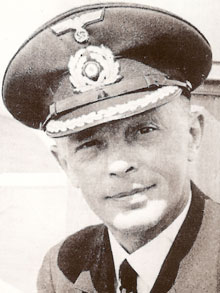
Werner Fürbringer
Kapitänleutnant (Crew 4/07)
| Successes 101 ships sunk with a total of 97,881 GRT 6 ships damaged with a total of 10,201 GRT |
| Born: | 2 Oct 1888 | Braunschweig |
| Died: | 8 Feb 1982 | Braunschweig |
 | Ranks
Decorations
|
U-boat Commands
| UB 2 | 20 Feb 1915 | - | 7 Mar 1916 |
| UB 17 | 10 Mar 1916 | - | 16 Mar 1916 |
| UB 39 | 29 Apr 1916 | - | 7 Nov 1916 |
| UC 70 | 22 Nov 1916 | - | 22 Jun 1917 |
| UC 17 | 22 May 1917 | - | 3 Aug 1917 |
| UB 58 | 10 Aug 1917 | - | 7 Feb 1918 |
| UB 110 | 23 Mar 1918 | - | 19 Jul 1918 |
Notes
Werner Fürbringer entered the Navy as a marine in Seekadett April 3 1907 by attending the basic course on the training ship SMS Charlotte until March 31 1908. He attended the Naval Academy from April 1, 1908 September 30, 1909, being promoted Fähnrich zur See (21/04/1908). The light cruiser SMS Roon participated in the Asian mission from 1909 to November 1910 being promoted to Leutnant zur See (28/09/1910), when back home was assigned to the armoured cruiser SMS Scharnhost until November 1912. At his request and then got to participate in the course Submarine lasting three months, after which it was shipped as wacht officer on the boat school SM U-1 from January to August 1913.
Promoted to Oberleutnant zur See (27.09.1913) was transferred with the same position on the new submarine oceanic SM U-20 under the U-Boote III Flotilla under the command of Kptlt. Otto Dröscher and Walther Schwiger beginning his war career.
In February 1915 he obtained his first command on the submarine SM UB-2 serving in Flanders Flotilla. Throughout the war he continued to be seconded to this group commanding various units including submarines also two mine-laying, earning accolades with a total of 106,914 tons, sank 102 merchant ships. He was promoted Kapitänleutnant November 16, 1917, and while he was in command of his latest submarine SM UB 110 was attacked with depth charges, 19 July 1918 off the coast of Scarborough and damaged, was forced to re-emerge and finally sunk by HMS Garry. 13 of the crew members were killed and he was captured along with the survivors. Returning from the prison was placed at the disposal of the Naval Command in Kiel until March 1920, when he retired from active service. From 1 January 1927 to 30 September 1933 he was appointed civilian employee at the Naval Command. Promoted Korvettenkapitän October 1, 1933, was taken into service as an instructor and consultant to the Submarine School until 1938 he is also in the last months of 1937 also served as commander of the department and promoted to Kapitän zur See.
Placed at the disposal of the Supreme Command of the Navy, he was awarded in 1938 the position of Chief of the Statistical Office of the Navy and later in 1939 like Chief of Exports of Armaments. At the beginning of the II world war, he was appointed commander of Submarine Defense Department of the Supreme Command of the Navy, which he held until October 31 1942, promoted Konteradmiral when he was appointed Inspector of Armaments of the Eastern Territories. On June 30, 1943 obtained the leave. He died at 94 years in the hometown of Brunswick on 8 Feb. 1982.
His older brother, Gerhardt Fürbringer, was also a U-boat Commander. He was captured when his U-40 was sunk on 23 June 1915.
Thoughts on submarine warfare prior to 1939
In the period immediately prior to the Second World War, Fübringer seems to have written a memorandum (cited in Padfield’s War Beneath the Sea, 1995 ed. p.48) arguing against a U-boat war against England until a way could be found to render U-boats immune to ASDIC, arguing that to commit the valuable U-boat crews [to such a war] would be irresponsible.
Moreover, he argued that naval air power would be necessary to destroy convoy escorts and that in the future the roles of the navy and air forces would be so interconnected that these elements must be welded into unity by the outbreak of the war if heavy failures are not to result.
Ships hit by Werner Fürbringer
| Date | U-boat | Name of ship | Type of ship | Tons | Nat. | ||
|---|---|---|---|---|---|---|---|
| 9 Jun 1915 | UB 2 | Britannia | Fishing vessel (smack) | 43 |  | br | |
| 9 Jun 1915 | UB 2 | Edward | Fishing vessel (smack) | 52 | | br | |
| 9 Jun 1915 | UB 2 | Laurestina | Fishing vessel (smack) | 48 | | br | |
| 9 Jun 1915 | UB 2 | Quivive | Fishing vessel (smack) | 50 | | br | |
| 9 Jun 1915 | UB 2 | Welfare | Fishing vessel (smack) | 45 | | br | |
| 10 Jun 1915 | UB 2 | Intrepid | Fishing vessel (smack) | 59 | | br | |
| 23 Aug 1915 | UB 2 |  | Miura | Navy Trawler | 257 | | br |
| 7 Sep 1915 | UB 2 | Constance | Fishing vessel (smack) | 57 | | br | |
| 7 Sep 1915 | UB 2 | Emmanuel | Fishing vessel (smack) | 44 | | br | |
| 10 Sep 1915 | UB 2 | Boy Ernie | Fishing vessel | 47 | | br | |
| 26 Feb 1916 | UB 2 | Arbonne | Steamer | 672 | | br | |
| 10 Jul 1916 | UB 39 | Staffa | Trawler | 176 | | br | |
| 13 Jul 1916 | UB 39 | Dalhousie | Drifter | 89 | | br | |
| 13 Jul 1916 | UB 39 | Florence | Trawler | 149 | | br | |
| 13 Jul 1916 | UB 39 | Mary Ann | fishing vessel | 5 | | br | |
| 13 Jul 1916 | UB 39 | Success | fishing vessel | 6 | | br | |
| 14 Jul 1916 | UB 39 | Ben Aden | Fishing vessel | 176 | | br | |
| 14 Jul 1916 | UB 39 | Bute | Trawler | 176 | | br | |
| 14 Jul 1916 | UB 39 | Girls Friend | Drifter | 55 | | br | |
| 14 Jul 1916 | UB 39 | Langley Castle | Drifter | 93 | | br | |
| 14 Jul 1916 | UB 39 | Recorder | Trawler | 149 | | br | |
| 1 Aug 1916 | UB 39 | Braconash | Fishing vessel | 192 | | br | |
| 1 Aug 1916 | UB 39 | Helvetia | Trawler | 167 | | br | |
| 1 Aug 1916 | UB 39 | King James | Fishing vessel | 163 | | br | |
| 1 Aug 1916 | UB 39 | Rhodesia | Trawler | 110 | | br | |
| 1 Aug 1916 | UB 39 | Tatiana | Trawler | 285 | | br | |
| 1 Aug 1916 | UB 39 | Zeeland | Steamer | 1,292 |  | nl | |
| 2 Aug 1916 | UB 39 | Olympia | Trawler | 221 | | br | |
| 2 Aug 1916 | UB 39 | Smiling Morn | Trawler | 126 | | br | |
| 2 Aug 1916 | UB 39 | Twiddler | Drifter | 99 | | br | |
| 3 Aug 1916 | UB 39 | Trawler Prince | Trawler | 126 | | br | |
| 3 Aug 1916 | UB 39 | Lucania | Drifter | 92 | | br | |
| 3 Aug 1916 | UB 39 | Merchant Prince | Trawler | 130 | | br | |
| 3 Aug 1916 | UB 39 | Destro (d.) | Steamer | 859 | | br | |
| 4 Aug 1916 | UB 39 | Jägersborg | Steamer | 1,797 |  | da | |
| 4 Aug 1916 | UB 39 | Stamfordham | Steamer | 921 | | br | |
| 5 Aug 1916 | UB 39 | Egyptian Prince | Trawler | 129 | | br | |
| 5 Aug 1916 | UB 39 | St. Olive | Trawler | 202 | | br | |
| 6 Sep 1916 | UB 39 | Ancona (d.) | Steamer | 1,168 | | br | |
| 6 Sep 1916 | UB 39 | Strathtay | Steamer | 4,428 | | br | |
| 6 Sep 1916 | UB 39 | Tagus | Steamer | 937 | | br | |
| 7 Sep 1916 | UB 39 | Marguerite | Sailing vessel | 102 |  | fr | |
| 7 Sep 1916 | UB 39 | Alcyon | Sailing vessel | 163 | | fr | |
| 7 Sep 1916 | UB 39 | Heathdene | Steamer | 3,541 | | br | |
| 7 Sep 1916 | UB 39 | Messicano | Steamer | 4,065 |  | it | |
| 8 Sep 1916 | UB 39 | Jeune Union | Sailing vessel | 267 | | fr | |
| 8 Sep 1916 | UB 39 | Lyderhorn | Steamer | 939 |  | nw | |
| 8 Sep 1916 | UB 39 | Olazarri | Steamer | 2,585 |  | sp | |
| 9 Sep 1916 | UB 39 | Europe | Sailing vessel | 356 | | fr | |
| 9 Sep 1916 | UB 39 | Pronto | Steamer | 1,411 | | nw | |
| 10 Sep 1916 | UB 39 | Lexie | Steamer | 3,778 | | br | |
| 11 Sep 1916 | UB 39 | Fredavore | steamer | 1,577 | | nw | |
| 20 Oct 1916 | UB 39 | Midland | Steamer | 4,247 | | br | |
| 20 Oct 1916 | UB 39 | Secundo | Steamer | 1,512 | | nw | |
| 21 Oct 1916 | UB 39 | | Hebe | Steamer | 775 | | da |
| 21 Oct 1916 | UB 39 | | Helga | Steamer | 1,182 | | da |
| 22 Oct 1916 | UB 39 | Alix | Steamer | 1,584 | | nw | |
| 14 Feb 1917 | UC 70 | Marthe Yvonne | Pilot boat | 30 | | fr | |
| 16 Mar 1917 | UC 70 | Cordouan | Pilot boat | 28 | | fr | |
| 16 Mar 1917 | UC 70 | Marguerite Vi (d.) | Q-ship | 852 | | fr | |
| 17 Mar 1917 | UC 70 | ALCIDE MARIE | Fishing vessel | 26 | | fr | |
| 17 Mar 1917 | UC 70 | Camille Emile | Fishing vessel | 20 | | fr | |
| 17 Mar 1917 | UC 70 | DIEU TE GARDE | Fishing vessel | 30 | | fr | |
| 17 Mar 1917 | UC 70 | Juliette | Fishing vessel | 29 | | fr | |
| 17 Mar 1917 | UC 70 | Louis Xiv | Fishing vessel (sail) | 44 | | fr | |
| 17 Mar 1917 | UC 70 | NOTRE DAME DU PERPETUEL SECOURS | Fishing vessel | 29 | | fr | |
| 17 Mar 1917 | UC 70 | NOZAL | Fishing vessel | 34 | | fr | |
| 17 Mar 1917 | UC 70 | RENEE ISLANDER | Fishing vessel | 25 | | fr | |
| 17 Mar 1917 | UC 70 | RUPELLA | Fishing vessel | 38 | | fr | |
| 17 Mar 1917 | UC 70 | Tasso | Steamer | 1,859 | | br | |
| 18 Mar 1917 | UC 70 | Madone | Fishing vessel (dundee) | 31 | | fr | |
| 18 Mar 1917 | UC 70 | Entente Cordiale | Fishing vessel (dundee) | 22 | | fr | |
| 18 Mar 1917 | UC 70 | Felicite Albert | Fishing vessel (dundee) | 32 | | fr | |
| 18 Mar 1917 | UC 70 | HYACINTHE YVONNE | Sailing vessel | 43 | | fr | |
| 19 Mar 1917 | UC 70 | Bergsli | Steamer | 2,133 | | nw | |
| 19 Mar 1917 | UC 70 | Michel | Steamer | 1,773 | | fr | |
| 24 Mar 1917 | UC 70 | Tapir | tug | 200 | | fr | |
| 16 Apr 1917 | UC 70 | Eduard | Sailing vessel | 476 | | br | |
| 17 Apr 1917 | UC 70 | Nirvana (d.) | Steamer | 6,021 | | br | |
| 30 Apr 1917 | UC 70 | Eden | Steamer | 1,304 | | nw | |
| 7 May 1917 | UC 70 | Lowmount | Steamer | 2,070 | | br | |
| 18 May 1917 | UC 70 | C.E.C.G. | Sailing vessel | 47 | | br | |
| 18 May 1917 | UC 70 | Dromore | Steamer | 268 | | br | |
| 23 May 1917 | UC 70 | Begona N°3 | Steamer | 2,699 | | sp | |
| 27 May 1917 | UC 70 | General De Boisdeffre | Sailing vessel | 2,195 | | fr | |
| 28 May 1917 | UC 70 | Ancona | Steamer | 1,168 | | br | |
| 18 Jun 1917 | UC 17 | Borneo | Navy Trawler | 211 | | br | |
| 19 Jun 1917 | UC 17 | Kate And Annie | Sailing vessel | 96 | | br | |
| 19 Jun 1917 | UC 17 | Mary Ann (d.) | Sailing vessel | 164 | | br | |
| 21 Jun 1917 | UC 17 | Childe Harold | Sailing vessel | 781 |  | am | |
| 21 Jun 1917 | UC 17 | Scheria | Steamer | 2,727 | | it | |
| 24 Jun 1917 | UC 17 | Clan Davidson | Steamer | 6,486 | | br | |
| 24 Jun 1917 | UC 17 | Crown Of Arragon | Steamer | 4,550 | | br | |
| 25 Jun 1917 | UC 17 | Galena | Sailing vessel | 1,073 | | am | |
| 25 Jun 1917 | UC 17 | Saxon Monarch | Steamer | 4,828 | | br | |
| 20 Jul 1917 | UC 17 | City Of Florence | Steamer | 5,399 | | br | |
| 21 Jul 1917 | UC 17 | Augustus Welt | Sailing vessel | 1,221 | | am | |
| 13 Oct 1917 | UB 58 | Bethel | Sailing vessel | 257 | | nw | |
| 13 Oct 1917 | UB 58 | Esmeralda | Sailing vessel | 830 |  | sw | |
| 19 Nov 1917 | UB 58 | Minnie Coles | Sailing vessel | 116 | | br | |
| 19 Dec 1917 | UB 58 | Saint Andre | Steamer | 2,457 | | fr | |
| 22 Dec 1917 | UB 58 | Clan Cameron | Steamer | 3,595 | | br | |
| 22 Dec 1917 | UB 58 | Start | Steamer | 728 | | nw | |
| 26 Jan 1918 | UB 58 | Louie Bell | Sailing vessel | 118 | | br | |
| 28 Jan 1918 | UB 58 | W. H. L. | Sailing vessel | 97 | | br | |
| 10 Jul 1918 | UB 110 | Sprucol (d.) | Tanker | 1,137 | | br | |
| 16 Jul 1918 | UB 110 | Southborough | Steamer | 3,709 | | br | |
| 108,082 | |||||||
| 101 ships sunk (97,881 tons) and 6 ships damaged (10,201 tons).
| |||||||
Media links
|
|

As an Amazon Associate uboat.net earns a commission from qualifying purchases.