
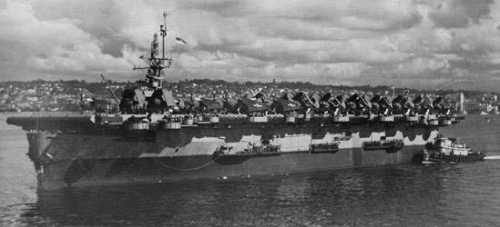
| Navy | The US Navy |
| Type | Escort carrier |
| Class | Casablanca |
| Pennant | CVE 67 |
| Built by | Kaiser Shipbuilding Co. (Vancouver, Washington, U.S.A.) |
| Ordered | 17 Jul 1942 |
| Laid down | 19 Apr 1943 |
| Launched | 6 Oct 1943 |
| Commissioned | 21 Nov 1943 |
| End service | 15 May 1946 |
| History | USS Solomons, an Escort Aircraft Carrier, was converted from a Maritime Commission hull (MC hull 1104) built by the Kaiser Shipbuilding Company of Vancouver, Washington. The contract for her construction was signed on July 17, 1942, P.O. No. 1870/1RNV. Her keel was laid down on April 19, 1943. Soon thereafter, she was assigned the first of her three names, Emperor. The name Emperor had been given because originally the ship was to be turned over the Royal Navy. The lease agreement was cancelled on January 22, 1943. USS Pybus was sent instead. After being designated an auxiliary aircraft carrier, ACV 67, she was renamed Nassuk Bay on June 28, 1943. On July 15, 1943, she was redesignated an Escort Carrier, CVE 67. She was launched on October 6, 1943 by Mrs. F. J. McKenna while still bearing the name Nassuk Bay. One month later on November 6, 1943, she received her third and final name, USS Solomons, and as such, was commissioned on November 21, 1943, Capt. M.E. Crist in command. USS Solomons spent the next four weeks in the Astoria-Puget Sound area undergoing post-trial shakedown, tests, and exercises. Departing Astoria on December 20, 1943, and headed for Alameda, California. She sailed independently but did receive air coverage from Navy blimps during the day. She arrived three days later on December 23, 1943. She departed on December 24, 1943 headed for San Fransico and arrived Christmas day. Following operations out of San Diego, she sailed for Pearl Harbor, Hawaii, on December 30, 1943. On January 6, 1944, USS Solomons loaded aircraft and supplies there, embarked passengers, and departed on the 9th for San Diego. She was escorted by the destroyer escort USS Duffy. The ship also conducted firing exercises enroute to California. Arriving at San Diego on January 14, 1944, USS Solomons conducted battle practice off the coast of southern California until the end of the month. She departed San Diego on the January 30, 1944, accompanied by her sister ship USS Tripoli and the destroyers USS Fitch and USS Decatur bound for Norfolk, Virginia. During her approach to the Panama Canal, USS Solomons planes participated in a simulated aerial attack on the canal. The carrier arrived at Balboa on February 9, 1944 embarked passengers, and departed for Norfolk two days later. On February 12, 1944 a radar contact was made and torpedo defense was sounded. USS Fitch left the formation to investigate but there was no further radar contacts. The ship arrived in Norfolk two days later on February 16, 1944. Upon arrival the ship was put into dry-dock until the March 19, 1944. After repairs were finished the loading of planes, supplies, and aviation stores commenced and the USS Solomons got underway on March 21, 1944 bound for Recife, Prenambuco Brazil where she was to report for duty to the Commander, Fourth Fleet. The destroyer escorts USS Eisner and USS Garfield Thomas joined the USS Solomons before they departed Norfolk. While enroute to Brazil air operations were conducted. On March 25, 1944 a torpedo bomber crashed into the after part of the Solomons flight deck. USS Eisner quickly picked up the pilot and crew. On March 31, 1944 the destroyer escorts USS Trumpeter, USS Straub and USS Gustafson joined the USS Solomons. On April 6, 1944 a sound contact was reported but further investigation proved negative. They arrived in Recife, Brazil on April 13, 1944 and reported for duty with the 4th Fleet. The Composite Squadron Nine was disembarked to the Ibura Airfield, Recife, Pernambuco, Brazil. On the next day, she got underway for her first antisubmarine patrol. This cruise, which lasted until the April 30, 1944, Her next antisubmarine patrol, May 4-20, 1944, also proved uneventful. Her third patrol, however, was to be more successful. Departing Recife in June 1, 1944, USS Solomons was soon involved in her sole U-boat engagement of the war. On 15 June, while conducting air operations a sound contact was received. Ensign Edwards, a pilot from the USS Solomons reported contact with an enemy submarine some 50 miles from the carrier. No further communication was ever received from Ensign Edwards. The destroyer escorts USS Straub and USS Herzog were immediately directed to the position of the contact and ordered to conduct a square search. The pilot, who had made the initial contact on the submarine, was shot down by enemy antiaircraft fire. Lieutenant Commander Avery, another pilot from the USS Solomons sighted the wake at 1654 of a fully surfaced submarine. When he was 8 miles from the submarine it altered course and as the plane closed the distance the sub began to run in circles of about 1,000 feet in diameter, successfully keeping the aircraft on its stern. During maneuvers intense anti-aircraft fire was directed at pilot as he circled the submarine at a range of 4,000 yards awaiting assistance. Ensign Wadsworth in Fighting Squadron-17, Ensign McMahon in Fighting Squadron-23, and Ensign Spear in Attack Bomber- Squadron-ll were about to land aboard the carrier when the contact report was made. They were vectored to the scene of the contact. USS Straub and USS Herzog were ordered to proceed to the scene of the contact immediately. McMahon and Wadsworth commenced strafing runs on the port and starboard quarters respectively, while Spear and Avery made rocket attacks on the submarine. The fighters effectively strafed the sub while Spear and Avery fired 14 rockets in pairs, 12 of which hit the submarine about the conning tower and forward of the conning tower. After this attack, in which four planes passed over the sub in a period of 10 seconds, the submarine straightened out, trailing oil, at a slow speed, and still directing anti-aircraft fire at the planes . Lieutenant (j.g.) Chamberlain and Lieutenant (j.g.) Weigle then took off to proceed to the scene of the attack. Weigle was directed to make a rocket attack, preceded by McMahon, who made another strafing run on the submarine. Of eight rockets fired by Weigle, six of then hit in the lethal area directly in front of the conning tower. The fighters were out of ammunition and were ordered back to the carrier. The submarine's speed had been reduced to 3 knots and it was trailing large quantities of greenish-yellow oil. Chamberlain was directed to begin a depth charge run on the submarine and, in the face of anti-aircraft fire, went in to an altitude of less than 50 feet above the conning tower before he released two depth charges. The depth charges caused a violent explosion which engulfed his plane and started a fire in the, bomb bay and center cockpit. He was able to make a water landing about 500 yards ahead of the submarine. Immediately after his attack the submarine began to sink bow first. Thirty to fourty survivors were observed in the water. USS Straub reported that 20 survivors, including the commanding officer were rescued. It was learned from the rescued prisoners that Ensign Edwards who had made the original contact was shot down. The ships then steamed on, conducting her air operations. On June 23, 1944, USS Solomons arrived in Recife and commenced refueling from the dock. The prisoners were transferred to Commander Fourth Fleet authorities. On July 1, 1944, the pilots that took part in the sinking of the submarine were decorated onboard the USS Solomons. The remainder of July was occupied by intense air operations off the coast of Brazil. August 1, 1944 found the USS Solomons in company with the destroyer escorts USS Alger, USS Trumpeter and USS Straub, conducting barrier operations against enemy submarines. However no contacts were made and on August 8, 1944 she entered the harbor of Rio de Janeiro. Accompanied once again by USS Alger, USS Trumpeter and USS Straub, she departed the following day for Recife. She arrived August 12, 1944 and commenced, loading stores and fresh provisions aboard. On August 15, 1944 USS Solomons departed Recife enroute to Norfolk Virginia, arriving on August 25, 1944. Until September 22, 1944 she held gunnery exercises and various tests off the coast of Norfolk. She left on September 23, 1944 for Staten Island, N.Y with the destroyer escorts USS Gentry and USS Traw. She arrived on September 25, 1944 and moored to pier No.14. She embarked 150 Army Airmen together with their P-47 aircraft. Preparations were completed for a long voyage. She departed on October 6, 1944. She steamed to rendezvous with a convoy enroute to Casablanca, French Morocco. Arriving back in the United States on October 17, 1944. The ship departed ten days later in convoy, conducting operations enroute to Narragansett Bay Rhode Island. The ships arrived on November 7, 1944 and refueled. The remainder of the month saw USS Solomons engaged in various types of carrier operations. On December 13, 1944 in company with the destroyer USS Broome she departed for Norfolk, Virginia for emergency repairs. After completing repairs, extensive drills were carried out until January 3, 1945 when the USS Solomons departed for Port Everglades, Florida, arriving on January 6, 1945. While moored at Port Everglades on January 8, 1945, Captain M.E. Crist, USN, was relieved as commanding officer by Captain R.S. Moss, USN. The remainder of January and the month of February were spent conducting rigid air drills off the coast of Florida. Steaming in company with the destroyers USS Lea and USS Bernadou, USS Solomons conducted air operations in which 43 F6F pilots were qualified on March 1, 1945. She returned to port shortly thereafter and picked up 12 pilots who reported aboard for temporary duty. On March 7, 1945, additional planes reported aboard for flight operations, and when she moored on March 10, 1945, 42 officers departed, having completed their temporary duty. On March 17, 1945, 58 more fighter pilots were qualified in carrier landings. The remainder of the month was spent conducting air operations. The period March 18, 1945 to September 30, 1945 was occupied in more air operations off the East Coast. On 15 May 1946, Solomons was decommissioned at Boston Naval Shipyard and struck from the Navy List on 5 June. Sold for scrap to the Patapsco Scrap Corp., Bethlehem, Pa., she was delivered to its agent on 22 December at Newport, R.I. |
Commands listed for USS Solomons (CVE 67)
Please note that we're still working on this section
and that we only list Commanding Officers for the duration of the Second World War.
| Commander | From | To | |
| 1 | T/Capt. Marion Edward Crist, USN | 21 Nov 1943 | 8 Jan 1945 |
| 2 | T/Cdr. Richard Stanley Moss, USN | 8 Jan 1945 | 15 Feb 1946 |
You can help improve our commands section
Click here to Submit events/comments/updates for this vessel.
Please use this if you spot mistakes or want to improve this ships page.
Notable events involving Solomons include:
Dear Sirs, I decided to send you some more information on the USS Solomons CVE 67, which can be found no my web page. The link is in my previous e-mail to you. The information listed below is more detailed then what you have at the above web site. REFERANCE MATERIAL USED (1.) From the "Dictionary of American Naval Fighting Ships," (1976) Vol. 6, p.547. (2.) Emil Buelher Naval Aviation Library & National Museum Of Naval Aviation (3.) Department Of The Navy, Naval Historical Center (4.) Division of Naval History, Ships' Histories Section, Navy Department (1.) USS SOLOMONS CVE-67 Displacement: 10,400 tons (full load) Length: 512'3" Beam: 65'2" Extreme Width: 108'1" Draft: 22'6" Speed: 19.3 k. (trials speed) Complement: 860 Armament: 1 5" 16 40mm Class: CASABLANCA Maritime Commission standard type: S4-S2-BB3 The USS Solomons Motto, "Have The Will To Win" (2.) The first Solomons was named after the Maryland Island that is located in the mouth of the Patuxent River. It was laid down on 5 May 1942 in Seattle, Washington. The company that built the ship was the Shain Manufacturing Company. The ship was a wooden-hulled ferry. It was launched on June 20, 1942 and delivered on the 21 August 1942. The ship was assigned to the 14th Naval District and sea lifted to Midway via Pearl Harbor. The Solomons was placed in service on 8 December 1942. The ship served her entire career in Midway. Its duties were to perform transport and ferry duties. On 6 November 1943 the ship was renamed the USS Sanibel YFB-23 ( Yard Craft Ferry Boat ). This was so that the name Solomons could be used for an aircraft carrier that was under construction at the time. The ship that would inherit the name was the CVE 67. The USS Sanibel remained in the Midway Island area until it was d from the 14th Naval District list of service craft on July 1, 1946. The ship was intentionally destroyed by fire two days later at Midway. The ship was stricken from the Navy list on 28 January 1947. (1.) Naming: Most escort carriers were initially named for various bays, but a great many were renamed in Honor of WWII Battles prior to Commissioning. Numbering: Ships of this type were initially designated as auxiliary aircraft escort vessels AVG this was changed to auxiliary aircraft carrier ACV 20 August 1942. On 15 July 1943 all were redesignated Escort Aircraft Carriers, CVE. This designation is used throughout the list for convenience. (2.) The second Solomons ( CVE 67 ) was named for the pivotal campaign in the South Pacific. A group of islands in the south-western Pacific, east of New Guinea, containing 15 major islands and numerous smaller ones. United States forces invaded the group at Guadalcanal on 7 August 1942. This was the first amphibious operation directed against Japanese held territory in World War II. By February 1943, Guadalcanal had been secured, and landings were made on two other island of the group, Bougainville and New Georgia. The development of the campaign in New Guinea, however, enabled the Americans to bypass the approximately 120,000 remaining Japanese who were scattered among the other islands of the Solomons group. (1.) The USS SOLOMONS CVE-67, an Escort Aircraft Carrier, was converted from a Maritime Commission hull ( MC hull 1104 ) built by the Kaiser Shipbuilding Company of Vancouver, Washington. (4.) The contract for her construction was signed on 18 June 1942, P.O. No. 1870/1RNV. (1.) Her keel was laid down on 19 April 1943. Soon thereafter, she was assigned the first of her three names, EMPEROR. (2.) The name EMPEROR had been given because originally the ship was to be turned over the Royal Navy. (3.) The lease agreement was cancelled on 22 January 1943. The USS Pybus AVG 34 was sent instead. After being designated an auxiliary aircraft carrier, ACV-67, she was renamed NASSUK BAY on 28 June 1943. On 15 July 1943, she was redesignated an Escort Carrier, CVE-67. She was launched on 6 October 1943 by Mrs. F. J. McKenna while still bearing the name NASSUK BAY. One month later on 6 November 1943, she received her third and final name, USS SOLOMONS CVE 67, and as such, was commissioned on 21 November 1943, Capt. M. E. Crist in command. (1.) USS SOLOMONS CVE 67 spent the next four weeks in the Astoria-Puget Sound area undergoing post-trial shakedown, tests, and exercises. Departing Astoria on 20 December 1943, and headed for Alameda, California. (4.) She sailed independently but did receive air coverage from Navy blimps during the day. (1.) She arrived three days later on 23 December 1943. She departed on 24 December 1943 headed for San Francisco and arrived Christmas day. Following operations out of San Diego, she sailed for Pearl Harbor, Hawaii, on 30 December 1943. On 6 January 1944, USS SOLOMONS CVE 67 loaded aircraft and supplies there, embarked passengers, and departed on the 9th for San Diego. (4.) She was escorted by the USS DUFFY DE 27. The ship also conducted firing exercises en route to California. (1.) Arriving at San Diego on 14 January 1944, USS SOLOMONS CVE 67 conducted battle practice off the coast of southern California until the end of the month. On 16 January 1944, the first plane, Piloted by Lt. Comdr. G. E. Shecter lands on the deck of the USS Solomons CVE 67. (4.) She departed San Diego on the 30 January 1944, accompanied by USS TRIPOLI CVE 64, USS FITCH DD 462 and USS DECATUR DD 341 bound for Norfolk, Va. During her approach to the Panama Canal, USS SOLOMONS CVE 67 planes participated in a simulated aerial attack on the canal. The carrier arrived at Balboa on 9 February 1944 embarked passengers, and departed for Norfolk two days later. On 12 February 1944 a radar contact was made and torpedo defence was sounded. The USS FITCH DD 462 left the formation to investigate but there was no further radar contacts. The ship arrived in Norfolk two days later on 16 February 1944. Upon arrival the ship was put into dry-dock until the 19 March 1944. After repairs were finished the loading of planes, supplies, and aviation stores commenced and the USS SOLOMONS CVE 67 got underway on 21 March 1944 bound for Recife, Prenambuco Brazil where she was to report for duty to the Commander, FOURTH Fleet. The USS EISNER DE 192 and USS WILLIAM G. THOMAS DE 193 joined the USS SOLOMONS CVE 67 before they departed Norfolk. While en route to Brazil air operations were conducted. On 25 March 1944 a torpedo bomber crashed into the after part of the SOLOMONS flight deck. The USS EISNER DE 192 quickly picked up the pilot and crew. On 30 March 1944 the USS SOLOMONS CVE 67 crossed the Equator. On 31 March 1944 the USS TRUMPTER DE 180, USS STRAUB DE 181, and USS GUSTAFSON DE 182 joined the USS SOLOMONS CVE 67. On 6 April 1944 a sound contact was reported but further investigation proved negative. They arrived in Recife, Brazil on 13 April 1944 and reported for duty with the 4th Fleet. The Composite Squadron NINE was disembarked to the Ibura Airfield, Recife, Pernambuco, Brazil. (1.) On the next day, she got underway for her first antisubmarine patrol. This cruise, which lasted until the 30 April 1944, Her next antisubmarine patrol, 4 - 20 May 1944, also proved uneventful. Her third patrol, however, was to be more successful. Departing Recife in 1 June 1944, USS SOLOMONS CVE 67 was soon involved in her sole U-boat engagement of the war. (4.) On 15 June, while conducting air operations a sound contact was received. Ensign Edwards, a pilot from the USS SOLOMONS CVE 67 reported contact with an enemy submarine some 50 miles from the carrier. No further communication was ever received from Ensign Edwards. (1.) The escorts, USS STRAUB DE-181 and HERZOG DE-178 were immediately directed to the position of the contact (4.) and ordered to conduct, a square search. The pilot, who had made the initial contact on the submarine, was shot down by enemy antiaircraft fire. Lieutenant Commander Avery, another pilot from the USS SOLOMONS CVE 67 sighted the wake at 1654 of a fully surfaced submarine. When he was 8 miles from the submarine it altered course and as the plane closed the distance the sub began to run in circles of about 1,000 feet in diameter, successfully keeping the aircraft on its stern. During manoeuvres intense anti-aircraft fire was directed at the plane as he circled the submarine at a range of 4,000 yards awaiting assistance. Ensign Wadsworth in Fighting Squadron-17, Ensign McMahon in Fighting Squadron-23, and Ensign Spear in Attack Bomber- Squadron-ll were about to land aboard the carrier when the contact report was made. They were vectored to the scene of the contact. USS STRAUB DE-181 and HERZOG DE-178 were ordered to proceed to the scene of the contact immediately. McMahon and Wadsworth commenced strafing runs on the port and starboard quarters respectively, while Spear and Avery made rocket attacks on the submarine. The fighters effectively strafed the sub while Spear and Avery fired 14 rockets in pairs, 12 of which hit the submarine about the conning tower and forward of the conning tower. After this attack, in which four planes passed over the sub in a period of 10 seconds, the submarine straightened out, trailing oil, at a slow speed, and still directing anti-aircraft fire at the planes. Lieutenant (j.g.) Chamberlain and Lieutenant (j.g.) Weigle then took off to proceed to the scene of the attack. Weigle was directed to make a rocket attack, preceded by McMahon, who made another strafing run on the submarine. Of eight rockets fired by Weigle, six of then hit in the lethal area directly in front of the conning tower. The fighters were out of ammunition and were ordered back to the carrier. The submarine's speed had been reduced to 3 knots and it was trailing large quantities of greenish-yellow oil. Chamberlain was directed to begin a depth charge run on the submarine and, in the face of anti-aircraft fire, went in at an altitude of less than 50 feet above the conning tower before he released two depth charges. The depth charges caused a violent explosion which engulfed his plane and started a fire in the, bomb bay and centre cockpit. He was able to make a water landing about 500 yards ahead of the submarine. Immediately after his attack the submarine began to sink bow first. Thirty to forty survivors were observed in the water. USS STRAUB DE 181 reported that 21 survivors, including the commanding officer were rescued. It was learned from the rescued prisoners that Ensign Edwards who had made the original contact was shot down. On 18 June 1944 a Memorial Service is held on the USS Solomons, for the American Airmen and German Seamen that were Lost during the sinking of U860. The ships then steamed on, conducting her air operations. On 23 June 1944, USS SOLOMONS CVE 67 arrived in Recife and commenced refuelling from the dock. The prisoners were transferred to Commander Fourth Fleet authorities. On 1 July 1944, the pilots that took part in the sinking of the submarine were decorated onboard the USS SOLOMONS CVE 67. The remainder of July was occupied by intense air operations off the coast of Brazil. On 1 August 1944 found the USS SOLOMONS CVE 67 in company with the USS ALGER DE 101, USS TRUMPETER DE 180, and the USS STRAUB DE 181, conducting barrier operations against enemy submarines. However no contacts were made and on 8 August 1944 she entered the harbour of Rio de Janeiro. Accompanied by USS ALGER DE 101, USS TRUMPETER DE 180, and the USS STRAUB DE 181,she departed the following day for Recife. She arrived 12 August 1944 and commenced, loading stores and fresh provisions aboard. On 15 August 1944 the USS SOLOMONS CVE 67 departed Recife en route to Norfolk Virginia, arriving on 25 August 1944. Until 22 September 1944 she held gunnery exercises and various tests off the coast of Norfolk. She left on 23 September 1944 for Staten Island, N.Y with USS GENTRY DE 349 and USS TRAW DE 350. She arrived on 25 September 1944 and moored to pier #14. (1.) She embarked 150 Army Airmen together with their P-47 aircraft. (4.) Preparations were completed for a long voyage. She departed on 6 October 1944, ,she steamed to rendezvous with convoy UFG-15B en route to Casablanca, French Morocco. The convoy was transporting the 100th and 103rd Infantry Divisions. Convoy UFG-15B consisted of the following ships, USAT George Washington 6,341 Troops Aboard USS Monticello AP 61 6,890 Troops Aboard USS General Gordon AP 117 5,196 Troops Aboard USS General J. R. Brook AP 132 3,456 Troops Aboard USAT Henry Gibbins 1,948 Troops Aboard USAT J. W. McAndrew 1,891 Troops Aboard SS Moormac Moon 549 Troops Aboard SS Santa Maria 1,791 Troops Aboard USS Merak A US Navy refrigeration vessel carrying food to the European Theatre. HMS Engadine A British vessel cargo and passengers unknown. USS Solomons CVE 67 USS Dewey DD 349 USS Naifeh DE 352 USS Gentry DE 349 USS Maurice J. Manuel Arriving back in the United States on 17 October 1944, the ship departed ten days later in convoy, conducting operations en route to Narragansett Bay Rhode Island. The ships arrived on 7 November 1944 and refuelled. The remainder of the month saw USS SOLOMONS CVE 67 engaged in various types of carrier operations. On 13 December 1944 in company with the USS BROOME she departed for Norfolk, Virginia for emergency repairs. After completing repairs, extensive drills were carried out until 3 January 1945 when the USS SOLOMONS CVE 67 departed for Port Everglades, Florida, arriving on 6 January 1945. While moored at Port Everglades on 8 January 1945, Captain M. E. Crist, USN, was relieved as commanding officer by Captain R. S. Moss, USN. On 26 January 1945, the 5,000th landing on the deck of the Solomons was made by an F6F. It is noted here that the Solomons Excelled at making More Landings Per Day and Qualifying More Pilots than any other ship in the CVE Atlantic Fleet. By the time the USS Solomons CVE 67 is decommissioned in 1946, she will have recorded a total of OVER 34,000 landings on her flight deck in just three years. The remainder of January and the month of February were spent conducting rigid air drills off the coast of Florida. Steaming in company with USS LEA DD118, and the USS BERNADOU, the USS SOLOMONS CVE 67 conducted air operations in which 43 F6F pilots were qualified on 1 March 1945. She returned to port shortly thereafter and picked up 12 pilots who reported aboard for temporary duty. On 7 March 1945, additional planes reported aboard for flight operations, and when she moored on 10 March 1945, 42 officers departed, having completed their temporary duty. On 17 March 1945, 58 more fighter pilots were qualified in carrier landings. The remainder of the month was spent conducting air operations. The period 18 March 1945 to 30 September 1945 was occupied in more air operations off the East Coast. On 15 April 1945, all hands were called to quarters on the Flight Deck for a Memorial Service for our late President and Commander In Chief, Franklin Delano Roosevelt. The Ship's Chaplain led the Officers and Crew in Prayer. Several hymns were sung and the Ensign was brought to Half Mast , where it remained for thirty days in Tribute to a Great President. The Bugler sounded Taps and after a short period of respectful silence the crew dispersed to carry on the Ship's work. When Germany surrendered the USS Solomons CVE 67, lost her opportunity to grasp a Surrender "Prize" when it was learned that the only U-boat in the vicinity of the USS Solomons had already contacted the Naval Shore Authority regarding her surrender. On 7 August 1945, 25,000th Landing aboard the USS Solomons CVE 67, being made by Ens. R. I. Jacobsen, in an SBF-4E, "Helldiver", Plane # 6, Bu. # 31925. On 27 October 1945, the USS Solomons is in Mobile, Alabama, along with Destroyer Escorts USS Pillsbury, and USS Pope and also the Submarines USS Flasher and USS Gabalin for Navy Day. It was estimated that over 80,000 people visited the USS Solomons CVE 67. On 5 December 1945 "Flight 19" NAS Ft. Lauderdale, 5 TBM Avenger Torpedo Bombers were warming up to take their last training hop. The Navy and Marine Combat Air crewman needed one more flight to qualify for their wings. And the pilots, except for the flight leader, needed one more navigational training flight to finish. One Marine missed the flight. This was the famous "Flight 19", a composite training flight of both Navy and Marine Corps airmen, that would become the subject of every "Devils Triangle" story on TV and books for decades to come. After flying eastward and then northward for some hours, they became lost. They reported trouble with their compasses and couldn't orient directions correctly. As nightfall approached they were almost out of gas. And then all of the Florida East coast bases lost radio contact with them. At NAS Banana River, Florida, two PBMs were alerted to take off on a Search and Rescue operation down to North of the Bahamas to fly a "box" pattern. Their long range meant that they could fly all night if necessary. They were fully gassed. They passed all pre-flight checks. The crew on PBM No. 59225 was made up of crew and other volunteers. Both PBMs took off and headed off in different directions. Radar had them both plotted. Suddenly, PBM 59225 disappeared from the radar. A merchant ship, the SS Gaines Mills, reported seeing a massive explosion high in the sky, which then gravitated down to the ocean and continued to burn with flames 100 feet high. A large search and rescue mission was already being formed by sea for the 5 TBMs. In the morning, the USS Solomons CVE 67 approached the approximate site of the crash and found only a small oil slick, no debris, no survivors. The plane and crew had apparently been vaporized. The other PBM and the search vessels and aircraft continued their search for the TBMs for several days with no results. On this day, 5 December 1945, 6 aircraft and 27 men disappeared and the cause has never been established. On ? February 1946, Captain R. S. Moss, USN, was relieved as commanding officer by Captain Allen Smith Jr, USN. Captain Smith is the former Commander of the USS THETIS BAY CVE 90. On 13 March 1946, the USS Solomons CVE 67 was in Savannah Georgia for St. Patrick's Day, along with the USS OTTER DE 210, USS BORUM DE 790, and USS DURIK. (1.) On 15 May 1946, SOLOMONS was decommissioned at Boston Naval Shipyard and struck from the Navy List on 5 June 1946. Sold for scrap to the Patapsco Scrap Corp., Bethlehem, Pa., for the sum of $14,672.00. She was delivered to its agent on 22 December at Newport, R.I. (1)
15 Jun 1944
German U-boat U-860 was sunk in the South Atlantic south of St. Helena, in position 25°27'S, 05°30'W, by depth charges and rockets from 7 Avenger and Wildcat aircraft (Task Group 22.10) of the US escort carrier USS Solomons.
8 Jan 1945
Capt M E Crist was CO 21/11/43-8/1/45
Capt R S Moss 8/1/45- ca 9/45 (1)
Media links
|

Sources
- Personal communication
As an Amazon Associate uboat.net earns a commission from qualifying purchases.