
List of all U-boats
U-2511
Type | XXI | |||||||||
| Ordered | 6 Nov 1943 | |||||||||
| Laid down | 7 Jul 1944 | Blohm & Voss, Hamburg (werk 2511) | ||||||||
| Launched | 2 Sep 1944 | |||||||||
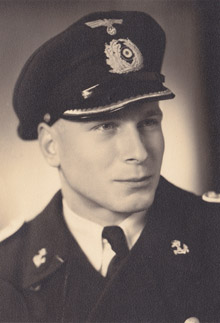
| Commissioned | 29 Sep 1944 | Korvkpt. Adalbert Schnee (Knights Cross) | ||||||||
| Commanders |
| |||||||||
| Career 1 patrol |
| |||||||||
| Successes | No ships sunk or damaged | |||||||||
| Fate |
Surrendered on 9 May 1945 at Bergen, Norway (Waller & Niestlé, 2010). Departed Bergen 17 June Operation Deadlight (post-war Allied operation, info) | |||||||||
| Final location | ||||||||||
This boat is a dive site
Innes McCartney dove on this boat in 2001 (see his report). About 20-30m underwater visibility [at the time] - 69 metres depth.
Depth: 220 feet (67 meters)Position (lat, long): 55.33, -7.38
See more U-boat dive sites.
General notes on this boat
30 Jan 1945. U-2511 had completed the usual working-up exercises in the Bay of Danzig, as well as trials of new equipment. She left port on 30 January 1945 with her crew and dozens of refugees — of the tens of thousands — who had crowded into Danzig in hopes of safe passage from the Russian incursion. Several hours into her journey, she surfaced near the Stolpe Banks in the Baltic off Leba. There the crew took on survivors from the wreck of the Wilhelm Gustloff, which had taken three torpedoes amidships from the Russian submarine S-13. The crew evaded mines, surface ships, and Allied submarines to reach the harbours of Sässnitz/Rügen islands, where their passengers disembarked for a refugee camp.
30 Apr 1945. The first type XXI boat on active service
U-2511 left the Bay of Danzig on 30 January 1945, where she had completed working up exercises, including extensive trials of new equipment. She then returned to the shipyard for some remaining work to be finished. On 16 March U-2511 left Kiel as part of a combat flotilla, the first type XXI U-boat to do so. A few days later she arrived at Horten U-boat base in Norway. After undergoing deep diving trials the boat left for Bergen on 18 April, arriving there on 21 April.
On the evening of 30 April, as Hitler committed suicide in Berlin, U-2511 set out from Bergen on her first and last patrol. The crew served under very experienced officers like Korvkpt. Adalbert Schnee (Knight's Cross with Oak Leaves), a highly successful commander of U-201, followed by two years on Dönitz's personal staff. Also aboard was one of the very few LIs to be awarded the Knight's Cross, Korvkpt. (Ing) Gerd Suhren, 'Teddy' Suhren's brother.
The intended destination of the patrol was the Caribbean, where the boat was to be tested under all conditions. On 1 May U-2511 made her first enemy contact. On 4 May Korvkpt. Schnee received Dönitz's cease-fire order. A few hours later U-2511 followed an HE (passive sonar) contact to the British cruiser HMS Norfolk, which was proceeding in company with other British warships. U-2511 approached to within 500 m (547 yds) without any ASDIC (active sonar) contact from escorting destroyers.
Schnee claimed he had a certain opportunity to torpedo the cruiser, but left the scene without revealing his presence and returned to base. U-2511 reached Bergen on 5 May, where a few days later Schnee met officers from HMS Norfolk, who at first refused to believe that U-2511 could have gotten so close without being detected. (In recent years doubt has been cast on this version of events, however. See: http://www.u-boot-archiv-cuxhaven.de/lang1/u_2511.html.)
Men lost from U-boats
Unlike many other U-boats, which during their service lost men due to accidents and various other causes, U-2511 did not suffer any casualties (we know of) until the time of her loss.
Media links
|
|
|
|
|




As an Amazon Associate uboat.net earns a commission from qualifying purchases.